March 23, 2021

Gated reverb or gated ambience is an audio processing technique that combines strong reverb (echo) and a noise gate (attenuating signals that register below a threshold). The effect is often associated with the sound of 1980s popular music.
It was developed in 1979 by engineer Hugh Padgham and producer Steve Lillywhite while working with the artists XTC, Peter Gabriel, and Phil Collins at Townhouse Studios in London, and is most famously demonstrated in Collins’s 1981 single ‘In the Air Tonight.’ Continue reading →
Posted in Art, Technology |
Leave a Comment »
March 19, 2021
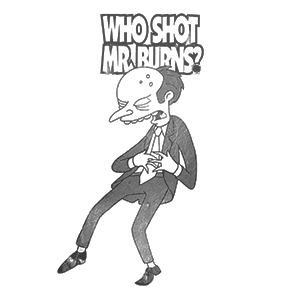
A cliffhanger or cliffhanger ending is a plot device in fiction which features a main character in a precarious or difficult dilemma or confronted with a shocking revelation at the end of an episode of serialized fiction. A cliffhanger is hoped to incentivize the audience to return to see how the characters resolve the dilemma.
Cliffhangers were used as literary devices in several works of the medieval era, with ‘One Thousand and One Nights,’ the collection of Arabic folktales, ending on a cliffhanger each night. Continue reading →
Posted in Art, Language |
Leave a Comment »
March 18, 2021

Garden hermits or ornamental hermits were hermits encouraged to live in purpose-built hermitages, follies, grottoes, or rockeries on the estates of wealthy landowners, primarily during the 18th century.
Such hermits would be encouraged to dress like druids and remain permanently on site, where they could be fed, cared for, and consulted for advice, or viewed for entertainment. Continue reading →
Posted in Money |
Leave a Comment »
March 16, 2021

In U.S. political jargon, a smoke-filled room (sometimes called a ‘smoke-filled back room’) is a secret political gathering or round-table-style decision-making process. The phrase is generally used to suggest an inner circle of power brokers, as at a convention. It suggests a cabal of powerful or well-connected, cigar-smoking men meeting privately to nominate a dark horse political candidate or otherwise make decisions without regard for the will of the larger group.
The origin of the term was in a report by Raymond Clapper of United Press, describing rumors of the process by which Warren G. Harding was nominated at the 1920 Republican National Convention as the party’s candidate for the presidential election. After many indecisive votes, Harding, a relatively minor candidate who was the junior senator from Ohio was, legend has it, chosen as a compromise candidate by Republican power-brokers in a private meeting at the Blackstone Hotel in Chicago after the convention had deadlocked.
Posted in Politics |
Leave a Comment »
March 9, 2021

Bog-wood, also known as ‘abonos’ and, especially amongst pipe smokers, as ‘morta,’ is a material from trees that have been buried in peat bogs and preserved from decay by the acidic and anaerobic bog conditions, sometimes for hundreds or even thousands of years. The wood is usually stained brown by tannins dissolved in the acidic water.
Bog-wood represents the early stages in the fossilization of wood, with further stages ultimately forming jet, lignite and coal over a period of many millions of years. Bog-wood may come from any tree species naturally growing near or in bogs, including oak (‘Quercus’ – ‘bog oak’), pine (‘Pinus’), yew (‘Taxus’), swamp cypress (‘Taxodium’), and kauri (‘Agathis’). Bog-wood is often removed from fields and placed in clearance cairns. It is a rare form of timber that is claimed to be ‘comparable to some of the world’s most expensive tropical hardwoods.’ Continue reading →
Posted in Money, Science |
Leave a Comment »
March 8, 2021

Hazel Scott (1920 – 1981) was a Trinidadian-born jazz and classical pianist, singer, and actor. She was a critically acclaimed performing artist and an outspoken critic of racial discrimination and segregation. She used her influence to improve the representation of Black Americans in film.
Born in Port of Spain, Scott moved to New York City with her mother at the age of four. Scott was a child musical prodigy, receiving scholarships to study at the Juilliard School when she was eight. In her teens, she performed in a jazz band. She also performed on the radio. Continue reading →
Posted in Art, Politics |
Leave a Comment »
March 4, 2021
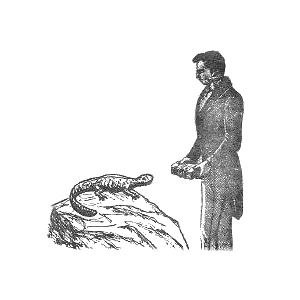
The salamander letter was a controversial document about the history of the Latter-day Saint (LDS) movement that presented a view of LDS founder Joseph Smith’s life that stood sharply at odds with the commonly accepted version of the early progression of the church Smith established.
The letter was one of hundreds of documents concerning the history of the LDS movement that surfaced in the early 1980s. Initially accepted by some document experts and collectors, the document was later demonstrated to be a forgery created by Mark Hofmann, who had been responsible for the ‘discovery’ of many other notable documents. Continue reading →
Posted in Money, Philosophy, Politics |
Leave a Comment »
March 1, 2021


A non-fungible token (NFT) is a special type of cryptographic token which represents something unique; non-fungible tokens are thus not mutually interchangeable.[1] This is in contrast to cryptocurrencies like bitcoin, and many network or utility tokens that are fungible in nature.
Non-fungible tokens are used to create verifiable digital scarcity, as well as digital ownership, and the possibility of asset interoperability across multiple platforms.[3] NFTs are used in several specific applications that require unique digital items like crypto art, digital collectibles, and online gaming. Continue reading →
Posted in Art, Technology |
Leave a Comment »
February 23, 2021
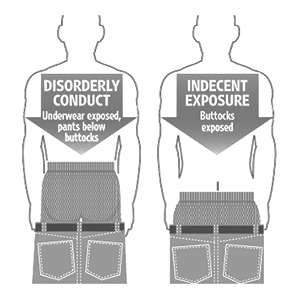
Sagging is a manner of wearing pants, jeans, or shorts that sag so that the top of the garment is significantly below the waist, sometimes revealing much of the wearer’s underpants.
Sagging is predominantly a male fashion. Women’s wearing of low-rise jeans to reveal their G-string underwear (the ‘whale tail’) is not generally described as sagging. A person wearing sagging trousers is sometimes called a ‘sagger,’ and in some countries this practice is known as ‘low-riding.’ Continue reading →
Posted in Politics |
Leave a Comment »
February 22, 2021

Free the Nipple is a topfreedom campaign created in 2012 during pre-production of a 2014 film of the same name. The campaign highlights the general convention of allowing men to appear topless in public while considering it sexual or indecent for women to do the same, and asserts that this difference is an unjust treatment of women.
The campaign argues that it should be legally and culturally acceptable for women to bare their nipples in public. There are two U.S. states where the mere showing of women’s breasts is illegal: Indiana and Tennessee. Fourteen states and many other cities have laws with ambiguous implications on how much a woman is allowed to expose her body. Continue reading →
Posted in Politics, Sex |
Leave a Comment »
February 10, 2021

Jack Mormon is a slang term originating in nineteenth-century America originally used to describe a person who was not a baptized member of the Church of Jesus Christ of Latter Day Saints but who was friendly to church members and Mormonism, sympathized with them, and/or took an active interest in their belief system.
Sometime in the early- to mid-twentieth century, however, the term began to refer to an individual deemed by adherents of The Church of Jesus Christ of Latter-day Saints (LDS Church) to be an inactive or lapsed member of the LDS Church who, despite his personal religious viewpoint, maintained good relations with and positive feelings toward the church. Continue reading →
Posted in Drugs, Language, Philosophy |
Leave a Comment »
February 8, 2021

Neil Cicierega [sis-uh-ree-guh] (b. 1986) is an American comedian, actor, filmmaker, singer, musician, songwriter, puppeteer, artist, and animator.
He is best known as the creator of a genre of Flash animation he termed ‘Animutation,’ the ‘Harry Potter’ puppet parody series ‘Potter Puppet Pals,’ and several music albums under the name Lemon Demon. He also released a series of mashup albums under his own name that have since gained a cult following. Continue reading →
Posted in Art, Humor |
Leave a Comment »


 The Daily Omnivore