July 30, 2012

‘Peace through strength‘ is a conservative slogan supporting military strength for the purpose of creating peaceful international relations. For supporters of the MX missile in the 1970s, the missile symbolized ‘peace through strength.’ The phrase was popular in political rallies during 1988.
The idea is a major justification cited for large militaries, and also served as the primary motivation behind the Cold War doctrine of mutually assured destruction. The logic here is that a strong military deters aggression and coercion (blackmail), and that no potential aggressor in his right mind would dare to attack or blackmail someone stronger than he is, because he knows he would be swiftly defeated if he tried to. Conservatives and neoconservatives argue that if an aggressor is irrational and cannot be deterred, he can be swiftly defeated by a large and strong standing military. Continue reading →
Posted in Politics, War, World |
Leave a Comment »
July 30, 2012
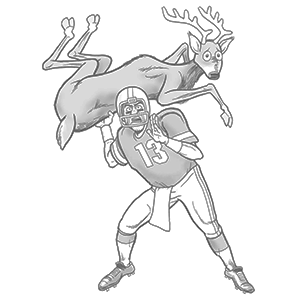
A self-serving bias is attributing successes to internal factors and failures to external factors. This bias is a mechanism for individuals to protect or enhance their own self-esteem.
A student who attributes a good grade on an exam to his or her own intelligence and hours of studying but a poor grade to the professor’s poor teaching ability and unfair test questions is exhibiting the self-serving bias. Studies have shown that similar attributions are made in various situations, such as the workplace, interpersonal relationships, sports, and consumer decisions. Continue reading →
Posted in Health, Science, World |
1 Comment »
July 30, 2012

Mistakes Were Made (But Not by Me) is a non-fiction book by social psychologists Carol Tavris and Elliot Aronson, first published in 2007. It deals with cognitive dissonance (discomfort caused by holding conflicting ideas simultaneously), self-serving bias (attributing successes to internal factors and failures to external factors), and other cognitive biases (deviations in judgment), using these psychological theories to illustrate how the perpetrators of hurtful acts justify and rationalize their behavior.
It describes a positive feedback loop of action and self-deception by which slight differences between people’s attitudes become polarized. Topics covered include: the doomsday cult described in ‘When Prophecy Fails’; the MMR vaccine controversy and Andrew Wakefield; marriage; day care sex abuse hysteria and false memory syndrome, confabulation of autobiographical memory; George W. Bush and the Iraq War; Criminal interrogations, trials, and capital punishment; Mel Gibson; and Oprah Winfrey and her involvement in the James Frey controversy.
Posted in Health, Language, Science |
Leave a Comment »
July 30, 2012

Po Bronson (b. 1964) is an American journalist and author who lives in San Francisco. After attending Lakeside School in Seattle, he graduated from Stanford University in 1986 and briefly worked as an assistant bond salesman in San Francisco.
He abandoned finance to pursue writing, publishing short stories and eventually a comedic novel based upon his bond trading experiences. ‘Bombardiers’ was an international best seller in 1995. Continue reading →
Posted in Language, Money, Technology |
Leave a Comment »
July 30, 2012
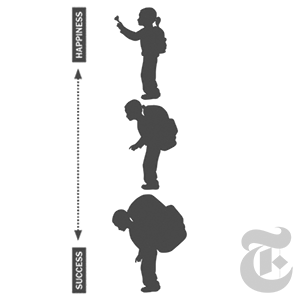
Madeline Levine, Ph. D., is a practicing psychologist in Marin County, California. She is the author of several non-fiction books: ‘Viewing Violence’ published in 1996, ‘See No Evil: A Guide to Protecting Our Children from Media Violence’ published in 1998, and ‘The Price of Privilege: how parental pressure and material advantage are creating a generation of disconnected and unhappy kids’ published in 2006. The first two books represent an analysis of the negative effects of media violence on child development.
Her third book is a study of the psychological ailments plaguing teens from affluent families. ‘The Price of Privilege’ is based not only on her 25 years of experience in treating such teens within Marin County (an affluent community within the San Francisco Bay Area) but also on her consultations with colleagues around the United States—particularly research psychologist Suniya S. Luthar — as well as her review of the contemporary psychological research on the subject. Her latest book is ‘Teach Your Children Well: Parenting for Authentic Success.’
Posted in Education, Health, Language |
Leave a Comment »
July 30, 2012

Morton’s toe (or Greek foot) is the common term for the condition of a shortened first metatarsal (big toe) in relation to the second metatarsal. It is a type of brachymetatarsia (a condition in which there is one or more abnormally short metatarsals).
The name derives from American orthopedic surgeon Dudley Joy Morton. Although commonly described as a disorder, it is sufficiently common to be considered a normal variant of foot shape (its prevalence varies with different populations). Continue reading →
Posted in Health |
Leave a Comment »
July 30, 2012

Machine-to-machine (M2M) refers to technologies that allow both wireless and wired systems to communicate with other devices of the same ability. M2M uses a device (such as a sensor or meter) to capture an event (such as temperature, inventory level, etc.), which is relayed through a network (wireless, wired, or hybrid) to an application (software program), that translates the captured event into meaningful information (for example, ‘items need to be restocked’).
Such communication was originally accomplished by having a remote network of machines relay information back to a central hub for analysis, which would then be rerouted into a system like a personal computer. However, modern M2M communication has expanded beyond a one-to-one connection and changed into a system of networks that transmits data to personal appliances. Continue reading →
Posted in Money, Technology |
Leave a Comment »
July 30, 2012

Basketball is the most popular and successful team sport in Lithuania. Luke Winn wrote in ‘Sports Illustrated,’ ‘Basketball is the only sport the 3.2 million Lithuanians truly care about—it’s their second religion, after Catholicism—and their success is proportionately stunning.’ The Lithuanian national basketball team won the European Basketball Championship in 1937, 1939 (led by Frank Lubin, the ‘Grandfather of Lithuanian Basketball’), and 2003.
They won a silver medal in 1995, and bronze in 2007, and again hosted EuroBasket 2011. Having been part of the Soviet Union, Lithuanian players frequently formed the core of the Soviet national team. This was especially so for the 1988 Olympic basketball gold medal-winning team. After the restoration of Lithuanian independence in 1990, the national team was resurrected. Lithuania won bronze medals in the first three Olympics to include NBA players – 1992, 1996, and 2000, finished fourth in 2004 and 2008, and qualified to play at London 2012 Olympics.
Posted in Games, World |
Leave a Comment »
July 27, 2012

Participatory culture is a neologism in reference of, but opposite to a Consumer culture — in other words a culture in which private persons (the public) do not act as consumers only, but also as contributors or producers (‘prosumers’). The term is most often applied to the production or creation of some type of published media.
This new culture as it relates to the Internet has been described as ‘Web 2.0.’ In participatory culture ‘young people creatively respond to a plethora of electronic signals and cultural commodities in ways that surprise their makers, finding meanings and identities never meant to be there and defying simple nostrums that bewail the manipulation or passivity of ‘consumers.”
Continue reading →
Posted in Money, Technology, World |
Leave a Comment »
July 27, 2012

Wayne White is an American artist, art director, cartoonist, and illustrator. He started his art career working as a cartoonist and illustrator for a number of publications including ‘The East Village Eye,’ ‘Raw,’ ‘The New York Times,’ and ‘The Village Voice.’ In 1986 he worked on ‘Pee Wee’s Playhouse’ where his work for his set and puppet designs won three Emmy awards; he also supplied a number of voices on the show.
Other television credits include production and set design for ‘Shining Time Station,’ ‘Riders in the Sky,’ ‘The Weird Al Show,’ and ‘Beakman’s World.’ He art directed two seminal music videos, Peter Gabriel’s ‘Big Time’ in 1986, and in 1996 he designed all the Georges Méliès inspired sets for the award-winning video for the Smashing Pumpkins, ‘Tonight, Tonight.’ Continue reading →
Posted in Art, Humor |
1 Comment »
July 27, 2012


‘Cyber Rights: Defending Free speech in the Digital Age’ is a 1998 non-fiction book about cyberlaw, written by free speech lawyer Mike Godwin. Godwin graduated from the University of Texas School of Law in 1990 and was the first staff counsel for the Electronic Frontier Foundation (EFF). Written with a first-person perspective, ‘Cyber Rights’ gives the reader a background in legal issues and history pertaining to free speech on the Internet.
It documents the author’s experiences in defending free speech online, and puts forth the thesis that ‘the remedy for the abuse of free speech is more speech.’ Godwin emphasizes that decisions made about the expression of ideas on the Internet have an impact on freedom of speech in other mediums of communication as well, as granted by the First Amendment to the United States Constitution. Continue reading →
Posted in Language, Politics, Technology |
Leave a Comment »
July 27, 2012

Counter-economics is a term originally used by libertarian activists Samuel Edward Konkin III and J. Neil Schulman, defined as ‘the study and/or practice of all peaceful human action which is forbidden by the State.’ The term is short for ‘counter-establishment economics.’
Counter-economics was integrated by Schulman into Konkin’s doctrine of agorism (a philosophy that advocates the goal of the bringing about of a society in which all relations between people are voluntary exchanges). The first book to portray counter-economics as a strategy for achieving a libertarian society was Schulman’s novel ‘Alongside Night’ (1979). Continue reading →
Posted in Money, Philosophy, Politics |
Leave a Comment »



