July 31, 2012

A SuperBall or bouncy ball is a toy, invented in 1964 by chemist Norman Stingley by compressing a synthetic rubber material under high pressure. It is an extremely elastic ball made of Zectron, which contains the synthetic rubber polymer polybutadiene, as well as hydrated silica, zinc oxide, stearic acid, and other ingredients, vulcanized with sulfur at a temperature of 165 degrees Celsius and at a pressure of 3,500psi.
The Super Ball has an amazingly high coefficient of restitution. Dropped from shoulder level, balls snap nearly all the way back; thrown down by an average adult, it can leap over a three-story building. Toys similar to SuperBalls are more generally known as bouncy balls, a term which covers other more or less similar balls by different manufacturers with different formulations.
Continue reading →
Posted in Games, Humor |
Leave a Comment »
July 30, 2012
Tough Mudder is an adventure sports company that hosts 10-12 mile endurance event obstacle courses designed by British Special Forces to test all around strength, stamina, mental grit, and camaraderie that are billed as ‘probably the toughest event on the planet’ and regularly attract 15-20,000 participants over a two day weekend.
Tough Mudder events are a new type of team endurance challenge. According to ‘The New York Times,’ the events are ‘more convivial than marathons and triathlons, but more grueling than shorter runs or novelty events (for example, ‘Warrior Dash’ courses are 3-4 miles). Contestants are not timed and organizers encourage ‘mudders’ to demonstrate teamwork by helping fellow participants over difficult obstacles to complete the course. The prize for completing a Tough Mudder challenge is an official orange sweatband and a free beer. It is estimated that 15-20% of participants do not finish. Each event is designed to be unique and incorporates challenges and obstacles that utilize the local terrain. Continue reading →
Posted in Games, Money, War |
Leave a Comment »
July 30, 2012
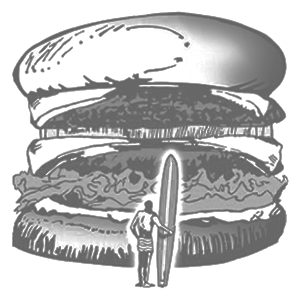
Big Kahuna Burger is a fictional chain of Hawaiian-themed fast food restaurants that appears in the movies of Quentin Tarantino including ‘Death Proof,’ ‘Four Rooms,’ ‘From Dusk Till Dawn,’ ‘Pulp Fiction,’ and ‘Reservoir Dogs.’
The packaging was created by Tarantino’s old friend Jerry Martinez. The Big Kahuna Burger is also seen in ‘The Adventures of Sharkboy and Lavagirl in 3-D,’ directed by Robert Rodriguez.
Posted in Art, Food |
Leave a Comment »
July 30, 2012
Monosodium [mon-uh-soh-dee-uhm] glutamate [gloo-tuh-meyt] (MSG) is a seasoning salt and one of the most abundant naturally occurring non-essential amino acids. The glutamate of MSG confers the same umami (savory) taste of glutamate from other foods (e.g. meats, poultry, fish, eggs, dairy products, and kombu seaweed), being chemically identical.
Industrial food manufacturers market and use MSG as a flavor enhancer because it balances, blends and rounds the total perception of other tastes. Professor Kikunae Ikeda from the Tokyo Imperial University isolated glutamic acid as a new taste substance in 1908 from kombu, and named its taste ‘umami.’ Continue reading →
Posted in Food, Health, World |
Leave a Comment »
July 30, 2012
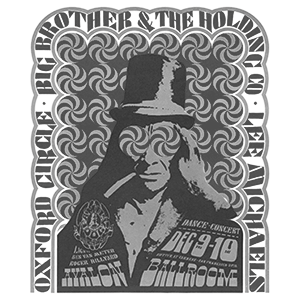
Victor Moscoso (b. 1936) is an artist best known for producing psychedelic rock posters/advertisements and underground comix in San Francisco during the 1960s and 1970s. Born in Spain, Moscoso was the first of the rock poster artists of the 1960s era with formal academic training and experience. After studying art at Cooper Union in New York City and at Yale University, he moved to San Francisco in 1959. There, he attended the San Francisco Art Institute, where he eventually became an instructor. Moscoso’s use of vibrating colors was influenced by painter Josef Albers, one of his teachers at Yale. He was the first of the rock poster artists to use photographic collage in many of his posters.
Professional lightning struck in the form of the psychedelic rock and roll poster for San Francisco’s dance halls and clubs. Moscoso’s posters for the Family Dog dance-concerts at the Avalon Ballroom and his Neon Rose posters for the Matrix resulted in international attention during the 1967 Summer of Love. Within a year, lightning struck again in the form of the underground comix. As one of the ‘Zap Comix’ artists, Moscoso’s work once again received international attention. Moscoso’s comix and poster work has continued up to the present and includes album covers for musicians such as Jerry Garcia, Bob Weir, Herbie Hancock, Jed Davis, and David Grisman.
Posted in Art |
Leave a Comment »
July 30, 2012

The Avalon Ballroom is a music venue, in the Polk Gulch neighborhood of San Francisco. The space operated from 1966 to 1968 and reopened in 2003. Large events include ‘Pagan Fest USA,’ that is held in May. The building that housed the Avalon Ballroom was built in 1911 and was originally called the Colin Traver Academy of Dance. The Avalon was founded by Robert E. Cohen, impresario Chet Helms and his music production company, Family Dog Productions, which had offices on Van Ness. Extraordinary posters advertising each event were produced by psychedelic artists, including Rick Griffin, Stanley Mouse, Alton Kelly, and Victor Moscoso.
Many local bands, such as Quicksilver Messenger Service and The Steve Miller Band, served as backup bands, as did the early Moby Grape and headliners such as the The Doors, 13th Floor Elevators, The Butterfield Blues Band, and Big Brother and the Holding Company, which Helms organized around singer and performer Janis Joplin in spring 1966. The Grateful Dead recorded two live albums, entitled ‘Vintage Dead’ and ‘Historic Dead,’ here in the autumn of 1966. In 1967, it hosted the ‘Mantra-Rock Dance’ musical event, organized by the local Hare Krishna temple, which featured Hare Krishna founder Bhaktivedanta Swami, along with Allen Ginsberg, The Grateful Dead, Moby Grape, and Big Brother and the Holding Company, with Janis Joplin.
Posted in Art |
Leave a Comment »
July 30, 2012

Bruce Conner (1933 – 2008) was an American artist renowned for his work in assemblage (artistic compositions made by putting together found objects) and film, among other disciplines. He attended Wichita University (now Wichita State), and received his B.F.A in Art at Nebraska University in 1956.
He then attended the University of Colorado on scholarship; also there was Jean Sandstedt, whom he had met at Nebraska and who would become his wife. In 1957 the two married and immediately flew to San Francisco. There, Conner quickly assimilated into the city’s famous Beat community and founded the Rat Bastard Protective Association, an underground, arts organization. His first solo shows in San Francisco, in 1958 and 1959, featured paintings, drawings, prints, collages, assemblages, and sculpture. Continue reading →
Posted in Art, Philosophy, Politics |
Leave a Comment »
July 30, 2012

Si vis pacem, para bellum is a Latin adage translated as, ‘If you wish for peace, prepare for war’ (usually interpreted as meaning peace through strength—a strong society being less likely to be attacked by enemies). The adage was adapted from a statement in ‘De Re Militari’ (‘Concerning Military Matters’) by Publius Flavius Vegetius Renatus, although the idea it conveys is also present in earlier works, such as Plato’s ‘Nomoi’ (‘Laws’).
With reference to the foreign policy of Napoleon Bonaparte, the historian, de Bourrienne, said: ‘Everyone knows the adage… Had Bonaparte been a Latin scholar he would probably have reversed it and said, ‘Si vis bellum para pacem.” Meaning that if you are planning a war, you should put other nations off guard by cultivating peace. Conversely, another interpretation could be that preparing for peace may lead another party to wage war on you. Continue reading →
Posted in Politics, War, World |
1 Comment »
July 30, 2012
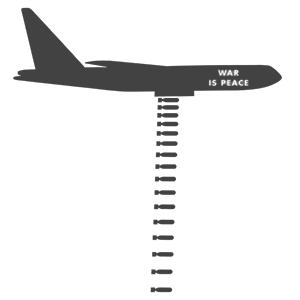
‘Peace through strength‘ is a conservative slogan supporting military strength for the purpose of creating peaceful international relations. For supporters of the MX missile in the 1970s, the missile symbolized ‘peace through strength.’ The phrase was popular in political rallies during 1988.
The idea is a major justification cited for large militaries, and also served as the primary motivation behind the Cold War doctrine of mutually assured destruction. The logic here is that a strong military deters aggression and coercion (blackmail), and that no potential aggressor in his right mind would dare to attack or blackmail someone stronger than he is, because he knows he would be swiftly defeated if he tried to. Conservatives and neoconservatives argue that if an aggressor is irrational and cannot be deterred, he can be swiftly defeated by a large and strong standing military. Continue reading →
Posted in Politics, War, World |
Leave a Comment »
July 30, 2012
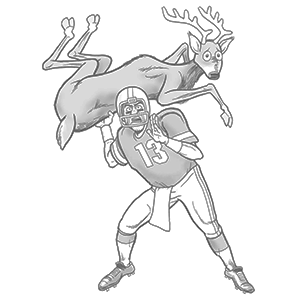
A self-serving bias is attributing successes to internal factors and failures to external factors. This bias is a mechanism for individuals to protect or enhance their own self-esteem.
A student who attributes a good grade on an exam to his or her own intelligence and hours of studying but a poor grade to the professor’s poor teaching ability and unfair test questions is exhibiting the self-serving bias. Studies have shown that similar attributions are made in various situations, such as the workplace, interpersonal relationships, sports, and consumer decisions. Continue reading →
Posted in Health, Science, World |
1 Comment »
July 30, 2012

Mistakes Were Made (But Not by Me) is a non-fiction book by social psychologists Carol Tavris and Elliot Aronson, first published in 2007. It deals with cognitive dissonance (discomfort caused by holding conflicting ideas simultaneously), self-serving bias (attributing successes to internal factors and failures to external factors), and other cognitive biases (deviations in judgment), using these psychological theories to illustrate how the perpetrators of hurtful acts justify and rationalize their behavior.
It describes a positive feedback loop of action and self-deception by which slight differences between people’s attitudes become polarized. Topics covered include: the doomsday cult described in ‘When Prophecy Fails’; the MMR vaccine controversy and Andrew Wakefield; marriage; day care sex abuse hysteria and false memory syndrome, confabulation of autobiographical memory; George W. Bush and the Iraq War; Criminal interrogations, trials, and capital punishment; Mel Gibson; and Oprah Winfrey and her involvement in the James Frey controversy.
Posted in Health, Language, Science |
Leave a Comment »
July 30, 2012

Po Bronson (b. 1964) is an American journalist and author who lives in San Francisco. After attending Lakeside School in Seattle, he graduated from Stanford University in 1986 and briefly worked as an assistant bond salesman in San Francisco.
He abandoned finance to pursue writing, publishing short stories and eventually a comedic novel based upon his bond trading experiences. ‘Bombardiers’ was an international best seller in 1995. Continue reading →
Posted in Language, Money, Technology |
Leave a Comment »


 The Daily Omnivore