June 21, 2012

‘Simulacra and Simulation‘ [sim-yuh-ley-kruh / sim-yuh-ley-shuhn] is a philosophical treatise by French sociologist Jean Baudrillard seeking to interrogate the relationship among reality, symbols, and society. A simulacrum (singular form of simulacra) in an imperfect simulation (a recreation of something). Baudrillard claims that our current society has replaced all reality and meaning with symbols and signs, and that human experience is of a simulation of reality.
Moreover, these simulacra are not merely mediations of reality, nor even deceptive mediations of reality; they are not based in a reality nor do they hide a reality, they simply hide that anything like reality is irrelevant to our current understanding of our lives. The simulacra that Baudrillard refers to are the significations and symbolism of culture and media that construct perceived reality, the acquired understanding by which our lives and shared existence is and are rendered legible; Baudrillard believed that society has become so saturated with these simulacra and our lives so saturated with the constructs of society that all meaning was being rendered meaningless by being infinitely mutable. Baudrillard called this phenomenon the ‘precession of simulacra.’ Continue reading →
Posted in Language, Philosophy, Science |
Leave a Comment »
June 21, 2012

Simulacrum [sim-yuh-ley-kruhm] (Latin: ‘likeness, similarity’) was first recorded in the English language in the late 16th century, to describe a representation, such as a statue or a painting, especially of a god. By the late 19th century, it had gathered a secondary association of inferiority: an image without the substance or qualities of the original.
Philosopher Fredric Jameson offers photorealism as an example of artistic simulacrum, where a painting is sometimes created by copying a photograph that is itself a copy of the real. Other art forms that play with simulacra include Trompe l’oeil, Pop Art, Italian neorealism, and the French New Wave. Continue reading →
Posted in Art, Philosophy, Technology |
1 Comment »
June 21, 2012

The digital dark age is a possible future situation where it will be difficult or impossible to read historical digital documents and multimedia, because they have been stored in an obsolete and obscure digital format.
The name derives from the term ‘Dark Ages’ in the sense that there would be a relative lack of written record. An early mention of the term was at a conference of the International Federation of Library Associations and Institutions (IFLA) in 1997. The term was also mentioned in 1998 at the ‘Time and Bits’ conference, which was co-sponsored by the Long Now Foundation and the Getty Conservation Institute. Continue reading →
Posted in Language, Technology |
Leave a Comment »
June 21, 2012

The term Network Society describes several different phenomena related to the social, political, economic, and cultural changes caused by the spread of networked, digital information and communications technologies. A number of academics are credited with coining the term since the 1990s and several competing definitions exist.
The intellectual origins of the idea can be traced back to the work of early social theorists such as Georg Simmel who analyzed the effect of modernization and industrial capitalism on complex patterns of affiliation, organization, production, and experience. Continue reading →
Posted in Politics, Technology, World |
2 Comments »
June 21, 2012
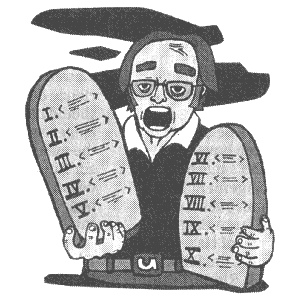
Information pollution is the contamination of information supply with irrelevant, redundant, unsolicited and low-value information. The spread of useless and undesirable information can have a detrimental effect on human activities. It is considered one of the adverse effects of the information revolution. Pollution is a large problem and is growing rapidly in e-mail, instant messaging (IM), and RSS feeds.
The term acquired particular relevance in 2003 when Jakob Nielsen, a leading web usability expert, published a number of articles discussing the topic. However, as early as 1971 researchers were expressing doubts about the negative effects of having to recover ‘valuable nodules from a slurry of garbage in which it is a randomly dispersed minor component.’ Continue reading →
Posted in Money, Politics, Technology |
1 Comment »
June 20, 2012
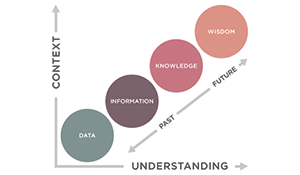

The term information revolution describes current economic, social, and technological trends beyond the Industrial Revolution. Many competing terms have been proposed that focus on different aspects of this societal development.
The British polymath crystallographer J. D. Bernal introduced the term ‘scientific and technical revolution’ in his book ‘The Social Function of Science’ (1939) in order to describe the new role that science and technology are coming to play within society. He asserted that science is becoming a ‘productive force,’ using the Marxist Theory of Productive Forces (a widely-used concept in communism placing primary emphasis on technical advances and strong productive forces in a nominally socialist economy before real communism, or even real socialism, can have a hope of being achieved). Continue reading →
Posted in Money, Politics, Technology |
Leave a Comment »
June 20, 2012

Technological unemployment is unemployment primarily caused by technological change. Since the early 1800’s, the observation of economists has been that technology has had a positive influence on employment: as technological change increased productivity, prices for commodities fell, resulting in increased demand, thereby increasing demand for labor. Machines freed workers from simple manual work but created new better paying jobs requiring more specialized skills.
However, some technologists claim that modern capabilities of pattern recognition, machine learning, and global networking are steadily eliminating the skilled work of large swaths of the middle income workforce. The warning is that technology is no longer creating jobs at the rate that it is making others obsolete. The notion of technological unemployment leading to structural unemployment (and being macroeconomically injurious) is often dismissed as the ‘Luddite fallacy.’ Continue reading →
Posted in Money, Politics, Technology |
2 Comments »
June 19, 2012

A credit boom-bust cycle is an episode characterized by a sustained increase in several economics indicators followed by a sharp and rapid contraction. Commonly the boom is driven by a rapid expansion of credit to the private sector accompanied with rising prices of commodities and stock market index.
Following the boom phase, asset prices collapse and a credit crunch arises, where access to financing opportunities are sharply reduced below levels observed during normal times. The unwinding of the boom phase brings a considerably large reduction in investment and fall in consumption and an economic recession may follow. The recession following the burst of the episode is oftentimes short-lived, GDP and consumption growth usually resume within a year.
Continue reading →
Posted in Money, Politics, World |
Leave a Comment »
June 19, 2012

A Malthusian catastrophe [mal-thoo-zee-uhn] would be a forced return to subsistence-level conditions due to population growth outpacing agricultural production. Population and growth size has a negative impact on the environment. Later formulations consider economic growth limits as well. The term is also commonly used in discussions of oil depletion. Based on the work of political economist Thomas Malthus (1766–1834), theories of Malthusian catastrophe are very similar to the Iron Law of Wages (real wages always tend toward the minimum wage necessary to sustain the life of the worker).
The main difference is that the Malthusian theories predict what will happen over several generations or centuries, whereas the Iron Law of Wages predicts what will happen in a matter of years and decades. The Industrial Revolution enabled the modern world to break out of the Malthusian growth model, however, various limited resources which may soon limit human population growth because of a widespread belief in the importance of prosperity for every individual and the rising consumption trends of large developing nations such as China and India.
Continue reading →
Posted in Food, Money, World |
Leave a Comment »
June 19, 2012

The Iron Law of Wages is a proposed law of economics that asserts that real wages always tend, in the long run, toward the minimum wage necessary to sustain the life of the worker. The theory was first named by Ferdinand Lassalle in the mid-nineteenth century.
Karl Marx attributed the doctrine to Lassalle (notably in ‘Critique of the Gotha Programme’), crediting the idea to Thomas Malthus in his work, ‘An Essay on the Principle of Population,’ and the terminology to Goethe’s ‘great, eternal iron laws’ in ‘Das Göttliche’ (‘On the Divine’). Continue reading →
Posted in Money, Politics |
Leave a Comment »
June 19, 2012

The Malthusian trap [mal-thoo-zee-uhn], named after political economist Thomas Robert Malthus, suggests that for most of human history, income was largely stagnant because technological advances and discoveries only resulted in more people, rather than improvements in the standard of living.
It is only with the onset of the Industrial Revolution in about 1800 that the income per person dramatically increased, and they broke out of the Trap; it has been shown, however, that the escape from the Malthusian trap can also generate serious political upheavals.
Continue reading →
Posted in Money, Technology, World |
Leave a Comment »
June 18, 2012
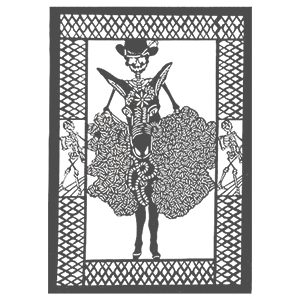
Papel picado (‘perforated paper’) is a decorative craft made out of paper cut into elaborate designs. Although it is a Mexican folk art, papel picado is used as a holiday decoration in many countries. The designs are commonly cut from tissue paper using a guide and small chisels, creating as many as forty banners at a time. Common themes includes birds, floral designs, and skeletons.
They are commonly displayed for both secular and religious occasions, such as Easter, Christmas, the Day of the Dead, as well as during weddings, quinceañeras, baptisms, and christenings. In Mexico, papel picado is especially incorporated into altars during the Day of the Dead. Continue reading →
Posted in Art, World |
Leave a Comment »



