June 26, 2012


The mudflap girl is an iconic silhouette of a woman with an hourglass body shape, sitting, leaning back on her hands, with her hair being blown in the wind. The icon is typically found on mudflaps, clothing, and other items associated with trucking in the United States. The image is sometimes also known as trucker girl, trucker lady or seated lady. This famous design was created in the 1970s by Bill Zinda of Wiz Enterprises in Long Beach, California, to promote his line of truck and auto accessories. It is variously claimed to be modeled on Leta Laroe, a famous exotic dancer at the time, or on Rachel Ann Allen, a friend’s wife, and mother of Ed Allen, the trademark’s owner.
As a parody, Wyoming Libraries use a mudflap girl holding a book, in an effort to attract readers. In another parody the feminist blog Feministing uses a version depicting the mudflap girl holding up her middle finger as an ironic logo. Optimus Prime has been portrayed as having a mudflap with the silhouette of Elita One (leader of the female autobots). At McMurdo Station, Antarctica, the mudflap girl is depicted on a utility vehicle, but wearing more appropriate attire for Antarctic environment.
Posted in Humor, Money, Sex |
Leave a Comment »
June 26, 2012

Kappa is an Italian manufacturer of sports clothes and accessories, that started as a sock and underwear manufacturer in 1916 in Turin. Its logo, known as ‘Omini,’ is a silhouette of a man (left) and woman (right) sitting back to back in the nude. It was created in 1969 by mere accident.
After a photo shoot for a bathing suit advertisement, a man and a woman were sitting back-to-back, naked, with the outlines of their bodies traced by the back lighting. The photographers knew they had something, and the idea grew into what is now the logo, which symbolizes the mutual support between man and woman, and their completion.
Posted in Games, Money, World |
Leave a Comment »
June 26, 2012

Umbro is an English sportswear and football equipment supplier, and a subsidiary of Nike since 2008. Umbro designs, sources, and markets sport-related apparel, footwear, and equipment. Its products are sold in over 90 countries. The company was founded in 1924 by Harold Humphreys, along with his brother Wallace in a small workshop, inspired by the growing interest in football witnessed nationwide.
The word ‘Umbro’ is an acronym derived from Humphreys Brothers Clothing. Umbro’s major debut was in the 1934 FA Cup final, when both teams Manchester City and Portsmouth wore uniforms designed and manufactured by the company. Other teams supplied by Umbro during the 1930s and 1940s were Sheffield United and Preston North End, Manchester United, and Blackpool. In 1952, the British team at the Summer Olympics wore Umbro, tailored for the needs of their individual sports. Umbro would be a major supplier to the British Olympics team for the next 20 years.
Continue reading →
Posted in Games, Money, World |
Leave a Comment »
June 26, 2012

Brine, Corp. is a US sporting goods manufacturer (lacrosse, soccer, volleyball, and field hockey equipment). It markets its products under its own brand as well as ‘In The Crease’ for goals and goal accessories. The company was founded by W.H. Brine in 1922 as the W.H. Brine Company. It was privately owned by the Brine family and named Brine, Inc. before it was acquired by New Balance in 2006.
It started as a small sports equipment and uniform company. They sold to private schools and regional camps, quickly growing to a major manufacturer of lacrosse and soccer equipment. Continue reading →
Posted in Games, Money, Technology |
1 Comment »
June 26, 2012

The Gatorade shower is a sports tradition that involves dumping a cooler full of liquid (most commonly Gatorade mixed with ice) over a coach’s (or occasionally star player or owner’s) head following a meaningful win, such as the Super Bowl. The tradition began with the New York Giants in the mid-1980s.
According to several sources, including Jim Burt of the Giants, in 1985, when the Giants beat the Washington Redskins 17-3, Burt dumped a cooler on Bill Parcells after being angry about the coach’s treatment of him that week. Burt insisted that Harry Carson dump the Gatorade on Parcells, because Carson was a favorite and wouldn’t get in trouble.
Continue reading →
Posted in Food, Games, Humor |
Leave a Comment »
June 25, 2012
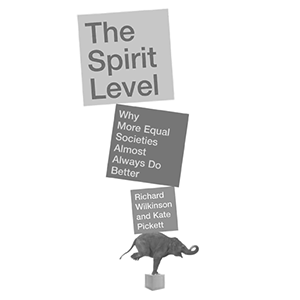
Equality of outcome is a controversial political concept which describes a state in which people have approximately the same material wealth or, more generally, in which the general conditions of their lives are similar. Achieving this requires reducing or eliminating material inequalities between individuals or households in a society. This could involve a transfer of income and/or wealth from wealthier to poorer individuals, or adopting other institutions designed to promote equality of condition from the start.
The concept is central to some political ideologies and is used regularly in political discourse, often in contrast to the term equality of opportunity. A related way of defining equality of outcome is to think of it as ‘equality in the central and valuable things in life.’ After the Russian Revolution of 1917, the political structure of the Soviet Union tried to emphasize equality of outcome as a primary goal. Continue reading →
Posted in Money, Philosophy, Politics |
Leave a Comment »
June 21, 2012

Elizabeth Murray (1940 – 2007) was an American painter. In 1967, Murray moved to New York, and first exhibited in 1971 in the Whitney Museum of American Art Annual Exhibition. One of her first mature works included ‘Children Meeting,’ 1978 (now in the permanent collection of the Whitney Museum, New York), an oil on canvas painting evoking human characteristics, personalities, or pure feeling through an interaction of non-figurative shapes, color, and lines. She is particularly noted for her shaped canvas paintings.
In 1999, Murray was awarded a MacArthur Fellowship. This grant led directly to opening of the Bowery Poetry Club, a Lower East Side performance arts venue run by her husband, Bob Holman. In 2007, Murray died of lung cancer. In her obituary, the ‘New York Times’ wrote that she ‘reshaped Modernist abstraction into a high-spirited, cartoon-based, language of form whose subjects included domestic life, relationships and the nature of painting itself…’
Posted in Art |
Leave a Comment »
June 21, 2012
Sébastien Tellier (b. 1974) is a French singer, songwriter and multi-instrumentalist. He is currently signed to Record Makers, a French independent record label. He sings in English, French, and Italian. Tellier’s first album, ‘L’incroyable Vérité’ (‘The Incredible Truth’), was released in 2001.
Tellier’s sophomore album ‘Politics’ was released in 2005. A particularly popular song from Politics was ‘La Ritournelle,’ a string-led tune, which featured Nigerian drummer, Tony Allen of Fela Kuti fame. ‘La Ritournelle’ was remixed by various artists, notably in Britain by Metronomy. Tellier has also recorded an acoustic album of his more popular songs, ‘Sessions’ in 2006. His third studio album ‘Sexuality’ was produced by Guy-Manuel de Homem-Christo of Daft Punk.
Posted in Art, World |
Leave a Comment »
June 21, 2012
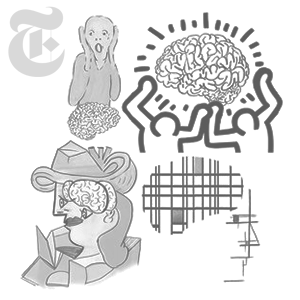
Neuroesthetics is a relatively recent sub-discipline of aesthetics (a branch of philosophy dealing with the nature of beauty), which received its formal definition in 2002 as the scientific study of the neural bases for the contemplation and creation of a work of art. With the aim of discovering general rules about aesthetics, one approach is the observation of subjects viewing art and the exploration of the mechanics of vision. It is proposed that pleasing sensations are derived from the repeated activation of neurons due to primitive visual stimuli such as horizontal and vertical lines.
The link between specific brain areas and artistic activity is of great importance to the field of neuroesthetics. This can be applied both to the ability to create and interpret art. A common approach to uncover the neural mechanisms is through the study of individuals, specifically artists, with neural disorders such as savant syndrome or some form of traumatic injury. It is argued that the sense of beauty and aesthetic judgment presupposes a change in the activation of the brain’s reward system. Continue reading →
Posted in Art, Science |
Leave a Comment »
June 21, 2012

In ethology (the study of animal behavior), a fixed action pattern (FAP) is an instinctive behavioral sequence that is indivisible and runs to completion. Fixed action patterns are invariant and are produced by a neural network known as the ‘innate releasing mechanism’ in response to an external sensory stimulus known as a ‘sign stimulus’ or ‘releaser’ (a signal from one individual to another).
A fixed action pattern is one of the few types of behaviors which can be said to be hard-wired and instinctive. Many mating dances, commonly carried out by birds, are examples of fixed action patterns. In these cases, the sign stimulus is typically the presence of the female. Another example of fixed action patterns is aggression towards other males during mating season in the red-bellied stickleback. A series of experiments carried out by Dutch ornithologist Niko Tinbergen showed that the aggressive behavior of the males is a FAP triggered by anything red, the sign stimulus. The threat display of male stickleback is also a fixed action pattern triggered by a stimulus. Continue reading →
Posted in Science |
Leave a Comment »
June 21, 2012
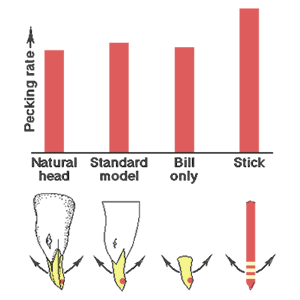
A supernormal stimulus is an exaggerated version of a stimulus to which there is an existing response tendency, or any stimulus that elicits a response more strongly than the stimulus for which it evolved. The idea is that the elicited behaviors evolved for the ‘normal’ stimuli of the ancestor’s natural environment, but the behaviors are now hijacked by the supernormal stimulus.
British art scholar Nigel Spivey demonstrates the effect in a 2005 BBC documentary series ‘How Art Made the World’ to illustrate neuroscientist Vilayanur S. Ramachandran’s speculation that this might be the reason for the grossly exaggerated body image demonstrated in works of art from the Venus of Willendorf right up to the present day. Continue reading →
Posted in Food, Science, Sex |
2 Comments »
June 21, 2012

Hyperreality, according to French sociologist Jean Baudrillard is, ‘A real without origin or reality.’ Italian philosopher called it, ‘The authentic fake.’ More recently, Hungarian filmmaker Pater Sparrow forwarded the term ‘virtual irreality.’ The term is used in semiotics (the study of symbols) and postmodern philosophy to describe an inability of consciousness to distinguish reality from a simulation of reality, especially in technologically advanced post-modern societies. Hyperreality is a way of characterizing what our consciousness defines as ‘real’ in a world where a multitude of media can radically shape and filter an original event or experience. Most aspects of the concept can be thought of as ‘reality by proxy.’
Baudrillard in particular suggests that the world we live in has been replaced by a copy world, where we seek simulated stimuli and nothing more. He borrows, from Jorge Luis Borges’ ‘On Exactitude in Science’ (which borrowed from Lewis Carroll), the example of a society whose cartographers create a map so detailed that it covers the very things it was designed to represent. When the empire declines, the map fades into the landscape and there is neither the representation nor the real remaining – just the hyperreal. Baudrillard’s idea of hyperreality was heavily influenced by phenomenology, semiotics, and Marshall McLuhan. Continue reading →
Posted in Money, Philosophy, Science |
Leave a Comment »




