May 26, 2012

Glitch is a term used to describe a style of electronic music that emerged in the mid to late 1990s that adheres to an ‘aesthetic of failure,’ where the deliberate use of glitch based audio media, and other sonic artifacts, is a central concern.
Sources of glitch sound material are usually malfunctioning or abused audio recording devices or digital technology, such as CD skipping, electric hum, digital or analog distortion, bit rate reduction, hardware noise, computer bugs, crashes, vinyl record hiss or scratches, and system errors. In a ‘Computer Music Journal’ article published in 2000, composer and writer Kim Cascone classifies glitch as a sub-genre of electronica, and used the term ‘post-digital’ to describe the glitch aesthetic.
Continue reading →
Posted in Art, Language, Technology |
Leave a Comment »
May 26, 2012

Glitch art is the aestheticization of digital or analog errors, such as artifacts and other ‘bugs,’ by either corrupting digital code/data or by physically manipulating electronic devices, for example by circuit bending (the intentional short-circuiting of low power electronic devices to create new musical devices). In a technical sense a glitch is the unexpected result of a malfunction. The term is thought to derive from the German ‘glitschig,’ meaning ‘slippery.’ It was first recorded in English in 1962 during the American space program by John Glenn when describing problems they were having, Glenn explained, ‘Literally, a glitch is a spike or change in voltage in an electrical current.’
Glitch is used to describe these kinds of bugs as they occur in software, video games, images, videos, audio, and other forms of data. The term glitch came to be associated with music in the mid 90s to describe a genre of experimental/noise/electronica (see glitch music). Shortly after, as VJs and other visual artist like Tony (Ant) Scott began to embrace the glitch as an aesthetic of the digital age, glitch art came to refer to a whole assembly of visual arts.
Posted in Art, Language, Technology |
3 Comments »
May 25, 2012

The memory-prediction framework is a theory of brain function that was created by Jeff Hawkins and described in his 2004 book, ‘On Intelligence.’ This theory concerns the role of the mammalian neocortex and its associations with the hippocampus and the thalamus in matching sensory inputs to stored memory patterns and how this process leads to predictions of what will happen in the future.
The theory is motivated by the observed similarities between the brain structures (especially neocortical tissue) that are used for a wide range of behaviours available to mammals. It posits that the remarkably uniform physical arrangement of cortical tissue reflects a single principle or algorithm which underlies all cortical information processing. Continue reading →
Posted in Health, Science |
Leave a Comment »
May 25, 2012

Encephalization Quotient [en-sefa-lie-zay-shun] (EQ) is a measure of relative brain size defined as the ratio between actual brain mass and predicted brain mass for an animal of a given size, which is hypothesized to be a rough estimate of the intelligence of the animal. This is a more refined measurement than the raw brain-to-body mass ratio, as it takes into account allometric effects (changes in proportion of various parts of an organism as a consequence of growth).
The relationship, expressed as a formula, has been developed for mammals, and may not yield relevant results when applied outside this group. Brain size usually increases with body size in animals. The relationship is not linear, however. Generally, small mammals have relatively larger brains than big ones. Mice have a direct brain/body size ratio similar to humans (1/40), while elephants have a comparatively small brain/body size (1/560), despite elephants being quite intelligent animals. Continue reading →
Posted in Science |
Leave a Comment »
May 25, 2012

‘There are no atheists in foxholes‘ is an aphorism used to argue that in times of extreme stress or fear, such as when participating in warfare, all people will believe in or hope for a higher power. The precise origin of the phrase is uncertain.
While primarily used to comment on the specific experiences faced by combat soldiers, the statement is often adapted to other perilous situations such as ‘there are no atheists in Probate Court.’ Continue reading →
Posted in Death, Philosophy, War |
Leave a Comment »
May 25, 2012
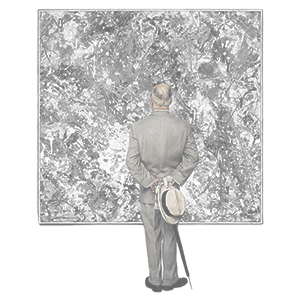
A connoisseur [kon-uh-sur] (meaning ‘to be acquainted with’ or ‘to know somebody/something’) is a person who has a great deal of knowledge about the arts and is an expert judge in matters of taste.
Internationally, the term is also used in gastronomy (in connection with fine food, beer, wine, tea, and many other products whose consumption can be pleasing to the senses). The ability to tell almost instinctively who painted a picture is defined as connoisseurship. Modern connoisseurship must be seen in context with museums, art galleries, and ‘the cult of originality.’
Continue reading →
Posted in Art, Language |
Leave a Comment »
May 24, 2012

Cornershop is a British indie rock band formed in 1991 by Tjinder Singh, his brother Avtar, David Chambers, and Ben Ayres. The band name originated from a stereotype referring to British Asians often owning street corner stores. Their music is a fusion of Indian music, Britpop, and electronic dance music.
Their debut release, the ‘In The Days of Ford Cortina’ EP, pressed on ‘curry-colored vinyl,’ contained a blend of Indian-tinged noise pop. The sound mellowed somewhat with the release of debut album ‘Hold On It Hurts’ in 1994. The album impressed David Byrne sufficiently for him to sign the band to his Luaka Bop label. Although David Chambers left, replaced by Nick Simms, the band re-emerged in 1995. Continue reading →
Posted in Art, World |
1 Comment »
May 24, 2012

CFCF is the stage name of Canadian electronic musician Michael Silver. Based in Montreal, Silver took the name CFCF from the call sign of the city’s CFCF-TV.
Silver has released an album and several EPs, independently and on Paper Bag Records, and Rvng Intl.
Posted in Art |
Leave a Comment »
May 24, 2012

3DMark is a computer benchmarking tool created and developed by Futuremark Corporation to determine the performance of a computer’s 3D graphic rendering and CPU workload processing capabilities. Running the application produces a 3DMark score, with higher numbers indicating better performance.
The 3DMark measurement unit is intended to give a normalized mean for comparing different PC hardware configurations (mostly graphics processing units and central processing units), which proponents such as gamers and overclocking enthusiasts assert is indicative of end-user performance capabilities. Founded in 1997 as ‘Futuremark’ by members of the former demoscene group ‘Future Crew,’ the company is the leading producer of computer benchmark applications in the world.
Posted in Money, Technology |
Leave a Comment »
May 24, 2012

Frame rate is the frequency (rate) at which an imaging device produces unique consecutive images called frames. The term applies equally well to computer graphics, video cameras, film cameras, and motion capture systems. Frame rate is most often expressed in frames per second (FPS), and is also expressed in progressive scan monitors as hertz (Hz).
The human visual system can process 10 to 12 separate images per second, perceiving them individually. The visual cortex holds onto one image for about one-fifteenth of a second, so if another image is received during that period an illusion of continuity is created, allowing a sequence of still images to give the impression of motion. Continue reading →
Posted in Art, Money, Technology |
Leave a Comment »
May 24, 2012
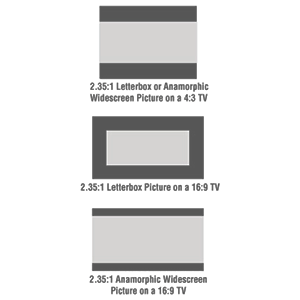
Letterboxing is the practice of transferring film shot in a widescreen aspect ratio to standard-width video formats while preserving the film’s original aspect ratio. The resulting videographic image has mattes (black bars) above and below it; these mattes are part of the image (i.e., of each frame of the video signal). LTBX is the identifying abbreviation for films and images so formatted. The term refers to the shape of a letter box, a slot in a wall or door through which mail is delivered, being rectangular and wider than it is high.
Letterboxing is used as an alternative to a full-screen, pan-and-scan transfer of a widescreen film, in which the original image is cropped to the narrower aspect ratio of the destination format, usually the 1.33:1 (4:3) ratio of the standard television screen, whereas letterboxing preserves the film’s original image composition as seen in the cinema. Letterboxing was developed for use in 4:3 television displays before widescreen television screens were available, but it is also necessary to represent on a 16:9 widescreen display the unaltered original composition of a film with a wider aspect ratio, such as Panavision’s 2.35:1 ratio. Continue reading →
Posted in Art, Money, Technology |
5 Comments »
May 23, 2012

A retronym [re-truh-nim] is a type of neologism that provides a new name for something to differentiate the original version from a more recent one. The original name is most often augmented with an adjective (rather than being completely displaced) to account for later developments of the object or concept itself. Much retronymy is driven by advances in technology.
Examples of retronyms are ‘acoustic guitar’ (coined when electric guitars appeared), and ‘analog watch’ to distinguish from a digital watch. In the entertainment industry, this can manifest itself as calling a movie ‘Part 1’ once sequels are released or by slightly altering the title (e.g. ‘Star Wars: A New Hope’ or ‘Indiana Jones and the Raiders of the Lost Ark’) to emphasize its connection with the sequel(s), or by referring to a television series as ‘the original,’ as in ‘Star Trek: The Original Series.’
Continue reading →
Posted in Language, Money, Technology |
Leave a Comment »


 The Daily Omnivore