May 29, 2012

Glass Candy is an American electronic music duo from Portland, Oregon, formed in 1996. The band consists of Ida No (vocals) and producer Johnny Jewel (synthesizers, guitar, production). While the band’s early catalog blends elements of No Wave and glam rock, their later work incorporates Italo disco. The band is known for evolving through the years since their original collaboration, and experimenting with various musical genres. No’s vocals have been likened to ’60s German singer Nico and ‘a frightened Debbie Harry or a pissed-off Lene Lovich in a haunted disco.’
Jewel has cited Marilyn Monroe films, 1980s cop show soundtracks, ‘Goblin,’ and John Carpenter soundtracks as inspirational. All music tracks are produced by basic analog equipment, without computers. The group has also said that stores could appropriately file their music ‘between Olivia Newton-John, Suicide, and Schoolly D.’ No describes their early work as ‘droney and weird.’
Posted in Art |
Leave a Comment »
May 29, 2012

Record Store Day is an internationally celebrated day observed the third Saturday of April each year. Its purpose, as conceived by independent record store employee Chris Brown, is to celebrate the art of music. The day brings together fans, artists, and thousands of independent record stores across the world.
Record Store Day was officially founded in 2007 by Eric Levin, Michael Kurtz, Carrie Colliton, Amy Dorfman, Don Van Cleave, and Brian Poehner and is now celebrated globally with hundreds of recording and other artists participating in the day by making special appearances, performances, meet and greets with their fans, the holding of art exhibits, and the issuing of special vinyl and CD releases, along with other promotional products to mark the occasion. Past Record Store Day ‘Ambassadors’ include: Metallica (2008), Jesse Hughes of Eagles of Death Metal (2009), Josh Homme of Queens of the Stone Age (2010), Ozzy Osbourne (2011), and Iggy Pop (2012).
Posted in Art, Money |
Leave a Comment »
May 29, 2012
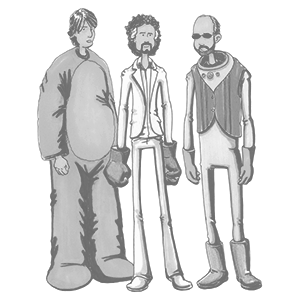
The Flaming Lips and Heady Fwends is a collaborative studio album by The Flaming Lips. Recorded throughout 2011 and 2012, the album was released as a limited edition on vinyl for Record Store Day on April 21, 2012. Four songs from the album were previously released on collaborative EPs in 2011. Following their last full-length album, 2009’s ‘Embryonic,’ the band produced several EPs with other artists including Neon Indian, Lightning Bolt, Prefuse 73, and Yoko Ono. Four tracks from these sessions appear on the album. The remaining seven songs were recorded at different times and locations, and are exclusive to the LP.
Mainstream artists such as Kesha and Coldplay’s Chris Martin share space with more experimental artists such as Lightning Bolt and Prefuse 73. The band released the double LP in vinyl form in a 10,000 unit run. Each disc has a unique pattern. Coyne has stated that he has requested and been given blood samples from some of the album’s collaborators. Coyne claims to have blood from Kesha and Neon Indian’s Alan Palomo. He plans to place small amounts of the blood sandwiched into the vinyl of limited editions of the records, and make these available to ‘interested rich Flaming Lips people.’
Posted in Art |
Leave a Comment »
May 29, 2012
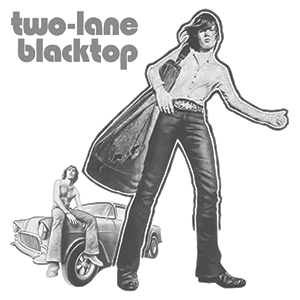
The Gumball 3000 is an annual British 3,000-mile international road rally which takes place on public roads, with a different route around the world each year. Founded in 1999 by British entrepreneur Maximillion Cooper, it sees an annual entry of 120 cars, which are mostly exotic and powerful sports cars. However, more unusual entries (such as police cars and camper-vans) have been seen.
The Rally is not a serious race in the traditional sense of rally races – there are no prizes for being fastest or official timekeeping of any sort. Organizers emphasize that it is a road trip adventure and not a race. The accolade of ‘Spirit of the Gumball’ Trophy is awarded to the driver(s) each year that embody the fun freedom of spirit and adventure that the event strives for. It is often awarded to the drivers of the vehicle that has perhaps been regarded as an ‘underdog’ (such as the Citroen 2CV, a Ford Transit ice-cream van, or 1963 VW Campervan) – or to the participants that have completed the 3000 miles against all odds, such as fixing their broken vehicle, or getting lost en route. Continue reading →
Posted in Games, Humor, Money |
Leave a Comment »
May 28, 2012
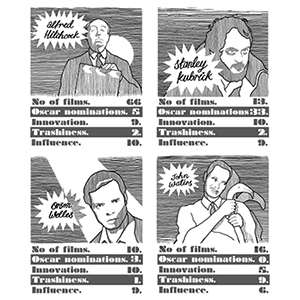
Top Trumps is a card game. Each card contains a list of numerical data, and the aim of the game is to compare these values in order to try to trump and win an opponent’s card. Each pack of Top Trumps is based on a theme, such as cars, aircraft, dinosaurs, or characters from a popular film or television series.
Each card in the pack shows a list of numerical data about the item. For example, in a pack based on cars, each card shows a different model of car, and the stats and data may include its engine size, its weight, its length, and its top speed. If the theme is about a TV series or film, the cards include characters and the data varying from things like strength and bravery to fashion and looks, depending on the criteria. Continue reading →
Posted in Education, Games |
1 Comment »
May 28, 2012

Chromaroma is a London-based game using players’ public transport passes (Oyster cards and Barclays Cycle Hire accounts). Points are awarded depending on the stations and journeys users complete on the London Underground and London Buses, as well as using ‘Boris bikes.’
It is described by its creators, Mudlark, as ‘location-based top trumps,’ and encourages competition through leaderboards. (Top Trumps is a card game. Each card contains a list of numerical data, and the aim of the game is to compare these values in order to try to trump and win an opponent’s card. A wide variety of different packs of Top Trumps have been published).
Posted in Games, Technology, World |
Leave a Comment »
May 27, 2012

GPS Drawing combines art, travelling (walking, flying, and driving) and technology and is a method of drawing that uses GPS to create large-scale artwork. Global Positioning System receivers determine one’s position on the surface of the Earth by trilateration of microwave signals from satellites orbiting at an altitude of 20,200 km. Tracks of a journey can automatically be recorded into the GPS receiver’s memory and can be downloaded onto a computer as a basis for drawing, sculpture or animation. This journey may be on the surface (e.g. walking) or taken in 3D (e.g. while flying).
The idea was first implemented by artists Hugh Pryor and Jeremy Wood, who have drawn a 13-mile wide fish in Oxfordshire and spiders whose legs reach across cities. They have also provided an answer to the question ‘What is the world’s biggest ‘IF’? It happens to be a pair of letters, ‘I,’ which goes from Iffley in Oxford to Southampton and back, and ‘F” which traverses through the Ifield Road in London down to Iford in East Sussex, through Iford and back up through Ifold in West Sussex. The total length is 537 km, and the height of the drawing in typographic units is 319,334,400 points.
Posted in Art, Technology, World |
Leave a Comment »
May 27, 2012

A paperclip is an instrument used to hold sheets of paper together, usually made of steel wire bent to a looped shape. Most paper clips are variations of the Gem type introduced in the 1890s or earlier, characterized by the almost two full loops made by the wire. Common to paper clips proper is their utilization of torsion and elasticity in the wire, and friction between wire and paper.
When a moderate number of sheets are inserted between the two ‘tongues’ of the clip, the tongues will be forced apart and cause torsion in the bend of the wire to grip the sheets together. Too many sheets will cause the elastic limit of the material to be exceeded, resulting in permanent deformation. Paper clips usually have an oblong shape with straight sides, but may also be triangular or circular, or have more elaborate shapes. The most common material is steel, but molded plastic is also used. Some other kinds of paper clip use a two-piece clamping system. Recent innovations include multi-colored plastic-coated paper clips and spring-fastened binder clips.
Continue reading →
Posted in Money, Technology, World |
Leave a Comment »
May 27, 2012

PAL-V Europe is a Dutch company who are developing a flying car, the PAL-V One, an autogyro or gyrocopter, with a pusher propeller at the rear of the fuselage providing forward thrust and a free-spinning rotor providing lift. Directional stability is provided by twin boom-mounted tailfins.
It has a tricycle undercarriage with relatively large wheels. On the ground, the propeller and rotor are stopped and power is diverted to the wheels, allowing it to travel as a three-wheeled car. Unusually, it leans into turns like a motorcycle, a solution pioneered by the Carver vehicle, also produced by a Dutch company.
Posted in Money, Technology |
Leave a Comment »
May 26, 2012
Glitch is a term used to describe a style of electronic music that emerged in the mid to late 1990s that adheres to an ‘aesthetic of failure,’ where the deliberate use of glitch based audio media, and other sonic artifacts, is a central concern.
Sources of glitch sound material are usually malfunctioning or abused audio recording devices or digital technology, such as CD skipping, electric hum, digital or analog distortion, bit rate reduction, hardware noise, computer bugs, crashes, vinyl record hiss or scratches, and system errors. In a ‘Computer Music Journal’ article published in 2000, composer and writer Kim Cascone classifies glitch as a sub-genre of electronica, and used the term ‘post-digital’ to describe the glitch aesthetic.
Continue reading →
Posted in Art, Language, Technology |
Leave a Comment »
May 26, 2012
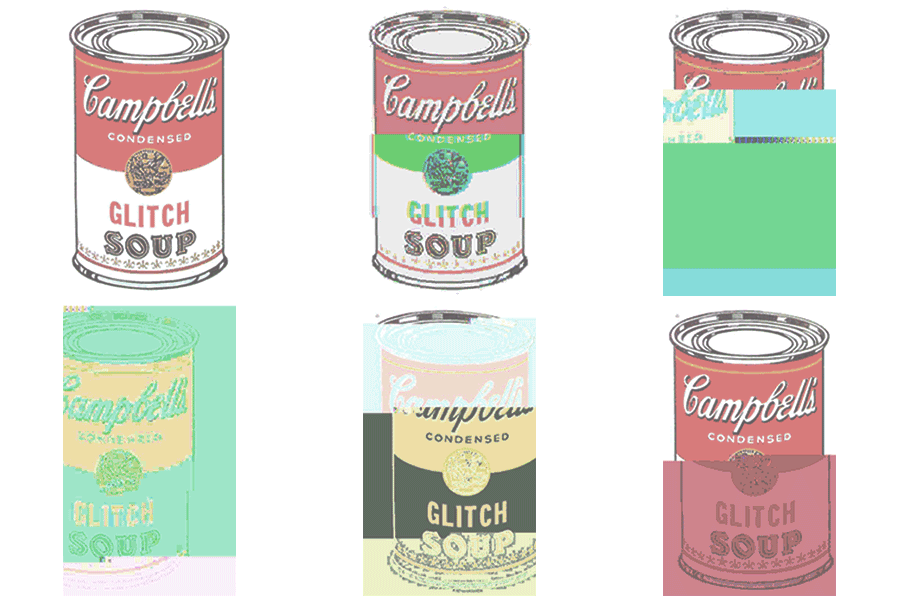
Glitch art is the aestheticization of digital or analog errors, such as artifacts and other ‘bugs,’ by either corrupting digital code/data or by physically manipulating electronic devices, for example by circuit bending (the intentional short-circuiting of low power electronic devices to create new musical devices). In a technical sense a glitch is the unexpected result of a malfunction. The term is thought to derive from the German ‘glitschig,’ meaning ‘slippery.’ It was first recorded in English in 1962 during the American space program by John Glenn when describing problems they were having, Glenn explained, ‘Literally, a glitch is a spike or change in voltage in an electrical current.’
Glitch is used to describe these kinds of bugs as they occur in software, video games, images, videos, audio, and other forms of data. The term glitch came to be associated with music in the mid 90s to describe a genre of experimental/noise/electronica (see glitch music). Shortly after, as VJs and other visual artist like Tony (Ant) Scott began to embrace the glitch as an aesthetic of the digital age, glitch art came to refer to a whole assembly of visual arts.
Posted in Art, Language, Technology |
3 Comments »
May 25, 2012

The memory-prediction framework is a theory of brain function that was created by Jeff Hawkins and described in his 2004 book, ‘On Intelligence.’ This theory concerns the role of the mammalian neocortex and its associations with the hippocampus and the thalamus in matching sensory inputs to stored memory patterns and how this process leads to predictions of what will happen in the future.
The theory is motivated by the observed similarities between the brain structures (especially neocortical tissue) that are used for a wide range of behaviours available to mammals. It posits that the remarkably uniform physical arrangement of cortical tissue reflects a single principle or algorithm which underlies all cortical information processing. Continue reading →
Posted in Health, Science |
Leave a Comment »



