May 22, 2012
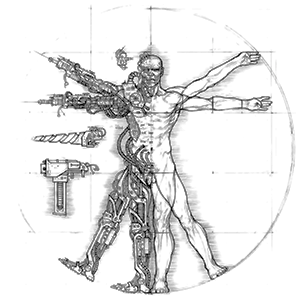
Hypermodernity is a type, mode, or stage of society that reflects a deepening or intensification of modernity. Characteristics include a deep faith in humanity’s ability to understand, control, and manipulate every aspect of human experience. This typically is manifested in a forward-looking commitment to science and knowledge, particularly with regard to the convergence of technology and biology.
The emphasis on the value of new technology to overcome natural limitations lends itself to a diminution or outright repudiation of the past, since yesterday’s knowledge can be considered ‘less’ than today’s. There can be a profound lack of integration between the past and the present since: what happened necessarily took place under ‘lesser’ circumstances than now, which generates a fundamentally separate context; and artifacts from the past superabundantly clutter the cultural landscape and are seamlessly reused to generate an even greater superabundance from which individuals are unable to discern original intent or meaning.
Continue reading →
Posted in Philosophy, Politics, Technology |
Leave a Comment »
May 22, 2012

Postmodernism is an era and a broad movement that developed in the mid to late 20th century that rejects the idea of objective truth and universal social progress. Starting with the 18th century Enlightenment, and for more than a century there was widespread belief that science and knowledge would improve the world; social progress would be inevitable. Modernism in particular held these beliefs. Postmodernism challenges that notion.
Although the term was first used around 1870, its modern appearance was to express criticism of modern architecture in 1949, leading to the postmodern architecture movement (a return to surface ornament, historical reference in decorative forms, and less boxy shapes). Postmodernism is not a method, but rather a way of approaching traditional ideas and practices in non-traditional ways that deviate from pre-established modes. Postmodernism gained significant popularity in the 1950s and dominated literature and art by the 1960s.
Continue reading →
Posted in Art, Language, Philosophy |
Leave a Comment »
May 21, 2012

Adventure Time is an American animated television series created by Pendleton Ward (a former writer and storyboard artist of ‘The Marvelous Misadventures of Flapjack’) and produced by Frederator Studios for Cartoon Network. The series follows the adventures of Finn, a 14-year old boy whose best friend is Jake, a dog with magical powers such as growing and shrinking or stretching into many shapes. Finn and Jake live in the post-apocalyptic Land of Ooo.Ward describes Finn as a ‘fiery little kid with strong morals,’ while Jake is based on Bill Murray’s character in the movie ‘Meatballs.’ The series is based on a short produced for Frederator’s Nickelodeon animation incubator series ‘Random! Cartoons.’ After the short became a viral hit on the Internet, Cartoon Network picked it up for a full-length series that premiered in 2010.
According to Ward, the show’s style was influenced by his time at CalArts and his work as a storyboard artist on ‘The Marvelous Misadventures of Flapjack.’ He tries to include ‘beautiful’ moments like those in Hayao Miyazaki’s ‘My Neighbor Totoro’ and some subversive humor, inspired by series like ‘The Simpsons’ and ‘Pee-wee’s Playhouse.’ Executive producer Fred Seibert compares the show’s animation style to that of ‘Felix the Cat’ and the Max Fleischer cartoons (e.g. ‘Betty Boop,’ ‘Popeye’) but says its world is also equally inspired by ‘Dungeons and Dragons’ and video games. Ward intends the show’s world to have a certain physical logic instead of ‘cartoony slapstick’ — even though magic exists in the story, the show’s writers try to create an internal consistency in how the characters interact with the world.
Posted in Art, Humor |
Leave a Comment »
May 21, 2012
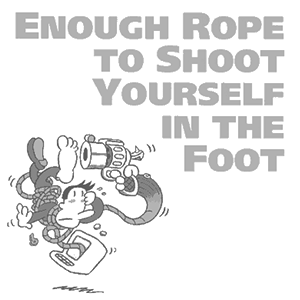
Akrasia [uh-kray-juh] (ancient Greek: ‘lacking command [over oneself]’) is the state of acting against one’s better judgement. The adjective form is ‘akratic.’ The problem goes back at least as far as Plato. Socrates asks precisely how this is possible—if one judges action A to be the best course of action, why would one do anything other than A? In the dialogue ‘Protagoras,’ Socrates attests that akrasia is an illogical moral concept, claiming ‘No one goes willingly toward the bad.’
If a person examines a situation and decides to act in the way he determines to be best, he will actively pursue this action, as the best course is also the good course, i.e. man’s natural goal. An all-things-considered assessment of the situation will bring full knowledge of a decision’s outcome and worth linked to well-developed principles of the good. A person, according to Socrates, never chooses to act poorly or against his better judgment; actions that go against what is best are only a product of being ignorant of facts or knowledge of what is best or good. Continue reading →
Posted in Language, Philosophy |
2 Comments »
May 21, 2012

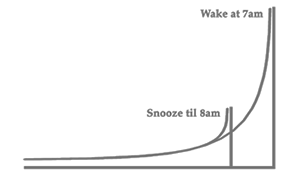
In economics, hyperbolic discounting is a time-inconsistent model of discounting. Given two similar rewards, humans show a preference for one that arrives sooner rather than later. Humans are said to discount the value of the later reward, by a factor that increases with the length of the delay. This process is traditionally modeled in form of exponential discounting, a time-consistent model of discounting.
A large number of studies have since demonstrated that the constant discount rate assumed in exponential discounting is systematically being violated. Hyperbolic discounting is a particular mathematical model devised as an improvement over exponential discounting. Hyperbolic discounting has been observed in humans and animals. Continue reading →
Posted in Money, Science |
1 Comment »
May 21, 2012
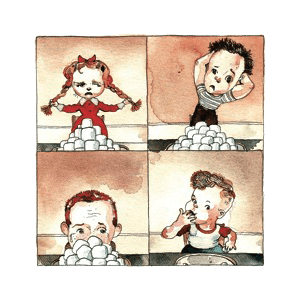
Delayed gratification denotes a person’s ability to wait in order to obtain something that he or she wants. This intellectual attribute is also called impulse control, will power, self control, and ‘low’ time preference, in economics. Delay discounting is defined as ‘the preference for smaller immediate rewards over larger but delayed rewards and to the well established fact that the subjective value of reward decreases with increasing delay to its receipt.’ Sociologically, good impulse control is considered a positive personality trait.
Moreover, people who lack the psychological trait of being able to delay gratification are said to require instant gratification and might suffer poor impulse control. The Stanford Marshmallow Experiment indicates that good impulse control might be psychologically important for academic achievement and for success in adult life.
Continue reading →
Posted in Health, Science |
1 Comment »
May 21, 2012
Cold brew or cold press refers to the process of steeping coffee grounds in room temperature water for an extended period. It is also sometimes referred to as Toddy coffee which is a trademarked cold brewing system. The cold-press process requires grinding coffee beans at a relatively coarse setting (typically as fine as possible to still be filtered) and soaking those grounds in cold water for a prolonged period of time, usually 12 hours or more. The grounds must be filtered out of the cold water after they have been steeped using a paper coffee filter, a fine metal sieve, or a French press.
The result is a coffee concentrate that is often diluted with water or milk, and can be served hot, over ice, or blended with ice and other ingredients such as chocolate. Cold brewed coffee naturally seems sweeter due to its lower acidity. Because the coffee beans in cold-press coffee never come into contact with heated water, the process of leaching flavor from the beans produces a different chemical profile than conventional brewing methods. Cold brew coffee is a type of iced coffee, but this latter term also refers to coffee that is brewed hot and then chilled.
Posted in Food |
1 Comment »
May 21, 2012

The drop is the point in a track where a switch of rhythm or bass line occurs and usually follows a recognizable build section and break. In Hip-Hop and electronic music, the reintroduction of the full bass line and drums is known as the drop. In Dubstep, the drop involves a full bass line and commonly a ‘wobble’ bass or ‘vowel’ bass accompanied by a strong shuffling beat.
In Metalcore sub-genres, bass drops are often utilized under the first chord of a breakdown, to emphasize the breakdown and give it a pronounced presence. In drum and bass, DJs sometimes perform what is called the ‘double drop’: beat matching two tracks in a way that the drop, and hence the respective climaxes, occur at the same time.
Posted in Art, Language |
1 Comment »
May 21, 2012

Magic realism is an aesthetic style or genre of fiction in which magical elements blend with the real world. The story explains these magical elements as real occurrences, presented in a straightforward manner that places the ‘real’ and the ‘fantastic’ in the same stream of thought. One example, is when a character in the story continues to be alive beyond the normal length of life and this is subtly depicted by the character being present throughout many generations.
On the surface the story has no clear magical attributes and everything is conveyed in a real setting, but such a character breaks the rules of our real world. The author may give precise details of the real world such as the date of birth of a reference character and the army recruitment age, but such facts help to define an age for the fantastic character of the story that would turn out to be an abnormal occurrence like someone living for two hundred years. Continue reading →
Posted in Art, Language, World |
Leave a Comment »
May 21, 2012
Jorge Luis Borges [bawr-hes] (1899 – 1986) was an Argentine writer whose work embraces the ‘character of unreality in all literature’; his most famous books, ‘Ficciones’ (1944) and ‘The Aleph’ (1949), are compilations of short stories interconnected by common themes such as dreams, labyrinths, libraries, mirrors, animals, fictional writers, religion, and God.
His works have contributed to the genre of science fiction and magic realism (a reaction against the realism/naturalism of the nineteenth century). In fact, critic Angel Flores, the first to use the term, set the beginning of this movement with Borges’s ‘Historia universal de la infamia’ (‘A Universal History of Infamy’) (1935). Scholars have also suggested that Borges’s progressive blindness helped him to create innovative literary symbols through imagination. His late poems dialogue with such cultural figures as Spinoza, Camões, and Virgil.
Continue reading →
Posted in Art, Language, Politics |
Leave a Comment »
May 21, 2012

In philosophy, anamnesis [an-am-nee-sis] is a concept in Plato’s epistemological and psychological theory that he develops in his dialogues ‘Meno’ and ‘Phaedo,’ and alludes to in his ‘Phaedrus.’
In ‘Meno,’ Plato’s character (and old teacher) Socrates is challenged by Meno with what has become known as the sophistic paradox, or the paradox of knowledge: ‘And how are you going to search for [the nature of virtue] when you don’t know at all what it is, Socrates? Which of all the things you don’t know will you set up as target for your search? And even if you actually come across it, how will you know that it is that thing which you don’t know?’ Continue reading →
Posted in Death, Education, Philosophy |
Leave a Comment »
May 18, 2012

An anxiolytic [ang-zee-uh-lit-ik] is a drug used for the treatment of anxiety and its related psychological and physical symptoms. Anxiolytics have been shown to be useful in the treatment of anxiety disorders. Beta-blockers, although not anxiolytics, can be used to combat the somatic symptoms of anxiety (such as an elevated heart rate).
Anxiolytics are also known as minor tranquilizers. The term is less common in modern texts, and was originally derived from a dichotomy with major tranquilizers, also known as neuroleptics or antipsychotics. Continue reading →
Posted in Death, Drugs, Health |
1 Comment »



