April 6, 2012
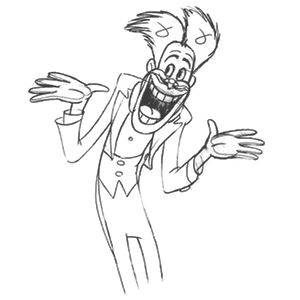
‘Minnie the Moocher‘ is a jazz song first recorded in 1931 by Cab Calloway and His Orchestra, famous for its nonsensical ad libbed (‘scat’) lyrics. In performances, Calloway would have the audience participate by repeating each scat phrase in a form of call and response. Eventually Calloway’s phrases would become so long and complex that the audience would laugh at their own failed attempts to repeat them. The song is based both musically and lyrically on Frankie ‘Half-Pint’ Jaxon’s 1927 ‘Willie the Weeper’ (Bette Davis sings this version in ‘The Cabin in the Cotton’).
The lyrics are heavily laden with drug references. The character ‘Smokey’ is described as ‘cokey’ meaning a user of cocaine; the phrase ‘kicking the gong around’ was a slang reference to smoking opium. It was followed two years later by Lonnie Johnson’s ‘Winnie the Wailer.’ Continue reading →
Posted in Art, Drugs |
Leave a Comment »
April 6, 2012

Bromo-DragonFLY is a psychedelic hallucinogenic drug related to phenethylamine (a chemical found in chocolate, which like amphetamine, causes the release of norepinephrine and dopamine in the brain). It is considered an extremely potent hallucinogen, only slightly less potent than LSD, with a normal dose in the region of 200 μg to 800 μg, and it has an extremely long duration (up to several days).
It is explicitly illegal only in Finland, Sweden, Norway, and Denmark, although it may be considered a controlled substance analogue under US and Australian drug laws. The compound was first synthesized in the lab of American pharmacologist David E. Nichols in 1998. As with the earlier and less potent dihydrofuran series of compounds nicknamed FLY, Bromo-DragonFLY was named after its superficial structural resemblance to a dragonfly. Continue reading →
Posted in Drugs, Health, Politics |
Leave a Comment »
April 6, 2012

Erowid is an online library of information about psychoactive plants and chemicals and other topics on altered states of consciousness such as meditation and lucid dreaming. It provides information about legal and illegal substances, including their desired and adverse effects. The site is organized by substance, ranging from well-known substances like alcohol, to obscure ones such as Bromo-DragonFLY (a hallacuinogen only slightly less potent than LSD, but which lasts for several days).
The information on the site is gathered from diverse sources including published literature, experts in related fields, and the experiences of the general public. Erowid acts as a publisher of new information as well as a library for the collection of documents and images published elsewhere. Continue reading →
Posted in Drugs, Health, Politics |
Leave a Comment »
April 4, 2012


Gun fu, a portmanteau of ‘gun’ and ‘kung fu,’ is the style of sophisticated close-quarters gunplay seen in Hong Kong action cinema and in Western films influenced by it. It often resembles a martial arts battle played out with firearms instead of traditional weapons. It may also be described by other terms such as ‘bullet ballet,’ ‘gun kata,’ or ‘gymnastic gunplay.’
The focus of gun fu is both style and the usage of firearms in ways that they were not designed to be used. Shooting a gun from each hand, shots from behind the back, as well as the use of guns as melee weapons are all common. Other moves can involve shotguns, Uzis, rocket launchers, and just about anything else that can be worked into a cinematic shot. It is often mixed with hand-to-hand combat maneuvers. Gun fu has become a staple factor in modern action films due to its visually appealing nature (regardless of its actual practicality in a real-life combat situation). This is a contrast to American action movies of the 1980s which focused more on heavy weaponry and outright brute-force in firearm-based combat. Continue reading →
Posted in Art, Death |
Leave a Comment »
April 4, 2012

The Male Gaze is a feminist theory that was first developed by British feminist film theorist Laura Muvley in 1975. The male gaze occurs when the audience, or viewer, is put into the perspective of a heterosexual man. Mulvey stressed that the dominant male gaze in mainstream Hollywood films reflects and satisfies the male unconscious: most filmmakers are male, thus the voyeuristic gaze of the camera is male. Male characters in the film’s narratives make women the objects of their gaze.
When feminism characterizes the ‘male gaze’ certain themes appear such as, voyeurism, objectification, fetishism, scopophilia (pleasure from looking), and women as the object of male pleasure. Mary Anne Doane at Brown University gives an example of how voyeurism can be seen in the male gaze: ‘The early silent cinema, through its insistent inscription of scenarios of voyeurism, conceives of its spectator’s viewing pleasure in terms of the peeping tom, behind the screen, reduplicating the spectator’s position in relation to the woman on the screen.’ Continue reading →
Posted in Money, Politics, Sex |
2 Comments »
April 4, 2012

Girls with guns is a sub-genre of action films and animation, often Asian films and anime, that portray a strong female protagonist who makes use of firearms to defend against or attack a group of antagonists. The genre may typically involves gunplay, stunts and martial arts action. The genre started in the late 1950s and early 1960s in Asia. Suzuki Seijun’s 1958 film ‘Underworld Beauty’ is an early example from Japan.
In the 1966, Hong Kong actress Cheng Pei-pei starred in the Shaw Brothers Studio film ‘Come Drink with Me,’ an early Chinese film of the genre. Rival Hong Kong studio, Golden Harvest Studios, had their own female fighter, Angela Mao Ying, who also helped popularize the trend in Asia. Continue reading →
Posted in Art, Death, Sex |
1 Comment »
April 4, 2012
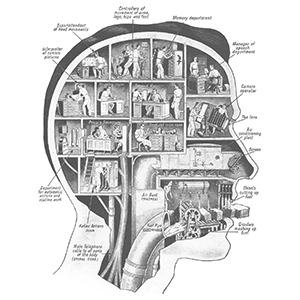
The ‘ghost in the machine‘ is British philosopher Gilbert Ryle’s description of René Descartes’ mind-body dualism. The phrase was introduced in Ryle’s book ‘The Concept of Mind’ (1949) to highlight the perceived absurdity of dualist systems like Descartes’ where mental activity carries on in parallel to physical action, but where their means of interaction are unknown or, at best, speculative.
Arthur Koestler’s wrote ‘The Ghost in the Machine,’ in 1967, focusing on mankind’s movement towards self-destruction, particularly in the nuclear arms arena. The book is particularly critical of B. F. Skinner’s behaviorist theory. One of Koestler’s central concepts is that as the human brain has grown, it has built upon earlier, more primitive brain structures, and that this is the ‘ghost in the machine’ of the title. Koestler’s theory is that at times these structures can overpower higher logical functions, and are responsible for hate, anger and other such destructive impulses.
Continue reading →
Posted in Language, Philosophy, Science |
1 Comment »
April 4, 2012

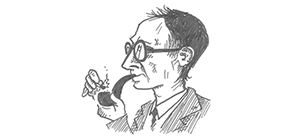
Ordinary language philosophy came out of followers of the later work of Ludwig Wittgenstein at the University of Oxford, and was most popular between 1930 and 1970. It is a philosophical school that approaches traditional philosophical problems as rooted in misunderstandings philosophers develop by distorting or forgetting what words actually mean in everyday use.
This approach typically involves eschewing philosophical ‘theories’ in favor of close attention to the details of the use of everyday, ‘ordinary’ language. Sometimes called ‘Oxford philosophy,’ it is generally associated with the work of a number of mid-century Oxford professors: mainly J.L. Austin, but also Gilbert Ryle, H.L.A. Hart, and Peter Strawson. The later Ludwig Wittgenstein is ordinary language philosophy’s most celebrated proponent outside the Oxford circle. Second generation figures include Stanley Cavell and John Searle.
Continue reading →
Posted in Language, Philosophy |
3 Comments »
April 4, 2012
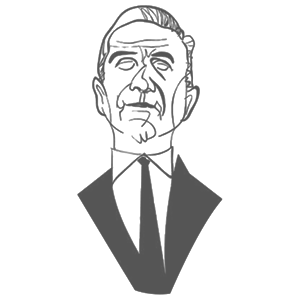
Gil Evans (1912 – 1988) was a jazz pianist, arranger, composer and bandleader, active in the United States. He played an important role in the development of cool jazz, modal jazz, free jazz and jazz fusion, and collaborated extensively with Miles Davis.
Between 1941 and 1948, he worked as an arranger for the Claude Thornhill Orchestra. Evans’ modest basement apartment behind a New York City Chinese laundry soon became a meeting place for musicians looking to develop new musical styles outside of the dominant bebop of the day. Those present included the leading bebop performer Charlie Parker himself, as well as Gerry Mulligan and John Carisi.
Continue reading →
Posted in Art |
1 Comment »
April 4, 2012
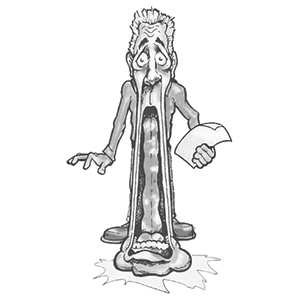
Cataplexy [kat-uh-plek-see] is a sudden and transient episode of loss of muscle tone, often triggered by emotions. It is a rare disease (prevalence of fewer than 5 per 10,000 in the community), but affects roughly 70% of people who have narcolepsy. Cataplexy can also be present as a side effect of SSRI Discontinuation Syndrome. The term cataplexy originates from the Greek ‘kata’ (‘downwards’), and ‘plexis’ (‘hitting’). Cataplexy manifests itself as muscular weakness which may range from a barely perceptible slackening of the facial muscles to the dropping of the jaw or head, weakness at the knees, or a total collapse. Usually the speech is slurred, vision is impaired (double vision, inability to focus), but hearing and awareness remain normal.
These attacks are triggered by strong emotions such as exhilaration, anger, fear, surprise, orgasm, awe, embarrassment, and laughter. A person’s efforts to stave off cataplectic attacks by avoiding these emotions may greatly diminish their quality of life, and they may become severely restricted emotionally if diagnosis and treatment is not begun as soon as possible. Cataplexy may be partial or complete, affecting a range of muscle groups, from those controlling facial features to (less commonly) those controlling the entire body.
Posted in Drugs, Health |
Leave a Comment »
April 4, 2012

Giggle incontinence, giggle enuresis or enuresis risoria, is the involuntary release of urine in response to giggling or laughter. The bladder may empty completely or only partially. Giggle incontinence is more common in children than adults, typically appearing at ages 5 to 7, and is most common in girls near the onset of puberty. The condition tends to improve with age, with fewer episodes during the teenage years, but may persist into adulthood. Giggle incontinence is a special form of urge incontinence (an involuntary loss of urine occurring for no apparent reason while feeling urinary urgency, a sudden need or urge to urinate), and is not the same as stress incontinence, which is generally brought on by participating in vigorous sport.
In voluntary urination, the bladder’s normally relaxed detrusor muscle contracts to squeeze urine from the bladder. One study concluded that the cause of giggle incontinence is involuntary contraction of the detrusor muscle induced by laughter. Because the complaint is difficult to reproduce under controlled conditions, its triggering mechanism is not clearly understood, but may be related to cataplexy, a sudden transient episode of loss of muscle tone often triggered by strong emotions.
Posted in Health, Humor |
Leave a Comment »
April 4, 2012

The Getty kouros [koor-os] is an over-life-sized statue in the form of a late archaic Greek kouros (representations of male youths). The dolomitic marble sculpture was bought by the J. Paul Getty Museum, Malibu, California, in 1985 for $7 million. Despite initial favorable scientific analysis of the patina and aging of the marble, a question of its authenticity has persisted from the start.
Subsequent demonstration of an artificial means of creating the de-dolomitization observed on the stone has prompted a number of art historians to revise their opinions of the work. If genuine, it is one of only twelve complete kouroi still extant. If fake, it exhibits a high degree of technical and artistic sophistication by an as-yet unidentified forger. Its status remains undetermined: today the museum’s label reads ‘Greek, about 530 B.C., or modern forgery.’
Continue reading →
Posted in Art, Money, Science |
1 Comment »



