March 26, 2012

The World Pyro Olympics is an annual competition amongst the most prestigious fireworks companies in the world. The event is one of the largest and most intense international fireworks competitions of the world. The World Pyro Olympics runs through a period of five consecutive days allowing locals and tourists alike to experience the greatest fireworks display in the world.
Two countries fire each day; the last participant fires on the final evening of the event. The host of the event does not participate in the competition but performs a fireworks display on the last night. Awards, such as the People’s Choice, are given out after the exhibition. The crowning of the World Pyro Olympics Champion ends the event.
Posted in Games, Money, World |
Leave a Comment »
March 26, 2012

The World Fireworks Championship is one of the largest pyrotechnic competitions in the world. It takes place annually over three weeks in December and features separate fireworks displays from six international pyrotechnic production companies. Competitors come from all over the globe, with participating teams providing a 25 minute long ‘pyromusical’ show for the attending crowds.
At the end of each display, a score is awarded by a team of four international judges. By the tournament’s conclusion, the competitor with the highest score is presented with the Winner’s Trophy, which is made from solid gold. The design of the trophy is influenced by the host city taking part. As all of the firework displays are synchronized to music, each display is broadcast over the host city’s local radio stations. The host city does not take part in the displays but provides the setting for the closing ceremony and winner’s banquet.
Posted in Games, Money, World |
Leave a Comment »
March 26, 2012

The Onion is an American news satire organization. It is a newspaper and a website featuring satirical articles reporting on international, national, and local news, in addition to a non-satirical entertainment section known as The A.V. Club (which features interviews and reviews of various newly released media, as well as other weekly features). Since 2007, the organization has been publishing satirical news audios and videos online, as the ‘Onion News Network.’
The Onion’s articles comment on current events, both real and fictional. It parodies such traditional newspaper features as editorials, man-on-the-street interviews, and stock quotes on a traditional newspaper layout with an AP-style editorial voice. Much of its humor depends on presenting everyday events as newsworthy and by playing on commonly used phrases, as in the headline ‘Drugs Win Drug War.’ Continue reading →
Posted in Humor, Language, Politics |
Leave a Comment »
March 25, 2012

‘A Night at the Roxbury‘ is a 1998 American comedy film based on a recurring skit on television’s long-running ‘Saturday Night Live’ called ‘The Roxbury Guys.’ SNL regulars Will Ferrell, Chris Kattan, Molly Shannon, and Colin Quinn star.
The film is about wealthy Yemeni-American brothers Steve (Will Ferrell) and Doug Butabi (Chris Kattan) who enjoy frequenting nightclubs, where they bob their heads in unison to dance music (specifically Haddaway’s hit song ‘What Is Love’) and fail miserably at picking up women. Their dream is to party at the famous L.A. nightclub The Roxbury, where they are continually denied entrance by a hulking bouncer (Michael Clarke Duncan).
Posted in Art, Humor |
Leave a Comment »
March 25, 2012

Second City Television (SCTV) is a Canadian television sketch comedy show offshoot from Toronto’s The Second City troupe that ran between 1976 and 1984. The basic premise of the show is that ‘SCTV’ is an independent television station in the city of Melonville.
Rather than broadcasting the usual TV rerun fare, the station produces a bizarre and humorously incompetent range of cheap local programming including a soap opera called ‘The Days of the Week’ (‘Monday… Tuesday… Wednesday… these are… the days of the week’), a game show, ‘Shoot At The Stars,’ in which celebrities are literally shot at like targets in a shooting gallery, and full blown movie spoofs like ‘Play it Again, Bob’ in which Woody Allen (Rick Moranis) tries to get Bob Hope (Dave Thomas) to star in his next film. Continue reading →
Posted in Art, Humor |
2 Comments »
March 25, 2012
The Harvard Lampoon is an undergraduate humor publication founded in 1876. It is the world’s longest continually published humor magazine. It is also the second longest-running English-language humor magazine, after the ‘Yale Record.’ The organization also produces occasional humor books and parodies of national magazines. Much of the organization’s capital is provided by the licensing of the ‘Lampoon’ name to ‘National Lampoon,’ begun by ‘Harvard Lampoon’ graduates in 1970.
The Lampoon is known for its bacchanalian parties, which can result in smashed plates and furniture. Robert K. Hoffman, co-founder of the ‘National Lampoon’ and major donor to the Dallas Museum of Art was a Trustee until his death in 2006, and was declared a Trustee ‘Ad-Infinitum’ a year later. The bone of his pinky finger is said to be encased in a block of lucite in the Harvard Lampoon’s ‘Brainatorium Crypt.’ Continue reading →
Posted in Education, Humor, Language |
Leave a Comment »
March 25, 2012

National Lampoon was both a ground-breaking American humor magazine and also a wide range of productions directly associated with that magazine. The magazine ran from 1970 to 1998, and was originally a spinoff of the ‘Harvard Lampoon’ (is an undergraduate humor publication founded in 1876 at Harvard University).
The magazine reached its height of popularity and critical acclaim during the 1970s, when it had a far-reaching effect on American humor. It spawned films, radio, live theater, various kinds of recordings, and print products including books. Many members of the creative staff from the magazine subsequently went on to contribute creatively to successful media of all types. Continue reading →
Posted in Art, Humor, Language |
Leave a Comment »
March 25, 2012

Heavy Metal is a 1981 Canadian fantasy-animated film directed by Gerald Potterton and produced by Ivan Reitman and Leonard Mogel, who also was the publisher of ‘Heavy Metal magazine,’ the basis for the film. The screenplay was written by Daniel Goldberg and Len Blum.
The film is an anthology of various science fiction and fantasy stories adapted from the magazine and original stories in the same spirit. Like the magazine, it has a great deal of graphic violence, nudity, and sexuality. Its production was expedited by having several animation houses working simultaneously on different segments, including CinéGroupe and Atkinson Film-Arts.
Posted in Art, Sex |
Leave a Comment »
March 25, 2012

Heavy Metal is an American science fiction and fantasy comics magazine, known primarily for its blend of dark fantasy/science fiction and erotica. In the mid-1970s, while publisher Leonard Mogel was in Paris to jump-start the French edition of ‘National Lampoon,’ he discovered the French science-fantasy magazine ‘Métal Hurlant’ which had debuted in 1974. The French title translates literally as ‘Howling Metal.’
When Mogel licensed the American version, he chose to rename it, and ‘Heavy Metal’ began in the U.S. in 1977 as a glossy, full-color monthly. Initially, it displayed translations of graphic stories originally published in ‘Métal Hurlant,’ including work by Enki Bilal, Jean Giraud (also known as Moebius), Philippe Druillet, Milo Manara and Philippe Caza. The magazine later ran Stefano Tamburini and Tanino Liberatore’s ultra-violent ‘RanXerox.’ Since the color pages had already been shot in France, the budget to reproduce them in the U.S. version was greatly reduced.
Continue reading →
Posted in Art, Language, Sex |
Leave a Comment »
March 24, 2012
Métal Hurlant (literal translation: ‘Screaming Metal’) is a French comics anthology of science fiction and horror comics stories, created in December 1974 by comics artists Jean Giraud (better known as Moebius) and Philippe Druillet together with journalist-writer Jean-Pierre Dionnet and financial director Bernard Farkas. The four were collectively known as ‘Les Humanoïdes Associés’ (‘United Humanoids’), which became the name of the publishing house releasing ‘Métal Hurlant.’ It was published in the US by National Lampoon under the title ‘Heavy Metal.’
The magazine was originally released quarterly; it consisted of 68 pages, of which only 18 were in color. Contributors included Moebius and Druillet, and such characters Arzach and Lone Sloane. Later issues featured Richard Corben, Alejandro Jodorowsky, Enki Bilal, Caza, Serge Clerc, Alain Voss, Berni Wrightson, Milo Manara, Frank Margerin and many others. Apart from comics, the magazine contained articles about science fiction books and movies, as well as music and videogame reviews. ‘Metal Hurlant,’ emphasizing complex graphics, cinematic imagery and surreal storylines, was highly influential throughout the world as one of the first mature expressions of ‘adult’ comic book making. It ceased publication in 1987.
Posted in Art, World |
Leave a Comment »
March 24, 2012

Blueberry is a Franco-Belgian comics western series created by the Belgian scriptwriter Jean-Michel Charlier and French comics artist Jean Moebius’ Giraud. It chronicles the adventures of Mike ‘Blueberry’ Donovan on his travels through the American Old West. Blueberry is an atypical western hero; he is not a wandering lawman who brings evil-doers to justice, nor a handsome cowboy who ‘rides into town, saves the ranch, becomes the new sheriff and marries the schoolmarm.’
He is accompanied in many tales by his hard-drinking deputy, Jimmy McClure, and later also by Red Woolley, a rugged pioneer. Donovan is the son of a rich Southern farmer and started as a dedicated racist. He was framed for a murder he did not commit, had to flee and was saved by an African-American. He became an enemy of discrimination of all kinds, fought against the Confederates (although he was a Southerner himself), and tried to protect the rights of Native Americans.
Continue reading →
Posted in Art, Language, World |
Leave a Comment »
March 24, 2012
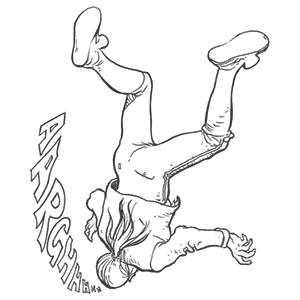
The Incal is a set of science fiction comic book series written in French by Alejandro Jodorowsky and illustrated by Moebius and others. ‘The Incal’ takes place in, and introduced Jodorowsky’s ‘Jodoverse,’ a fictional universe in which his science fiction comics take place. The story begins in the dystopian capital city of an insignificant planet in a human-dominated galactic empire. The series stars John DiFool, anoccasional bodyguard. DiFool has no interest in being a hero, has mood swings and suffers from self-doubt and temper tantrums in which he threatens to walk away and assume a comfortable lifeh. He has a fondness for cigars, ‘ouisky’ and ‘homeosluts’ (gynoid prostitutes).
The series mixes space opera, metaphysics, and satire; a counterpoint to the grandiosity of the events is always Difool’s base, even cowardly nature. Every major character in The Incal is based upon Tarot cards – for example, John Difool is based upon The Fool with his name being a pun upon ‘John, the Fool.’ Moebius and Jodorowsky sued Luc Besson, director of ‘The Fifth Element,’ claiming that the film borrowed graphic and story elements from ‘The Incal,’ but they lost their case. In a 2002 interview with Danish comic book magazine ‘Strip!,’ Jodorowsky actually claimed that he considered it an honor that somebody stole his ideas, saying he believes that authors do not create the stories they tell as much as they make personal interpretations of mythemes shared by the collective unconscious.
Posted in Art, Humor, Language |
Leave a Comment »




