March 13, 2012

The Virtual Boy was a video game console developed and manufactured by Nintendo. It was the first video game console that was supposed to be capable of displaying ‘true 3D graphics’ out of the box. Whereas most video games use monocular cues to achieve the illusion of three dimensions on a two-dimensional screen, The Virtual Boy creates an illusion of depth through the effect known as parallax.
In a manner similar to using a head-mounted display, the user looks into an eyepiece made of neoprene on the front of the machine, and then an eyeglass-style projector allows viewing of the monochromatic (in this case, red) image. It was released in 1995 in Japan and North America at a price of around US$180. It met with a lukewarm reception that was unaffected by continued price drops. Nintendo discontinued it the following year.
Continue reading →
Posted in Games, Money, Technology |
Leave a Comment »
March 12, 2012

Slingshot is a water purification device created by Dean Kamen. Powered by a stirling engine running on a combustible fuel source, it claims to be able to produce clean water from almost any source. The device takes contaminated water and runs it through a vapor compression distiller that produces clean water, producing 250 gallons daily, enough for 100 people. The test devices have been used with ‘anything that looks wet,’ including polluted river water, saline ocean water, and raw sewage. In a demonstration at a technology conference in 2004, Kamen ran his own urine through the machine and drank the clean water that came out.
A pair of Slingshot devices ran successfully for a month in a village in Honduras during the summer of 2006. While the initial devices cost hundreds of thousands of dollars, Kamen hopes that increased economies of scale will allow production machines to be made available for $2,000 each. The Slingshot process operates by means of vapor compression distillation, requires no filters, and can operate using cow dung as fuel. In addition to producing drinkable water, the Slingshot also generates enough electricity to light 70 energy-efficient light bulbs.Kamen hopes to seed thousands of the units with local village entrepreneurs, in much the same way independent cell phone businesses have thrived and gradually changed the face of many impoverished areas around the globe.
Posted in Food, Technology, World |
Leave a Comment »
March 12, 2012

The mosquito laser is a device invented by astrophysicist Lowell Wood to kill large numbers of mosquitoes to reduce the chance of people being infected with malaria. Although originally introduced in the early 1980s, the idea was not substantially researched until decades later.
In 2007, the Bill & Melinda Gates Foundation requested Intellectual Ventures LLC to find a way to fight and eventually end malaria. Intellectual Ventures resurrected the idea of using lasers to kill mosquitoes and now has a working prototype. The idea has been criticized because most areas where malaria runs rampant do not have reliable electrical power.
Continue reading →
Posted in Health, Technology |
Leave a Comment »
March 12, 2012
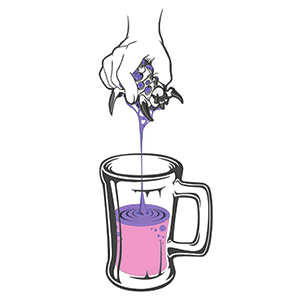
BarCraft is a portmanteau name for watching ‘StarCraft’ at bars. This phenomenon popped up in the spring of 2011 in the United States, with the start of North American Star League. It is often attributed to Team Liquid user ‘primadog,’ the redditor ‘_Oskar,’ and the Chao Bistro in Seattle. In May 2011, the user o_Oskar posted a topic on reddit saying that on the 11th of that month, people could go to Chao in Seattle to watch that day’s North American Star League games while drinking a few beers and enjoying the company of other ‘StarCraft’ fans.
Since then, the BarCraft phenomenon has grown exponentially, with BarCrafts in the United States, Canada, Sweden, Australia, and many more countries around the world, covering a variety of eSports events, not just StarCraft. New initiatives have recently sprouted from the barcraft trend. Namely, barcrafts have been used to raise money for the charity Child’s Play. Additionally, while not a charity in the strictest sense, One Nation of Gamers -a network of barcrafts composed of volunteers- pools all the money they raise to fund online starcraft tournaments for the community to watch.
Posted in Drugs, Food, Games |
1 Comment »
March 12, 2012

Oxfam is the largest retailer of second hand books in Europe, selling around 12 million per year. Most of Oxfam’s 750 charity shops around the UK sell books, and around 100 are specialist bookshops or book and music shops. A typical Oxfam bookshop will have around 50 volunteers, as well as a small number of full-time staff. Books are donated directly to shops by the public, or through Oxfam ‘book banks’ in convenient locations around the country. The profits of the book sales support the work of Oxfam.
Oxfam has been trying to shake off the dusty image of its shops, and the rapid expansion of specialist bookshops has formed part of that strategy. Modern Oxfam bookshops typically boast professional fittings and a wide range of stock, including recent novels, specialist textbooks and out-of-print curios. However, charity bookshops, particularly those belonging to Oxfam, have been criticized for forcing traditional bookshops out of business. Small bookshops have complained that Oxfam receives unfair advantages in the form of favorable tax rates and cheaper waste disposal, amongst other things. In response to these criticisms, Oxfam has said that much of the damage to small book retailers has come from supermarkets and online retailers, particularly Tesco and Amazon.
Posted in Money, Politics, World |
Leave a Comment »
March 12, 2012

The World Beard and Moustache Championships is a biennial competition in which men with beards and moustaches display lengthy, highly-styled facial hair in several categories which are rated by a panel of judges. The first Championship took place in Höfen-Enz, Germany, in 1990. The 2011 championships were hosted by ‘The Norwegian Moustache Club of 91’ in Trondheim, Norway.
The 12th incarnation of the contest will be in Stuttgart, Germany in 2013 and will be hosted by Belle Moustache Beard and Culture Club. There are 3 brackets of facial hair: Moustache, Partial Beard and Full Beard. Each bracket is broken into individual categories. There are usually 17 categories but there were 18 different categories for the 2009 championships.
Posted in Games, Humor, World |
Leave a Comment »
March 12, 2012

Sweat equity is a term that refers to a party’s contribution to a project in the form of effort — as opposed to financial equity, which is a contribution in the form of capital. In a partnership, some partners may contribute to the firm only capital and others only sweat equity. Similarly, in a startup company formed as a corporation, employees may receive stock or stock options, becoming thus part-owners of the firm, in return for accepting salaries that are below their respective market values (this includes zero wages). This concept, also called ‘stock for services’ and sometimes ‘equity compensation’ can also be seen when startup companies use their shares of stock to entice service providers to provide necessary corporate services in exchange for a discount or for deferring service fees until a later date,
The term can also be used to describe the value added to real estate by owners who make improvements by their own toil. The more labor applied to the home, and the greater the resultant increase in value, the more sweat equity that has been used. In a successful model used by Habitat for Humanity, families who would otherwise be unable to purchase their own home (based on qualifying factors including need, ability to pay, and willingness to partner) contribute sweat equity hours to the construction of their own home, the homes of other Habitat for Humanity partner families or by volunteering to assist the organization in other ways.
Posted in Language, Money |
Leave a Comment »
March 12, 2012
An opsimath [ahp-se-math] can refer to a person who begins, or continues, to study or learn late in life. Opsimathy was once frowned upon, used as a put down with implications of laziness, and considered less effective by educators than early learning. The emergence of opsimath clubs has demonstrated that opsimathy has shed much of this negative connotation, and that this approach may, in fact, be desirable.
Notable opsimaths include Sir Henry Rawlinson, Grandma Moses, and Cato the Elder who learned Greek only at the age of 80. George Dawson (1898 – 2001) was called ‘America’s favorite poster child for literacy’ after learning to read at the age of 98. His life story, ‘Life Is So Good,’ was published in 2000.
Posted in Education, Language |
Leave a Comment »
March 12, 2012

In literature, the competent man is a stock character who can do anything perfectly, or at least exhibits a very wide range of abilities and knowledge, making him a form of polymath. While not the first to use such a character type, the heroes (and heroines) of Robert A. Heinlein’s fiction are generally competent men/women (with Jubal Harshaw being a prime example), and one of Heinlein’s characters Lazarus Long gives a good summary of requirements: ‘A human being should be able to change a diaper, plan an invasion, butcher a hog, conn a ship, design a building, write a sonnet, balance accounts, build a wall, set a bone, comfort the dying, take orders, give orders, cooperate, act alone, solve equations, analyze a new problem, pitch manure, program a computer, cook a tasty meal, fight efficiently, die gallantly. Specialization is for insects.’
The competent man, more often than not, is written without explaining how he achieved his wide range of skills and abilities, especially as true expertise typically suggests practical experience instead of learning through books or formalized education alone. While not implausible with older or unusually long lived characters, when such characters are young it is often not adequately explained as to how they acquired so many skills at an early age. It would be easy for a reader to form the impression that the competent man is just basically a superior sort of human being. Many non-superpowered comic book characters are written as hyper-competent characters due to the perception that they would simply be considered underpowered otherwise.
Posted in Art, Language, Philosophy |
1 Comment »
March 12, 2012

A polymath [pol-ee-math] (Greek: ‘having learned much’) is a person whose expertise spans a significant number of different subject areas. In less formal terms, a polymath (or polymathic person) may simply be someone who is very knowledgeable. Most ancient scientists were polymaths by today’s standards. The common term Renaissance man is used to describe a person who is well educated or who excels in a wide variety of subjects or fields. The concept emerged from the numerous great thinkers of that era who excelled in the arts and sciences, including Leonardo da Vinci, Michelangelo, Galileo Galilei, Copernicus, and Francis Bacon.
The emergence of these thinkers was likewise attributed to the then rising notion in Renaissance Italy expressed by one of its most accomplished representatives, Leon Battista Alberti (1404–1472): that ‘a man can do all things if he will.’ It embodied the basic tenets of Renaissance humanism, which considered humans empowered, limitless in their capacities for development, and led to the notion that people should embrace all knowledge and develop their capacities as fully as possible. Thus the gifted people of the Renaissance sought to develop skills in all areas of knowledge, in physical development, in social accomplishments, and in the arts. The term has since expanded from original usage and has been applied to other great thinkers before and after the Renaissance such as Aristotle, Johann Goethe, and Isaac Newton.
Continue reading →
Posted in Education, Games, Science |
Leave a Comment »
March 12, 2012
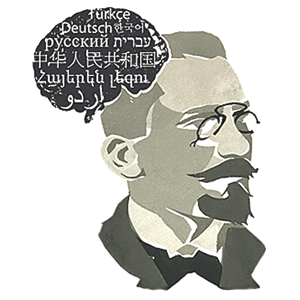
A polyglot [pol-ee-glot] is someone with a high degree of proficiency in several languages. A bilingual person can speak two languages fluently, whereas a trilingual three; above that the term multilingual may be used. A hyperpolyglot is one who can speak six or more languages fluently. The term was coined by the linguist Richard Hudson in 2003. One notable hyperpolyglot was Emil Krebs (1867-1930) who mastered 68 languages in speech and writing.
There are several theories as to why some people learn many languages with relative ease, while others struggle learning even one foreign language. One theory is that a spike in testosterone levels in the womb can increase a brain’s asymmetry. Neuroscientist Katrin Amunts studied the brain of Emil Krebs and determined that the area of Krebs’ brain responsible for language—Broca’s area—was organized differently than in monolingual men. However, neurolinguist Loraine Obler has suggested a link with the Geschwind–Galaburda cluster, which shows a high coincidence of left-handedness, auto-immune disorders, learning disorders and talents in art, mathematics and, possibly, languages.
Posted in Health, Language, World |
Leave a Comment »
March 12, 2012
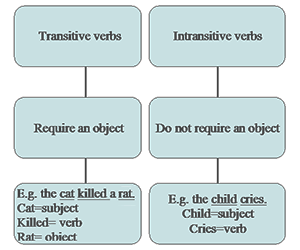

Transitivity [tran-si-tiv-i-tee] in grammar refers to whether a verb has an object or not.
An intransitive verb is an action that involves the object or person doing the action by itself: ‘The door opened.’ This contrasts with a transitive verb, where the action is done by someone or something else: ‘John opened the door.’
Posted in Language |
Leave a Comment »



