March 16, 2020

Weird Al Yankovic (b.1959) is an American musical comedian whose humorous songs make light of popular culture and often parody specific songs by contemporary musical acts; original songs that are style pastiches of the work of other acts; and polka medleys of several popular songs, featuring his favored instrument, the accordion.
Since his first-aired comedy song in 1976, he has sold more than 12 million albums (as of 2007), recorded more than 150 parody and original songs, and performed more than 1,000 live shows. His works have earned him five Grammy Awards and a further eleven nominations, four gold records, and six platinum records in the United States. Yankovic’s first top ten Billboard album (‘Straight Outta Lynwood’) and single (‘White & Nerdy’) were both released in 2006, nearly three decades into his career. Continue reading →
Posted in Art, Humor |
Leave a Comment »
March 6, 2020
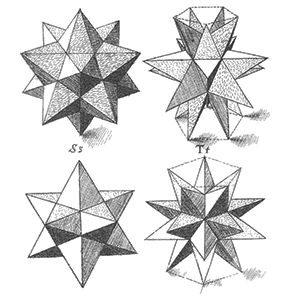
The musica universalis (literally ‘universal music’), also called ‘music of the spheres’ or ‘harmony of the spheres,’ is an ancient philosophical concept that regards proportions in the movements of celestial bodies—the Sun, Moon, and planets—as a form of music. This ‘music’ is not thought to be audible, but rather a harmonic, mathematical, or religious concept.
The idea continued to appeal to scholars until the end of the Renaissance, influencing many kinds of scholars, including humanists. Further scientific exploration discovered orbital resonance in specific proportions in some orbital motion. Continue reading →
Posted in Art, Philosophy, Science |
3 Comments »
March 4, 2020

Pigasus was a 145-pound (66 kg) domestic pig who was nominated for President of the United States as a theatrical gesture by the Youth International Party in 1968, just before the opening of the Democratic National Convention in Chicago. The youth-oriented party (whose members were commonly called ‘Yippies’) was an anti-establishment and countercultural revolutionary group whose views were inspired by the free speech and anti-war movements of the 1960s, mainly the opposition to United States involvement in the Vietnam War.
Yippies were known for using dramatic theatrics in their demonstrations, and they used Pigasus as a way to mock the social status quo. At a rally announcing his candidacy, Pigasus was confiscated by Chicago policemen and several of his Yippie backers were arrested for disorderly conduct. Continue reading →
Posted in Humor, Politics |
Leave a Comment »
March 2, 2020

Second wind is a phenomenon in distance running, such as marathons or road running (as well as other sports), whereby an athlete who is out of breath and too tired to continue suddenly finds the strength to press on at top performance with less exertion.
The feeling may be similar to that of a ‘runner’s high.’ Some scientists believe the second wind to be a result of the body finding the proper balance of oxygen to counteract the buildup of lactic acid in the muscles. Others claim second winds are due to endorphin production. A second wind phenomenon is also seen in some medical conditions, such as glycogen storage disease type V. Continue reading →
Posted in Games, Health |
1 Comment »
February 29, 2020

Chapo Trap House is an American political podcast founded in 2016 and hosted by Will Menaker, Matt Christman, Felix Biederman, Amber A’Lee Frost, and Virgil Texas. The podcast became known for its left-wing contentious commentary in the run-up to the 2016 U.S. presidential election.
The show is closely identified with Twitter culture and with the ‘dirtbag left,’ a term coined by Frost to refer to a style of left-wing political contentious discourse that eschews civility for its own sake in favor of subversive, populist vulgarity. The show is produced by Chris Wade and formerly by Brendan James. Continue reading →
Posted in Humor, Politics |
Leave a Comment »
February 28, 2020

A hotdish is a casserole that typically contains a starch, a meat, and a canned or frozen vegetable mixed with canned soup. The dish is usually made with ground beef over tater tots with cream of mushroom soup, but some versions in Minnesota use the official state grain wild rice, or even macaroni, in place of the tots.
The dish originates in the Upper Midwest region of the United States, where it remains popular, particularly in Minnesota, South Dakota, Wisconsin, and North Dakota. Hotdish is cooked in a single baking dish, and served hot (per its name). It commonly appears at communal gatherings such as family reunions, potlucks and church suppers. Continue reading →
Posted in Food, Politics |
Leave a Comment »
February 27, 2020

Milkshake Duck is an Internet meme that describes phenomena that are initially perceived as positive but later revealed to be flawed. Oxford Dictionaries defined the term as ‘a person or character on social media that appears to be endearing at first, but is found to have an unappealing back story,’ but did not consider usage of the neologism to be sufficiently long-lived or widespread to warrant inclusion in their dictionaries.
The term has been connected to ‘cancel culture,’ a growing trend of call-out culture on social media resulting in celebrities being ostracized and careers abruptly derailed by publicized misconduct. Continue reading →
Posted in Humor, Politics, Technology |
1 Comment »
February 26, 2020

Outrage porn is any type of media that is designed to evoke outrage for the purpose generating increased web traffic or online attention. The term was coined in 2009 by political cartoonist and essayist Tim Kreider of ‘The New York Times,’ who said: ‘It sometimes seems as if most of the news consists of outrage porn, selected specifically to pander to our impulses to judge and punish and get us all riled up with righteous indignation.’
Kreider made a distinction between authentic outrage and outrage porn by stating, ‘I’m not saying that all outrage is inherently irrational, that we should all just calm down, that It’s All Good. All is not good…Outrage is healthy to the extent that it causes us to act against injustice.’ Kreider is also noted as saying: ‘It spares us the impotent pain of empathy, and the harder, messier work of understanding.’ Continue reading →
Posted in Politics, Technology |
1 Comment »
February 25, 2020
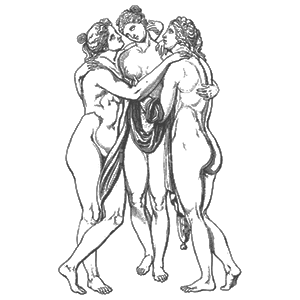
Charisma [kuh-riz-muh] is compelling attractiveness or charm that can inspire devotion in others.
Scholars in sociology, political science, psychology, and management reserve the term for a type of leadership seen as extraordinary; in these fields, the term ‘charisma’ is used to describe a particular type of leader who uses ‘values-based, symbolic, and emotion-laden leader signaling.’ Continue reading →
Posted in Health, Philosophy |
Leave a Comment »
February 21, 2020
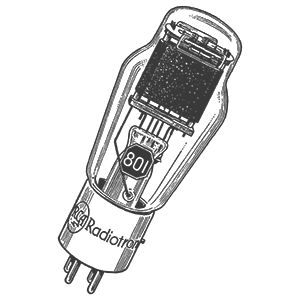
A vacuum tube, also called a ‘valve’ in British English, is a device that controls electric current flow in a high vacuum between electrodes (conductors that emit or receive electrons). Tubes were used in many radios, television sets, and amplifiers until they were supplanted by lower cost transistors in the 1960s that performed the same function but used less electricity and were more durable.
In a vacuum tube, a cathode (an electrode that emits electrons) is heated, as in a light bulb, so it will emit electrons. This is called ‘thermionic emission.’ The electrons are accelerated from the cathode to the anode (an electrode that receives electrons) by the electric field in the tube. Vacuum tubes must be hot to work. Most are made of glass, thus are fragile and can break. Vacuum tubes were used in the first computers like the ENIAC, which were large and need much work to continue operating. Continue reading →
Posted in Art, Technology |
Leave a Comment »
February 21, 2020
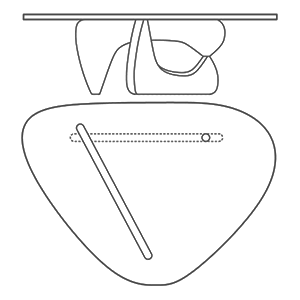
The Noguchi [nuh-goo-chee] table is a piece of modernist furniture first produced in the mid-20th century. Introduced by Herman Miller in 1947, it was designed in the United States by Japanese American artist and industrial designer Isamu Noguchi. The Noguchi table comprises a wooden base composed of two identical curved wood pieces and a heavy plate glass top.
The Noguchi table was an evolution of a rosewood and glass table Noguchi designed in 1939 for A. Conger Goodyear, president of the Museum of Modern Art. The design team at Herman Miller was so impressed by the table’s use of biomorphism (shapes reminiscent of living organisms) that they recruited Noguchi to design a similar table with a freeform sculptural base and biomorphic glass top for use in both residential and office environments. Continue reading →
Posted in Art |
Leave a Comment »
February 20, 2020

An egg cream is a cold beverage consisting of milk, carbonated water, and flavored syrup (typically chocolate or vanilla). Despite the name, the drink contains neither eggs nor cream.
The egg cream is almost exclusively a fountain drink. Although there have been several attempts to bottle it, none have been wholly successful, as its refreshing taste and characteristic head require mixing of the ingredients just before drinking. Continue reading →
Posted in Food |
Leave a Comment »


 The Daily Omnivore