January 30, 2012

The Pareto [pah-re-taw] principle states that, for many events, roughly 80% of the effects come from 20% of the causes. Business-management consultant Joseph M. Juran suggested the principle and named it after Italian economist Vilfredo Pareto, who observed in 1906 that 80% of the land in Italy was owned by 20% of the population. He then carried out surveys on a variety of other countries and found to his surprise that a similar distribution applied. He even found that 20% of the pea pods in his garden contained 80% of the peas.
It is a common rule of thumb in business; e.g., ‘80% of your sales come from 20% of your clients.’ The Pareto principle is only tangentially related to Pareto efficiency, which was also introduced by the same economist. Pareto developed both concepts in the context of the distribution of income and wealth among the population.
Posted in Money, Politics, World |
Leave a Comment »
January 30, 2012
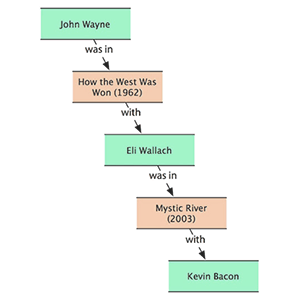
Connectors are said by author Malcolm Gladwell to be people in a community who know large numbers of people and who are in the habit of making introductions. A connector is essentially the social equivalent of a computer network hub. Connectors usually know people across an array of social, cultural, professional, and economic circles, and make a habit of introducing people who work or live in different circles. Although connectors are rare—only one in several thousand people might be thought of as a true connector they are, like mavens (experts) and salesmen, very important in the healthy function of civil society and business. Connectors are also important in trendsetting.
Malcolm Gladwell popularized the term connector in his 2000 book ‘The Tipping Point.’ Paul Revere, Roger Horchow, Ahmed Ibrahim, and Lois Weisberg are notable connectors. Gladwell also suggests that mavens may act most effectively when in collaboration with connectors – i.e., those people who have a wide network of casual acquaintances by whom they are trusted, often a network that crosses many social boundaries and groups. Connectors can thus easily and widely distribute the advice or insights of a maven.
Posted in Language, Science |
Leave a Comment »
January 30, 2012
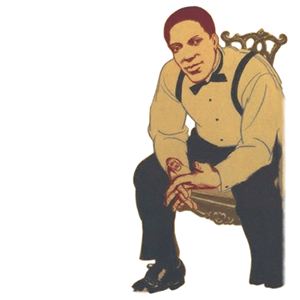
Six degrees of separation refers to the idea that everyone is on average approximately six steps away, by way of introduction, from any other person on Earth, so that a chain of, ‘a friend of a friend’ statements can be made, on average, to connect any two people in six steps or fewer.
It was originally set out by Hungarian author Frigyes Karinthy and popularized by a play written by John Guare.
Continue reading →
Posted in Art, Science, Technology, World |
Leave a Comment »
January 30, 2012
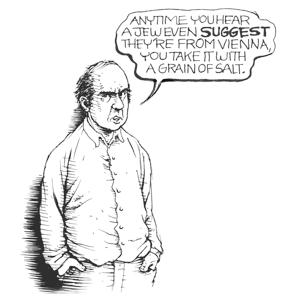
Jewish geography is a popular ‘game’ sometimes played when Jews meet each other for the first time and try to identify people they know in common. An Israeli version of the game, pitsuchim, has been a common pastime among young Israeli backpackers traveling the world, taking its name from a 1980s television quiz show.
As Etan Diamond observes in his book ‘And I Will Dwell in Their Midst: Orthodox Jews in Suburbia’: ‘This ‘game’ of ‘Jewish geography’ follows a simple pattern. One person asks, ‘You’re from [insert name of city here]? Do you know [insert person’s name here]?’ The other one usually responds something like, ‘Sure, he sits behind my uncle in synagogue,’ or ‘I met her once at a youth group convention,’ or ‘She is really good friends with my sister’s college roommate.’ Non-Jews often find it astonishing that such links are made so easily, but given both the relative smallness of the Jewish community – and the even smaller size of the Orthodox Jewish community – and the extensive overlapping social circles within these communities, it should not surprise too much.’
Posted in Games, Philosophy |
Leave a Comment »
January 30, 2012
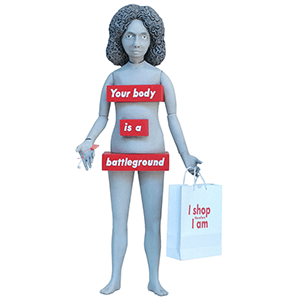
Barbara Kruger (b. 1945) is an American conceptual artist. Much of her work consists of black-and-white photographs overlaid with declarative captions—in white-on-red Futura Bold Oblique or Helvetica Ultra Condensed. The phrases in her works often include use of pronouns such as ‘you,’ ‘your,’ ‘I,’ ‘we,’ and ‘they.’ Much of Kruger’s work engages the merging of found photographs from existing sources with pithy and aggressive text that involves the viewer in the struggle for power and control that her captions speak to. In their trademark white letters against a slash of red background, some of her instantly recognizable slogans read ‘I shop therefore I am,’ and ‘Your body is a battleground.’
Much of her text questions the viewer about feminism, consumerism, and individual autonomy and desire, although her black-and-white images are culled from the mainstream magazines that sell the very ideas she is disputing. Kruger juxtaposes imagery and text critical of sexism; the circulation of power within cultures is a recurring motif in her work. A larger category that threads through her work is the appropriation and alteration of existing images. The importance of appropriation art in contemporary culture lay in its ability to play with preponderant imagistic and textual conventions: to mash up meanings and create new ones.
Posted in Art, Money, Politics |
Leave a Comment »
January 29, 2012
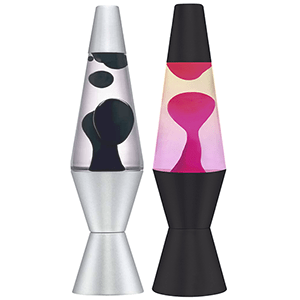
A lava lamp is a novelty light that contains blobs of colored wax inside a glass vessel filled with clear liquid. The wax rises and falls as its density changes due to heating from an incandescent light bulb underneath the vessel. Briton Edward Craven-Walker invented the lava lamp in 1963; it was originally called the ‘Astro Lamp.’
The wax is transparent, translucent or opaque mix of mineral oil, paraffin wax and carbon tetrachloride. The density of common wax is much lower than that of water and would float on top under any temperature. However, the carbon tetrachloride is heavier than water (also nonflammable and miscible with wax), and is added to the wax to make its density at room temperature slightly higher than that of the water.
Posted in Art |
Leave a Comment »
January 27, 2012

The Bonnaroo Music and Arts Festival is an annual four day music festival created and produced by Superfly Productions and AC Entertainment, held at Great Stage Park on a 700-acre farm in Manchester, Tennessee. It hosted its tenth annual event in 2011. The main attractions of the festival are the multiple stages of live music, featuring a diverse array of musical styles including indie rock, world music, hip hop, jazz, bluegrass, country music, folk, gospel, reggae, electronica, and other alternative music. The festival began with a primary focus on jam bands, but has diversified greatly in recent years. The festival features craftsmen and artisans selling unique products, food and drink vendors, a comedy tent, a silent disco, and a cinema tent, and a Ferris wheel.
The word Bonnaroo, popularized by New Orleans R&B singer Dr. John with his 1974 album ‘Desitively Bonnaroo,’ means ‘a really good time.’ It is a Ninth Ward slang construction taken from the French ‘bon’ meaning ‘good,’ and ‘rue’ from the French ‘street,’ translating to ‘the best on the streets.’ The name was chosen both for its literal meaning and to honor the rich Louisiana music tradition. The first Bonnaroo took place in 2002 and took inspiration from music festivals like Coachella in California and Glastonbury in England.
Posted in Art, Money |
1 Comment »
January 26, 2012

Patrick Nagel (1945 – 1984) was an American artist. He created popular illustrations on board, paper, and canvas, most of which emphasize the simple grace of and beauty of the female form, in a distinctive style descended from Art Deco. He is best known for his illustrations for ‘Playboy’ magazine, and the pop group Duran Duran, for whom he designed the cover of the best selling album ‘Rio.’ Nagel would start with a photograph and work down, always simplifying and removing elements which he felt were unnecessary. The resulting image would look flat, but emphasized those elements which he felt were most important. Nagel’s figures generally have black hair, bright white skin, full-lipped mouths, and the distinctive Nagel eyes, which are often squared off in the later works.
According to Elena G. Millie, curator of the poster collection at the Library of Congress: ‘Like some of the old print masters (Toulouse-Lautrec and Bonnard, for example), Nagel was influenced by the Japanese woodblock print, with figures silhouetted against a neutral background, with strong areas of black and white, and with bold line and unusual angles of view. He handled colors with rare originality and freedom; he forced perspective from flat, two-dimensional images; and he kept simplifying, working to get more across with fewer elements. His simple and precise imagery is also reminiscent of the art-deco style of the 1920s and 1930s- its sharp linear treatment, geometric simplicity, and stylization of form yield images that are formal yet decorative.’
Posted in Art |
1 Comment »
January 26, 2012

Derek Vincent Smith (b. 1983), better known as Pretty Lights, is an American electronic music artist. Smith wrote and produced hip hop music while attending high school in Fort Collins, Colorado, but the music of such artists as Aphrodite attracted him to American raves. After graduating from high school, he attended University of Colorado at Boulder, but dropped out during his freshman year to focus instead on his music. Smith’s music relies heavily on digital sampling and crosses many genres, forming a combination of ‘glitchy hip-hop beats, buzzing synth lines, and vintage funk and soul samples, sometimes grime.’
Pretty Lights’ sound is generated by synthesizing samples and organic beats using the Novation X-Station, monome, and the Akai MPD32. Smith uses these digital controllers to program the music production software Ableton Live 8. Due to the sample-based nature of his music, Smith releases all his music for free with a recommended donation, so as to avoid having to clear samples. When performing live, Smith uses two Macbook Pros running Ableton Live 8 and two Akai MPD32s.
Posted in Art, Technology |
Leave a Comment »
January 26, 2012
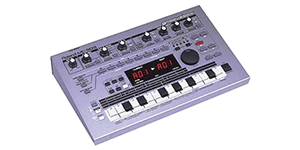

The term Groovebox was originally used by Roland corporation to refer to its MC-303 mobile music synthesizer, but the term has since entered into general use. It refers to a self-contained instrument for the production of live, loop-based electronic music with a high degree of user control facilitating improvisation.
A groovebox consists of three integrated elements: one or more sound sources, such as a drum machine, a synthesizer or a sampler, a music sequencer (recorder), and a control surface, i.e. a combination of knobs (potentiometer or rotary encoder), sliders and buttons, and display elements (LED and/or LCD).
Continue reading →
Posted in Art, Money, Technology |
Leave a Comment »
January 26, 2012


Livetronica, a portmanteau of the words ‘live’ and ‘electronica,’ is a sub-genre of the jam band movement that blends such musical styles as rock, jazz, funk, and electronica. It consists primarily of instrumental music. The terms ‘Jamtronica’ and ‘Trance fusion’ are also used to refer to this style of music.
Artists like the Disco Biscuits, Lake Trout, and The New Deal are credited as founding fathers of the genre, but recently up-and-coming bands such as The Werks, Pnuma Trio, and the Histronic of Minneapolis have started to inject new life and young blood into the scene.
Posted in Art, Technology |
Leave a Comment »
January 26, 2012
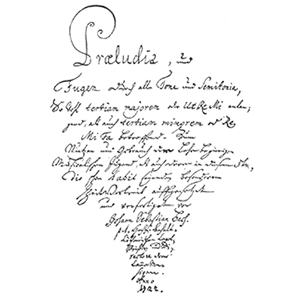
In music, a fugue [fyoog] is a compositional technique (in classical music) in two or more voices, built on a subject (theme) that is introduced at the beginning in imitation (repetition at different pitches) and recurs frequently in the course of the composition.
In other words, a fugue is a piece of music written for a certain number of parts (voices). The word ‘fugue’ comes from the Italian ‘fuga’ meaning ‘flight.’
Continue reading →
Posted in Art |
Leave a Comment »