January 16, 2012

Wakamaru is a Japanese domestic robot made by Mitsubishi Heavy Industries, primarily intended to provide companionship to elderly and disabled people. The robot is yellow, 1m tall, and weighs 30 kilograms. It has two arms and its flat, circular base has a diameter of 45 cm. The first hundred went on sale in 2005, for USD $14,000. Wakamaru runs a Linux operating system on multiple microprocessors.
It can connect to the Internet, and has limited speech (in both male and female voices) and speech recognition abilities. Functions include reminding the user to take medicine on time, and calling for help if it suspects something is wrong. Wakamaru was the childhood name of Minamoto no Yoshitsune, a 12th century Japanese general.
Posted in Health, Technology, World |
1 Comment »
January 16, 2012

Paro is a therapeutic robot baby harp seal, intended to be very cute and to have a calming effect on and elicit emotional responses in patients of hospitals and nursing homes, similar to Animal-Assisted Therapy. It was designed by Takanori Shibata of the Intelligent System Research Institute of Japan’s AIST beginning in 1993. It was first exhibited to the public in late 2001 and handmade versions have been sold commercially since 2004.
Paro is based on harp seals Shibata saw in Canada, where he also recorded their cries that Paro uses. The robot has tactile sensors and responds to petting by moving its tail and opening and closing its eyes. It also responds to sounds and can learn a name. It can show emotions such as surprise, happiness and anger. It produces sounds similar to a real baby seal and (unlike a real baby seal) is active during the day and goes to sleep at night.
Posted in Health, Technology, World |
Leave a Comment »
January 16, 2012

Dustbot is a robot that collects garbage from homes. It can be summoned by phone call or SMS, and uses GPS to automatically make its way to the customer, collect the rubbish, and take it to a dustbin. In addition, the Dustbots carry environmental sensors to monitor the pollution levels over, for example, a pedestrian area.
Prototypes have been tested in Italy and Sweden and Ireland. The Dustbot project is funded by the European Commission. The Dustbot system, consisting of the DustCart and the DustClean robots, is designed to work in tight urban areas where large trucks find it difficult to operate, such as old European cities.
Posted in Technology, World |
1 Comment »
January 16, 2012
In cryptography, a brute-force attack, or exhaustive key search, is a strategy that can, in theory, be used against any encrypted data. Such an attack might be utilized when it is not possible to take advantage of other weaknesses in an encryption system that would make the task easier. It involves systematically checking all possible keys until the correct key is found. In the worst case, this would involve traversing the entire search space.
The key length used in the encryption determines the practical feasibility of performing a brute-force attack, with longer keys exponentially more difficult to crack than shorter ones. Brute-force attacks can be made less effective by obfuscating the data to be encoded, something that makes it harder for an attacker to recognize when he/she has cracked the code. One of the measures of the strength of an encryption system is how long it would theoretically take an attacker to mount a successful brute-force attack against it.
Posted in Politics, Technology |
1 Comment »
January 16, 2012

Presenteeism [prez-uhn-tee-iz-uhm] is the act of attending work while sick. A topic that is at times considered its opposite, absenteeism, has historically received extensive attention in the management sciences, but presenteeism has only recently found a place in research literature. Management researchers in Europe, such as Simpson (1998), were some of the first to explore this topic, but those in epidemiology and other health related fields have also examined the effects of this behavior.
While the construct is often cited as coming to work while sick, Johns (2010) further noted that the definitions do not assign any motives to presenteeism. An employee, therefore, may come to work because he or she simply needs the money and cannot afford to take time off due to illness. Additionally, one could go to work due to a love and devotion to the job. In this case, presenteeism could be considered an act of organizational citizenship and inspire admiration from colleague. Therefore, simply viewing presenteeism as a negative act that leads to productivity loss and decreased health may be restricting potential analysis of the construct.
Posted in Health, Money |
Leave a Comment »
January 16, 2012

Repetition compulsion is a psychological phenomenon in which a person repeats a traumatic event or its circumstances over and over again. This includes reenacting the event or putting oneself in situations where the event is likely to happen again. This ‘re-living’ can also take the form of dreams in which memories and feelings of what happened are repeated, and even hallucination.
The term can also be used to cover the repetition of behaviour or life patterns more broadly: a ‘key component in Freud’s understanding of mental life, ‘repetition compulsion’…describes the pattern whereby people endlessly repeat patterns of behavior which were difficult or distressing in earlier life.’
Continue reading →
Posted in Health |
Leave a Comment »
January 16, 2012

The Happy Human is a secular icon and the official symbol of the International Humanist and Ethical Union (IHEU), a world body for Humanism, and has been adopted by many Humanist organisations and individuals worldwide. Its origin was a competition organized in 1965 by the British Humanist Association to find a symbol for itself.
The winning design was created by Denis Barrington. The trademark is still held by the British Humanist Association, which freely licenses use of the symbol by bona fide Humanist organizations worldwide. A great many Humanist organizations use the symbol or an adapted version of it.
Posted in Philosophy, Politics, World |
Leave a Comment »
January 16, 2012

Gorilla Glass, manufactured by Corning, is an alkali-aluminosilicate sheet glass engineered specifically to be thin, light and damage-resistant. Its primary application is portable electronic devices with screens, such as phones and tablets. Corning experimented with chemically strengthened glass in 1960, as part of an initiative called ‘Project Muscle.’ Gorilla Glass was used in about 20 percent of the world’s approximately 200 million mobile handsets in 2010. Corning says that Gorilla Glass is RF compatible and has outstanding optical clarity, making it suitable for HD and 3-D television displays. Early in 2012, Corning announced a new version of Gorilla Glass that is 20 percent thinner, but continues to have the same scratch resistance and endurance as the original. The thinner glass will allow for greater touch sensitivity for the user.
The glass is placed in a hot bath of molten potassium salt at a temperature of approximately 400 °C (~750 °F). Smaller sodium ions leave the glass, and larger potassium ions from the salt bath replace them. These larger ions take up more room and are pressed together when the glass cools, producing a layer of compressive stress on the surface of the glass. Gorilla Glass’s special composition enables the potassium ions to diffuse far into the surface, creating high compressive stress deep into the glass. This layer of compression creates a surface that is more resistant to damage from everyday use. Like all glass, Gorilla glass can be recycled.
Posted in Money, Technology |
1 Comment »
January 16, 2012
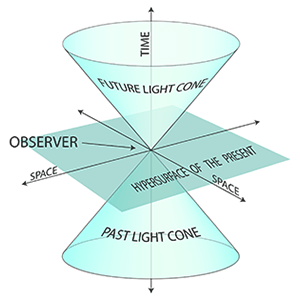
In philosophy, the Rietdijk–Putnam argument, named after C. W. Rietdijk and Hilary Putnam, uses 20th-century findings in physics—specifically in special relativity—to support the philosophical position known as four-dimensionalism.
If special relativity is true, then each observer will have their own plane of simultaneity, which contains a unique set of events that constitutes the observer’s present moment. Continue reading →
Posted in Science |
Leave a Comment »
January 16, 2012

Paragraph 175 was a provision of the German Criminal Code from 1871 to 1994 that criminalizing homosexuality Around 140,000 men were convicted under the law. The statute was amended several times. The Nazis broadened the law in 1935; in the prosecutions that followed, thousands died in concentration camps. East Germany reverted to the old version of the law in 1950, limited its scope to sex with youths under 18 in 1968, and abolished it entirely in 1988. West Germany retained the Nazi-era statute until 1969, when it was limited to ‘qualified cases’; it was further attenuated in 1973, and finally revoked entirely in 1994 after German reunification.
Under the Third Reich, 5,000 and 15,000 homosexual men were forced into concentration camps, where they were identified by the pink triangle. The majority of them died there. While the Nazi persecution of homosexuals is reasonably well-known today, far less attention had been given to the continuation of this persecution in post-war Germany. In 1945, when camps were being liberated, some homosexual prisoners were forced to serve out their sentence under Paragraph 175. About 100,000 men were implicated in legal proceedings from 1945 to 1969, and about 50,000 were convicted (if they had not committed suicide before, as many did).
Posted in Politics, Sex, War |
Leave a Comment »
January 16, 2012


‘Slaughterhouse-Five, or The Children’s Crusade: A Duty-Dance with Death’ is a 1969 satirical novel by Kurt Vonnegut about World War II experiences and journeys through time of a soldier called Billy Pilgrim.
The work is also known under the lengthy title: ‘Slaughterhouse-Five, or The Children’s Crusade: A Duty Dance with Death, by Kurt Vonnegut, a Fourth-Generation German-American Now Living in Easy Circumstances on Cape Cod [and Smoking Too Much], Who, as an American Infantry Scout Hors de Combat, as a Prisoner of War, Witnessed the Fire Bombing of Dresden, Germany, ‘The Florence of the Elbe,’ a Long Time Ago, and Survived to Tell the Tale. This Is a Novel Somewhat in the Telegraphic Schizophrenic Manner of Tales of the Planet Tralfamadore, Where the Flying Saucers Come From. Peace.’
Continue reading →
Posted in Humor, Language, War |
Leave a Comment »
January 15, 2012

Major Lazer is a collaborative musical project from DJ/Producers Diplo and Switch. Made up of DJs Diplo and Switch, the two were introduced after working with M.I.A..
The duo’s first album ‘Guns Don’t Kill People… Lazers Do’ was released in 2009, on Downtown Records. It was recorded in Jamaica at Tuff Gong Studios. Vocalists such as Santigold, Vybz Kartel, Ward 21, Busy Signal, Nina Sky, Amanda Blank, Mr. Vegas, Turbulence, Mapei, T.O.K, Prince Zimboo, Leftside and others contribute guest vocals to the album, as well as additional production from Afrojack and Crookers.
Posted in Art |
Leave a Comment »



