January 16, 2012

The Happy Human is a secular icon and the official symbol of the International Humanist and Ethical Union (IHEU), a world body for Humanism, and has been adopted by many Humanist organisations and individuals worldwide. Its origin was a competition organized in 1965 by the British Humanist Association to find a symbol for itself.
The winning design was created by Denis Barrington. The trademark is still held by the British Humanist Association, which freely licenses use of the symbol by bona fide Humanist organizations worldwide. A great many Humanist organizations use the symbol or an adapted version of it.
Posted in Philosophy, Politics, World |
Leave a Comment »
January 16, 2012

Gorilla Glass, manufactured by Corning, is an alkali-aluminosilicate sheet glass engineered specifically to be thin, light and damage-resistant. Its primary application is portable electronic devices with screens, such as phones and tablets. Corning experimented with chemically strengthened glass in 1960, as part of an initiative called ‘Project Muscle.’ Gorilla Glass was used in about 20 percent of the world’s approximately 200 million mobile handsets in 2010. Corning says that Gorilla Glass is RF compatible and has outstanding optical clarity, making it suitable for HD and 3-D television displays. Early in 2012, Corning announced a new version of Gorilla Glass that is 20 percent thinner, but continues to have the same scratch resistance and endurance as the original. The thinner glass will allow for greater touch sensitivity for the user.
The glass is placed in a hot bath of molten potassium salt at a temperature of approximately 400 °C (~750 °F). Smaller sodium ions leave the glass, and larger potassium ions from the salt bath replace them. These larger ions take up more room and are pressed together when the glass cools, producing a layer of compressive stress on the surface of the glass. Gorilla Glass’s special composition enables the potassium ions to diffuse far into the surface, creating high compressive stress deep into the glass. This layer of compression creates a surface that is more resistant to damage from everyday use. Like all glass, Gorilla glass can be recycled.
Posted in Money, Technology |
1 Comment »
January 16, 2012

In philosophy, the Rietdijk–Putnam argument, named after C. W. Rietdijk and Hilary Putnam, uses 20th-century findings in physics—specifically in special relativity—to support the philosophical position known as four-dimensionalism.
If special relativity is true, then each observer will have their own plane of simultaneity, which contains a unique set of events that constitutes the observer’s present moment. Continue reading →
Posted in Science |
Leave a Comment »
January 16, 2012

Paragraph 175 was a provision of the German Criminal Code from 1871 to 1994 that criminalizing homosexuality Around 140,000 men were convicted under the law. The statute was amended several times. The Nazis broadened the law in 1935; in the prosecutions that followed, thousands died in concentration camps. East Germany reverted to the old version of the law in 1950, limited its scope to sex with youths under 18 in 1968, and abolished it entirely in 1988. West Germany retained the Nazi-era statute until 1969, when it was limited to ‘qualified cases’; it was further attenuated in 1973, and finally revoked entirely in 1994 after German reunification.
Under the Third Reich, 5,000 and 15,000 homosexual men were forced into concentration camps, where they were identified by the pink triangle. The majority of them died there. While the Nazi persecution of homosexuals is reasonably well-known today, far less attention had been given to the continuation of this persecution in post-war Germany. In 1945, when camps were being liberated, some homosexual prisoners were forced to serve out their sentence under Paragraph 175. About 100,000 men were implicated in legal proceedings from 1945 to 1969, and about 50,000 were convicted (if they had not committed suicide before, as many did).
Posted in Politics, Sex, War |
Leave a Comment »
January 16, 2012


‘Slaughterhouse-Five, or The Children’s Crusade: A Duty-Dance with Death’ is a 1969 satirical novel by Kurt Vonnegut about World War II experiences and journeys through time of a soldier called Billy Pilgrim.
The work is also known under the lengthy title: ‘Slaughterhouse-Five, or The Children’s Crusade: A Duty Dance with Death, by Kurt Vonnegut, a Fourth-Generation German-American Now Living in Easy Circumstances on Cape Cod [and Smoking Too Much], Who, as an American Infantry Scout Hors de Combat, as a Prisoner of War, Witnessed the Fire Bombing of Dresden, Germany, ‘The Florence of the Elbe,’ a Long Time Ago, and Survived to Tell the Tale. This Is a Novel Somewhat in the Telegraphic Schizophrenic Manner of Tales of the Planet Tralfamadore, Where the Flying Saucers Come From. Peace.’
Continue reading →
Posted in Humor, Language, War |
Leave a Comment »
January 15, 2012

Major Lazer is a collaborative musical project from DJ/Producers Diplo and Switch. Made up of DJs Diplo and Switch, the two were introduced after working with M.I.A..
The duo’s first album ‘Guns Don’t Kill People… Lazers Do’ was released in 2009, on Downtown Records. It was recorded in Jamaica at Tuff Gong Studios. Vocalists such as Santigold, Vybz Kartel, Ward 21, Busy Signal, Nina Sky, Amanda Blank, Mr. Vegas, Turbulence, Mapei, T.O.K, Prince Zimboo, Leftside and others contribute guest vocals to the album, as well as additional production from Afrojack and Crookers.
Posted in Art |
Leave a Comment »
January 15, 2012

Ester Hernandez (b. 1944) is a Chicana visual artist known for her pastels, paintings and prints primarily depicting Chicanas/Latinas. Her artwork captures time, and makes sense of the complex world we live in. She aspires to create a visual dialogue for women’s role in this new multi-cultural millennium. Her work reflects the political, social, ecological, and spiritual themes born from community pride, a commitment to political action, and an abiding sense of humor.
As a solo artist and member of Las Mujeres Muralistas, an influential San Francisco Mission district Latina women mural group in the early seventies, her career has marked her as a pioneer in the Chicana/Chicano civil rights art movement.
Continue reading →
Posted in Art, Money, Politics |
1 Comment »
January 15, 2012

Plutocracy [ploo-tok-ruh-see] is rule by the wealthy, or power provided by wealth. The combination of both plutocracy and oligarchy is called plutarchy. The word ‘plutocracy’ is derived from the Ancient Greek root ‘ploutos,’ meaning ‘wealth’ and ‘kratos,’ meaning ‘to rule’ or ‘to govern.’
The term is generally used to describe these two distinct concepts: one of a historical nature and one of a modern political nature. The former indicates the political control of the state by an oligarchy of the wealthy. Examples of such plutocracies include the Roman Republic, some city-states in Ancient Greece, the civilization of Carthage, the Italian city-states/merchant republics of Venice, Florence, Genoa, and pre-WWII Empire of Japan zaibatsus.
Continue reading →
Posted in Language, Money, Politics |
1 Comment »
January 15, 2012

Goombas, known in Japan as Kuribo (‘Chestnut People’), are fictional species from Nintendo’s series of ‘Mario’ video games. They first appeared in the NES video game ‘Super Mario Bros.’ as the first enemy players encounter. They are usually brown and are most commonly seen walking around aimlessly, often as an obstacle, in video games. They were included late in the development of Super Mario Bros. in order to create a simple, easy-to-defeat enemy.
Goombas were the last enemy added to the game after play testers stated that the Koopa Troopa was too tricky an enemy. As a result, the designers introduce a basic enemy. When they decided to do this, however, they had very little space left in the game. They used a single image twice to convey the notion that the Goombas are walking, rotating it back and forth, causing it to look lopsided as it walks and giving the motion the appearance of a trot. The Goomba’s resemblance to the Super Mushroom forced designers to change the mechanics and appearance of the Super Mushroom. They used the Goomba’s ability to be jumped on and defeated to teach players how to deal with enemies and to not fear the Super Mushroom. The Goombas are designed after a shiitake mushroom.
Posted in Games |
Leave a Comment »
January 15, 2012
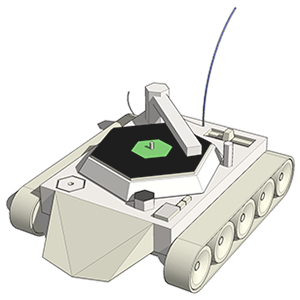
Sonic and ultrasonic weapons (USW) are weapons of various types that use sound to injure, incapacitate, or kill an opponent. Some sonic weapons are currently in limited use or in research and development by military and police forces. Others exist only in the realm of science fiction.
Some of these weapons have been described as sonic bullets, sonic grenades, sonic mines, or sonic cannons. Some make a focused beam of sound or ultrasound; some make an area field of sound. Although many real sonic and ultrasonic weapons are described as ‘non-lethal,’ they can still kill under certain conditions.
Continue reading →
Posted in Technology, War |
1 Comment »
January 15, 2012

A hoodie is a sweatshirt with a hood. They often include a muff sewn onto the lower front, and a drawstring to adjust the hood opening, and may have a vertical zipper down the center similar to a windbreaker style jacket.
The garment’s style and form can be traced back to Medieval Europe when the formal wear for monks included a long, decorative hood called cowl worn a tunic or robes. The modern clothing style was first produced by Champion in the 1930s and marketed to laborers who endured freezing temperatures in upstate New York. Continue reading →
Posted in Money, Politics, World |
Leave a Comment »
January 15, 2012
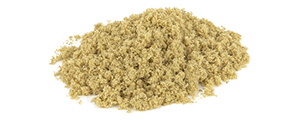

Hashish [ha-sheesh] is a cannabis preparation composed of compressed stalked resin glands, called trichomes, collected from the unfertilized buds of the cannabis plant. It contains the same active ingredients but in higher concentrations than unsifted buds or leaves.
Hashish is often a paste-like substance with varying hardness and pliability, its color most commonly light to dark brown but varying toward green, yellow, black or red. Hashish is heated in a pipe, hookah, bong, bubbler, vaporizer, hot knife, smoked in joints mixed with cannabis buds or tobacco, or cooked in foods. Continue reading →
Posted in Drugs |
Leave a Comment »



 The Daily Omnivore