December 13, 2011

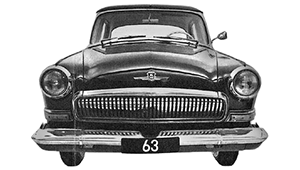
Black Volga [vol-guh] refers to an urban legend widespread in Poland, Russia, Belarus, Ukraine, and Mongolia, mainly in the 1960s and 1970s. It was about a black (in some versions red) Volga limousine (with white wheel rims, white curtains or other white elements) that was allegedly used to abduct people, especially children. According to different versions, it was driven by priests, nuns, Jews, vampires, satanists or Satan himself. Children were kidnapped to use their blood as a cure for rich westerners or Arabs suffering from leukemia; other variants used organ theft as the motive, combining it with another famous legend about kidney theft by the KGB.
The legend surfaced again in the late 20th century, with a BMW or Mercedes car taking the Volga’s place, sometimes depicted with horns instead of wing mirrors. In this version, the driver would ask passers-by for the time and kill them when they approached the car to answer (in another version of the legend, they died at the same time a day later).
Posted in Humor, World |
1 Comment »
December 13, 2011
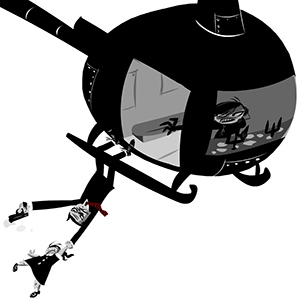
Black helicopters is a term which became popular in the US militia movement and its associated political circles in the 1990s as a symbol and warning sign of an alleged conspiratorial military takeover, though it has also been associated with men in black and similar conspiracies. Rumors circulated that, for instance, the UN patrolled the States with unmarked black helicopters, or that federal agents used black helicopters to enforce wildlife laws.
The concept springs from the basic truth that many government agencies and corporations do use helicopters, and that some of these helicopters are dark-colored or black. For instance, dark-colored military helicopters were deployed in the standoff at Ruby Ridge. Earlier tales from the 1970s linked them with UFO conspiracy theories. Continue reading →
Posted in Humor, Politics, War |
1 Comment »
December 13, 2011

Saturnalia [sat-er-ney-lee-uh] is an Ancient Roman festival or celebration held in honor of Saturn (Cronus), the youngest of the Titans, father of the major gods of the Greeks and Romans, and son of Uranus and Gaia. Most relevantly, Saturn is the father of Rome’s primary god, Jupiter. Saturnalia was introduced around 217 BCE to raise citizen morale after a crushing military defeat at the hands of the Carthaginians.
Originally celebrated for a day, on December 17, its popularity saw it grow until it became a week-long extravaganza, ending on the 23rd. Efforts to shorten the celebration were unsuccessful. Augustus tried to reduce it to three days, and Caligula to five. These attempts caused uproar and massive revolts among the Roman citizens. Continue reading →
Posted in Philosophy |
Leave a Comment »
December 13, 2011

In ethnolinguistics, an endonym [en-doe-nim] or autonym is a local name for a geographical feature, and an exonym [ex-o-nim] or xenonym is a foreign language name for it. Exonyms and endonyms can be names of places (toponym), ethnic groups (ethnonym), languages (glossonym), or individuals (personal name).
For example, China, India, Germany, Greece, Japan, and Korea are the English exonyms corresponding to the endonyms Zhongguo, Bharat, Deutschland, Hellas, Nippon, and Goryeo, respectively.
Continue reading →
Posted in Language, Politics, World |
Leave a Comment »
December 13, 2011


Groundhopping is a hobby that involves attending matches at as many different stadiums or grounds as possible. Largely a soccer-related pastime, groundhopping probably found its origin in the 1970s in England. From the late 1980s fans in Germany started groundhopping as well. Currently it is especially popular in the United Kingdom, Germany, the Netherlands and Belgium.
There is no universal set of rules for counting ‘hopped grounds’, although a generally accepted one is that a match must have been seen at the ground. There are some formal organizations for groundhoppers, including the 92 club in England, which consists of groundhoppers who have visited matches in all stadiums of the Premier and Football League.
Posted in Games, World |
Leave a Comment »
December 13, 2011
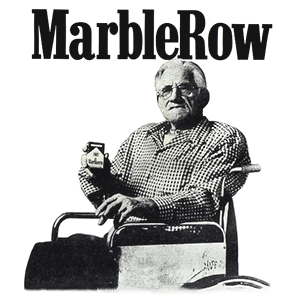
Billboard Utilising Graffitists Against Unhealthy Promotions, or B.U.G.A. U.P. is an Australian subvertising artistic movement that detourns or modifies with graffiti billboard advertising that promotes something they deem unhealthy. The movement started in inner-city Sydney in 1979 and has been active ever since, although the late 70’s and early-mid 1980s is considered their most prolific period. The movement’s founder was Bill Snow, who continues to be active in anti-smoking and littering campaigns.
The movement aimed mainly at Cigarette and Alcohol advertising, often blanking out letters and adding others to promote their view that the product is unhealthy. Cola and soft drink ads were also targeted.
Posted in Money, Politics, World |
Leave a Comment »
December 13, 2011

The Billboard Liberation Front practices culture jamming (a tactic used by anti-consumerist social movements to disrupt or subvert mainstream cultural institutions, including corporate advertising) by altering billboards by changing key words to radically alter the message, often to an anti-corporate message.
It started in San Francisco in 1977 as an outgrowth of the Cacophony Society, a secret society responsible for a number of anarchic pranks.
Posted in Humor, Money, Politics |
Leave a Comment »
December 13, 2011


Wok racing was developed by the German TV host Stefan Raab. Modified Chinese woks are used to make timed runs down an Olympic bobsled track. There are competitions for one-person-woksleds and four-person-woksleds, the latter using four woks per sled. Wok racing was inspired by a bet on a German TV show in 2003. Participants are mostly b-list celebrities. The typical racing woks are the ordinary round-bottomed Chinese pans, usually directly imported from China. The only modifications are that the bottom is reinforced with an epoxy filling and the edges of the wok are coated with polyurethane foam to avoid injuries.
Four-person woksleds consist of two pairs of woks, each of them is held together by a rounded frame. The two pairs are connected by a coupling. Due to the rather risky nature of the sport the participants wear heavy protective gear, usually similar to ice hockey equipment. To further reduce friction and the risk of injuries, the athletes wear ladles under their feet. To improve performance, the underside of the woks are often heated with a blowlamp before the race.
Posted in Games, Humor, World |
Leave a Comment »
December 13, 2011
Zoobomb is a weekly bicycling activity in Portland, Oregon during which participants ride bicycles rapidly downhill in the city’s West Hills. Zoobomb began in 2002. Participants carry their bikes on MAX Light Rail to the Washington Park station next to the Oregon Zoo. From there, participants take the elevator to the surface and then ride their bikes down the hills in the vicinity. This process is often repeated several times throughout the night. ‘The people that are going 35-mph-plus have backgrounds in BMX, mountain biking, bike messengering or downhill skateboarding. I don’t know that people showing up for the first time understand this.’
There is an emphasis on unusual bicycles, first and foremost the children’s bicycles or ‘minibikes,’ but extending to tall bikes, swing bikes, choppers, non-functional bicycles, skateboards, etc. The event is treated in a very lighthearted fashion, including a large amount of socializing between rides. Riders often dress up in costume or decorate their bicycles. Though many riders bring their own bicycles, the participants maintain a ‘Zoobomb pile,’ a tower of minibikes anchored to a bicycle rack at the Zoobomb meeting point for riders to borrow. The pile has become a local landmark.[3][5]A legally blind person ‘The Blind Bomber’ regularly attends (on a tandem bike, behind a sighted rider). Though not technically a race, there is some prestige in getting down the hill first.
Posted in Games, Humor |
Leave a Comment »
December 13, 2011

Kinetic sculpture races are organized contests of human-powered amphibious all-terrain works of art. The original event, the Kinetic Grand Championship in Humboldt County, California, is also called the ‘Triathlon of the Art World’ because art and engineering are combined with physical endurance during a three day cross country race that includes sand, mud, pavement, a bay crossing, a river crossing and major hills.
The concept of kinetic sculpture racing originated in Ferndale, California in 1969 when local sculptor Hobart Brown ‘improved’ the appearance of his son’s tricycle by welding on two additional wheels and other embellishments. Seeing this ‘Pentacycle,’ fellow artist Jack Mays challenged him to a race. Continue reading →
Posted in Art, Games, Humor |
Leave a Comment »
December 13, 2011

The Idiotarod is a shopping cart race in which teams of five ‘idiots’ tie themselves to a (sometimes modified) shopping cart and run through the streets of a major metropolitan area. The race usually features people in costumes and themed floats. The races are fun competitions where sabotage, costume, and presentation are rewarded. Sabotage such as tripping competitors, throwing marbles or large obstacles in their paths, and the spreading of misinformation such as false route information are common.
The Idiotarod is named after the Iditarod, a 1,000 mile dog-sledding race in Alaska. Idiotarods take place in Austin, Boston, Chicago, Denver, New York City, Phoenix, Portland, Salt Lake City, Seattle, St. Louis, Toronto, Los Angeles, Vancouver and Washington, D.C. though the original race was founded in San Francisco in 1994 as the ‘Urban Iditarod.’
Posted in Games, Humor |
Leave a Comment »
December 13, 2011

‘Carts of Darkness‘ is a 2008 National Film Board of Canada documentary film by Murray Siple about a group of homeless men in North Vancouver, who use shopping carts to collect bottles and cans to return for money and also race down the city’s steep slope for thrills. The subjects in the film control the carts using only their weight and one foot, during descents that cross intersections, with top speeds claimed to be as high as 70 km/h.
Siple, a former director of extreme sports videos and avid skateboarder and snowboarder, became a quadriplegic after a car accident in 1996. His first film after his accident, ‘Carts of Darkness’ allowed the filmmaker to regain the excitement he had experienced with extreme sports as well as relate to a fellow group of outsiders.
Posted in Art, Games, Money |
1 Comment »



