December 8, 2011


Personal medicine is an activity that a person does to obtain wellness, rather than something a person takes (e.g., medication) for wellness. In the psychiatric setting, personal medicine, or other self-initiated, non-pharmaceutical self-care activities, is used to decrease symptoms, avoid undesirable outcomes such as hospitalization, and improve mood, thoughts, behaviors, and the overall sense of well being. Not to be confused with ‘personalized medicine’ (a medical model emphasizing the customization of healthcare, with all decisions and practices being tailored to individual patients).
The self-care use of ‘personal medicine’ was first introduced in early 2003 as a result of qualitative research conducted by Patricia E. Deegan through the University of Kansas School of Social Welfare. After interviewing individuals who were taking psychiatric medication as a part of their recovery process, Deegan found that: ‘When describing their use of psychiatric pharmaceuticals or ‘pill medicine,’ research participants also described a variety of personal wellness strategies and activities that I have called ‘personal medicine.’ Personal medicines were non-pharmaceutical activities and strategies that served to decrease symptoms and increase personal wellness.
Posted in Health |
Leave a Comment »
December 8, 2011

Dwolla is a United States-only e-commerce company that provides an online payment system and mobile payments network by the same name. The company was founded in 2008 with services based only in Iowa. After raising $1.31 million in funding, Dwolla launched nationally in 2009 with founders Ben Milne (CEO) and Shane Neuerburg (CTO), in Des Moines, Iowa, United States, with a few small banks and retailers. Transactions using Dwolla surpassed $1 million a week and its Iowa user-base was overtaken in 2011, with 20,000 users. The company began with two employees and has approximately 15 employees as of June 2011.
The main pull for Dwolla is its low transaction fees. From its onset, Dwolla charged 25 cents per transaction, less than its main rival Paypal, which for several years has charged 30 cents, plus 1.9-2.9% of each transaction. The name Dwolla is a conjunct of ‘dollar’ and ‘web.’ Dwolla is notable for its interest among users of Bitcoin, a digital currency. Some Bitcoin exchanges allow users to buy Bitcoins with dollars transferred to the exchange via Dwolla, and allow users to sell Bitcoins and have the proceeds transferred back to them using Dwolla. Although Dwolla representatives have said that they saw growth due to Bitcoin users, they do not offer any official endorsement of Bitcoins.
Posted in Money, Technology |
Leave a Comment »
December 8, 2011
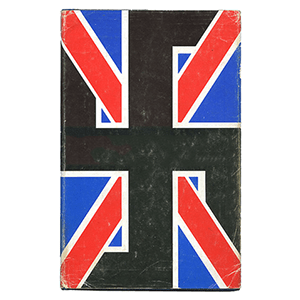
The Double Cross System, or XX System, was a World War II anti-espionage and deception operation of the British military intelligence arm, MI5. Nazi agents in Britain – real and false – were captured, turned themselves in or simply announced themselves and were then used by the British to broadcast mainly disinformation to their Nazi controllers.
Its operations were overseen by the Twenty Committee under the chairmanship of John Cecil Masterman; the name of the committee comes from the number 20 in Roman numerals: ‘XX.’ The policy of MI5 during the war was initially to use the system for counter-espionage. It was only later that its potential for deception purposes was realized. Agents from both of the German intelligence services, the Abwehr and Sicherheitsdienst (SD), were apprehended. Continue reading →
Posted in Politics, War, World |
Leave a Comment »
December 8, 2011


A spit curl is a spiral curl of hair pressed flat against the cheek, temple, or forehead, a style popular in the 1920s and made famous by actress Clara Bow and cartoon character Betty Boop.
The unglamorous name for spit curls suggests how they stayed locked on the head. Normally women would set small tendrils in the front of their hair with bobby pins, and then would position them by licking or wetting their fingers to produce the spit curls look.
Posted in Art |
Leave a Comment »
December 8, 2011


A cowlick [kou-lik] is a section of hair that stands straight up or lies at an angle at odds with the style in which the rest of an individual’s hair is worn. They appear when the growth direction of the hair forms a spiral pattern. The term originates from the domestic bovine’s habit of licking its young, which results in a swirling pattern in the hair.
The most common site of a human cowlick is in the crown, but they can show up anywhere. They also sometimes appear in the front and back of the head. Continue reading →
Posted in Health, Language |
1 Comment »
December 8, 2011
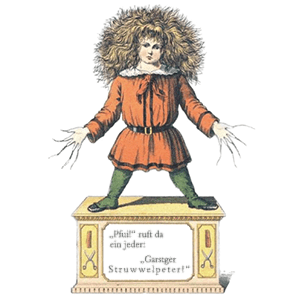
Uncombable hair syndrome (also known as Pili trianguli et canaliculi, Spun-glass hair, and Cheveux incoiffables) is a rare structural anomaly of the hair with a variable degree of effect. It was discovered in the 1970s. It becomes apparent from as little as 3 months to up to 12 years.
The hair is normal in quantity and is usually silvery-blond or straw-colored. It is disorderly, it stands out from the scalp, and cannot be combed flat. The underlying structural anomaly is longitudinal grooving of the hair shaft, which appears triangular in cross section. To be noticeable, 50 % of hairs must be affected by the structural abnormality. Improvement often occurs in later childhood.
Posted in Health |
Leave a Comment »
December 8, 2011
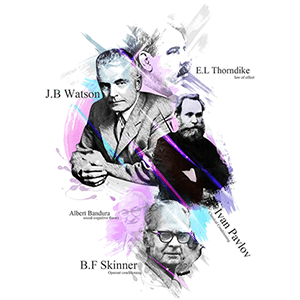
John B. Watson (1878 – 1958) was an American psychologist who established the psychological school of behaviorism. Through his behaviorist approach, Watson conducted research on animal behavior, child rearing, and advertising. In 1920 Johns Hopkins University asked Watson to leave his faculty position because of publicity surrounding the affair he was having with his graduate student-assistant Rosalie Rayner.
In addition, he and Rayner conducted the controversial ‘Little Albert’ experiment. After his divorce was finalized, Watson and Rayner married in 1921. They remained together until her death in 1935. In his post academic career, Watson worked for many years for J. Walter Thompson, a leading American advertising agency. He is credited with popularizing the ‘coffee break’ during an ad campaign for Maxwell House coffee.
Continue reading →
Posted in Health, Money, Science |
1 Comment »
December 8, 2011

Aquascaping is the craft of arranging aquatic plants, as well as rocks, stones, cavework, or driftwood, in an aesthetically pleasing manner within an aquarium—in effect, gardening under water. Aquascape designs include a number of distinct styles, including the garden-like Dutch style and the Japanese-inspired nature style. Although the primary aim of aquascaping is to create an artful underwater landscape, the technical aspects of aquarium maintenance must also be taken into consideration.
Many factors must be balanced in the closed system to ensure the success of an aquascape, including filtration, maintaining carbon dioxide at levels sufficient to support photosynthesis underwater, substrate and fertilization, lighting, and algae control. Aquascape hobbyists trade plants, conduct contests, and share photographs and information via the internet.
Continue reading →
Posted in Art, Games, Science |
2 Comments »
December 8, 2011

A Macquarium is an aquarium made to sit within the shell of an Apple Macintosh computer. The term was coined by computer writer Andy Ihnatko. In the early 1990s several Mac models in this form factor (the Macintosh 128K, Macintosh 512K and Macintosh Plus) were becoming obsolete, and Ihnatko considered that turning one into an aquarium might be ‘the final upgrade’ — as well as an affordable way to have a color Compact Mac.
He has mentioned in interviews that he had seen previous, overly-complex attempts at Macintosh aquariums at trade shows that among other drawbacks suffered from noticeable water level lines across the ‘screen’ that spoiled the illusion of a ‘really good screensaver,’ which drove him to design a version without a visible water line and which allowed the external case of the donor Mac to remain intact.
Posted in Humor, Technology |
Leave a Comment »
December 8, 2011
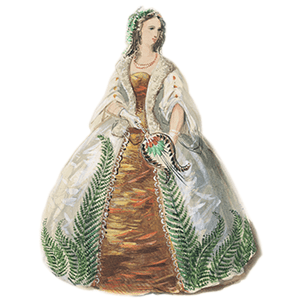
Pteridomania [tuh-rid-uh-mey-nee-uh] or Fern-Fever was a craze for ferns. Victorian decorative arts presented the fern motif in pottery, glass, metal, textiles, wood, printed paper, and sculpture, with ferns ‘appearing on everything from christening presents to gravestones and memorials.’
The term, a compound of ‘Pteridophytes’ and ‘mania,’ was coined in 1855 by Charles Kingsley in his book ‘Glaucus, or the Wonders of the Shore’: ‘Your daughters, perhaps, have been seized with the prevailing ‘Pteridomania’…and wrangling over unpronounceable names of species (which seem different in each new Fern-book that they buy)…and yet you cannot deny that they find enjoyment in it, and are more active, more cheerful, more self-forgetful over it, than they would have been over novels and gossip, crochet and Berlin-wool.’
Continue reading →
Posted in Games, Money, Science |
Leave a Comment »
December 7, 2011

Paradoxical [par-uh-dok-si-kuhl] laughter is an exaggerated expression of humor which is unwarranted by external events. It may be uncontrollable laughter which may be recognized as inappropriate by the person involved. It is associated with altered mental states or mental illness, such as mania, hypomania or schizophrenia, and can have other causes.
Paradoxical laughter is indicative of an unstable mood, often caused by the pseudobulbar affect (a neurologic disorder characterized by uncontrollable episodes of crying and/or laughing), which can quickly change to anger and back again, on minor external cues. This type of laughter can also occur at times when the fight-or-flight response may otherwise be evoked.
Posted in Health, Language |
Leave a Comment »
December 7, 2011

Gerd Arntz (1900 – 1988) was a German Modernist artist – famous for his black and white woodcuts. A core member of the Cologne Progressives he was also a council communist. The Cologne Progressives participated in the revolutionary unions AAUD and its offshoot the AAUE in the 1920s, and in 1928 Arntz was contributing anti-parliamentary prints to its paper ‘Die Proletarische Revolution’ which called for workers to form and participate in worker’s councils. These political prints depicted the life of worker’s and the class struggle in abstracted figures in woodcuts.
In 1926 Otto Neurath sought his collaboration in designing pictograms for the ‘Vienna Method of Pictorial Statistics’ (‘Wiener Methode der Bildstatistik’; later renamed ‘Isotype’). From the beginning of 1929 Arntz worked at the Gesellschafts- und Wirtschaftsmuseum (Social and economic museum) directed by Neurath in Vienna. Eventually, Arntz designed around 4000 pictograms. After the brief civil war in Austria in 1934 he emigrated to the Netherlands, joining Neurath and Reidemeister in The Hague, where they continued their collaboration at the International Foundation for Visual Education.
Posted in Art, Language, Politics |
Leave a Comment »