December 7, 2011
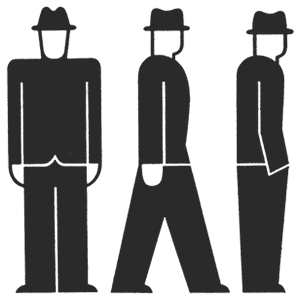
Isotype (International System of TYpographic Picture Education) is a method of showing social, technological, biological and historical connections in pictorial form.
It was first known as the Vienna Method of Pictorial Statistics, due to its having been developed at the Social and Economic Museum of Vienna (Gesellschafts- und Wirtschaftsmuseum in Wien) between 1925 and 1934. The founding director of the museum, Otto Neurath, was the initiator and chief theorist of the Vienna Method. The term Isotype was applied to the method around 1935, after its key practitioners were forced to leave Vienna by the rise of Austrian fascism.
Continue reading →
Posted in Art, Language, Politics |
Leave a Comment »
December 7, 2011
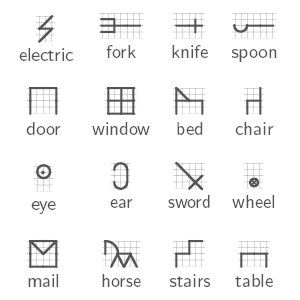
Blissymbols or Blissymbolics was conceived as an ideographic writing system called Semantography consisting of several hundred basic symbols, each representing a concept, which can be composed together to generate new symbols that represent new concepts. Blissymbols differ from most of the world’s major writing systems in that the characters do not correspond at all to the sounds of any spoken language.
Blissymbols were invented by Charles K. Bliss (1897–1985), born Karl Kasiel Blitz in the Austro-Hungarian city of Czernowitz (in what is now Ukraine), which had a mixture of different nationalities that ‘hated each other, mainly because they spoke and thought in different languages.’ Bliss graduated as a chemical engineer at the Vienna University of Technology, and joined an electronics company as a research chemist. When the German Army invaded Austria in 1938, he was sent to the concentration camps of Dachau and Buchenbald. His German wife Claire managed to get him released, and they finally became exiles in Shanghai, where Bliss had relatives.
Continue reading →
Posted in Health, Language, World |
Leave a Comment »
December 7, 2011
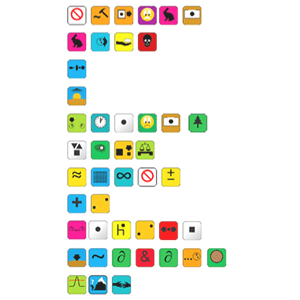
iConji is a free pictographic communication system based on an open, visual vocabulary of characters with built-in translations for most major languages. The app debuted with 1183 unique characters, known as the lexiConji (vocabulary), culled from base words used in common daily communications, word frequency lists, often-used mathematical and logical symbols, punctuation symbols, and the flags of all nations.
The process of assembling a message from iConji characters is called iConjisation. Since most characters represent an entire word or concept, rather than a single letter or character, iConji has the potential to be a more efficient communication system than SMS (texting). The usual jumble of text and confusing abbreviations can often be replaced by a short string of colorful icons that convey the identical meaning.
Continue reading →
Posted in Language, Technology, World |
Leave a Comment »
December 7, 2011

Emoji [ih-moh-jee] is the Japanese term for the picture characters or emoticons used in Japanese electronic messages and webpages. Originally meaning pictograph, the word literally means ‘e’ (‘picture) ‘moji’ (‘letter’). The characters are used much like emoticons elsewhere, but a wider range is provided, and the icons are standardized and built into mobile devices. Some emoji are very specific to Japanese culture, such as a bowing (apologizing) businessman, a face wearing a face mask, or a group of emoji representing popular foods (e.g. ramen noodles, rice balls). The three main Japanese phone operators, NTT DoCoMo, au, and SoftBank Mobile (formerly Vodafone), have each defined their own variants of emoji.
Although typically only available in Japan, the characters and code required to use emoji are, thanks to the nature of software development, often present in many phones’ software. As a result, some phones, such as the Apple iPhone, allow access to the symbols without requiring a Japanese operator. Emoji have also started appearing in emailing services such as Gmail (accessed via Google Labs) in 2009.
Posted in Humor, Language, Technology |
Leave a Comment »
December 6, 2011

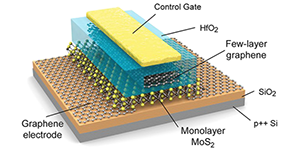
Molybdenite [mo-lib-de-nite] is a mineral (molybdenum disulfide, MoS2). Similar in appearance and feel to graphite, molybdenite has a lubricating effect that is a consequence of its layered structure, which consists of a sheet of molybdenum atoms sandwiched between sheets of sulfur atoms. The Mo-S bonds are strong, but the interaction between the sulfur atoms at the top and bottom of separate sandwich-like tri-layers is weak, resulting in easy slippage as well as cleavage planes.
Molybdenite occurs in high temperature hydrothermal ore deposits. Important deposits include the disseminated porphyry molybdenum deposits at Questa, New Mexico and the Henderson and Climax mines in Colorado. Molybdenite flakes are being researched for their potential use in low power semiconductors.
Posted in Money, Technology |
2 Comments »
December 6, 2011

The Tweel (a portmanteau of tire and wheel) is an experimental tire design developed by the French tire company Michelin. The tire uses no air, and therefore cannot burst or become flat.
Instead, the Tweel’s hub connects to flexible polyurethane spokes which are used to support an outer rim and assume the shock-absorbing role of a traditional tire’s pneumatic properties.
Continue reading →
Posted in Money, Technology |
Leave a Comment »
December 6, 2011

Non-pneumatic tires (NPT), or Airless tires, are tires that are not supported by air pressure. They are used on some small vehicles such as riding lawn mowers and motorized golf carts. They are also used on heavy equipment such as backhoes, which are required to operate on sites such as building demolition, where tire puncture is likely. Tires composed of closed-cell polyurethane foam are also made for bicycles and wheelchairs. Airless tires generally have higher rolling friction and provide much less suspension than similarly shaped and sized pneumatic tires. Other problems for airless tires include dissipating the heat buildup that occurs when they are driven. Airless tires are often filled with compressed polymers (plastic), rather than air.
Michelin is currently developing an integrated tire and wheel combination, the ‘Tweel,’ that operates entirely without air. The automotive engineering department at Clemson University is developing a low energy loss airless tire with Michelin through the NIST ATP project. Resilient Technologies and the University of Wisconsin’s Polymer Engineering Center are creating a ‘non-pneumatic tire,’ which is basically a round polymeric honeycomb wrapped with a thick, black tread. The initial version of the tire is for the Humvee.
Posted in Language, Money, Technology |
1 Comment »
December 4, 2011

Supersize is a very large portion of fast food. At McDonald’s it once referred to the largest size of French fries (7-ounce) and soft drinks (42-ounce). After taking a customer’s order, employees would ask, ‘Would you like that Supersized?’
The 2004 documentary ‘Super Size Me’ is often credited with associating the term with obesity and unhealthy portions sizes. The movie followed one man’s month-long McDonald’s diet. McDonald’s began to phase out the Super Size option from their menu in the spring of 2004, and by the end of the year it was gone completely. Continue reading →
Posted in Food, Health, Money |
Leave a Comment »
December 4, 2011

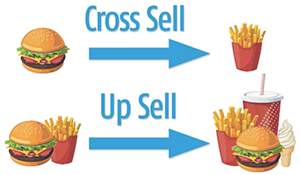
Upselling is a sales technique whereby a seller induces the customer to purchase more expensive items, upgrades, or other add-ons in an attempt to make a more profitable sale. Upselling usually involves marketing more profitable services or products but can also be simply exposing the customer to other options that were perhaps not considered previously.
Upselling implies selling something that is more profitable or otherwise preferable for the seller instead of, or in addition to, the original sale. A different technique is cross-selling in which a seller tries to sell something else.
Continue reading →
Posted in Money |
Leave a Comment »
December 4, 2011
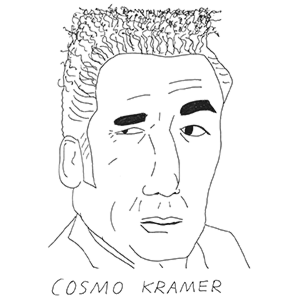
The Ben Franklin effect is a psychological finding: A person who has done someone a favor is more likely to do that person another favor than they would be if they had received a favor from that person. Similarly, one who harms another is more willing to harm them again than the victim is to retaliate.
In the words of Benjamin Franklin, who famously observed the effect and for whom it is named, ‘He that has once done you a Kindness will be more ready to do you another, than he whom you yourself have obliged.’ Continue reading →
Posted in Money, Politics |
1 Comment »
December 4, 2011

The door-in-the-face (DITF) technique is a persuasion method whereby a persuader attempts to convince someone to comply with a request by first making an extremely large request that the respondent will obviously turn down, with a metaphorical slamming of a door in the persuader’s face. The respondent is then more likely to accede to a second, more reasonable request than if this second request were made without the first, extreme request.
Psychology and marketing professor Robert Cialdini suggests this as a form of reciprocity, i.e. the (induced) sharp negative response to the first request creates a sense of debt or guilt that the second request offers to clear, and the reduced second request is interpreted by the receiver as a concession which is reciprocated by compliance with the request. Alternately, a reference point (or framing) construal may explain this phenomenon, as the initial bad offer sets a reference point from which the second offer looks like an improvement.
Continue reading →
Posted in Language, Money, Politics |
1 Comment »
December 3, 2011
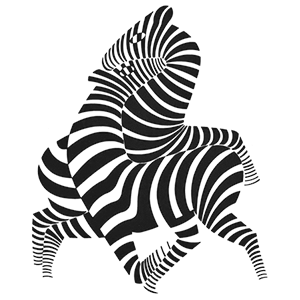
Op art is a style of visual art that makes use of optical illusions. ‘Optical art is a method of painting concerning the interaction between illusion and picture plane, between understanding and seeing.’ Op art works are abstract, with many of the better known pieces made in only black and white. When the viewer looks at them, the impression is given of movement, hidden images, flashing and vibration, patterns, or alternatively, of swelling or warping.
Op art is derived from the constructivist practices of the Bauhaus, a German design school, founded by Walter Gropius, which stressed the relationship of form and function within a framework of analysis and rationality. Students were taught to focus on the overall design, or entire composition, in order to present unified works. When the Bauhaus was forced to close in 1933, many of its instructors fled to the US where the movement took root in Chicago and eventually at the Black Mountain College in Asheville, North Carolina, where Anni and Josef Albers would come to teach. Continue reading →
Posted in Art |
Leave a Comment »



