December 1, 2011

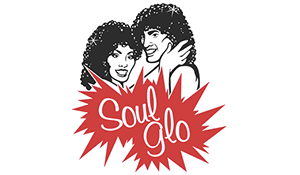
The Jheri [jer-ee] curl is a hairstyle that was common and popular in the African American community especially during the 1970s and 1980s. Invented by and named for Jheri Redding, the Jheri curl gave the wearer a glossy, loosely curled look. It was touted as a ‘wash and wear’ style that was easier to care for than the other popular chemical treatment of the day, the relaxer. A Jheri curl was a two-part application that consisted of a softener (often called a ‘rearranging cream’) to loosen the hair and a solution to set the curls. The rearranging cream used pungent chemicals, causing the naturally tight curls to loosen and hang. The loose hair was then set and a chemical solution was then added to the hair to permanently curl it.
Perming the hair was time and labor-intensive and expensive to maintain. The harsh mix of chemicals required for the process caused the wearer’s natural hair to become extremely brittle and dry. To maintain the look of the Jheri curl, users were required to apply a curl activator spray and heavy moisturizers daily and to sleep with a plastic cap on their heads to keep the hairstyle from drying out. The activator in particular had the undesirable side effect of being very greasy; this would often stain clothing and furniture. The hairstyle went out of fashion by the late 1980s and was replaced in part with the hi-top fade haircut.
Posted in Art, Humor, Money |
Leave a Comment »
December 1, 2011
Corporate-owned life insurance (COLI), also known as dead peasant life insurance, or janitors insurance, is life insurance on employees’ lives that is owned by the employer, with benefits payable to the employer. When the employer is a bank, it is known as a bank owned life insurance (BOLI).
COLI was originally purchased on the lives of key employees and executives by a company to hedge against the financial cost of losing key employees to unexpected death, the risk of recruiting and training replacements of necessary or highly-trained personnel, or to fund corporate obligations to redeem stock upon the death of an owner. This use is commonly known as ‘key man'” or ‘key person’ insurance. Continue reading →
Posted in Money, Politics |
Leave a Comment »
December 1, 2011
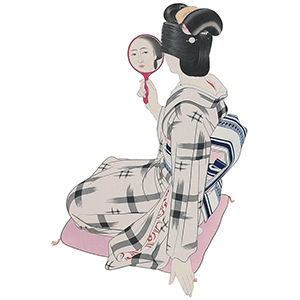
‘Pink Box: Inside Japan’s Sex Clubs’ is a book by photojournalist Joan Sinclair, chronicling her exploration of the secret world of fuzoku (prostitution) in Japan. Sinclair was joined by contributor James Farrer, a British sociologist who attempted to ‘place[s] the images in the context of contemporary Japanese culture.’
The book was published in 2006. Sinclair, a lawyer, describes being triggered to write the book by a comment she overheard ten years earlier, when she spent a year teaching English in Japan. Sinclair describes encountering, and overcoming, difficulties researching and getting access to the clubs—usually reserved for Japanese born patrons.
Posted in Politics, Sex, World |
Leave a Comment »
December 1, 2011

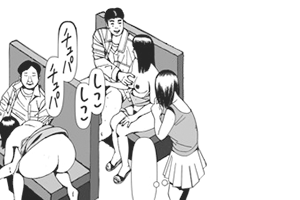
A pink salon, or pinsaro for short, is a type of brothel in Japan which specializes in oral sex. A pink salon is unusual in that the service is offered in small booths within a large open-plan room. The client is served soft drinks or alcoholic beverages by the ‘companion’ who performs fellatio on him. There may also be additional activities such as fingering the ‘companion’ and sumata (a Japanese term for a non-penetrative sex act where the sex worker rubs the client’s penis with her hands, thighs (intercrural sex), and labia majora).
Unlike the west, Japan does not have the same stigmas attached to sex work. Many young Japanese women work in pink salons throughout late high school and college as work is plentiful and pay is much better than in customer service positions. However, the work is demanding and an employee may be required to fellate over a dozen men in a single four hour shift.
Posted in Money, Sex, World |
Leave a Comment »
December 1, 2011

An image club, is a type of brothel in Japan similar to ‘fashion health’ parlors (a form of massage parlor which circumvents Japanese anti-prostitution laws by offering a range of services that stop short of sexual intercourse).
They differ in that image clubs are themed along popular sexual fantasies such as a business office, a doctor’s office, a classroom, or a subway car. The prostitutes themselves, whose activities are usually limited to oral sex, wear exaggerated costumes appropriate to the setting and the desire of the customer.
Posted in Money, Sex, World |
Leave a Comment »
December 1, 2011
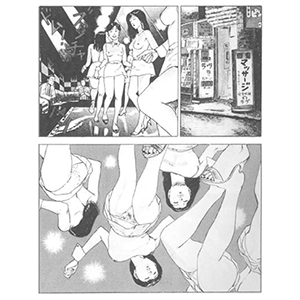
No-pan kissa (literally ‘no-panties cafe’) is a Japanese term for cafes where the waitresses wear short skirts with no underwear. The floors, or sections of the floor, are often mirrored. Customers order drinks and snacks and may look at, but not generally touch, the staff. The shops otherwise look like normal coffee shops, rather than sex establishments, although they charge around four times as much for coffee.
A later development in certain no-pan kissa was the creation of small private rooms where the staff provided sexual services like oral sex or masturbation. Eventually such coffee shops gave way to ‘fashion health’ clubs (a form of massage parlor which circumvents Japanese anti-prostitution laws by offering a range of services that stop short of sexual intercourse), and few, if any, remain. In addition to no-pan kissa, there have also been no-pan shabu-shabu, and no-pan yakiniku restaurants; and no-pan karaoke.
Posted in Money, Sex, World |
Leave a Comment »
December 1, 2011

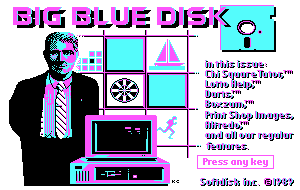
A disk magazine, colloquially known as a diskmag, is a magazine that is distributed in electronic form to be read using computers. These had some popularity in the 1980s and 1990s as periodicals distributed on floppy disk, hence their name. The rise of the Internet in the late 1990s caused them to be superseded almost entirely by online publications, which are sometimes still called ‘diskmags’ despite the lack of physical disks.
A unique and defining characteristic about a diskmag in contrast to a typical ASCII ‘zine’ is that a diskmag usually comes housed as an executable program file that will only run on a specific hardware platform. A diskmag tends to have an aesthetically appealing and custom graphical user interface (or even interfaces), background music and other features that take advantage of the hardware platform the diskmag was coded for. Diskmags have been written for many platforms, ranging from the C64 on up to the IBM PC and have even been created for video game consoles, like ‘scenedicate’ for the Dreamcast.
Continue reading →
Posted in Games, Language, Technology |
Leave a Comment »
December 1, 2011
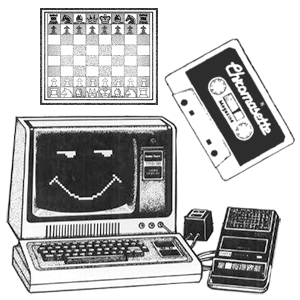
‘Chromasette‘ was the first ever, cassette-based TRS-80 Color Computer magazine produced by David Lagerquist and was an offshoot of ‘CLOAD’ magazine. It was published monthly from 1981 – 1984. It was advertised in ‘Creative Computing’ magazine in 1983 as $45 a year for 12 issues, or $5 each.
The first issue contained 5 Basic programs, and the ‘cover’ of the electronic magazine (which had to be loaded onto a TRS-80 Color Computer and then run) was dynamic. Included with each cassette was a 5-6 page newsletter explaining the programs included on the cassette, including their PMODE and PCLEAR values (if needed), their locations on tape, and several paragraphs of documentation about each (sometimes suggesting program alterations that change or improve the results).
Posted in Language, Money, Technology |
Leave a Comment »
December 1, 2011
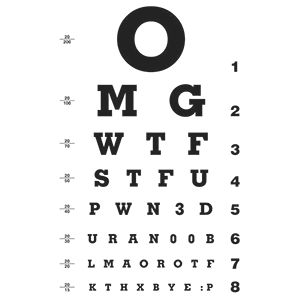
Leet (or ‘1337’), short for ‘elite,’ also known as leetspeak, is an alternative alphabet for the English language that is used primarily on the Internet. It uses various combinations of ASCII characters to replace Latinate letters. For example, leet spellings of the word leet include 1337 and l33t; eleet may be spelled 31337 or 3l33t.
The term is derived from the word ‘elite.’ Leet may also be considered a substitution cipher, although many dialects or linguistic varieties exist in different online communities. The term ‘leet’ is also used as an adjective to describe formidable prowess or accomplishment, especially in the fields of online gaming and in its original usage, computer hacking. Continue reading →
Posted in Language, Technology |
Leave a Comment »
December 1, 2011

Cyberculture is the culture that has emerged, or is emerging, from the use of computer networks for communication, entertainment and business. It is also the study of various social phenomena associated with the Internet and other new forms of network communication, such as online communities, online multi-player gaming, social media and texting.
Since the boundaries of cyberculture are difficult to define, the term is used flexibly, and its application to specific circumstances can be controversial. It generally refers at least to the cultures of virtual communities, but extends to a wide range of cultural issues relating to ‘cyber-topics,’ e.g. cybernetics. It can also embrace associated intellectual and cultural movements, such as cyborg theory in feminism and cyberpunk in literature. The term often incorporates an implicit anticipation of the future. Continue reading →
Posted in Language, Technology, World |
Leave a Comment »
December 1, 2011
Netnography is the branch of ethnography (the study and recording of human cultures) that analyzes the free behavior of individuals on the Internet that uses online marketing research techniques to provide useful insights.
The term was coined by market research expert Robert Kozinets. It provides information on the symbolism, meanings, and consumption patterns of online consumer groups. Continue reading →
Posted in Money, Technology, World |
Leave a Comment »
November 30, 2011
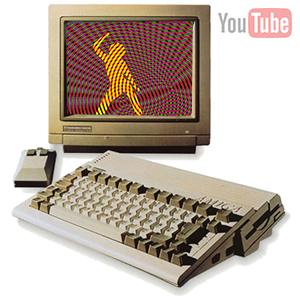
The demoscene is a computer art subculture that specializes in producing demos, which are non-interactive audio-visual presentations that run in real-time on a computer. The main goal of a demo is to show off programming, artistic, and musical skills. The demoscene first appeared during the 8-bit era on computers such as the Commodore 64, ZX Spectrum and Amstrad CPC, and came to prominence during the rise of the 16/32-bit home computers (the Amiga and the Atari ST). In the early years, demos had a strong connection with software cracking. When a cracked program was started, the cracker or his team would take credit with a graphical introduction called a ‘crack intro’ (shortened cracktro). Later, the making of intros and standalone demos evolved into a new subculture independent of the software (piracy) scene.
Prior to the popularity of IBM PC compatibles, most home computers of a given line had relatively little variance in their basic hardware, which made their capabilities practically identical. Therefore, the variations among demos created for one computer line were attributed to programming alone, rather than one computer having better hardware. This created a competitive environment in which demoscene groups would try to outperform each other in creating amazing effects, and often to demonstrate why they felt one machine was better than another.
Continue reading →
Posted in Art, Games, Technology |
Leave a Comment »



