July 22, 2011
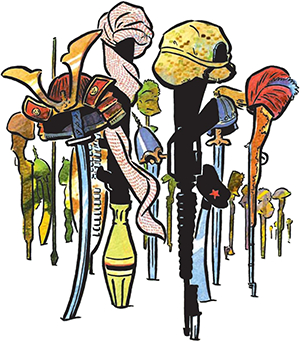

The Clash of Civilizations is a theory, proposed by political scientist Samuel P. Huntington, that people’s cultural and religious identities will be the primary source of conflict in the post-Cold War world. This theory was originally formulated in a 1992 lecture at the American Enterprise Institute, which was then developed in a 1993 ‘Foreign Affairs article’ titled ‘The Clash of Civilizations?,’ in response to Francis Fukuyama’s 1992 book, ‘The End of History and the Last Man.’ Huntington later expanded his thesis in a 1996 book ‘The Clash of Civilizations and the Remaking of World Order.’
The phrase itself was first used by American historian, Bernard Lewis in an article in a 1990 issue of ‘The Atlantic Monthly’ titled ‘The Roots of Muslim Rage.’
Continue reading →
Posted in Politics, War, World |
Leave a Comment »
July 22, 2011

Nepeta [neh-puh-ta] is a genus of about 250 species of flowering plants in the family Lamiaceae, commonly known as ‘catnip’ because of their attractant effect on cats—the nepetalactone contained in nepeta binds to the olfactory receptors of cats, typically resulting in temporary euphoria. Catmints are also used in herbal medicine for their mild sedative effect on humans.
Nepetalactone is an organic compound, first reported in 1941 after it was isolated by steam distillation of catnip. The compound is also present in the wood of tartarian honeysuckle (Lonicera tatarica), shavings of which are often used in cat toys. Around 80% of cats are affected and susceptibility is gene-linked. The chemical interacts as a vapor at the olfactory epithelium. Nepetalactone has effects on some insects: it repels cockroaches and mosquitoes.
Posted in Drugs, Science, Sex |
1 Comment »
July 22, 2011

Corpsing is a British theatrical slang term used to describe when an actor breaks character during a scene by laughing or by causing another cast member to laugh. The term originated when a living actor played a corpse on stage; there was sometimes a temptation to try to make that actor laugh. Corpsing is not a term exclusive to the theatre, but is also used to describe actions designed to cause hysteria in live television or radio.
The ‘Saturday Night Live’ sketches featuring ‘Debbie Downer’ (Rachel Dratch) are also notable for corpsing, as well as the famous ‘Stefon’ (Bill Hader), who only went on one occasion without corpsing throughout his entire five-year stint. Jimmy Fallon is also known for breaking character by laughing.
Posted in Art, Humor, Language |
1 Comment »
July 22, 2011
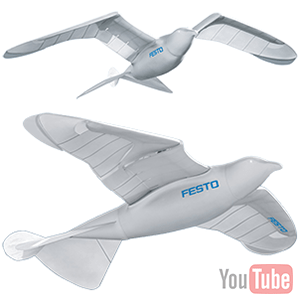
SmartBird is an autonomous unmanned aerial vehicle created by Festo’s Bionic Learning Network. It is an ornithopter modeled on the herring gull. It has a mass of 450 grams and a wingspan of 1.96 meters. Smartbird is constructed of polyurethane foam and carbon fiber and is powered by a 135 brushless motor running at 23 watts.
Flight occurs in a manner very similar to that of real birds. The vertical motion of the wings is provided by an electric motor in the body of the bird. It is connected to two wheels that attach to rods in the wings in a manner similar to steam locomotives. Inside the wings are torsional motors that adjust the wings’ angle of attack to provide forward motion. Directional control is provided by moving the tail.
Posted in Technology |
Leave a Comment »
July 22, 2011

Shel Silverstein (1930 – 1999), was an American poet, musician, cartoonist, and author of children’s books. He styled himself as Uncle Shelby in his children’s books.
Silverstein grew up in Chicago: ‘When I was a kid—12 to 14, around there—I would much rather have been a good baseball player or a hit with the girls, but I couldn’t play ball. I couldn’t dance. Luckily, the girls didn’t want me. Not much I could do about that. So I started to draw and to write. I was also lucky that I didn’t have anybody to copy, be impressed by. I had developed my own style; I was creating before I knew there was a Thurber, a Benchley, a Price and a Steinberg. I never saw their work till I was around 30. By the time I got to where I was attracting girls, I was already into work, and it was more important to me. Not that I wouldn’t rather make love, but the work has become a habit.’
Continue reading →
Posted in Art, Humor, Language |
Leave a Comment »
July 21, 2011

A flood myth or deluge myth is a mythical or religious story of a great flood sent by a deity or deities to destroy civilization as an act of divine retribution. It is a theme widespread among many cultures, though it is perhaps best known in modern times through the biblical and Quranic account of Noah’s Ark, the Hindu puranic story of Manu, through Deucalion in Greek mythology or Utnapishtim in the Epic of Gilgamesh. Parallels are often drawn between the flood waters of these myths and the primeval waters found in some creation myths since the flood waters are seen to cleanse humanity in preparation for rebirth. Most flood myths also contain a culture hero who strives to ensure this rebirth.
Historian, Adrienne Mayor first promoted the hypothesis that flood stories were inspired by ancient observations of seashells and fish fossils inland and on mountains. The ancient Greeks, Egyptians, Romans, and Chinese all wrote about finding such remains in these locations, and the Greeks hypothesized that Earth had been covered by water several times, noting seashells and fish fossils found on mountain tops as evidence. Native Americans also expressed this belief in their early encounters with Europeans. However, Leonardo da Vinci postulated that an immediate deluge could not have caused the neatly ordered strata he found in the Italian Apennines.
Posted in Philosophy, World |
Leave a Comment »
July 21, 2011
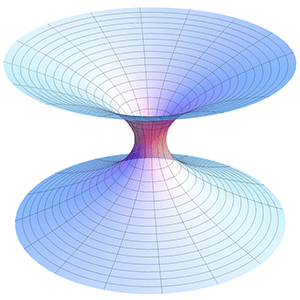
In astrophysics, a white hole is the opposite of a black hole. Where a black hole attracts and sucks in any nearby matter, a white hole does the opposite and pushes nearby matter away.
A theory about white holes is that they act as an exit for matter sucked in by a black hole, suggesting that black holes are a type of teleporter (something that can transport objects instantly without travelling through space). The black and white holes are connected by a wormhole.
Posted in Science |
Leave a Comment »
July 21, 2011

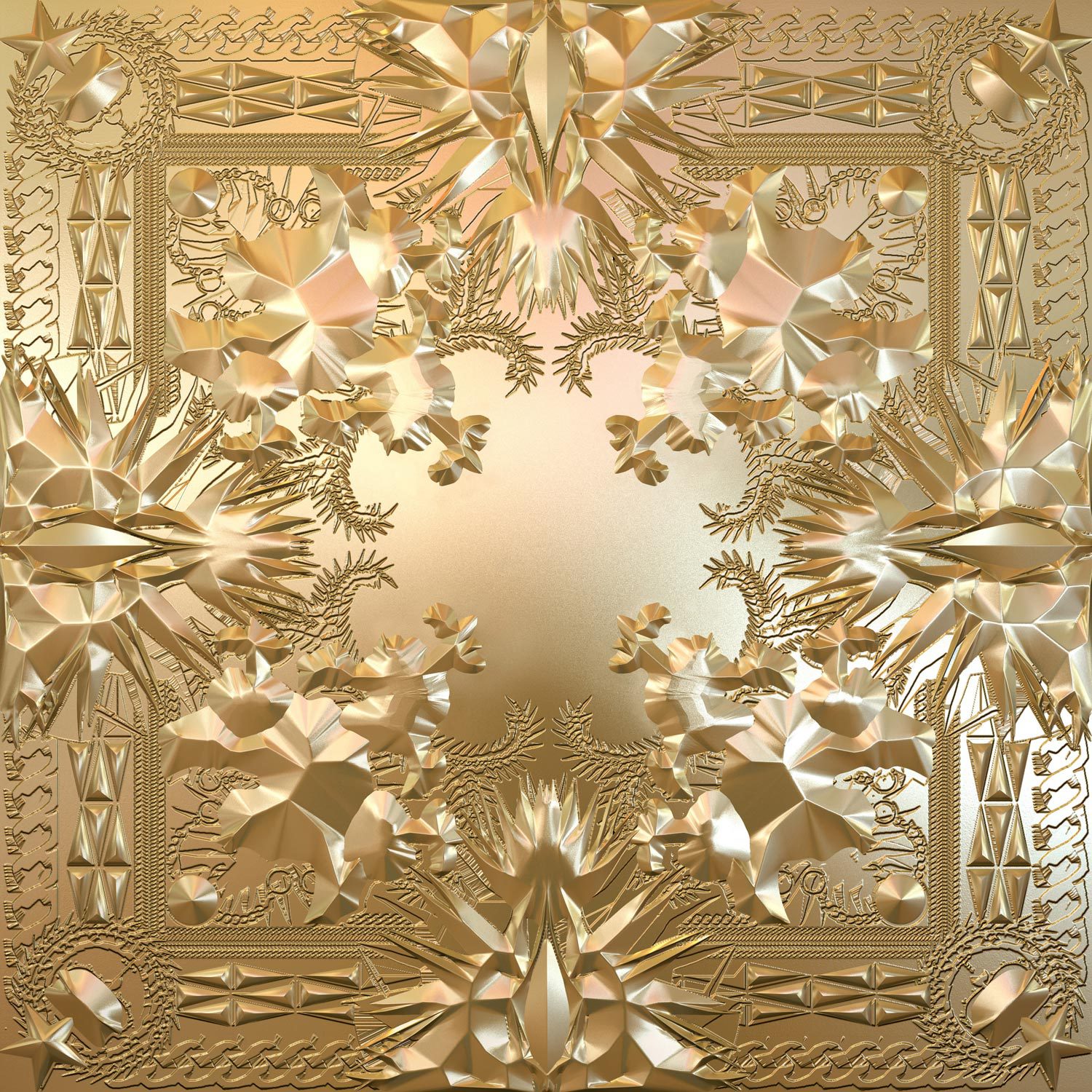
Watch the Throne is a collaborative studio album by Jay-Z and Kanye West, set to be released August 1, 2011. Production began in Bath, England and continued during available times in Jay-Z’s and West’s respective schedules at recording locations in Australia, Paris, New York City, and Los Angeles. Parts of the album were recorded at the Mercer Hotel and Tribeca Grand Hotel in New York City.
In an interview, Jay-Z discussed their insistence on recording in person, stating ‘If we were gonna do it, we were gonna do it together. No mailing it in.’ The album features guest appearances by Beyoncé, Frank Ocean, and Mr Hudson, with production by Kanye West along with The Neptunes, The RZA, Q-Tip, Swizz Beatz, and others. The album’s cover and artwork were both designed by Italian fashion designer Riccardo Tisci.
Posted in Art, Money |
Leave a Comment »
July 20, 2011

Dippin’ Dots is an ice cream snack, invented by Curt Jones in 1987. The confection is created by flash freezing ice cream mix in liquid nitrogen; consequently, Dippin’ Dots contain less air than conventional ice cream. The resulting small spheres of ice cream are stored at temperatures ranging from -70 to -20 °F (from -57 °C to -29 °C). The marketing slogan is ‘Ice Cream of the Future.’ The company, headquartered in Paducah, Kentucky, United recently began selling its product in supermarkets in the United States. Dippin’ Dots are sold in individual servings at franchised outlets, many in theme parks, stadiums, shopping malls, and in vending machines.
Several competing beaded ice-cream lines have been introduced in recent years. Some of these competing brands are similar to Dippin’ Dots in shape or size, yet differ in that they use dairy stabilizers and artificial sweeteners, in an effort to keep the beads from adhering to one another. Dippin’ Dots, made from conventional ice cream ingredients, are held at sub-zero temperatures to keep the beads separate and free-flowing.
Posted in Food, Money, Technology |
1 Comment »
July 20, 2011

El Bulli is a molecular gastronomy restaurant near the town of Roses, Spain (near the French border), run by chef Ferran Adrià. In early 2011, management announced that the restaurant would close that summer to reopen as a creativity center in 2014. Its main objective is to be a think-tank for creative cuisine and gastronomy and will managed by a private foundation. The former restaurant accommodated only 8,000 diners a season, but received more than two million requests. The average cost of a meal was €250. The restaurant itself operated at a loss since 2000, with operating profit coming from El Bulli-related books and lectures by Adrià. The location was selected in 1961 by Dr Hans Schilling, a German, and his Czech wife Marketta, who wanted a restaurant for a piece of land he had purchased. The name ‘El Bulli’ came from the French bulldogs the Schillings owned.
The first restaurant was opened in 1964. Ferran Adrià joined the staff in 1984, and was put in sole charge of the kitchen in 1987. In 1990 the restaurant gained its second Michelin star, and in 1997 its third. Menu items have included melon with ham, pine nut marshmallows, steamed brioche with rose-scented mozzarella, rock mussels with seaweed and fresh herbs, and passion fruit trees. Texturas is a range of products by Adrià and his brother Albert. Texturas include products such as Xanthan and Algin. Xanthan gum allows the user to use a very small amount to thicken soups, sauces and creams without changing the flavor. Algin is a key component of the ‘Spherification Kit’ and is essential for every spherical preparation: caviar, raviolis, balloons, gnocchi, pellets, and mini-spheres.
Posted in Food, Money, Technology |
Leave a Comment »
July 20, 2011

Spherification is the culinary process of shaping a liquid into spheres which visually and texturally resemble caviar. The technique was originally developed by the creative team at the Spanish restaurant, elBulli under the direction of executive chef Ferran Adrià. There are two main methods for creating such spheres, which differ based on the calcium content in the product to be spherified.
For substances containing no calcium, the liquid is mixed with sodium alginate, and dripped into a cold solution of calcium chloride or calcium carbonate. ‘Reverse’ spherification, for use with substances which contain calcium, requires dripping the substance into an alginate bath. Both methods give the same result: a sphere of liquid held by a thin gel membrane, texturally similar to caviar.
Posted in Food, Technology |
Leave a Comment »
July 20, 2011

The Cessna 172 Skyhawk is a four-seat, single-engine, high-wing, fixed-wing aircraft. First flown in 1955 and still in production, more Cessna 172s have been built than any other aircraft.
Measured by its longevity and popularity, the Cessna 172 is the most successful mass produced light aircraft in history. The first production models were delivered in 1956 and they are still in production. As of 2008, more than 43,000 had been built.
Posted in Money, Technology |
Leave a Comment »