July 3, 2011

Almost 30 years after its release, the plot for the movie ‘Trading Places’ was part of the inspiration for new regulations on the financial markets. In March of 2010 Commodity Futures Trading Commission chief Gary Gensler stated, in testimony he gave to the 111th Congress, ‘We have recommended banning using misappropriated government information to trade in the commodity markets. In the movie, starring Eddie Murphy, the Duke brothers intended to profit from trades in frozen concentrated orange juice futures contracts using an illicitly obtained and not yet public Department of Agriculture orange crop report.
The ‘Eddie Murphy Rule,’ as it came to be known, later came into effect as part of the Wall Street Transparency and Accountability Act of the Dodd-Frank Wall Street Reform and Consumer Protection Act, which dealt with insider trading.
Posted in Humor, Money, Politics |
Leave a Comment »
July 3, 2011
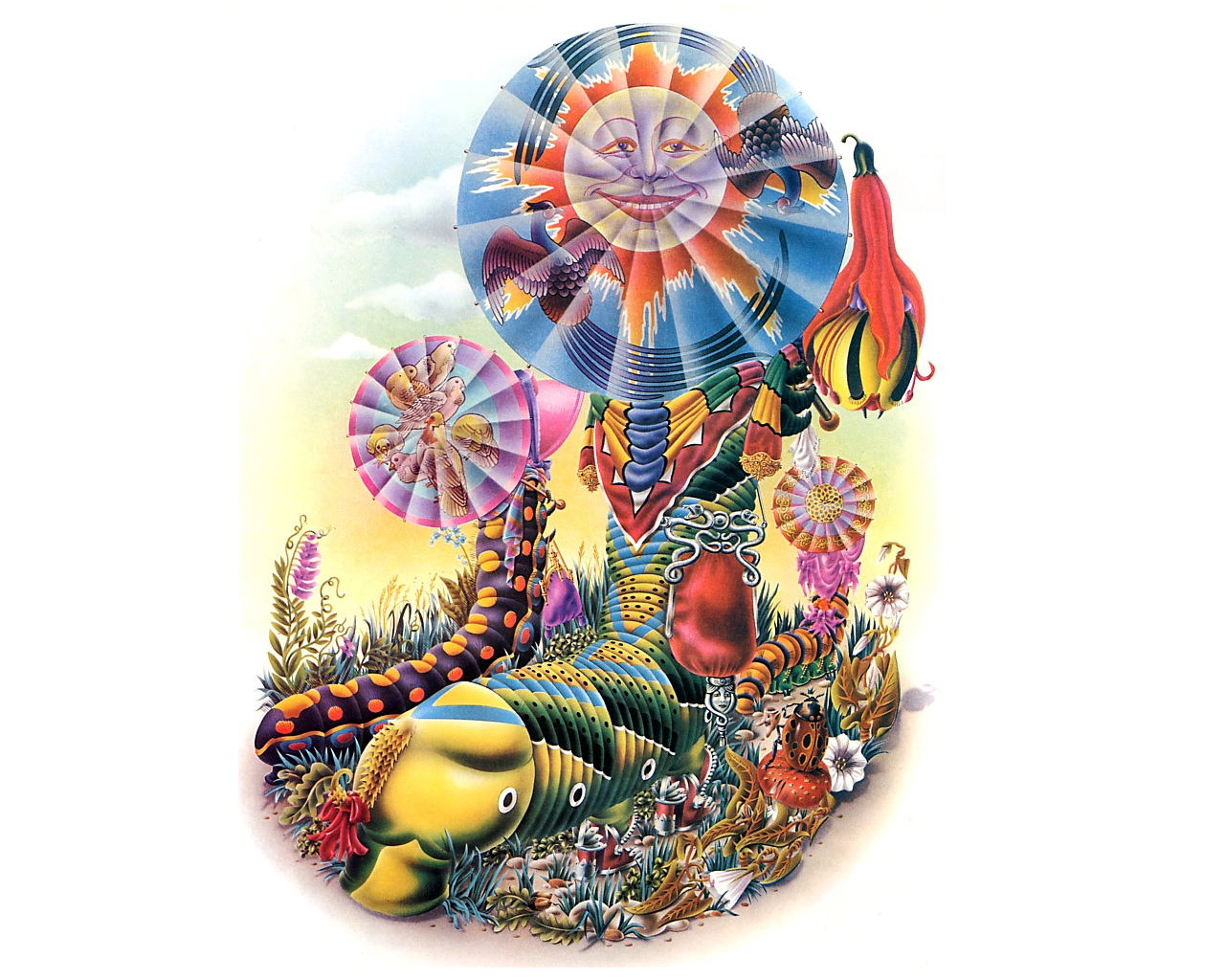
Alan Aldridge is a UK artist and illustrator based out of Los Angeles. Aldridge first worked as an illustrator at ‘The Sunday Times Magazine.’ He was hired in 1965 by Penguin’s chief editor Tony Godwin to become the art director of Penguin Books. Over the next two years as art director, he especially focused on science fiction book covers and introduced his style which resonated with the mood of the time. In 1968 he moved to his own graphic-design firm, INK, which became closely involved with graphic images for the Beatles and Apple Corps.
His work is characterized by a flowing, cartoony style and soft airbrushing – very much in step with the psychedelic styles of the times. In the theater, in 1969 he designed the graphics for controversial Jane Arden play ‘Vagina Rex and the Gas Oven.’ He is possibly best known, however, for the picture book ‘The Butterfly Ball and the Grasshopper Feast’ (1973), a series of illustrations of anthropomorphic insects and other creatures, which he created in collaboration with William Plomer, who wrote the accompanying verses. This was based on William Roscoe’s poem of the same name, but was inspired when Aldridge read that John Tenniel had told Lewis Carroll it was impossible to draw a ‘wasp in a wig’.
Posted in Art |
Leave a Comment »
June 30, 2011

John Pasche is an art designer, most famous for designing the ‘Tongue and Lip Design’ logo for the popular band The Rolling Stones. He designed four tour posters for the Rolling Stones between 1970 and 1974, and also worked for other reputed artists, such as Paul McCartney, The Who, The Stranglers and Dr Feelgood. He works as a freelance designer in Surrey, UK, and he still remains a fan of the band.
Pasche designed the ‘Tongue and Lip Design’ logo in 1971, which was originally reproduced on the ‘Sticky Fingers’ album. In what was perhaps one of the first cases of rock brand marketing, Jagger reportedly approached the Royal College of Art in 1969 looking to commission images for the band. Pasche designed the logo and ended up working for the Stones. ‘Face to face with him, the first thing you were aware of was the size of his lips and his mouth,’ Pasche said.
Posted in Art, Money |
Leave a Comment »
June 30, 2011


The Royal Society for the encouragement of Arts, Manufactures and Commerce (RSA) is a British multi-disciplinary institution, based in London. The name Royal Society of Arts is frequently used for brevity. It was founded in 1754 and was granted a Royal Charter in 1847. Notable members have included Benjamin Franklin, Karl Marx, Adam Smith, Stephen Hawking and Charles Dickens. Its founding charter expressed the purpose of the society as being to ’embolden enterprise, enlarge science, refine art, improve our manufactures and extend our commerce,’ but also of the need to alleviate poverty and secure full employment.
In its early years, the Society offered prizes — which it called ‘premiums’ — for people who could successfully achieve one of a number of published challenges. Captain William Bligh suffered the ‘Mutiny on the Bounty’ while attempting to win a premium for shipping breadfruit from the East to the West Indies. He subsequently repeated the voyage and this time succeeded, and the Society awarded him the prize. The Society offered premiums for a very wide range of challenges including devising new forms of machinery and agricultural improvements (which included seeking ways to improve the cultivation of opium poppies).
Posted in Art, Money, World |
Leave a Comment »
June 30, 2011

RoboCup is an international robotics competition founded in 1997. The aim is to develop autonomous soccer robots with the intention of promoting research and education in the field of artificial intelligence.
The name RoboCup is a contraction of the competition’s full name, “‘Robot Soccer World Cup,’ but there are many other stages of the competition such as ‘Search and Rescue’ and ‘Robot Dancing.’ The official goal of the project: ‘By mid-21st century, a team of fully autonomous humanoid robot soccer players shall win the soccer game, complying with the official rule of the FIFA, against the winner of the most recent World Cup.’
Posted in Games, Technology |
Leave a Comment »
June 30, 2011


Action origami is origami that can be animated. The original traditional action model is the flapping bird. Typically models where the final assembly involves some special action, for instance blowing up a waterbomb, are also classed as action origami., More rarely models like paper plane and spinners which have no moving parts are included. Some traditional action origami involved cuts but modern models typically are built with no cuts.
Action toys include birds or butterflies with flapping wings, beaks that peck, and frogs that hop, as well as popular traditional models like the fortune teller. Bangers are models that make a nose when flicked down hard. Some models are far more complex than can be classed as toys. They are built to amaze and astonish. For instance Robert J. Lang’s ‘Bassist, Pianist, and Violinist’ is a set of action models where each one plays an instrument when pulled on appropriately.
Posted in Art, Games, Language |
Leave a Comment »
June 30, 2011

Liquid and digits is a type of gestural, interpretive, rave and urban street dance that sometimes involve aspects of pantomime. The term invokes the word ‘liquid’ to describe the fluid-like motion of the dancer’s body and appendages and ‘digits’ to refer to illusions constructed with the dancer’s fingers. Liquid dancing has many moves in common with popping and waving. While some argue that the dance evolved spontaneously in the 19902 rave culture, others contend it originated in the break dancing culture of the 1970s. With the decline of the original rave scene, liquid has become a standing part of a worldwide club culture and the underground street dancing movement.
B-boys and funk stylists generally contend that liquid dancing is a development of waving, a technique in popping. Liquid dancing covers many of the same fundamentals as popping and it is fully possible (and common) for dancers to combine the styles, further blurring the distinction between the two. The defining difference is liquid dancing concentrating on smooth movements while popping is characterized by jerky pops (hits) and contractions. Some liquid practitioners accentuate their dance with light emitting gear such as glowsticks, LED keychain lights, or white gloves under black light. When a dancer specializes in glowsticks, the dance often ceases to resemble liquid and is then referred to as glowsticking.
Posted in Art, Games |
Leave a Comment »
June 30, 2011

Tutting is a contemporary abstract interpretive street dance style modeled after Egyptian hieroglyphics. It is performed with attention to the musics’ rhythm by altering the position of the body and limbs in a synchronized, robotic manner. The size of poses, or tuts, varies from large body tuts to intricate finger tuts. The transitions between poses can be elaborate and expressive. Moreover, certain sub-styles have emerged such as boxing (creating and manipulating box-like or rectangular shapes predominantly with ones arms) and a liquid-influenced style that some tutters use to make the joints appear as hinges that can then be manipulated by another body part.
Both techniques are special applications of the mime concept ‘fixed point.’ Much as a mime conveys a wall by always keeping one hand on the wall, or shows a rope by always keeping one hand on the rope, a tutter shows a shape by always maintaining at least one side of the shape. To do this, a tutter will use his body parts to assemble a shape segment by segment and disassemble it in the same piecemeal fashion. The electronic dance community has played a large role in the increasing robustness of tutting due to the more abstract nature of its own predominant style, liquiding. Tutting is highly regarded in both the electronic and popping communities for its technical depth and distinctiveness.
Posted in Art, Games, Language |
Leave a Comment »
June 30, 2011

Yellow Magic Orchestra (YMO) is a Japanese electronic music band consisting of principal members Haruomi Hosono (bass and keyboards), Yukihiro Takahashi (drums and lead vocals) and Ryuichi Sakamoto (keyboards and vocals). The group began under the name ‘Yellow Magic Band’ in 1977, and then renamed itself as ‘Yellow Magic Orchestra’ in 1978.
The band’s former ‘fourth member’ was music programmer Hideki Matsutake. They are regarded as influential innovators of popular electronic music. They helped pioneer synthpop and ambient house, ushered in electronica, anticipated the beats and sounds of electro music, laid the foundations for J-pop, and influenced the house, techno, and hip-hop movements.
Continue reading →
Posted in Art, Technology, World |
Leave a Comment »
June 30, 2011


A chiptune, also known as chip music, is synthesized electronic music often produced with the sound chips of old computers and video game consoles, as well as with other methods such as emulation. In the early 1980s, home computers became cheaper and more accessible; this led to a proliferation of personal computers and gaming consoles that were abandoned as users moved on to the next generation of software, and the hardware to run it. Small groups of artists and musicians continue to use these forgotten computers to produce audio and visual work.
The game technologies that are typically used in chip music production are those produced from the 1980s up until the early to mid 1990s. These systems, including the NEC PC-8801, Commodore 64, Nintendo Entertainment System, and Nintendo Game Boy, were aimed at the domestic consumer market. These systems were unique in that they marked a period in the technological development of game audio in which dedicated hardware sub-systems or sound chips were used to create sound.
Continue reading →
Posted in Art, Games, Technology |
Leave a Comment »
June 30, 2011

Mati Klarwein (1932 – 2002) was a painter best known for his works used on the covers of music albums. Klarwein was born in Hamburg, Germany. His family was of Jewish origin and fled to the British Mandate of Palestine when he was two years old, after the rise of Nazi Germany.
In 1948 when the territory became Israel, his family traveled to Paris. There Mati studied with French painter, Fernand Léger. Later, he traveled south to Saint-Tropez and met Austrian artist, Ernst Fuchs, who would have a profound influence on him. Leaving France in the 1950s, Klarwein traveled widely and lived in many different countries, including Tibet, India, Bali, North Africa, Turkey, Europe and the Americas. He settled in New York City in the early 1960s.
Continue reading →
Posted in Art, Drugs |
Leave a Comment »
June 30, 2011
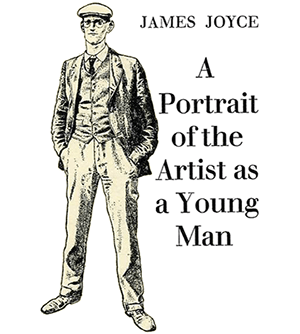

The Bildungsroman [bil-doongz-roh-mahn] (German: ‘education novel’) is a genre of novel which focuses on the psychological and moral growth of the protagonist from youth to adulthood, and in which character change is thus extremely important. The term was coined by philologist (scholar of language in written historical sources) Karl Morgenstern in 1819, and later famously reprised by German historian Wilhelm Dilthey in 1905. The birth of the genre is normally dated to the publication of Goethe’s ‘The Apprenticeship of Wilhelm Meister’ in 1795 in Germany. A Bildungsroman tells about the growing up or coming of age of a sensitive person who is looking for answers and experience. The genre evolved from folklore tales of a dunce or youngest son going out in the world to seek his fortune.
Typically, in the beginning of the story there is an emotional loss which makes the protagonist leave on his journey. In a Bildungsroman, the goal is maturity, and the protagonist achieves it gradually and with difficulty. The genre often features a main conflict between the character and society. Typically, the values of society are gradually accepted by the protagonist who is in turn welcomed back into the fold. There are many variations and subgenres: An Entwicklungsroman (‘development novel’) is a story of general growth rather than self-cultivation. An Erziehungsroman (‘education novel’) focuses on training and formal schooling, while a Künstlerroman (‘artist novel’) is about the development of an artist and shows a growth of the self.
Posted in Art, Language, World |
Leave a Comment »