July 4, 2011

Indie electronic (also called indietronica) is a music genre that combines indie, electronica, rock and pop music. Typical instruments used in indietronica music are electronic keyboard, synthesizer, sampler and drum machine.
Indie electronic began in the early ’90s with bands like Stereolab and Disco Inferno, took off in the new millennium as the new digital technology developed, with acts including Broadcast from the UK, Justice from France, Lali Puna from Germany and The Postal Service, and Ratatat from the US, mixing a variety of indie sounds with electronic music, largely produced on small independent labels.
Posted in Art, Money, Technology |
Leave a Comment »
July 4, 2011

Enter the Void is a 2009 French film written and directed by Gaspar Noé, labeled by Noé as a ‘psychedelic melodrama. The story is set in Tokyo and focuses on Oscar, a young American drug dealer who gets shot by the police, but continues to watch over his sister Linda and the events which follow during an out-of-body experience, floating above Tokyo’s streets. The film is shot from a first-person view, and occasionally features Oscar staring over his own shoulder as he recalls moments from his past.
Having been Noé’s dream project for many years, the production of ‘Enter the Void’ was made possible due to the commercial success of ‘Irréversible,’ the director’s previous feature film. The film makes heavy use of imagery inspired by experimental cinema and psychedelic drug experiences. Principal photography took place on location in Tokyo and involved many complicated crane shots. Continue reading →
Posted in Art, Drugs, World |
1 Comment »
July 3, 2011

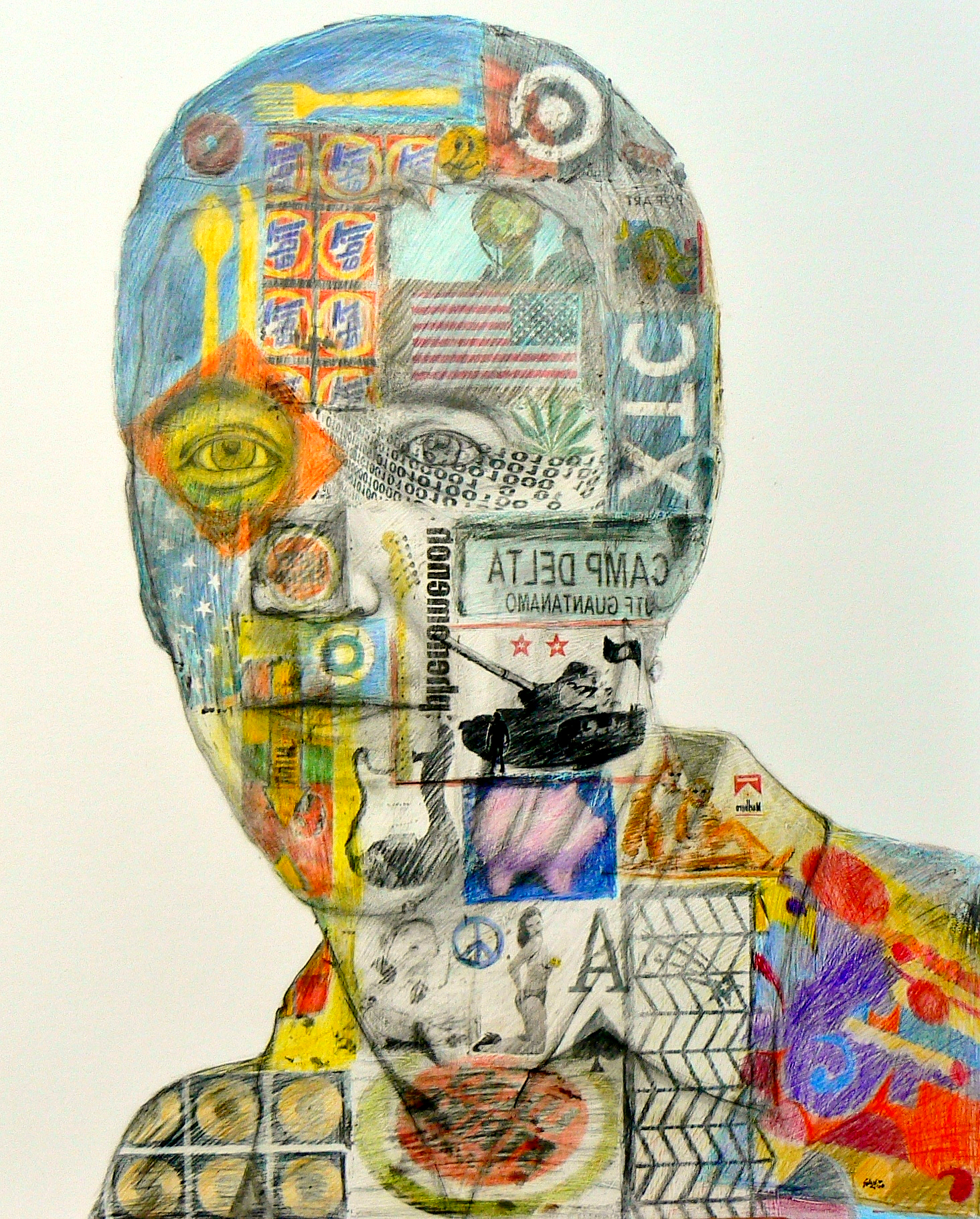
Monoprinting is a form of printmaking that has images or lines that can only be made once, unlike most printmaking, where there are multiple originals. There are many techniques of monoprinting, including lithography, woodcut, and etching. A monoprint is a single impression of an image made from a reprintable block, such as a metal plate used for etching, a litho stone or wood block. Rather than printing an edition of multiple copies of a single image, only one impression may be produced, either by painting or making a collage on the block. Etching plates may also be inked in a way that is expressive and unique in the strict sense, in that the image cannot be reproduced exactly.
Monoprints may also involve elements that change, where the artist reworks the image in between impressions or after printing so that no two prints are aboslutely identical. Monoprints may include collage, hand-painted additions, and a form of tracing by which thick ink is laid down on a table, paper is placed on top and is then drawn on, transferring the ink onto the paper. Monoprints can also be made by altering the type, color, and pressure of the ink used to create different prints. Monoprints are known as the most painterly method among the printmaking techniques; it is essentially a printed painting. The characteristic of this method is that no two prints are alike. The beauty of this medium is also in its spontaneity and its combination of printmaking, painting and drawing media.
Posted in Art, Technology |
Leave a Comment »
July 3, 2011

Ted McCarty (1910 – 2001) was a pioneer of electric guitar design and production. This began when he was chosen as vice president of the of Gibson Guitar Corporation in 1949, then later as president from 1950 to 1966. This period became known as Gibson’s golden age of electric guitars. During his tenure, Les Paul’s electric guitar design, the first solid-body guitar produced by Gibson, came to fruition. The Gibson Les Paul later became the company’s flagship solid body.
Never satisfied, McCarty sought to create a hybrid design that would combine the sustain of a solid-body electric with the mellow warmth of a hollow-body. The ES-335 was created as a ‘semi-hollow,’ with both a central block running the length of the guitar and hollow wings. McCarty was also responsible for the development of the Tune-o-matic bridge system, the humbucking pickup, and the Explorer, Flying V, Moderne, SG and Firebird guitars. Like Leo Fender, McCarty never played the guitar. He instead talked with every guitarist he could in order to find out what guitar players were interested in.
Posted in Art, Money, Technology |
Leave a Comment »
July 3, 2011
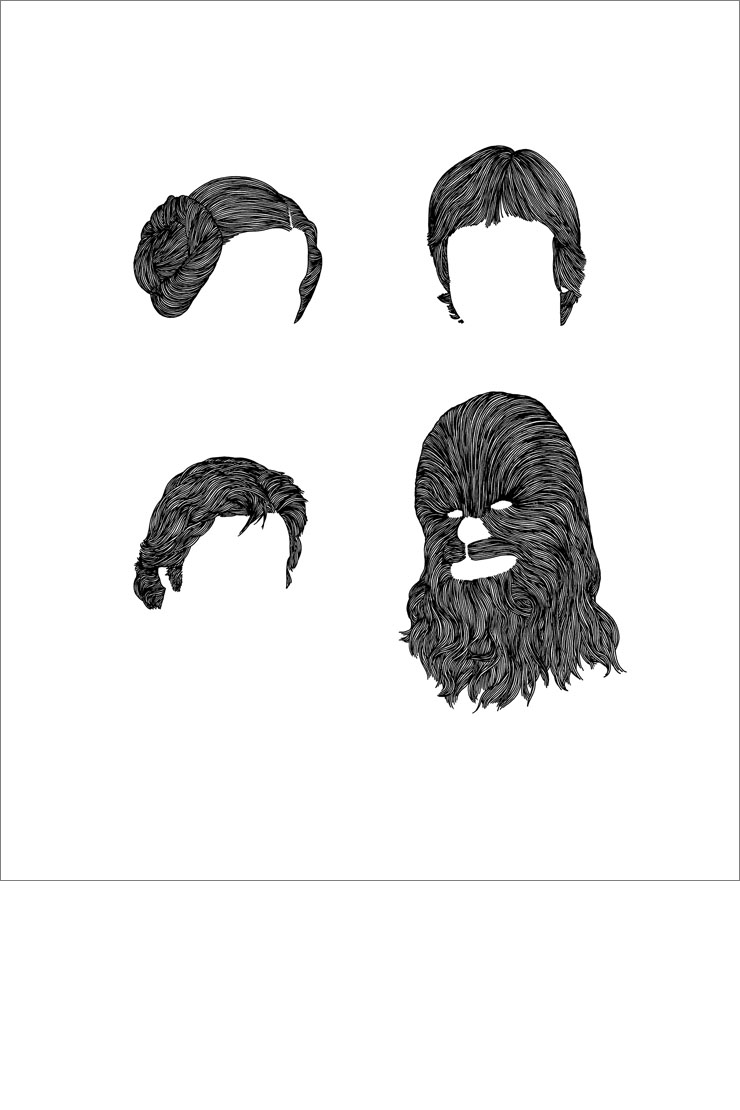
Mr Bingo (b. 1979) is an illustrator living and working in London. He describes himself as having a ‘slightly smaller than average’ head and ‘girl’s arms,’ plus ‘the same haircut as his mum.’ He includes amongst his influences ‘[the] local ASDA supermarket, thick humans, fat humans, dogs who wear clothes, the British abroad, overheard conversations and juvenile graffiti.’
A selection of his work can be found on his website, and he has created a number of limited edition silkscreen prints which can be viewed online, and (so far) consist of ‘Hair portraits’ – famous ‘faces,’ illustrated only by their hair.
Posted in Art, Humor |
Leave a Comment »
July 3, 2011
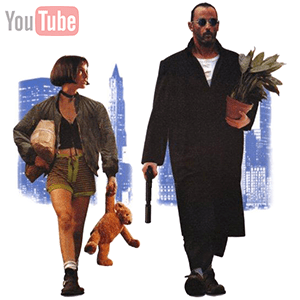
‘Léon‘ (also known as ‘The Professional’) is a 1994 thriller film written and directed by French director Luc Besson. It stars Jean Reno as a mob hitman, Gary Oldman as a corrupt DEA agent, and a young Natalie Portman, in her feature film debut, as a 12-year-old girl who is taken in by the hitman after her family is murdered by corrupt police agents.
Léon is a hitman (or ‘cleaner,’ as he refers to himself) living a solitary life in New York City’s Little Italy. His work comes from a mafioso who operates from the ‘Supreme Macaroni Company’ restaurant. Léon spends his idle time engaging in calisthenics, nurturing a houseplant that early on he describes as his ‘best friend,’ and (in one scene) watching old Gene Kelly musicals. Léon is to some extent an expansion of an idea in Besson’s earlier 1990 film, ‘La Femme Nikita,’ in which Jean Reno plays a similar character named Victor. Besson described Léon as ‘Now maybe Jean is playing the American cousin of Victor. This time he’s more human.’
Posted in Art |
Leave a Comment »
July 3, 2011
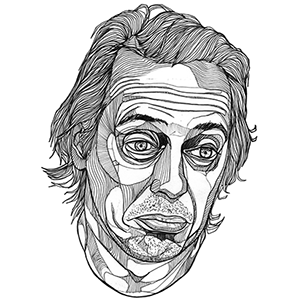
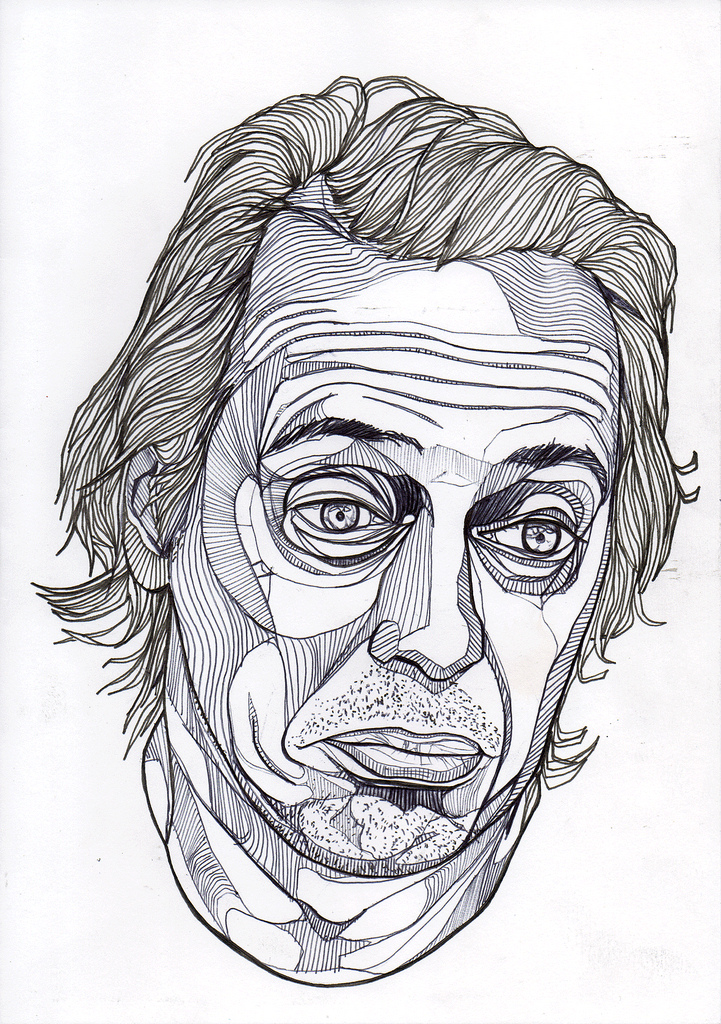
Steve Buscemi (b. 1957) is an American actor, writer and film director. An associate member of the renowned experimental theater company The Wooster Group, Buscemi has starred in successful Hollywood and indie films including ‘Reservoir Dogs,’ ‘Fargo,’ ‘The Big Lebowski,’ ‘Armageddon,’ and’ Big Fish. Buscemi was born in Brooklyn, New York, the son of Dorothy, who worked as a hostess at Howard Johnson’s, and John Buscemi, a sanitation worker and Korean War veteran. Buscemi’s father was of Sicilian descent, his ancestors from Menfi, and his mother was of part Irish ancestry. He has three brothers: Jon, Ken, and Michael, and was raised Roman Catholic.
Buscemi often plays characters that are neurotic and paranoid. He has appeared in a number of films by the Coen Brothers, in which he tends to die in a grisly, prolonged or unexpected manner. He frequently provides comic relief in Adam Sandler films such as ‘Airheads,’ ‘Billy Madison,’ ‘The Wedding Singer,’ and ‘Big Daddy.’
Posted in Art |
3 Comments »
July 3, 2011

An Aerobie is a flying ring used in a manner similar to a flying disc (Frisbee) for recreational catches between two or more individuals. An Aerobie is lighter, and is more stable in flight than a Frisbee. It can be bent to tune it for straighter flight. Designed in 1984 by Stanford engineering lecturer Alan Adler, the Aerobie has a polycarbonate core with soft rubber bumpers molded onto the inner and outer rims. The outer rim has a spoiler designed to impart stability.
In the 1970s, Adler began attempting to improve the flying disc, considering its design characteristics. He tried streamlining the shape to reduce drag, but this resulted in a disc that was more unstable in flight. Eventually, he turned his attention to the ring shape. This led to the development of the predecessor of the Aerobie, which was called the ‘Skyro.’ About a million of this model were sold. In 1980, it was used to set a Guiness World Record throw of 261 meters. It lacked the spoiler rim of the Aerobie. It had low drag, but was only stable at a certain speed. The later introduction of the spoiler, which balanced the lift, made the ring stable ‘over a wide range of speeds.’
Posted in Games, Money |
Leave a Comment »
July 3, 2011

‘Eminence Front‘ is a song written and sung by Pete Townshend of The Who. It appears as the sixth track on the group’s 1982 studio album, ‘It’s Hard.’ It is the only song from the album that the band has opted to play live after the initial post-release tours. Lead singer Roger Daltrey, vocally critical of the album, described ‘Eminence Front’ as the only song on it that he felt was worthy of being released.
In the song, Townshend sings about the delusions and drug use of the wealthy and hedonistic. The lyrics describe a party in which people hide from their problems behind a facade. Townshend has introduced the song in live performances with: ‘This song is about what happens when you take too much white powder; it’s called Eminence Front.’
Posted in Art, Drugs, Money |
1 Comment »
July 3, 2011

Manqué [mahng-key] (feminine, manquée) is a term used in reference to a person who has failed to live up to a specific expectation or ambition. It is usually used in combination with a profession: for example, a career civil servant with political prowess who nonetheless never attained political office might be described as a ‘politician manqué.’
It can also be used relative to a specific role model; a second-rate method actor might be referred to as a ‘Marlon Brando manqué.’ The term derives from the past participle of the French verb manquer (‘to miss’). In English, it is used in the manner of a French adjective: coming after the noun it is modifying instead of before.
Posted in Language, Politics, World |
Leave a Comment »
July 3, 2011

The Subservient Chicken is a 2004 advertising campaign created to promote international fast food restaurant chain Burger King’s TenderCrisp chicken sandwich and their ‘Have it Your Way’ campaign. On its website, a man in a chicken costume performs a wide range of actions based on a user’s input, showing pre-recorded footage and appearing like an interactive webcam. The site takes literally the advertising slogan ‘Get chicken just the way you like it.’
There are more than three hundred commands that the Subservient Chicken will respond to, including: Moonwalk, Riverdance, and pick your nose. When told to perform sex acts, take off his mask, or do anything the Subservient Chicken considers offensive, the chicken walks up to the camera and shakes a scolding chicken finger in disappointment.
Posted in Food, Humor, Money |
Leave a Comment »
July 3, 2011

Milk kinship, formed during nursing by a non-biological mother, was a form of fostering allegiance with fellow community members. In the early modern period, milk kinship was widely practiced in many Arab countries for both religious and strategic purposes. Like the Christian practice of godparenting, milk kinship established a second family that could take responsibility for a child whose biological parents came to harm. ‘Milk kinship in Islam thus appears to be a culturally distinctive, but by no means unique, institutional form of adoptive kinship.’ A child in one of these societies would be breastfed by a woman of a lower class, enabling the child’s biological mother to maintain her modesty.
The childhood of the prophet Muhammad illustrates the practice of traditional Arab milk kinship. In his early childhood, he was sent away to foster-parents amongst the Bedouin. By nursing him, Halimah bint Abdullah became his ‘milk-mother.’ The rest of her family was drawn into the relationship as well: her husband al-Harith became Muhammad’s ‘milk-father,’ and Muhammad was raised alongside their biological children as a ‘milk-brother.’ This case suggests that it was typical for a child’s wet nurse to be responsible for raising him. Continue reading →
Posted in Food, Philosophy, World |
Leave a Comment »