March 17, 2011

A paywall blocks access to a webpage with a screen requiring payment. Web sites that use them include some owned by periodical publications. In 2002 the Financial Times started charging for Web access to published stories. The Wall Street Journal has almost one million paying online readers, which generates about $65 million a year.
Utilities to circumvent paywalls are available. RefSpoof for Mozilla Firefox spoofs the referrer to Google so that multiple ‘first click free’ links can be performed. BreakthePaywall adds an option to Internet Explorer’s context menu which uses various methods (referrer and user-agent spoofing, Cookie deletion, etc.).
Posted in Language, Money, Technology |
Leave a Comment »
March 17, 2011

Charley Harper (1922 – 2007) was a Cincinnati-based American Modernist artist. He was best known for his highly stylized wildlife prints, posters and book illustrations. During his career, Charley Harper illustrated numerous books, notably ‘The Golden Book of Biology,’ magazines such as ‘Ford Times,’ as well as many prints, posters, and other works.
As his subjects are mainly natural, with birds prominently featured, Charley often created works for many nature-based organizations, among them the National Park Service and the Cincinnati Zoo.
Posted in Art, Science |
Leave a Comment »
March 17, 2011
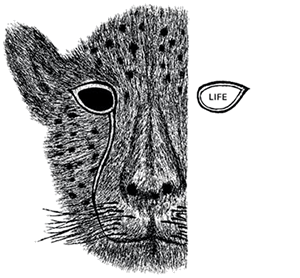
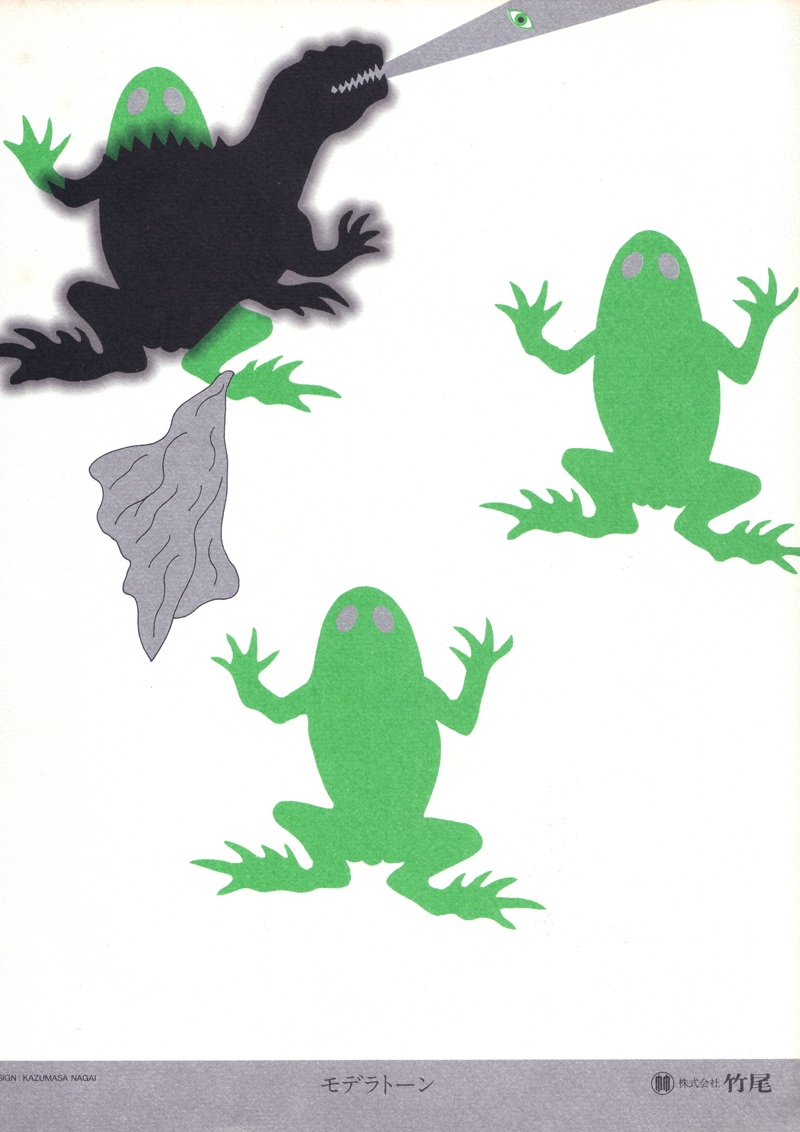
Kazumasa Nagai (b. 1929) is a Japanese graphic artist and poster designer. He co-founded the Nippon Design Center in Tokyo in 1960.
Posted in Art, Money, World |
Leave a Comment »
March 17, 2011

The endurance running hypothesis is the theory that the evolution of certain human characteristics can be explained as adaptations to long-distance running. The theory states that prior to the invention of the spear, the first projectile weapon, 200,000 years ago, ancient humans would use persistence hunting as their method of hunting animals, whereby, rather than outpacing animals, they would chase the animals over long distances until the animals would overheat.
Thus, adaptations favoring long-distance running ability would have been favored in humans. After projectile weapons were developed – in evolutionarily recent times – the importance of long-distance running became lessened but the traits remained.
Posted in Games, Science |
Leave a Comment »
March 17, 2011

The aquatic ape hypothesis (AAH), an alternative explanation of some characteristics of human evolution, theorizes that the common ancestors of modern humans spent a period of time adapting to life in a partially-aquatic environment. The theory is based on differences between humans and other great apes, and apparent similarities between humans and some aquatic mammals. First proposed in 1942 and expanded in 1960, its greatest proponent has been the writer Elaine Morgan, who has spent more than forty years discussing the AAH.
While there are theories suggesting protohumans underwent some adaptations due to interaction with water, the sort of radical specialization posited by the AAH has not been accepted within the scientific community as a valid explanation for human divergence from related primates. It has been criticized for possessing a variety of theoretical problems, for lacking evidentiary support, and for there being alternative explanations for many of the observations suggested to support the theory.
Posted in Science |
Leave a Comment »
March 17, 2011

‘The Naked Ape: A Zoologist’s Study of the Human Animal’ is a 1967 book by ethologist Desmond Morris which examines human behavior (he wrote a followup, ‘The Human Zoo,’ about urban behavior in 1969). Ethology is the scientific study of animal behavior, a sub-topic of zoology. Morris attempted to frame human behavior in the context of evolution, but his explanations failed to convince academics because they were based on a teleological (goal-oriented) understanding of evolution. However, the book was revolutionary for its time and has found fans among anthropologists and zoologists alike.
‘The Naked Ape’ depicts human behavior as largely evolved, to meet the challenges of prehistoric life as a hunter-gatherer. Morris made a number of claims in the book, including that not only does Homo sapiens have the largest brain of all primates but also the largest penis. He further claimed that our fleshy ear-lobes, which are unique to humans, are erogenous zones, the stimulation of which can cause orgasm in both sexes. Morris stated that the more rounded shape of human female breasts means they are mainly a sexual signalling device rather than simply for providing milk for infants.
Posted in Language, Science |
Leave a Comment »
March 17, 2011

Sukey is British organization formed to counteract the police tactics of kettling, by co-ordinating information electronically and transmitting it to the protesters, allowing them to avoid the police kettle. ‘Sukey,’ is British slang for the person who takes the kettle off the stove (which is itself derived from the nursery rhyme: ‘Polly Put the Kettle On.’
The organization was founded by the students Sam Carlisle and Sam Gaus during the occupation by students at University College London. The system was first used for a London demonstration against the proposed abolition of the Education Maintenance Allowance (EMA) on 29 January 2011.
Posted in Politics, Technology |
Leave a Comment »
March 17, 2011


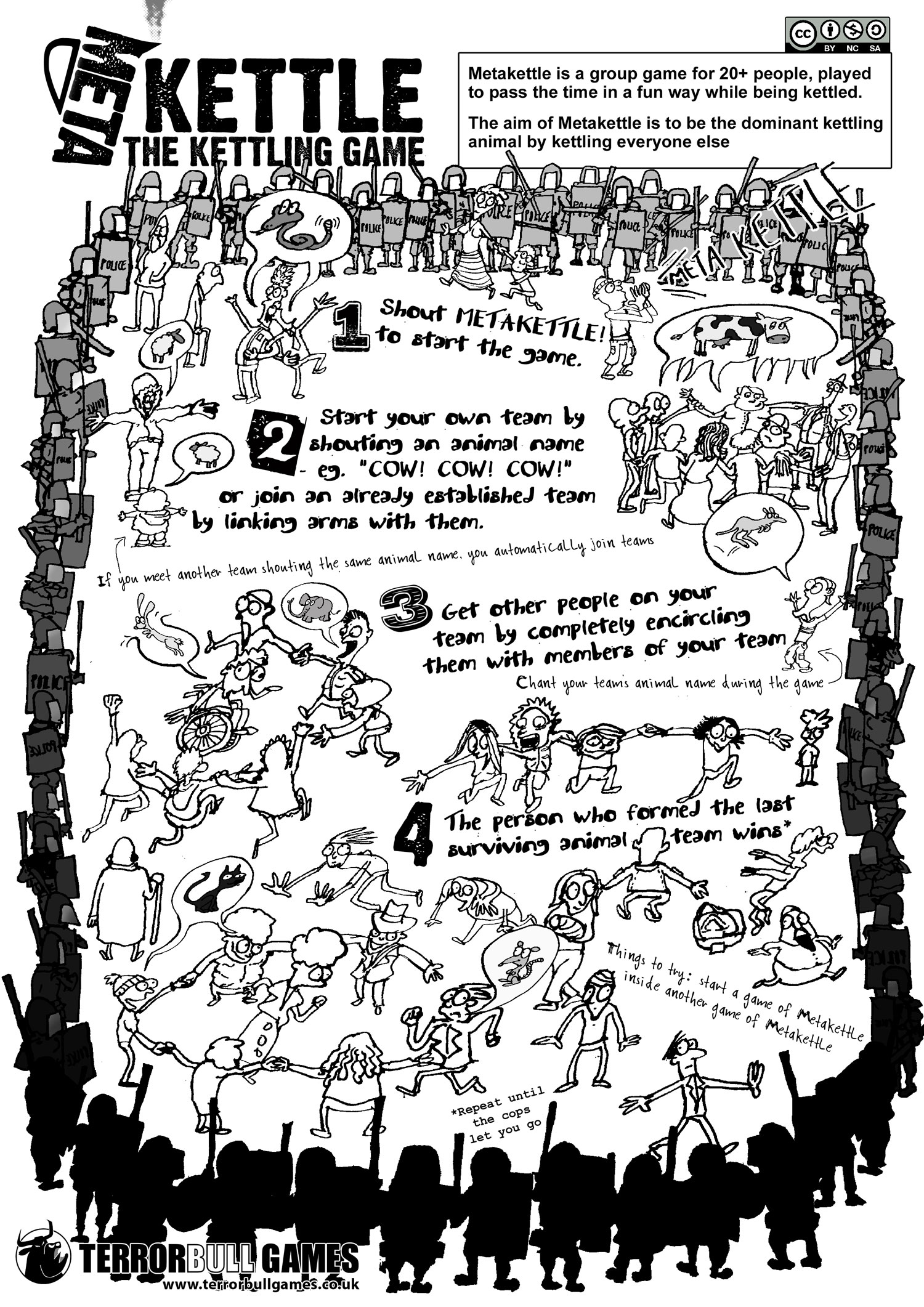
Kettling, also known as containment or corralling, is a police tactic for the management of large crowds during demonstrations or protests. It involves the formation of large cordons of police officers who then move to contain a crowd within a limited area. Protesters are left only one choice of exit, determined by the police, or are completely prevented from leaving. The term ‘kettle’ is a metaphor, likening the containment of violence to the containment of heat and steam within a domestic kettle.
The tactic prevents large groups from breaking into smaller splinters that have to be individually chased down, thus requiring the policing to break into multiple small battles. Kettling has been criticized for being an indiscriminate tactic which leads to the detention of law-abiding citizens and innocent bystanders, as well as for denying detainees access to food, water and toilets (for long periods of time in some cases). Critics also allege that kettling has been used to foment disorder with the aim of changing the focus of public debate.
Posted in Politics, War, World |
Leave a Comment »
March 16, 2011

Phase-change memory (PCM) is a type of computer memory which exploits the unique behavior of chalcogenide glass; with the application of heat produced by the passage of an electric current, this material can be ‘switched’ between two states, crystalline and amorphous.
Recent versions can achieve two additional distinct states, effectively doubling its storage capacity. PCM is one of a number of new memory technologies competing in the non-volatile role with the almost universal flash memory, but is faster and uses far less power than the latter. Samsung last year announced a 512Mbit PCM RAM chip for use in mobile handsets.
Posted in Money, Technology |
Leave a Comment »
March 16, 2011

The China Syndrome is a term coined by an American physicist in 1971 to describe the result of a severe nuclear meltdown in which molten reactor core components penetrate their containment vessel and building. The term is misleading, since molten material from such an event could not melt through the crust of the Earth and reach China.
Nuclear power plants ordered during the late 1960s raised safety questions and created fears that a severe reactor accident could release large quantities of radioactive material into the environment. In the early 1970s, a controversy arose regarding the ability of emergency cooling systems to prevent a core meltdown, which might lead to the so-called China Syndrome.
Posted in Politics, Technology |
Leave a Comment »
March 16, 2011

A nuclear meltdown is an informal term for a severe nuclear reactor accident that results in core damage from overheating. The term is not officially defined by the International Atomic Energy Agency. Meltdown conditions can be created when system failures lead to temperatures and heat generation that exceed cooling capacity to the extent that the nuclear fuel assemblies overheat and melt, either partially or completely.
A meltdown is considered very serious because of the potential that highly intense radioactive materials with long half-lives and lethal threat could be released into the environment. The effects of a nuclear meltdown depend on the safety features designed into a reactor. A modern reactor is designed both to make a meltdown unlikely, and to contain one should it occur. Continue reading →
Posted in Language, Money, Technology |
Leave a Comment »
March 16, 2011

Joel Thomas Zimmerman (b. 1981), better known by his stage name deadmau5 (pronounced ‘dead mouse’), is a Canadian progressive, electro, and house producer based in Toronto, Ontario. His debut album, ‘Get Scraped,’ was released in 2006. He is known for often performing in a titular costume head which he originally created while learning to use a 3D program, which resembles a mouse head.
Posted in Art, Money, Technology |
Leave a Comment »