January 1, 2011

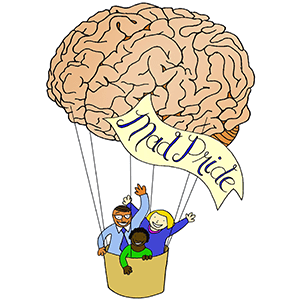
Neurodiversity is an idea which asserts that atypical neurological development is a normal human difference that is to be recognized and respected as any other human variation. Differences may arise in ways of processing information, including language, sound, images, light, texture, taste, or movement. The concept of neurodiversity is embraced by some autistic individuals and people with related conditions.
Some groups apply the concept of neurodiversity to conditions potentially unrelated to autism such as bipolar disorder, ADHD, schizophrenia, circadian rhythm disorders, developmental speech disorders, Parkinson’s disease (and other motor control disorders), and dyslexia.
Posted in Health, Politics |
Leave a Comment »
January 1, 2011
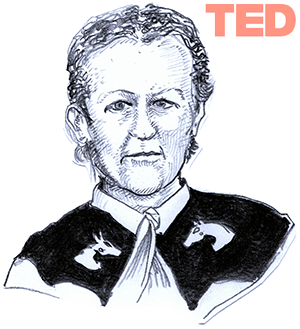
Temple Grandin (b. 1947) is an American doctor of animal science and professor at Colorado State University, bestselling author, and consultant to the livestock industry on animal behavior. As a person with high-functioning autism, Grandin is also widely noted for her work in autism advocacy and is the inventor of the ‘hug machine’ designed to calm hypersensitive persons.
Grandin became well known after being described by Oliver Sacks in the title narrative of his book ‘An Anthropologist on Mars’ (1995); the title is derived from Grandin’s description of how she feels around neurotypical people. She first spoke in public about autism in the mid-1980s at the request of Ruth C. Sullivan, one of the founders of the Autism Society of America. Continue reading →
Posted in Health, Science |
Leave a Comment »
January 1, 2011
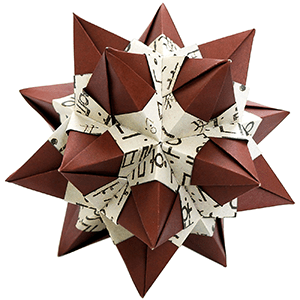

The Japanese kusudama (literally ‘medicine ball’) is a paper model that is usually (although not always) created by sewing or gluing multiple identical pyramidal units (usually stylized flowers folded from square paper) together through their points to form a spherical shape. Occasionally, a tassel is attached to the bottom for decoration.
Kusudama originate from ancient Japanese culture, where they were used for incense and potpourri; possibly originally being actual bunches of flowers or herbs. They are now typically used as decorations, or as gifts. It is a precursor to modular origami, a paper folding technique which uses multiple sheets of paper to create a larger and more complex structure than possible using single-piece origami techniques.
Posted in Art, World |
Leave a Comment »
January 1, 2011

Dox (short for documents) is internet slang for personal information, often including real name, known aliases, addresses, phone numbers, SSN, credit card numbers, place of employment, etc. A person is ‘doxed’ when all their personal information is made public.
Posted in Language, Technology |
Leave a Comment »
January 1, 2011

Free Beer, formerly known as ‘Our Beer,’ is the first brand of Danish beer with a ‘free’ recipe – free as in ‘freedom,’ taken after the term ‘free software.’ The name ‘Free Bee’ is a play on Richard Stallman’s common explanation that free software is ‘free as in speech, not free as in beer.’ The recipe is published under a Creative Commons license, specifically the Attribution-ShareAlike license. The beer was created by students at the IT-University in Copenhagen together with Superflex, a Copenhagen-based artist collective, to illustrate how concepts of the free software movement might be applied outside the digital world.
Initially, much of the homebrewing community spoke out against the quality and comprehensiveness of the recipe. Making reference to the technical problems of when software instructions (‘source code’) cannot be made into a functioning program, several people commented that if the recipe were source code, it would not compile (a compiler is a program that takes ‘source code’ from a high-level language and changes it to a target language, mostly machine code, the lowest level language). Since then the recipe went through several iterations and has now reached version 4.0, which corrects most of the early mistakes. The quality of the beer also improved, and the amount of sugar in it decreased by 90%.
Posted in Drugs, Food, Philosophy |
Leave a Comment »
January 1, 2011
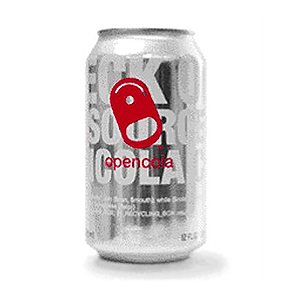
OpenCola is a brand of cola unique in that the instructions for making it are freely available and modifiable. Anybody can make the drink, and anyone can modify and improve on the recipe as long as they, too, license their recipe under the GNU General Public License. Since recipes are, by themselves, not copyrightable, the legal basis for this is untested.
The original version 1.0 was released on 27th January 2001. Current Version is 1.1.3. Although originally intended as a promotional tool to explain free and open source software, the drink took on a life of its own and 150,000 cans were sold. The Toronto-based company Opencola founded by Grad Conn, Cory Doctorow, and John Henson became better known for the drink than the software it was supposed to promote. Laird Brown, the company’s senior strategist, attributes its success to a widespread mistrust of big corporations and the ‘proprietary nature of almost everything.’
Posted in Food, Money, Politics |
Leave a Comment »
January 1, 2011

Blockhead (real name Tony Simon) is an American Hip hop producer based in Manhattan, New York. Aside from his solo efforts released on the Ninja Tune label, he is most associated with producing for Aesop Rock, a rapper for the Definitive Jux independent hip hop label. He is also a member of the hip hop/comedy group Party Fun Action Committee. His father, the late Sidney Simon, was a well known sculptor in New York City.
Posted in Art |
Leave a Comment »
December 24, 2010


In Jamaican popular culture, a sound system is a group of disc jockeys, engineers and MCs playing ska, rocksteady or reggae music. The sound system scene is generally regarded as an important part of Jamaican cultural history and as being responsible for the rise of several modern Jamaican musical genres.
The sound system concept first became popular in the 1950s, in the ghettos of Kingston. DJs would load up a truck with a generator, turntables, and huge speakers and set up street parties. In the beginning, the DJs played American rhythm and blues music, but as time progressed the sound migrated to a local flavor.
Continue reading →
Posted in Art, World |
Leave a Comment »
December 24, 2010

Dubstep is a genre of electronic dance music, originating from Croydon, UK. Its overall sound has been described as ‘tightly coiled productions with overwhelming bass lines and reverberant drum patterns, clipped samples, and occasional vocals.’
The earliest dubstep releases, which date back to 1998, were darker, more experimental, instrumental dub remixes of 2-step garage tracks attempting to incorporate the funky elements of breakbeat, or the dark elements of drum and bass into 2-step.
Continue reading →
Posted in Art, Technology |
1 Comment »
December 24, 2010


Pulp from the Latin ‘pulpa’ (animal or plant pulp, pith of wood). Pulp is the fibrous material used to make paper. It is also refers to the juice vesicles of a citrus fruit. The adjective meaning ‘sensational’ is from pulp magazines, named for the wood pulp paper used in cheaply made magazines and books. Pulp magazines (often referred to as ‘the pulps’), also collectively known as pulp fiction, refers to inexpensive fiction magazines published from 1896 through the 1950s. Pulps were printed on inexpensive paper with ragged, untrimmed edges.
Pulp is also name of a 1972 British comedy thriller starring Michael Caine as a writer of cheap paperback detective novels. The English alternative rock band Pulp formed six years later drew its name from the film. Pulp is also the title of the last novel by American writer Charles Bukowski. Additionally, Pulp refers to the central part of a tooth, commonly referred to as the nerve, it branches out and continues down each root through the canals of the tooth and stops just shy of the apex, or tip of the tooth. Red pulp and white pulp describes tissue in the spleen, an organ which creates blood cells.
Posted in Language, Science |
Leave a Comment »
December 23, 2010

Tadoma is a method of communication used by deafblind individuals, in which they place their thumb on the speaker’s lips and their fingers along the jawline. The middle three fingers often fall along the speaker’s cheeks with the little finger picking up the vibrations of the speaker’s throat. It is sometimes referred to as ‘tactile lipreading,’ as the deafblind person feels the movement of the lips, as well as vibrations of the vocal cords, puffing of the cheeks and the warm air produced by nasal sounds such as ‘N’ and ‘M.’
It is a difficult method to learn and use, and is rarely used nowadays. However, a small number of deafblind people successfully use Tadoma in everyday communication. Helen Keller also used a form of Tadoma.
Continue reading →
Posted in Health, Language |
Leave a Comment »
December 23, 2010

TV-B-Gone is a type of simple universal remote control device for turning off a large majority of the current available brands of television sets. It was created to allow people in a public place to turn off nearby television sets, presumably because the broadcast was distracting them from other activities. Its inventor has referred to it as ‘an environmental management device.’
The device is part of a key-chain, and, like other remote devices, is battery-powered. Although it can require up to 69 seconds for the device to find the proper code for a particular television receiver, the most popular televisions turn off in the first few seconds. During the 2008 Consumer Electronics Show, some individuals from gadget blog, Gizmodo brought a TV-B-Gone remote control and shut off many display monitors at booths and during demos affecting several companies. These actions caused the individual from Gizmodo to be banned for life from future CES events.
Posted in Humor, Technology |
Leave a Comment »