October 12, 2010


The Amazon Mechanical Turk (MTurk) is a crowdsourcing Internet marketplace that enables computer programmers (known as Requesters) who are located in the United States to co-ordinate the use of human intelligence to perform tasks which computers are unable to do. The Requesters are able to pose tasks known as HITs (Human Intelligence Tasks), such as choosing the best among several photographs of a store-front, writing product descriptions, or identifying performers on music CDs. Workers (called Providers) can then browse among existing tasks and complete them for a monetary payment set by the Requester.
Requesters can ask that Workers fulfill Qualifications before engaging a task, and they can set up a test in order to verify the Qualification. They can also accept or reject the result sent by the Worker, which reflects on the Worker’s reputation. Currently, a Requester has to have a U.S. address, but Workers can be anywhere in the world. Requesters, which are typically corporations, pay at least 10 percent over the price of successfully completed HITs to Amazon.
Posted in Money, Technology |
Leave a Comment »
October 12, 2010

Choco Taco is a brand of dessert food resembling a taco, consisting of a taco shell-like waffle cone, reduced-fat vanilla ice cream, artificially flavored fudge, peanuts, and a milk chocolate coating. The product was invented in Philadelphia in the 1980s by the Jack and Jill Ice Cream Company, but was introduced nationwide by Good Humor-Breyers in 1996 as ‘America’s coolest taco,’ at the Supermarket Industry Convention in Chicago, Illinois.
The ‘Choco Taco’ is marketed under both the Good Humor and Klondike brands. Both brands are owned by the same ice cream conglomerate, Good Humor-Breyers, a unit of Unilever, based in Green Bay, Wisconsin. In 1998, Unilever introduced the Choco Taco to Italy with the name Taco Algida.
Posted in Food, Money |
Leave a Comment »
October 11, 2010

On many computer operating systems, the superuser, or root, is a special user account used for system administration. Separation of administrative privileges from normal user privileges makes an operating system more resistant to viruses and other malware. Additionally, in organizations, administrative privileges are often reserved for authorized individuals in order to control abuse, misuse, or other undesired activities by end-users.
Posted in Language, Technology |
Leave a Comment »
October 11, 2010

Jailbreaking is a process that allows iPad, iPhone and iPod Touch users to install homebrew applications on their devices by unlocking the operating system and allowing the user root access. Once jailbroken, iPhone users are able to download many extensions and themes previously unavailable through the App Store via unofficial installers such as Cydia.
A jailbroken iPad, iPhone or iPod Touch is still able to use the App Store and iTunes. Jailbreaking is different from SIM unlocking, which, once completed, means that the mobile phone will accept any SIM without restriction on, for example, the country or network operator of origin.
Posted in Politics, Technology |
Leave a Comment »
October 11, 2010


Kush [koosh] refers to a subset of strains of indica cannabis. The origins of Kush cannabis are from landrace plants mainly in Afghanistan, but are also from Iran, Pakistan, and Northern India. The name derives from the Hindu Kush mountain range. Kush strains of cannabis were brought to the United States in the mid-to-late 1970s and continue to be available. Kush strains were among those cultivated by the British firm GW Pharmaceuticals for its legally licensed commercial trial of medicinal cannabis.
Congressman Mark Kirk, a Republican member of the House of Representatives from Illinois, introduced legislation to increase the penalties for selling kush: The High-Potency Marijuana Sentencing Enhancement Act of 2009 (H.R. 2848). Kirk said that as kush may sell for up to $600 per ounce increases penalties are justified, saying that ‘if you can make as much money selling pot as cocaine, you should face the same penalties.’
Posted in Drugs, World |
Leave a Comment »
October 10, 2010

Ital or I-tal is the dietary system associated with the Rastafari movement. The word derives from the English word ‘vital,’ with the initial syllable replaced by i. This is done to many words in the Rastafari vocabulary to signify the unity of the speaker with all of nature. Rastafarians derive their beliefs and morality from intense personal meditations and prayer, and therefore there is no single dogma of Rastafarian belief. Due to this emphasis on individual personal meditation in Rastafari, the expression of Ital eating varies widely from Rasta to Rasta, and there are few universal ‘rules’ of Ital living.
Continue reading →
Posted in Food, Philosophy, World |
Leave a Comment »
October 10, 2010

In economics and finance, arbitrage [ahr-bi-trahzh] is the practice of taking advantage of a price difference between two or more markets. For example if you can buy one euro for one dollar, you immediately profit if the current exchange rate values euros above dollars. An arbitrage in simple terms, is the possibility of a risk-free profit at zero cost.
In principle and in academic use, an arbitrage is risk-free; in practice, there are always risks in arbitrage, some minor (such as fluctuation of prices decreasing profit margins), some major (such as devaluation of a currency or derivative). People who engage in arbitrage are called arbitrageurs — such as a bank or brokerage firm. The term is mainly applied to trading in financial instruments, such as bonds, stocks, derivatives, commodities and currencies.
Posted in Money |
Leave a Comment »
October 10, 2010

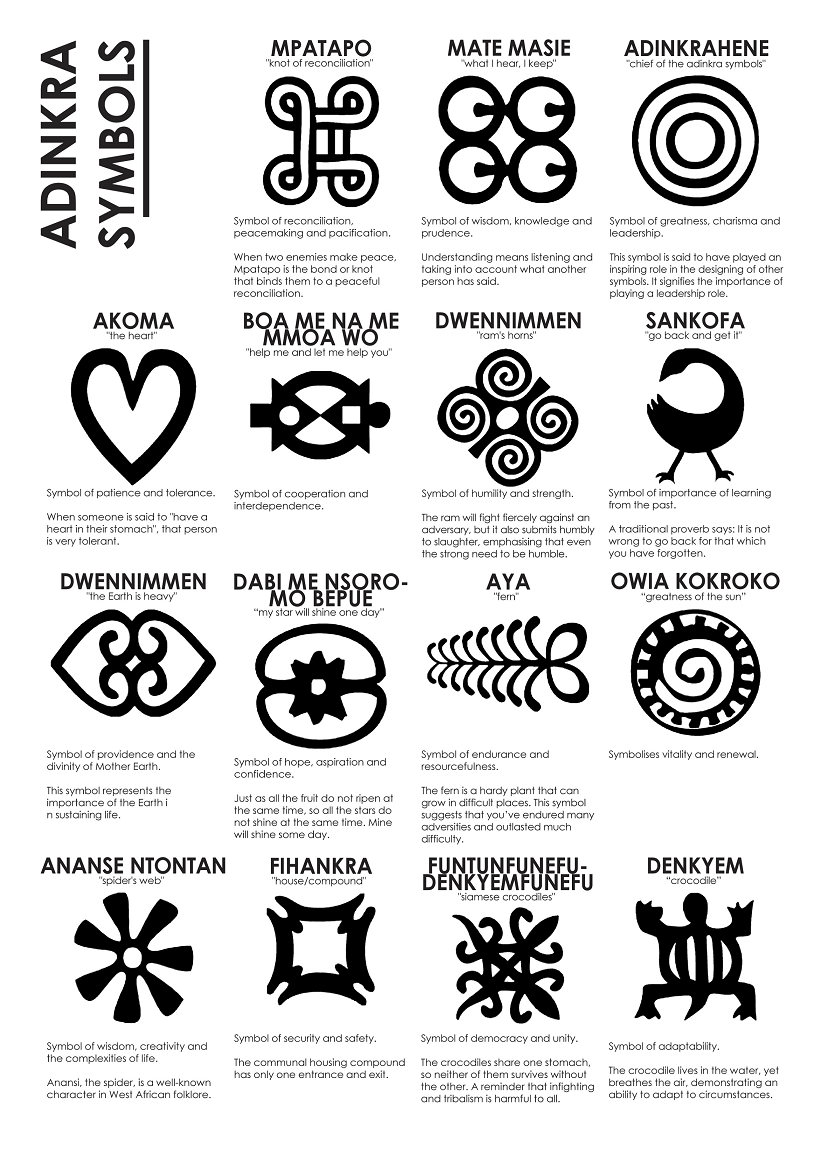
Adinkra [oon-din-krah] are visual symbols, originally created by the Akan of Ghana and the Gyaman of Cote d’Ivoire in West Africa, that represent concepts or aphorisms.
Adinkra are used on fabric, walls, in pottery, woodcarvings and logos. Fabric adinkra are often made by woodcut sign writing as well as screen printing. They also can be used to communicate evocative messages that represent parts of their life or those around them.
Posted in Art, Philosophy, World |
3 Comments »
October 10, 2010

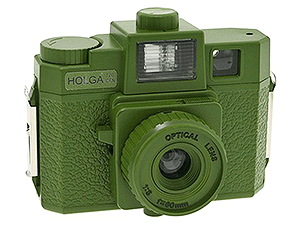
Lomography is the commercial trademark of Lomographische AG, an Austria photography company. The name is inspired by the former state-run optics manufacturer LOMO PLC of Saint Petersburg, Russia. LOMO created and produced the 35 mm LOMO LC-A Compact Automat camera — which became the centerpiece of Lomography’s marketing and sales activities. This camera was loosely based upon the Cosina CX-1 and introduced in the early 1980s.
Continue reading →
Posted in Art, Money |
Leave a Comment »
October 10, 2010
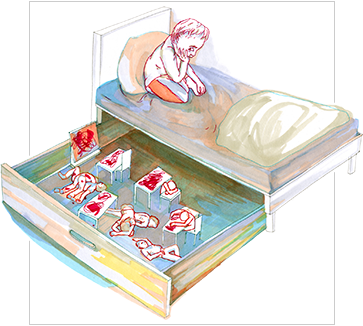
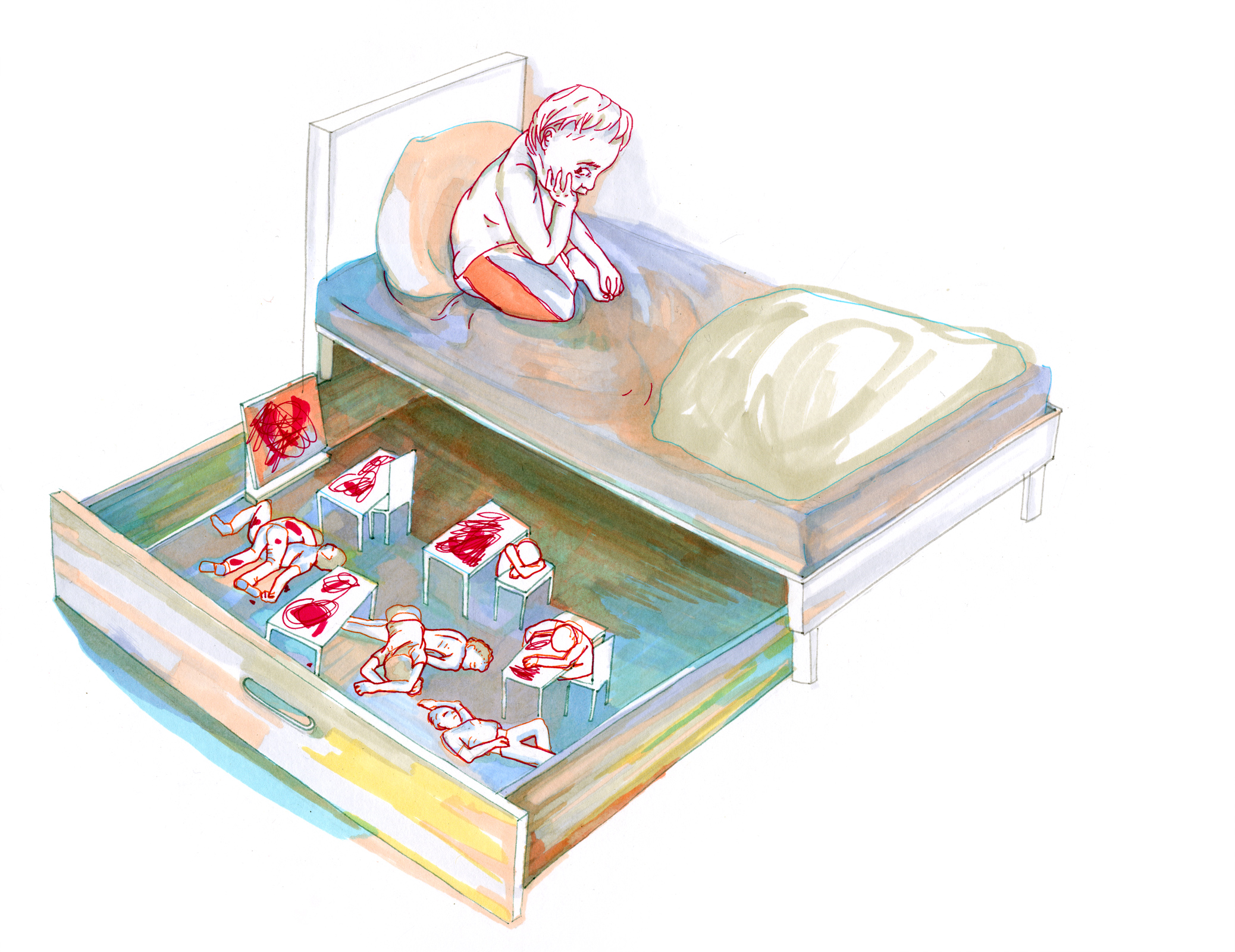
Hikikomori (literally ‘pulling away,’ being confined’) is a Japanese term to refer to the phenomenon of reclusive people who have chosen to withdraw from social life, often seeking extreme degrees of isolation and confinement because of various personal and social factors in their lives.
The term hikikomori refers to both the sociological phenomenon in general as well as to people belonging to this societal group. In Western terminology this group may include individuals suffering from social phobia or social anxiety problems. This could also be due to agoraphobia, avoidant personality disorder or painful or extreme shyness.
Posted in Health, Language, World |
Leave a Comment »
October 10, 2010

The term vignette [vin-yet] originated in French language in 1751, and referred to ‘decorative designs,’ originally in the form of vine tendrils around the borders of a book page, especially a picture page. Other theories hold that the term generally means something small and that originally it meant ‘something that may be written on a vine-leaf.’ Presently the term has application in a number of fields from graphic design to viticulture.
Posted in Language |
Leave a Comment »
October 10, 2010
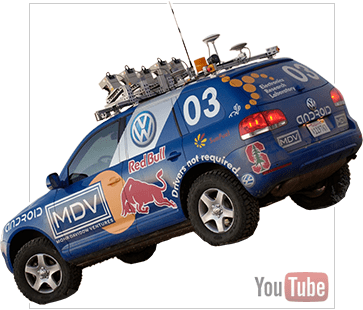
Stanley is an autonomous vehicle created by Stanford University’s Stanford Racing Team in cooperation with the Volkswagen Electronics Research Laboratory (ERL). It competed in, and won, the 2005 DARPA Grand Challenge, earning the Stanford Racing Team the 2 million dollar prize. Stanley’s descendant ‘Junior’ placed second in the 2007 DARPA Urban Challenge. Stanley is based on a diesel engined Volkswagen Toureg, Junior on a Passat. The Stanford Racing Team chose the Touareg for its ‘drive by wire’ control system which could be adapted to run directly from an on-board computer.
To navigate, Stanley used five roof mounted LIDAR units to build a 3-D map of the environment, supplementing the position sensing GPS system. An internal guidance system utilizing gyroscopes and accelerometers monitored the orientation of the vehicle and also served to supplement GPS and other sensor data. Additional guidance data was provided by a video camera used to observe driving conditions out to eighty meters (beyond the range of the LIDAR) and to ensure room enough for acceleration. Stanley also had sensors installed in a wheel well to record a pattern imprinted on the tire and to act as an odometer in case of loss of signal (such as when driving through a tunnel). Using the data from this sensor, the on-board computer can extrapolate how far it has traveled since the signal was lost.
Posted in Technology |
Leave a Comment »




 The Daily Omnivore