July 20, 2010

‘Kilroy was here‘ is an American popular culture expression, often seen in graffiti. Its origins are debated, but the phrase and the distinctive accompanying doodle — a bald man with his nose and fingers peeking over a wall – is widely known among U.S. residents who lived during World War II. The British equivalent of Kilroy is called ‘Mr. Chad,’ and the Australian equivalent is called ‘Foo.’ It is not certain which variation appeared first.
Posted in Art, Humor |
Leave a Comment »
July 20, 2010

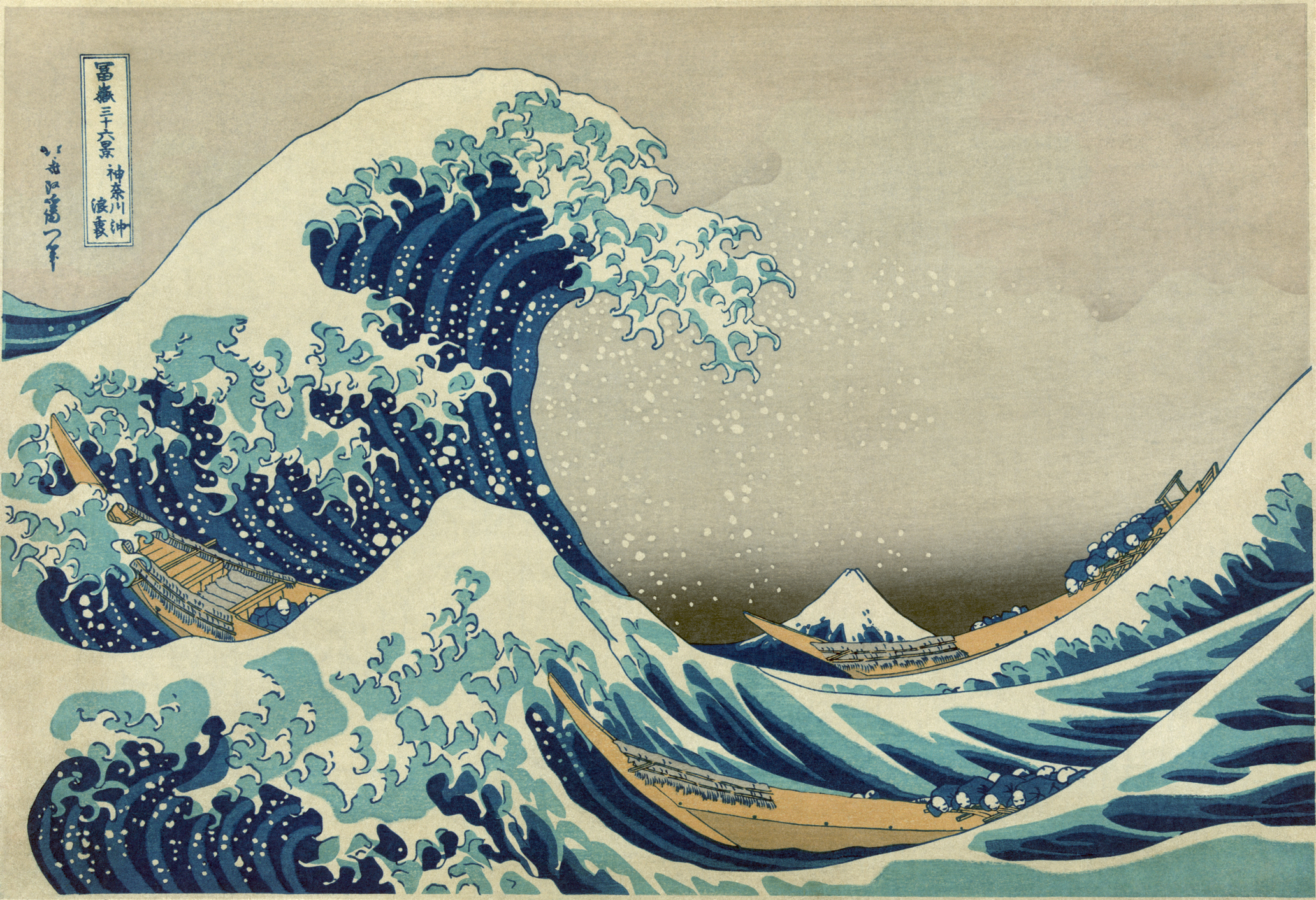
Ukiyo-e is a genre of Japanese woodblock prints (or woodcuts) and paintings produced between the 17th and the 20th centuries, featuring motifs of landscapes, tales from history, the theatre, and pleasure quarters. Usually the word ukiyo is literally translated as ‘floating world’ in English, referring to a conception of an evanescent world, impermanent, fleeting beauty and a realm of entertainments (kabuki, courtesans, geisha) divorced from the responsibilities of the mundane, everyday world.
Ukiyo-e were affordable because they could be mass-produced, and they were mainly meant for townsmen, who were generally not wealthy enough to afford an original painting. Hokusai (1760 – 1849) is among the most reknown ukiyo-e artists. His woodblock print series Thirty-six Views of Mount Fuji, which includes The Great Wave off Kanagawa, has been shown in galleries and museums all over the world.
Posted in Art, World |
Leave a Comment »
July 20, 2010

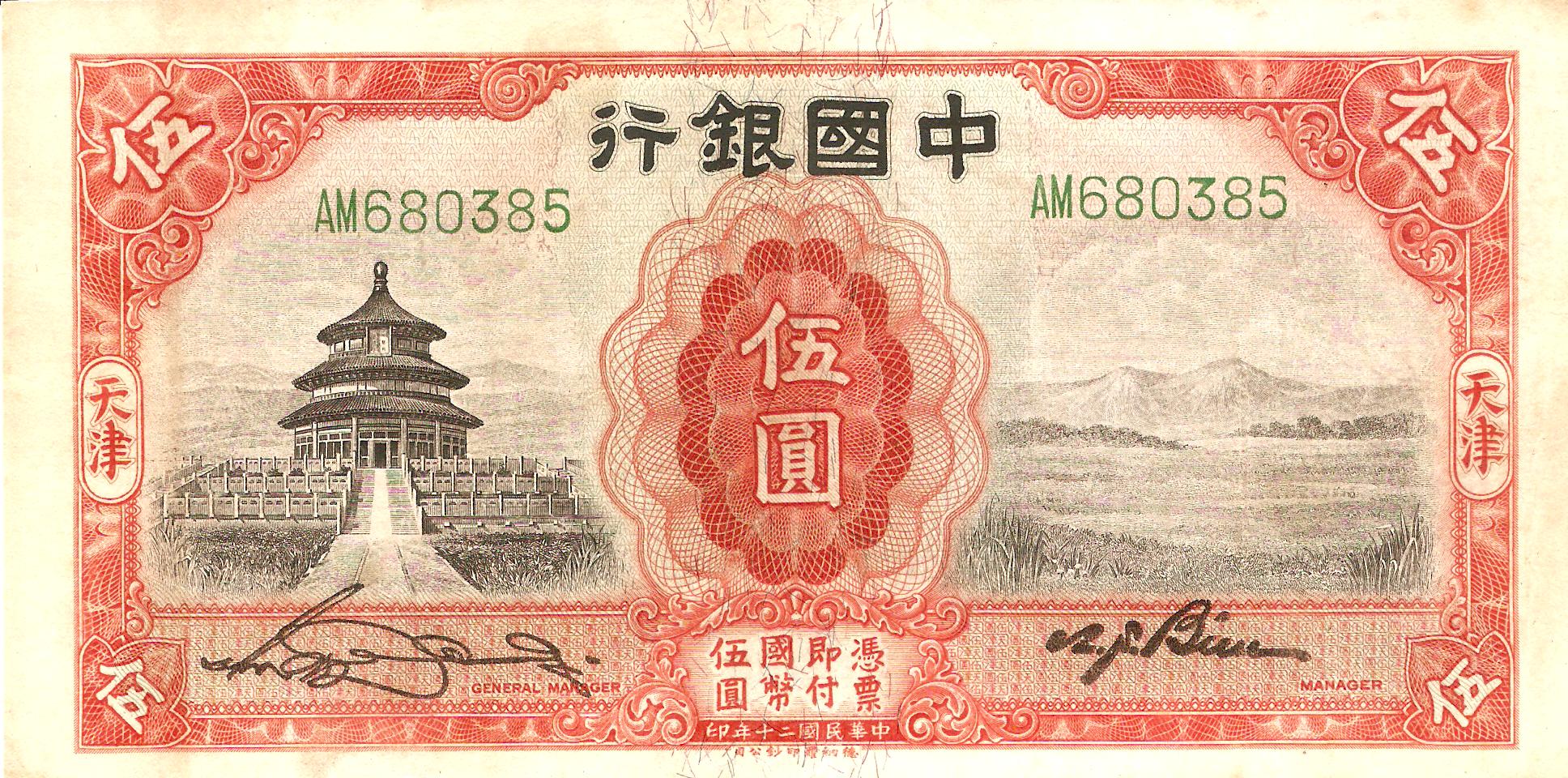
The Renminbi [ren-min-bee] is the official currency of China whose principal unit is the Yuan. The currency is legal tender in mainland China, but not in Hong Kong and Macau. Renminbi translates as people’s currency. A yuán is also known colloquially as a kuài. One yuán is divided into 10 jiao. One jiao is divided into 10 fēn.
Posted in Money, World |
Leave a Comment »
July 20, 2010
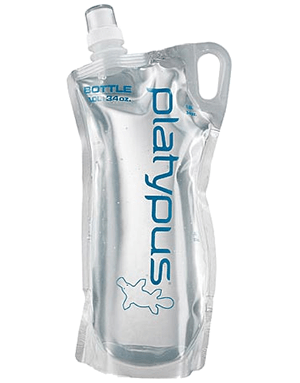
Platypus is a brand of water bottles made by Cascade Designs. Compared to a hard bottle of equal volume, they weigh 80% less and take up a mere one fifth of the space when empty. The bottles can be frozen and used as ice packs or boiled to sterilize their contents.
Posted in Food, Technology |
Leave a Comment »
July 20, 2010

Nalgene is the main product line of Nalge Nunc International, a distributor and manufacturer of plastic laboratory containers that has diversified into the field of containers for outdoor sports. In recent years, studies have suggested that polycarbonate plastics such as the ones Nalgene used may leach endocrine disruptors like Bisphenol A (BPA). Nalgene denies that the quantity leached from their products posed a significant threat to health, but as of April 2008 they began phasing out production of any BPA containing products. All current Nalgene water bottles are made from copolyester.
Posted in Health, Money |
1 Comment »
July 20, 2010

SIGG is a Swiss manufacturing company that sells aluminum and stainless steel water bottles. The disadvantage of thin aluminum is that it does not offer much insulation, which means that condensation can build on the outside of the bottle when cold drinks are transported, and hot drinks will result in a bottle which can not be comfortably touched. SIGG sells insulating sleeves that protect the bottle from dents, help insulate the beverages inside them and eliminate the condensation issue. The interior of the bottles is coated with a food-compatible stove enamel. The bottle is part of the permanent design collection of the NY Museum of Modern Art.
Posted in Money, Technology |
Leave a Comment »
July 17, 2010


The fat acceptance movement (also known as the size acceptance movement, fat liberation movement, and fat power) is a grassroots effort to change societal attitudes towards obese people. The movement argues that overweight people are targets of hatred, discrimination, and undue social pressure. Critics worry that fat acceptance encourages obesitiy, which is linked to heart disease, diabetes, high blood pressure, and joint problems.
Posted in Health, Politics |
Leave a Comment »
July 17, 2010

A nutmeg (or tunnel) is a technique used in football or field hockey, in which a player plays the ball through an opponent’s legs. This can be whilst passing to another player, shooting or occasionally to carry on and retrieve it himself. However it is well accepted that the classic nutmeg involves retrieving the ball oneself after passing the ball through the opponent’s legs, ideally calling ‘nuts’ or ‘megs’ whilst doing so.
The usage may have arisen because of a sharp practice used in nutmeg exports between America and England. Unscrupulous exporters mixed wooden replicas into the sacks being shipped to England. Being nutmegged soon came to imply stupidity on the part of the duped victim and cleverness on the part of the trickster. Panna is a two person soccer game where opponents attempt to meg each other that is popular in the Netherlands.
Posted in Games, Humor |
Leave a Comment »
July 17, 2010
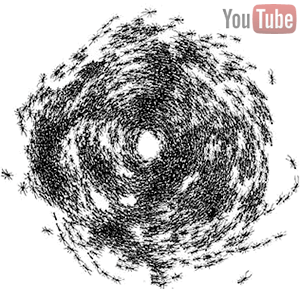
An ant mill is a phenomenon where a small group of army ants separated from the main foraging party lose the pheromone track and begin to follow one another, forming a continuously rotating circle. The ants will eventually die of exhaustion. This phenomenon is a side effect of the self-organizing structure of ant colonies.
Each ant follows the ant in front of it, and this will work until something goes wrong and an ant mill forms. An ant mill was first described by William Beebe who observed a mill 1,200 feet in circumference. It took each ant 2.5 hours to make one revolution. Similar phenomena have been noted in processionary caterpillars and fish.
Posted in Science |
Leave a Comment »
July 17, 2010

A kōan [koh-ahn] is a fundamental part of the history and lore of Zen Buddhism. It consists of a story, dialogue, question, or statement, the meaning of which cannot be understood by rational thinking but may be accessible through intuition. One widely known kōan is ‘what is the sound of one hand clapping.’ The word kōan, the name by which practice is known to the West, comes from the Japanese pronunciation of the Chinese characters.
Posted in Language, Philosophy, World |
Leave a Comment »
July 17, 2010

The keffiyeh is a traditional headdress typically worn by Arab men made of a square of cloth, usually cotton, folded and wrapped in various styles around the head. It is commonly found in arid climate areas to provide protection from direct sun exposure, as well as for occasional use in protecting the mouth and eyes from blown dust and sand. Its distinctive woven check pattern originated in an ancient Mesopotamian representation of either fishing nets or ears of grain.
Posted in Art, World |
Leave a Comment »
July 17, 2010

Ylem is a term coined in the late 1940s by cosmologist Ralph Alpher for a hypothetical original substance or condensed state of matter, which became subatomic particles and elements as we understand them today.
Posted in Language, Science |
Leave a Comment »