August 1, 2010

Happy Farm is a social network game, or massively multiplayer online game, based on farm management simulation. It is played predominantly by users in Mainland China and Taiwan, and is the most popular MMOG in terms of players. At the height of its popularity, there were 23 million daily active users, logging on to the game at least every day. Happy Farm was developed by Chinese social game developer 5 Minutes in 2008. It allows players to grow crops, trade with others, sell produce, and steal from neighbors. The game was influenced by the Japanese RPG series, ‘Harvest Moon.’ The game peaked during the end of the 2000s, and in the following years, experienced a sharp decline in players. As of 2012, it had practically vanished.
‘Happy Farm’ went on to inspire many more farming social network games, including ‘FarmVille,’ as well as parodies such as ‘Jungle Extreme’ and ‘Farm Villain.’ In 2009, ‘Harvest Moon’ developers Marvellous Entertainment eventually released their own farming social network game, ‘Bokujo Monogatari,’ for the Japanese site Mixi.’
Posted in Games, Technology, World |
Leave a Comment »
August 1, 2010

A Shepard tone, named after Roger Shepard, is a sound consisting of a superposition of sine waves separated by octaves. This creates the auditory illusion of a tone that continually ascends or descends in pitch, yet which ultimately seems to get no higher or lower.
Posted in Science |
Leave a Comment »
August 1, 2010

The Penrose stairs is an impossible object created by Lionel Penrose and his son Roger Penrose. It can be seen as a variation on the Penrose triangle. It is a two-dimensional depiction of a staircase in which the stairs make four 90-degree turns as they ascend or descend yet form a continuous loop, so that a person could climb them forever and never get any higher. This is clearly impossible in three dimensions; the two-dimensional figure achieves this paradox by distorting perspective.
The best known example of Penrose stairs appears in the lithograph Ascending and Descending by M. C. Escher, where it is incorporated into a monastery where several monks ascend and descend the endless staircase. The staircase had also been discovered previously by the Swedish artist Oscar Reutersvärd, but neither Penrose nor Escher were aware of his designs.
Posted in Art, Science |
Leave a Comment »
August 1, 2010

Salty liquorice, salmiak or salmiakki is a variety of liquorice that contains a relatively large amount of ammonium chloride (salmiac) in addition to the liquorice root extract, sugar, and starch or gum arabic that constitute normal liquorice. Ammonium chloride has a spicy taste that vaguely resembles that of sodium chloride (table salt). However, salty liquorice does not necessarily contain any sodium.
Although some types of regular liquorice can also contain a small amount of ammonium chloride, salty liquorice can contain up to about 8 percent of ammonium chloride. Moreover, the salty taste is typically less masked by a high sugar content compared to regular liquorice. Salty liquorice candies are almost always black or very dark brown and can range from very soft to very hard and may be brittle. The other colors used are white and variants of grey.
Posted in Food, World |
Leave a Comment »
July 22, 2010

Roundup is the brand name of a herbicide produced by Monsanto that contains the active ingredient glyphosate. Glyphosate is the most used herbicide in the USA, and Roundup has been the number one selling herbicide worldwide since at least 1980. Several weed species, known as superweeds, have developed Roundup resistance largely because of repeated exposure.
Monsanto also produces seeds which grow into plants genetically engineered to be tolerant to glyphosate, which are known as Roundup Ready crops. The genes contained in these seeds are patented. Soy was the first Roundup Ready crop, and was produced at Monsanto’s Agracetus Campus located in Middleton, Wisconsin in 1996. As of 2005, 87% of U.S. soybean fields were planted with glyphosate resistant varieties. The Roundup Ready line of seeds has grown to include corn, canola, cotton, and other crops. The latest iteration is Roundup Ready Corn 2.
Posted in Food, Money, Science |
Leave a Comment »
July 22, 2010
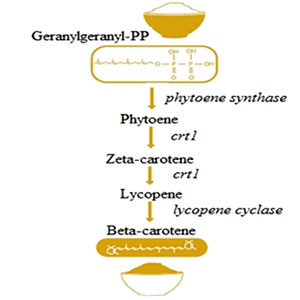
Golden rice is a variety of rice produced through genetic engineering to biosynthesize beta-carotene, a precursor of pro-vitamin A in the edible parts of rice. The scientific details of the rice were first published in Science in 2000. Golden rice was developed as a fortified food to be used in areas where there is a shortage of dietary vitamin A. In 2005 Syngenta, a biotechnology company announced a new variety called Golden Rice 2 which produces up to 23 times more beta-carotene than the original variety.
Neither variety is currently available for human consumption. Although golden rice was developed as a humanitarian tool, it has met with significant opposition from environmental and anti-globalization activists.
Posted in Food, Health, Science |
Leave a Comment »
July 22, 2010


Intermittent explosive disorder (IED) is a behavioral disorder characterized by extreme expressions of anger, often to the point of uncontrollable rage, that are disproportionate to the situation at hand. It is currently categorized in the Diagnostic and Statistical Manual of Mental Disorders as an impulse control disorder. Impulsive aggression is unpremeditated, and is defined by a disproportionate reaction to any provocation, real or perceived.
Individuals diagnosed with IED report their outbursts were brief (lasting less than an hour), with a variety of bodily symptoms (sweating, chest tightness, twitching, palpitations). Violent acts were frequently accompanied by a sensation of relief, and in some cases, pleasure, but accompanied by remorse after the fact.
Posted in Health |
Leave a Comment »
July 22, 2010

Solar puffing refers to the act of using a magnifying lens to heat cannabis for consumption. Utilization of this method avoids residues left by butane or other propellants used in lighters and matches, and a greater amount of THC is extracted due to a lower heating temperature as opposed to that of combustion. This method is similar to that of vaporization.
Posted in Drugs |
Leave a Comment »
July 22, 2010
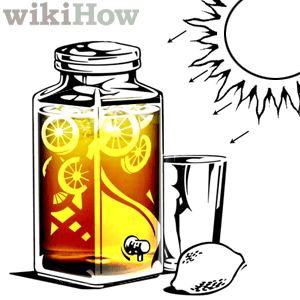
Unsweetened iced tea is sometimes made by a particularly long steeping of tea leaves at lower temperature (one hour in the sun versus 5 minutes at 80-100°C). Some people call this ‘sun tea.’
In addition, sometimes it is also left to stand overnight in the refrigerator. Sun tea is easy to make, but can be toxic if not made carefully. If there are ropy-looking strands in the tea, or any other unusual-looking particles, or if the tea looks thick or syrupy chances are it has become a bacterial hotbed. A very clean container (including the spigot if there is one) and a caffeinated tea will deter bacterial growth for a few hours. Sun tea should be discarded after that period.
Posted in Food |
Leave a Comment »
July 21, 2010


The International HapMap Project an organization that aims to develop a haplotype map (HapMap) of the human genome, which will describe the common patterns of human genetic variation. Haplotypes are contiguous strings of DNA. HapMap is a key resource for researchers to find genetic variants affecting health, disease, and responses to drugs and environmental factors. The information produced by the project is made freely available to researchers around the world.
Unlike with the rarer Mendelian diseases, combinations of different genes and the environment play a role in the development and progression of common diseases (such as diabetes, cancer, heart disease, stroke, depression, and asthma), or in the individual response to pharmacological agents. To find the genetic factors involved in these diseases, one could in principle obtain the complete genetic sequence of several individuals, some with the disease and some without, and then search for differences between the two sets of genomes. This approach is currently infeasible because of the cost of full genome sequencing. The HapMap project proposes a shortcut.
Posted in Health, Science |
Leave a Comment »
July 21, 2010

La Mexicaine De Perforation is a subdivision of a French group called the L’UX (Urban eXperiment), which holds clandestine artistic events. In September 2004, french police discovered a fully functional underground movie theatre run by La Mexicaine De Perforation in the catacombs of Paris.
When the police returned for a formal investigation, all the equipment had disappeared—all that was left was a note on the floor reading, ‘Do not search’ (‘Ne cherchez pas’). The members of L’UX are largely secret, but its spokesman is Lazar Kunstmann who published La Culture En Clandestins L’UX relating 25 years of clandestine cultural actions.
Posted in Art, Politics, World |
Leave a Comment »
July 20, 2010

Dada [dah-dah] or Dadaism is a movement in art and literature based on deliberate irrationality and negation of traditional artistic values. It began in Zürich, Switzerland, during World War I and peaked from 1916 to 1922. The movement primarily involved visual arts, literature—poetry, art manifestoes, art theory—theatre, and graphic design, and concentrated its anti-war politics through a rejection of the prevailing standards in art through anti-art cultural works.
Its purpose was to ridicule what its participants considered to be the meaninglessness of the modern world. In addition to being anti-war, dada was also anti-bourgeois and anarchistic in nature. The movement influenced later styles like the avant-garde and downtown music movements, and groups including surrealism, Nouveau réalisme, pop art, Fluxus and punk rock.
Posted in Art, Language |
Leave a Comment »




