April 7, 2016

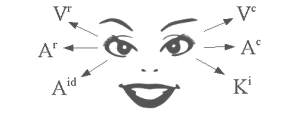
The term unsaid refers what is not explicitly stated, what is hidden or implied in the speech of an individual or a group of people. The unsaid may be the product of intimidation; of a mulling over of thought; or of bafflement in the face of the inexpressible. Sociolinguistics points out that in normal communication what is left unsaid is as important as what is actually said — that we expect our auditors regularly to fill in the social context/norms of our conversations as we proceed.
British sociologist Basil Bernstein described two types of speech: restricted and elaborated code. The former is suitable for insiders who share assumptions and understanding on the topic, whereas the latter is more explicit, more thorough, and does not require the listener to read between the lines. Continue reading →
Posted in Language |
Leave a Comment »
April 6, 2016

‘800-pound gorilla’ is an American English expression for a person or organization so powerful that it can act without regard to the rights of others or the law. The phrase is rooted in a joke riddle: ‘Where does an 800-lb. gorilla sit?’ The answer: ‘Anywhere it wants to.’
The term can describe a powerful geopolitical and military force, or, in business, a powerful corporate entity that has such a large majority percentage of whatever market they compete within that they can use that strength to crush would-be competitors. The metaphor has been mixed, on occasion, with the metaphor of the elephant in the room (an obvious truth that is going unaddressed).
Posted in Humor, Language |
1 Comment »
April 5, 2016

Fighting words are written or spoken words, generally expressed to incite hatred or violence from their target. Specific definitions, freedoms, and limitations of fighting words vary by jurisdiction. It is also used in a general sense of words that when uttered tend to create (deliberately or not) a verbal or physical confrontation by their mere usage.
In 1942, the Supreme Court established the doctrine by a 9–0 decision in ‘Chaplinsky v. New Hampshire.’ It held that ‘insulting or ‘fighting words,’ those that by their very utterance inflict injury or tend to incite an immediate breach of the peace’ are among the ‘well-defined and narrowly limited classes of speech the prevention and punishment of [which] … have never been thought to raise any constitutional problem.’ Chaplinsky, a Jehovah’s Witness, had purportedly told a New Hampshire town marshal who was attempting to prevent him from preaching that he was ‘a God-damned racketeer’ and ‘a damned fascist’ and was arrested. The court upheld the arrest. Continue reading →
Posted in Language, Politics |
1 Comment »
April 4, 2016
The National Beep Baseball Association NBBA was organized in 1976 for visually impaired adults to play baseball. Each year it coordinates local, state, and regional tournaments. The World Series was held in Taiwan in 2000. The game is played on a grass field with six fielders (generally a first-baseman, third-baseman, shortstop, left fielder, right fielder, and center fielder) and one or two ‘spotters’ (sighted individuals that call out a number to signify which part of the field a ball is travelling towards), as well as a sighted pitcher and catcher. Fielders and batter are blindfolded.
There is also a DH and DF (designated hitter and fielder). They must also be legally blind in most cases. However, the NBBA has a rule that, if a team cannot field the minimum six batters required to fill its lineup card, it may opt to allow up to two sighted volunteers to blindfold themselves and play as the visually impaired players do. The ball beeps and is a modified, and oversized, softball. The bases are blue, nearly 5 ft tall, and have mostly foam interior with the electronics that cause it to buzz steadily when a switch is thrown. They are each placed 100 ft from homeplate and are in the equivalent positions to first and third bases in regular baseball.
Posted in Games |
Leave a Comment »
April 1, 2016

April Fools’ Day (sometimes called ‘All Fools’ Day’) is celebrated every year on the first day of April by playing practical jokes and spreading hoaxes. Pranksters expose their ruse by shouting ‘April Fool.’ Some newspapers, magazines, and other published media report fake stories, which are usually explained the next day or below the news section in small letters. Although popular since the 19th century, the day is not a public holiday in any country.
Geoffrey Chaucer’s ‘The Canterbury Tales’ (1392) contains the first recorded association between the first of April and foolishness. Some precursors of April Fools’ Day include the Roman festival of Hilaria, the Holi festival of India, and the Medieval Feast of Fools. Continue reading →
Posted in Humor, World |
1 Comment »
March 31, 2016
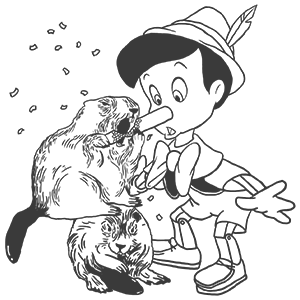
Dutch uncle refers to a person who issues frank, harsh, or severe comments and criticism to educate, encourage, or admonish (the reverse of what is normally thought of as avuncular or uncle-like, i.e. indulgent and permissive). During the Anglo-Dutch Wars in the 17th century, the English language gained an array of similar insults, such as: ‘Dutch courage’ (alcohol-induced bravery), ‘Double Dutch’ (incomprehensible, nonsense), ‘Dutch cap’ (contraceptive diaphragm), ‘Dutch wife’ (sex doll), ‘Dutch widow’ (prostitute), ‘Dutch comfort’ (saying that ‘Things could be worse!’), ‘Dutch metal’ or ‘Dutch gold’ (cheap alloy resembling gold), ‘Dutch treat’ (social date where the invitee pays for himself/herself), ‘Dutch concert’ (noise and uproar, as from a drunken crowd), and ‘Dutch-bottomed’ (empty).
Another proposed explanation is that the term, often expressed as ‘talk to one like a Dutch uncle,’ originated in the early 19th century as an allusion to the sternness and sobriety attributed to the Dutch. Dutch behavior is defined in the book ‘Culture Shock! Netherlands: A Survival Guide To Customs and Etiquette’ as ‘practical, direct, outspoken, stubborn, well-organized, blunt and thinking they are always right.’ Another book that advocates this theory is ‘The UnDutchables,’ which assigns comparable characteristics: ‘not lacking in self-esteem … caught up in a cycle of endless envy … always speak their mind … frank, obstinate, blunt,’ basically summed up by the phrase ‘the natives thrive on shaking their fingers at and scolding each other.’
Posted in Language, World |
1 Comment »
March 29, 2016

In advertising, a hard sell is an advertisement or campaign that uses a more direct, forceful, and overt sales message. The term is also used to describe aggressive sales techniques used by company representatives, particularly in the context of doorstep selling.
The concepts that distinguish a hard sell from a ‘soft sell’ (subtle, casual, or friendly sales message) have to do with directness of an advertiser or seller, rational appeal, and the amount of information given to the buyer about a product. A hard sell is extremely direct in nature. An advertisement will contain a forceful, loud slogan in order to grab buyers’ attention, or a salesperson will be very persistent, cornering their buyer into purchasing the product they are selling. Continue reading →
Posted in Money |
Leave a Comment »
March 28, 2016


The Me Generation refers to the ‘baby boomer’ generation (Americans born during the 1946 to 1964 post-war baby boom) and the self-involved qualities that some social critics associated with it. Boomers were dubbed the ‘Me’ generation by writer Tom Wolfe during the 1970s; Christopher Lasch was another writer who commented on the rise of a culture of narcissism among the younger generation. The phrase caught on with the general public, at a time when ‘self-realization’ and ‘self-fulfillment’ were becoming cultural aspirations among young people, who considered them far more important than social responsibility.
The 1960s are remembered as a time of political protests, radical experimentation with new cultural experiences (e.g. Sexual Revolution, ‘happenings,’ and New Age spirituality). The Civil Rights Movement gave rebellious young people serious goals to work towards. Cultural experimentation was justified as being directed toward spiritual or intellectual enlightenment. The 1970s, in contrast, were a time of disillusionment with idealistic politics among the young, particularly after the resignation of Richard Nixon, the assassination of Martin Luther King, Jr., and the end of the Vietnam War. Unapologetic hedonism became acceptable among the young, expressed in the Disco music popular at the time.
Continue reading →
Posted in Politics |
Leave a Comment »
March 27, 2016

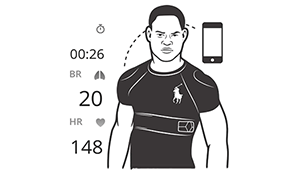
A conductive textile is a fabric which can conduct electricity. Conductive textiles can be made with metal strands woven into the construction of the textile. There is also an interest in semiconducting textiles, made by impregnating normal textiles with carbon- or metal-based powders.
Conductive fibers consist of a non-conductive or less conductive substrate, which is then either coated or embedded with electrically conductive elements, often carbon, nickel, copper, gold, silver, or titanium. Substrates typically include cotton, polyester, nylon, and stainless steel to high performance synthetic fibers like Kevlar and Zylon. Straddling the worlds of textiles and wires, conductive fibers are sold either by weight or length, and measured in gauge. Continue reading →
Posted in Technology |
Leave a Comment »
March 26, 2016
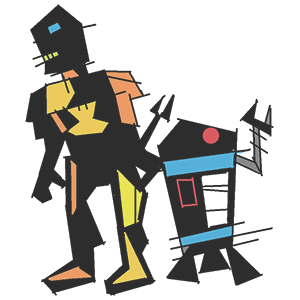
A shared universe is a set of creative works where more than one writer (or other artist) independently contributes a work that can stand alone but fits into the joint development of the storyline, characters, or world of the overall project. It is common in genres like science fiction. It differs from ‘collaborative writing’ where multiple artists are working together on the same work, and from ‘crossovers’ where the works and characters are independent except for a single meeting.
The term shared universe is also used within comics to reflect the overall milieu created by the comic book publisher in which characters, events, and premises from one product line appear in other product lines in a media franchise. The term has also been used in a wider, non-literary sense to convey interdisciplinary or social commonality, often in the context of a ‘shared universe of discourse.’ Continue reading →
Posted in Art, Money |
Leave a Comment »
March 25, 2016

The Wolfpack is a 2015 American documentary film about a family who homeschooled and raised their seven children in the confinement of their apartment in the Lower East Side of New York City. The film, directed by Crystal Moselle, premiered at the 2015 Sundance Film Festival, where it won the US Documentary Grand Jury Prize.
Locked away for fourteen years, the Angulo family’s seven children—six brothers named Mukunda, Narayana, Govinda, Bhagavan, Krisna (Glenn), and Jagadesh (Eddie), and their sister Visnu—learned about the world through watching films. They also re-enact scenes from their favorite movies. Their father, Oscar, had the only door key and prohibited the kids and their mother from leaving the apartment except for a few strictly-monitored trips on the ‘nefarious’ streets. Continue reading →
Posted in Art |
Leave a Comment »
March 24, 2016


Fika [fee-kah] is a concept in Swedish culture with the basic meaning ‘to have coffee,’ often accompanied with pastries or sandwiches. A more contemporary generalized meaning of the word, where the coffee may be replaced by tea or even juice, lemonade or squash for children, has become widespread. In some social circles, even just a sandwich or a small meal may be denoted a fika similar to the English concept of afternoon tea. In Sweden pastries in general (for example cinnamon buns) are often referred to as ‘fikabröd’ (‘fika bread’).
Fika is a common practice at workplaces in Sweden where it constitutes at least one break during a normal workday. Often, two fikas are taken in a day at around 9:00 in the morning and 3:00 in the afternoon. The work fika is an important social event where employees can gather and socialize to discuss private and professional matters. It is not uncommon for management to join employees and to some extent it can even be considered impolite not to join one’s colleagues at fika. The practice is not limited to any specific sector of the labor market and is considered normal practice even in government administration. Continue reading →
Posted in Food, Money, World |
Leave a Comment »


 The Daily Omnivore