December 17, 2015
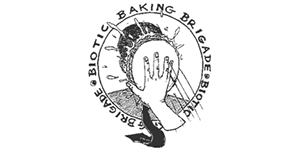
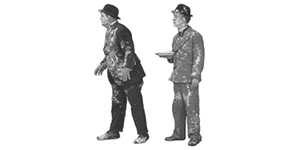
Pieing is the act of throwing a pie at a person or people. This may be a simple practical joke, but can be a political action when the target is an authority figure, politician, or celebrity and can be used as a means of protesting against the target’s political beliefs, or against perceived arrogance or vanity. Perpetrators generally regard the act as a form of ridicule to embarrass and humiliate the victim. In most or all jurisdictions, pieing is punishable as battery, and may constitute assault as well.
In pieing, the goal is usually to humiliate the victim while avoiding actual injury. For this reason the pie is traditionally of the cream variety without a top crust, and is rarely if ever a hot pie. In Britain, a pie in the context of throwing is traditionally referred to as a ‘custard pie.’ An aluminum pie pan or paper plate filled with whipped cream or shaving foam can substitute for a real pie. Pieing and pie fights are a staple of slapstick comedy, and pie ‘tosses’ are also common charity fundraising events, especially in schools. Continue reading →
Posted in Food, Humor, Politics |
1 Comment »
December 16, 2015
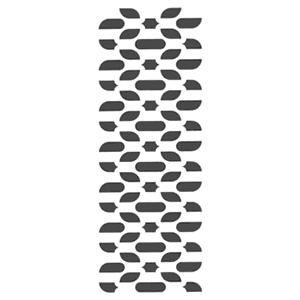
The Dreamachine is a stroboscopic flicker device that produces visual stimuli. Artist Brion Gysin and William S. Burroughs’s ‘systems adviser’ Ian Sommerville created the device after reading neurophysiologist and robotician William Grey Walter’s 1963 book, ‘The Living Brain.’ In its original form, a Dreamachine is made from a cylinder with slits cut in the sides. The cylinder is placed on a turntable and rotated at 78 or 45 revolutions per minute. A light bulb is suspended in the center of the cylinder and the rotation speed allows the light to come out from the holes at a constant frequency of between 8 and 13 pulses per second.
This frequency range corresponds to alpha waves, electrical oscillations normally present in the human brain while relaxing. A Dreamachine is ‘viewed’ with the eyes closed: the pulsating light stimulates the optic nerve and thus alters the brain’s electrical oscillations. Users experience increasingly bright, complex patterns of color, which become shapes and symbols, swirling around. It is claimed that by using a Dreamachine one may enter a hypnagogic state (the dreamlike transfer from wakefulness to sleep). This experience may sometimes be quite intense, but to escape from it, one needs only to open one’s eyes.
Posted in Art, Technology |
Leave a Comment »
December 15, 2015


Phreaking is a slang term coined to describe the activity of hobbyists who study, experiment with, or explore, telecommunication systems, such as equipment and systems connected to public telephone networks. ‘Phreak,’ ‘phreaker,’ or ‘phone phreak’ are names used for and by individuals who participate in phreaking. The term first referred to groups who had reverse engineered the system of tones used to route long-distance calls. By re-creating these tones, phreaks could switch calls from the phone handset, allowing free calls to be made around the world.
Electronic tone generators known as ‘blue boxes’ became a staple of the phreaker community, including future Apple Inc. cofounders Steve Jobs and Steve Wozniak. The blue box era came to an end with the ever increasing use of computerized phone systems, which sent dialling information on a separate, inaccessible channel. By the 1980s, much of the system in the US and Western Europe had been converted. Phreaking has since become closely linked with computer hacking. Continue reading →
Posted in Money, Politics, Technology |
Leave a Comment »
December 14, 2015


Almighty dollar is an idiom often used to satirize an individual or cultural obsession with material wealth, or with capitalism in general. The phrase implies that money is a kind of deity. Although the phrase was not popularized until the 19th century, similar expression were used much earlier. For example, British writer Ben Jonson wrote in 1616: ‘Whilst that for which all virtue now is sold, And almost every vice, almightie gold.’
The ‘dollar’ version of the phrase is commonly attributed to American writer Washington Irving, who used it in the story ‘The Creole Village,’ which was first published in the 1837 edition of ‘The Magnolia,’ a literary annual: ‘The almighty dollar, that great object of universal devotion throughout our land, seems to have no genuine devotees in these peculiar villages; and unless some of its missionaries penetrate there, and erect banking houses and other pious shrines, there is no knowing how long the inhabitants may remain in their present state of contented poverty.’
Posted in Money, Philosophy |
1 Comment »
December 12, 2015

Smell-O-Vision was a system that released odor during the projection of a film so that the viewer could ‘smell’ what was happening in the movie. The technique was created by inventor Hans Laube and made its only appearance in the 1960 film ‘Scent of Mystery,’ produced by Mike Todd, Jr., son of film producer Mike Todd. The process injected 30 odors, such as freshly-baked bread, pipe tobacco, and salty ocean air, into a movie theater’s seats when triggered by the film’s soundtrack.
The use of scents in conjunction with film dates back to 1906, before the introduction of sound. In this first instance, a 1958 issue of ‘Film Daily’ claims that Samuel Roxy Rothafel of the Family Theatre in Forest City, Pennsylvania, placed a wad of cotton wool that had been soaked in rose oil in front of an electric fan during a newsreel about the Rose Bowl Game. Arthur Mayer installed an in-theater smell system in Paramount’s Rialto Theater on Broadway in 1933, which he used to deliver odors during a film. However, it would take over an hour to clear the scents from the theater, and some smells would linger for days afterward. Continue reading →
Posted in Art, Humor, Technology |
Leave a Comment »
December 10, 2015


Prolefeed is a Newspeak term in the novel ‘Nineteen Eighty-Four’ by George Orwell. It was used to describe the deliberately superficial literature, movies and music that were produced by Prolesec, a section of the Ministry of Truth, to keep the ‘proles’ (i.e., proletariat) content and to prevent them from becoming too knowledgeable. The ruling Party believes that too much knowledge could motivate the proles to rebel against them.
The term is used occasionally to describe shallow entertainment in the real world. For example, Theodore Dalrymple wrote in the ‘The Spectator’ that ‘France …. is less dominated by mass distraction (known here as popular culture, but in ‘Nineteen Eighty-Four’ as prolefeed) than Britain is.’ The term has also been applied to fast food, such as that of McDonald’s: ‘Once seen as the all-American corporation, ‘McDonald’s’ is now shorthand for a globalist mass culture that provides cheap, unhealthy food to lower-class people. McDonald’s is, quite literally, prolefeed. Part of this image was a deliberate choice by the corporation.’ Continue reading →
Posted in Language, Money, Politics |
Leave a Comment »
December 8, 2015

A pastiche [pa-steesh] is a work of visual art, literature, theatre, or music that imitates the style or character of the work of one or more other artists. Unlike parody, pastiche celebrates, rather than mocks, the work it imitates. The word pastiche is a French cognate of the Italian noun ‘pasticcio,’ which is a pâté or pie-filling mixed from diverse ingredients.
Metaphorically, pastiche and pasticcio describe works that are either composed by several authors, or that incorporate stylistic elements of other artists’ work. They are examples of eclecticism in art. Pastiche is sometimes confused with allusion, but a literary allusion may refer to another work, but it does not reiterate it. Moreover, allusion requires the audience to share in the author’s cultural knowledge. Both allusion and pastiche are mechanisms of intertextuality (the shaping of a text’s meaning by another text). Continue reading →
Posted in Art, Language |
Leave a Comment »
December 7, 2015
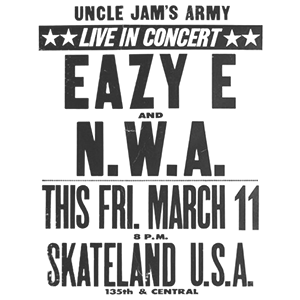
NWA (Niggaz Wit Attitudes) was an American hip hop group from Compton, California. It was one of the earliest and most significant popularizers of the gangsta rap and West Coast hip hop subgenres. Active from 1986 to 1991, the rap group endured controversy owing to their music’s explicit lyrics that many viewed as being disrespectful of women, as well as its glorification of drugs and crime.
The group was subsequently banned from many mainstream American radio stations. In spite of this, the group has sold over 10 million units in the US alone. The group was also known for their deep hatred of the police system, which sparked much controversy over the years. Their debut album ‘Straight Outta Compton’ marked the beginning of the new gangsta rap era as the production and social commentary in their lyrics were revolutionary within the genre. Continue reading →
Posted in Art, Politics |
Leave a Comment »
December 3, 2015

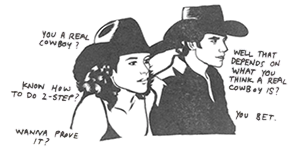
The term honky-tonk has been applied to various styles of 20th century American music. A honky-tonk a type of bar that provides country music for entertainment to its patrons. Bars of this kind are common in the Southern and Southwestern regions of the US, and many country music legends, such as Loretta Lynn, Merle Haggard, Patsy Cline, and Ernest Tubb began their careers as amateur musicians in honky-tonks.
Honky tonks were rough establishments that served alcoholic beverages to a working class clientele, and sometimes offered dancing, piano players, or small bands. Some were local hubs of underground prostitution. Dance researcher Katrina Hazzard-Gordon writes that the honky-tonk was ‘the first urban manifestation of the ‘jook” (‘juke joints,’ African American roadhouses and bars). Honky tonk originally referred to bawdy variety shows in the West and to the theaters housing them. The distinction between honky tonks, saloons and dancehalls was often blurred, especially in cowtowns, mining districts, military forts, and oilfields. Continue reading →
Posted in Art |
Leave a Comment »
December 2, 2015
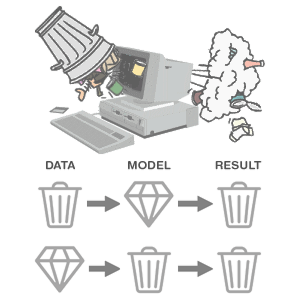
Garbage in, garbage out (GIGO) in the field of computer science or information and communications technology refers to the fact that computers, since they operate by logical processes, will unquestioningly process unintended, even nonsensical, input data (‘garbage in’) and produce undesired, often nonsensical, output (‘garbage out’). The principle applies to other fields as well.
The underlying principle was noted by the inventor of the first programmable computing device design: ‘On two occasions I have been asked, ‘Pray, Mr. Babbage, if you put into the machine wrong figures, will the right answers come out?’ … I am not able rightly to apprehend the kind of confusion of ideas that could provoke such a question.’ Continue reading →
Posted in Humor, Language, Technology |
Leave a Comment »
December 1, 2015


Mechanophilia [muh-kan-uh-fil-ee-uh] is a paraphilia (atypical sexuality) involving a sexual attraction to machines. It is a crime in some nations, such as the UK, with perpetrators placed on a sex-offender registry. Motorcycles in particular are often portrayed as sexualized fetish objects to those who desire them. Designers such as Francis Picabia and Filippo Tommaso Marinetti have been said to have exploited the sexual attraction of automobiles. In 2008, an American named Edward Smith admitted to ‘having sex’ with 1000 cars.
Biologist Edward O. Wilson is quoted describing mechanophilia, the love of machines, as ‘a special case of ‘biophilia,” the instinctive bond between human beings and other living (or lifelike) systems. Conversely, psychologists such as Erich Fromm would see it as a form of necrophilia. Continue reading →
Posted in Health, Sex, Technology |
1 Comment »
November 30, 2015
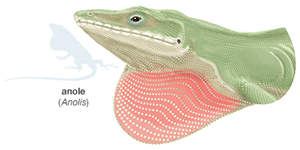
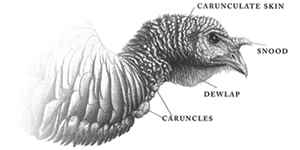
A dewlap [doo-lap] is a longitudinal flap of skin that hangs beneath the lower jaw or neck of many vertebrates. While the term is usually used in this specific context, it can also be used to include other structures occurring in the same body area with a similar aspect, such as those caused by a double chin or the submandibular vocal sac of a frog. In a more general manner, the term refers to any pendulous mass of skin, such as a fold of loose skin on an elderly person’s neck, or the wattle of a bird, a drooping protuberance hanging from various parts of the head or neck.
Many reptiles have dewlaps, most notably the anole species of lizard, which have large skin dewlaps which they can extend and retract. These dewlaps are usually of a different color from the rest of their body and when enlarged make the lizard seem much larger. They display them when indicating territorial boundaries and to attract females. Lizards usually accompany their dewlap movement with head bobs and other displays. Though much uncertainty resides around the purpose of these displays, the color of the dewlap and the head bobs are thought to be a means of contrasting background noise. Continue reading →
Posted in Language, Science |
Leave a Comment »


 The Daily Omnivore