February 10, 2016

Aquafaba [ah-kwuh-fah-buh], or chickpea brine, is the liquid from canned chickpeas, used as an egg substitute because of its function as an emulsifier, leavening agent, and foaming agent. Vegan baker Goose Wohlt coined the term aquafaba (‘bean liquid’) to describe the substance, which French chef Joël Roessel discovered could be used as substitute for egg whites in recipes. Aquafaba has been used to create meringues, macarons, nougat, and other products that normally require the use of eggs, making them suitable for people with egg allergies, vegans, and lacto-vegetarians.
There is currently no scientific consensus on the chemical properties of aquafaba and why it mimics egg whites so effectively. Seed proteins, including albumins and globulins, as well as soluble fibers, sugars, and glycosides have been proposed as contributing to the similarity. Roessel purports that the most likely agent that causes the liquid to foam are saponins, plant molecules containing a combination of hydrophobic (fat-soluble) and a hydrophilic (water-soluble) components.
Posted in Food, Health |
1 Comment »
February 9, 2016
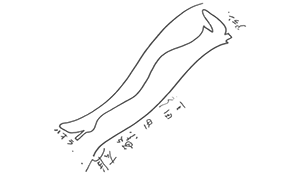

Ma is a Japanese word which can be roughly translated as ‘gap,’ ‘space,’ ‘pause,’ or ‘the space between two structural parts.’ It is best described as a consciousness of place, not in the sense of an enclosed three-dimensional entity, but rather the simultaneous awareness of form and non-form, similar to the concept of ‘negative space’ in graphic design. Ma is not something that is created by compositional elements; it is the thing that takes place in the imagination of the human who experiences these elements. Therefore, ma can be defined as experiential place understood with emphasis on interval.
In his 2001 book ‘The Art of Looking Sideways,’ graphic designer Alan Fletcher discusses the importance of exemplifying ‘space’ as a substance: ‘Cézanne painted and modelled space. Giacometti sculpted by ‘taking the fat off space.’ Mallarmé conceived poems with absences as well as words. Ralph Richardson asserted that acting lay in pauses… Isaac Stern described music as ‘that little bit between each note – silences which give the form’… The Japanese have a word (‘ma’) for this interval which gives shape to the whole. In the West we have neither word nor term. A serious omission.’
Posted in Art, Philosophy, World |
Leave a Comment »
February 8, 2016

Helmut Krone (1925 – 1996) was a pioneer of modern advertising. He spent over 30 years at the advertising agency Doyle Dane Bernbach where he was the art director for the popular 1960s campaign for the Volkswagen Beetle, which featured a large unadorned photo of the car with the tiny word ‘Lemon’ underneath it. He was also responsible for the series of ‘When you’re only No. 2, you try harder’ advertisements for Avis, and the creation of Juan Valdez, who personified Colombian coffee. His work has been collected by the Museum of Modern Art and the Smithsonian. Krone’s ‘Think Small’ advertisement for Volkswagen was voted the best campaign of all time in Advertising Age’s 1999 ‘The Century of Advertising issue.’
Krone was born in Yorkville, on the upper east side of Manhattan, which was at that time a German neighborhood. He attended Public School 77 in Queens before enrolling at the School of Industrial Art, where he hoped to become a product designer. When he was 21, he took his first step towards advertising, working with designer Robert Greenwell doing freelance advertisements for magazines. He followed naval service in World War II with postwar classes with Alexey Brodovitch and stints at ‘Esquire’ and ‘Sudler & Hennessey.’ Then, at the age of 29, he began to work for Doyle Dane Bernbach.
Posted in Art, Money |
Leave a Comment »
February 6, 2016


Super Bowl ads are commercials run during the National Football League (NFL) championship game, among the United States’ most watched television broadcasts, with Nielsen having estimated that Super Bowl XLIX in 2015 was seen by at least 114.4 million domestic viewers, surpassing the previous year’s game as the highest-rated television broadcast in US history. As such, advertisers have typically used commercials during the Super Bowl as a means of building awareness for their products and services among this wide audience, while also trying to generate buzz around the ads themselves so they may receive additional exposure, such as becoming a viral video.
Super Bowl commercials have become a cultural phenomenon of their own alongside the game itself with some viewers reporting that they are more interested in the commercials than the game. In 2015, Dish Network went as far as allowing the ‘commercial skipping’ features on its Hopper digital video recorder to function in reverse and allow users to view a recording of the Super Bowl that skips over the game itself and only shows the commercials. Continue reading →
Posted in Games, Money |
1 Comment »
February 5, 2016

In cognitive psychology the adaptive unconscious is thought to be a set of mental processes that influence judgment and decision making in a way that is inaccessible to introspective awareness, and thus linked to the unconscious mind. It is different from conscious processing: it is faster, effortless, more focused on the present, but less flexible. In other theories of the mind, the unconscious is limited to ‘low-level’ activity, such as carrying out goals which have been decided consciously. In contrast, the adaptive unconscious is thought to be involved in ‘high-level’ cognition such as goal-setting as well.
The term ‘adaptive unconscious’ suggests it has survival value and hence is an adaptation which was strongly selected in the past. Indeed, for much of vertebrate evolution, all mental activity was unconscious. No-one supposes that fish have consciousness. Thus our consciousness is added to an already-existing set of mechanisms which operate but whose operation is normally not felt by us. Continue reading →
Posted in Education, Health |
1 Comment »
February 4, 2016


Rebranding is a marketing strategy in which a new name, term, symbol, design, or combination thereof is created for an established brand with the intention of developing a new, differentiated identity in the minds of consumers, investors, competitors, and other stakeholders. Often, this involves radical changes to a brand’s logo, name, legal names, image, marketing strategy, and advertising themes. Such changes typically aim to reposition the brand/company, occasionally to distance itself from negative connotations of the previous branding, or to move the brand upmarket; they may also communicate a new message a new board of directors wishes to communicate.
Rebranding can be applied to new products, mature products, or even products still in development. The process can occur intentionally through a deliberate change in strategy or occur unintentionally from unplanned, emergent situations, such as a ‘Chapter 11 corporate restructuring,’ ‘union busting,’ or ‘bankruptcy.’ Rebranding can also refer to a change in a company/ corporate brand that may own several sub-brands for products or companies. Continue reading →
Posted in Language, Money |
Leave a Comment »
February 3, 2016
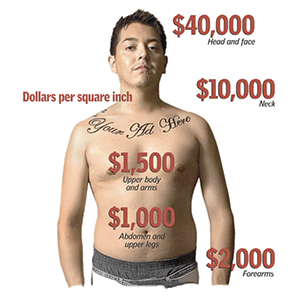
Forehead Advertising is a type of nontraditional advertising that involves using a person’s forehead as advertising space. John Carver and his London Creative Agency, CUNNING, is credited with inventing the concept in 2003 with ForeheADS. In a 2004 CUNNING campaign, forty young adults were paid $11 per hour to wear temporary tattoos on their foreheads for a 2004 campaign promoting the launch of the Scion tC for Toyota. A short lived startup in Rhode Island, Headvertise, offered up to $150 per week for wearing a temporary logo tattoo on one’s forehead. It was last reported that 64 students had featured ads on their foreheads for companies such as Roommates.com.
Forehead advertising made headlines in early 2005 when a 20-year-old man, Andrew Fischer, auctioned his forehead for advertising space on eBay. The winning company, SnoreStop, bid $37,375 to display their logo via temporary tattoo on his forehead for 30 days. Later that year forehead advertising moved beyond temporary tattoos. Kari Smith auctioned her forehead for advertising space on eBay for an asking price of $10,000. GoldenPalace.com, a Canadian Internet gambling company, paid $10,000 for Smith to permanently tattoo ‘GoldenPalace.com’ on her forehead. GoldenPalace.com has also advertised its logo via temporary and permanent tattoos on the backs of boxers, bellies of pregnant women, women’s legs, and the chest of a swimsuit model. Continue reading →
Posted in Humor, Money |
1 Comment »
February 2, 2016

Catvertising is the use of cats in advertising. The tongue-in-cheek portmanteau was coined in the late 1990s, and enjoyed a spike in popularity beginning 2011 as a result of a parody of commercialization of cat viral videos by the advertising agency st. john in Toronto.
The video was part of a series of spoofs beginning with ‘Pink Ponies: A Case Study,’ then ‘Catvertising,’ and finally ‘Buyral’ (a blend of ‘buy’ and ‘viral’). A University of Arizona marketing team competes under the name ‘Catvertising.’
Posted in Humor, Money |
Leave a Comment »
February 1, 2016

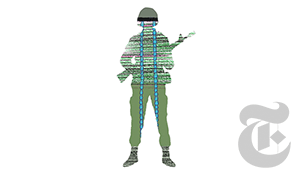
Survivor guilt is a mental condition that occurs when a person perceives themselves to have done wrong by surviving a traumatic event when others did not. It may be found among survivors of combat, natural disasters, epidemics, among the friends and family of those who have died by suicide, and in non-mortal situations such as among those whose colleagues are laid off. The experience and manifestation of survivor’s guilt will depend on an individual’s psychological profile.
The Diagnostic and Statistical Manual of Mental Disorders defines it as a significant symptom of post traumatic stress disorder (PTSD). Characteristic symptoms include anxiety and depression, social withdrawal, sleep disturbance and nightmares, physical complaints and mood swings with loss of drive. Continue reading →
Posted in Death, Health, War |
Leave a Comment »
January 29, 2016


A Raisin in the Sun is a play by African American playwright Lorraine Hansberry that debuted on Broadway in 1959. The title comes from the poem ‘Harlem’ by Langston Hughes: ‘What happens to a dream deferred? Does it dry up like a raisin in the sun?’ The story tells a black family’s experiences in the Washington Park Subdivision of Chicago’s Woodlawn neighborhood as they attempt to ‘better’ themselves with an insurance payout from the death of the father.
Walter and Ruth Younger, their son Travis, along with Walter’s mother Lena (Mama) and sister Beneatha, live in poverty in a dilapidated two-bedroom apartment on Chicago’s south side. Walter is barely making a living as a limousine driver. Though Ruth is content with their lot, Walter is not and desperately wishes to become wealthy. His plan is to invest in a liquor store in partnership with Willy and Bobo, street-smart acquaintances of Walter’s. Continue reading →
Posted in Art, Language, Politics |
Leave a Comment »
January 27, 2016

The term infomania is used to describe a sometimes debilitating feeling of ‘information overload,’ caused by the combination of a backlog of information to process (usually in e-mail), and continuous interruptions from technologies like phones and instant messaging. It is also understood as distraction caused by the urge to constantly check on incoming information, which causes the person to neglect other, often more important things—duties, family, etc. (For instance, a typical symptom of infomania is that of checking email frequently during vacation.)
The term was coined by Elizabeth M. Ferrarini, the author of ‘Confessions of an Infomaniac ‘(1984) and ‘Infomania: The Guide to Essential Electronic Services’ (1985). Confessions was an early book about life online. In 2005, British psychologist Glenn Wilson conducted an experimental study which documented the detrimental effects of information overload on problem solving ability. This was described in a press release accompanying a self-report survey of the extent of misuse of modern technology sponsored by Hewlett-Packard (However, in 2010, Wilson published a clarifying note about the study in which he documented its limited size and stated the results were ‘widely misrepresented in the media.’)
Posted in Education, Health, Technology |
Leave a Comment »
January 26, 2016


Restraint bias is the tendency for people to overestimate their ability to control impulsive behavior. An inflated self-control belief may lead to greater exposure to temptation, and increased impulsiveness. Therefore, the restraint bias has bearing on addiction. For example, someone might experiment with drugs, simply because they believe they can resist any potential addiction. An individual’s inability to control, or their temptation can come from several different visceral impulses such as hunger, sexual arousal, and fatigue. These impulses provide information about the current state and behavior needed to keep the body satisfied.
The ‘Empathy Gap Effect’ deals with individuals having trouble appreciating the power that the impulse states have on their behavior. There is a cold-to-hot empathy gap that states when people are in a cold state, like not experiencing hunger, they tended to underestimate those influences in a hot state. The underestimation of the visceral impulses can be contributed to restricted memory for the visceral experience which means the individual can recall the impulsive state but cannot recreate the sensation of the impulsive state. Continue reading →
Posted in Health |
Leave a Comment »



