February 26, 2016


A reduced-gravity aircraft is a type of fixed-wing aircraft that provides brief near-weightless environments for training astronauts, conducting research and making gravity-free movie shots. Versions of such airplanes, officially nicknamed ‘Weightless Wonders,’ were operated by the NASA Reduced Gravity Research Program.
The aircraft gives its occupants the sensation of weightlessness by following an elliptic flight path relative to the center of the Earth. While following this path, the aircraft and its payload are in free fall at certain points of its flight path. The aircraft is used in this way to demonstrate to astronauts what it is like to orbit the Earth. There are 25 seconds of weightlessness out of 65 seconds of flight in each parabola. The airplane typically flies about 40–60 parabolic maneuvers. In about two thirds of the passengers, these flights produce nausea due to airsickness, giving the plane its nickname ‘vomit comet.
Posted in Humor, Technology |
Leave a Comment »
February 25, 2016
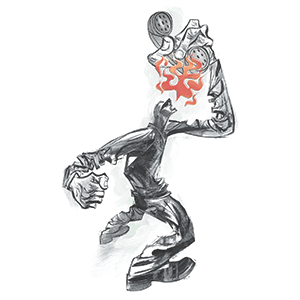
Swatting is the act of deceiving an emergency service into dispatching a police response based on the false report of an ongoing critical incident. The term derives from SWAT (Special Weapons and Tactics), a heavily armored police unit. Swatting has been associated with online harassment campaigns, and episodes range from the deployment of bomb squads and evacuations of schools and businesses, to a single fabricated police report meant to discredit an individual as a prank or personal vendetta.
The action of swatting – linked to the action of ‘doxxing’ (obtaining the address and details of an individual) – has been described as terrorism due to its potential to cause disruption, waste the time of emergency services, divert attention from real emergencies and possibly cause injuries and psychological harm to persons targeted. The act of making false reports to emergency services is punishable by prison sentences in the US and is a crime in many other countries. Continue reading →
Posted in Politics, Technology |
1 Comment »
February 24, 2016

Microdosing is a technique for studying the behavior of drugs in humans through the administration of doses so low (‘sub-therapeutic’) they are unlikely to produce whole-body effects, but high enough to allow the cellular response to be studied. This allows the observation of a drug’s pharmacokinetics with a low risk of side effects. This is called a ‘Phase 0 study’ and is usually conducted before clinical Phase I to predict whether a drug is viable for the next phase of testing. Human microdosing aims to reduce the resources spent on non-viable drugs and the amount of testing done on animals.
Psychedelic drugs are also sometimes used at sub-therapeutic doses for non-hallucinogenic effects. For example, LSD at one tenth the normal dose has been reported to have antidepressant properties and is said to aid in problem solving.
Posted in Drugs, Health |
1 Comment »
February 23, 2016

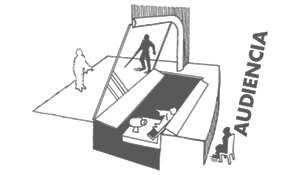
Pepper’s ghost is an illusion technique used in theater, amusement parks, museums, television, and concerts. It is named after John Henry Pepper, a scientist who popularized the effect in a famed demonstration in 1862. It has a long history, dating into the 16th century, and remains widely performed today.
Notable examples of the illusion are the ‘Girl-to-Gorilla’ trick found in old carnival sideshows and the appearance of ‘ghosts’ at the ‘Haunted Mansion’ at Disneyland. Teleprompters are a modern implementation of Pepper’s ghost. They reflect a speech or script and are commonly used for live broadcasts such as news programs. Examples of concert illusions based on Pepper’s ghost are the appearance of Tupac Shakur onstage with Dr. Dre and Snoop Dogg at the 2012 Coachella Music and Arts Festival and Michael Jackson at the 2014 Billboard Music Awards. Continue reading →
Posted in Art, Technology |
Leave a Comment »
February 21, 2016

In scholastic philosophy, quiddity [kwid-i-tee] was another term for the essence of an object, literally ‘what it is’ or its ‘whatness.’ The term derives from the Latin word ‘quidditas,’ meaning ‘what it was to be (a given thing),’ which was used by the medieval scholastics as a literal translation of the equivalent term in Aristotle’s Greek. It describes properties that a particular substance (e.g. a person) shares with others of its kind. The question ‘what (quid) is it?’ asks for a general description by way of commonality.
Quiddity was often contrasted by the scholastic philosophers with the ‘haecceity’ or ‘thisness’ of an item, which was supposed to be a positive characteristic of an individual that caused them to be this individual, and no other. It is used in this sense in British poet George Herbert’s eponymous poem, ‘Quiddity.’ In law, the term is used to refer to a quibble or academic point. An example can be seen in Hamlet’s graveside speech: ‘Where be his quiddities now, his quillets, his cases, his tenures’ says Hamlet, referring to a lawyer’s quiddities.
Posted in Language, Philosophy |
1 Comment »
February 20, 2016
In marketing, brand management is the analysis and planning on how a brand is perceived in the market, with the goal of developing a good relationship with the target market. Tangible elements of brand management include the product itself (i.e. the look, price, packaging). Intangible elements include the experience that the consumer has had with the brand, and also their relationship with it. A brand manager would oversee all of these things. The modern discipline of brand management is considered to have been started by a famous memo at Procter & Gamble by Neil H. McElroy.
Marketing scholar Molly Hislop defined branding as ‘the process of creating a relationship or a connection between a company’s product and emotional perception of the customer for the purpose of generating segregation among competition and building loyalty among customers.’ It is a fulfillment in customer expectations and consistent customer satisfaction. Brand management aims to create an emotional connection between products, companies and their customers and constituents. Brand managers create strategies to convert a suspect to prospect; prospect to buyer; buyer to customer and customer to brand advocates. Continue reading →
Posted in Money |
Leave a Comment »
February 19, 2016


Inbound marketing is promoting a company through blogs, podcasts, video, eBooks, electronic newsletters, whitepapers, SEO (search engine optimization), physical products, social media marketing, and other forms of content marketing which serve to attract customers through the different stages of the purchase funnel. In contrast, buying attention (marketing stunts), cold-calling, direct paper mail, radio, TV advertisements, sales flyers, spam, telemarketing, and traditional advertising are considered ‘outbound marketing.’
Inbound marketing refers to marketing activities that bring visitors in, rather than marketers having to go out to get prospects’ attention. Inbound marketing earns the attention of customers, makes the company easy to be found, and draws customers to the website by producing interesting content. Many companies are now realizing that their technical documentation, often considered a ‘necessary evil,’ is authoritative, trustworthy content that can be their most effective inbound marketing channel, generating more than half of overall site traffic and over half of lead generation. Continue reading →
Posted in Money |
Leave a Comment »
February 18, 2016


Earned media refers to publicity gained through promotional efforts other than advertising, as opposed to ‘paid media,’ which refers to publicity gained through advertising. There are many types of media available to online marketers and fit into the broad categories. Owned media is defined as communication channels that are within one’s control, such as websites, blogs, or email. Paid media refers mostly to traditional advertising. Earned media, on the other hand, is generated when content receives recognition and a following outside of traditional paid advertising, through communication channels such as social media and word of mouth.
A Nielsen study in 2013 found that earned media (also described in the report as ‘word-of-mouth’) is the most trusted source of information in all countries it surveyed worldwide. It also found that earned media is the channel most likely to stimulate the consumer to action. Other authorities make the distinction between online and offline earned media / word-of-mouth, and have shown that offline word-of-mouth has been found to be more effective than online word-of-mouth. Continue reading →
Posted in Money |
Leave a Comment »
February 17, 2016

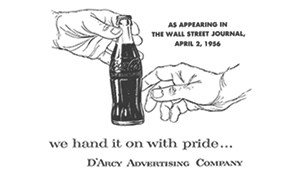
The study of the history of marketing as an academic field emerged only recently with the publication of ‘The History of Marketing Thought’ by Robert Bartels in 1976. Broadly defined marketing is any activity that connects producers with consumers, which was previously considered a subtopic of economics. Wroe Alderson’s book, ‘Marketing Behavior and Executive Action’ (1957) is also considered a break-point in the history of marketing thought. After Alderson, marketing began to incorporate other fields of knowledge besides economics, notably behavioral science, developing into a multidisciplinary field.
Marketing historian Jagdish Shethhave identified three schools of marketing: Managerial (systematized marketing emerged during the late 1950s and became arguably the predominant and most influential school of thought in the field), Consumer/Buyer Behavior (the use of behavioral science to market goods and services was popularized in the second half of the twentieth century), and Social Exchange (recently, ‘exchange’ has been forwarded as the fundamental concept of marketing). Continue reading →
Posted in Money |
Leave a Comment »
February 16, 2016


Magic words are words which have a specific, and sometimes unintended, effect. They are often nonsense phrases used in fantasy fiction or by stage prestidigitators. Certain comic book heroes use magic words to activate their super powers. Magic words are also used as Easter eggs or cheats in computer games, other software, and operating systems. (For example, the words ‘xyzzy,’ ‘plugh,’ and ‘plover’ were magic words in the classic computer adventure game ‘Colossal Cave Adventure’).
Examples of traditional magic words include: Abracadabra, Alakazam, Hocus pocus, Open sesame (used by the character Ali Baba in the English version of a tale from the collection popularly known as ‘1001 Arabian Nights’), Presto chango, Shazam (used by the comic book hero Captain Marvel), and Shemhamforash (used by Satanists). Craig Conley, a scholar of magic, writes that the magic words used by conjurers may originate from ‘pseudo-Latin phrases, nonsense syllables, or esoteric terms from religious antiquity,’ but that what they have in common is ‘language as an instrument of creation.’ Continue reading →
Posted in Language |
Leave a Comment »
February 15, 2016
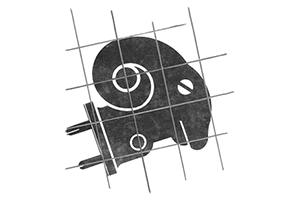

Do Androids Dream of Electric Sheep? is a science fiction novel by American writer Philip K. Dick. First published in 1968, the novel is set in a post-apocalyptic San Francisco, where Earth’s life has been greatly damaged by nuclear global war. Most animal species are endangered or extinct due to extreme radiation poisoning, so that owning an animal is now a sign of status and empathy, an attitude encouraged towards animals. The book served as the primary basis for the 1982 film ‘Blade Runner.’
The main plot follows a single day in the life of Rick Deckard, a bounty hunter hired by the San Francisco Police Department to ‘retire’ (kill) six escaped androids. A secondary plot follows John Isidore, a driver for an electric-animal repair company, who is a ‘special’ (a radioactively-damaged, intellectually slow human whose status prohibits him from emigrating). In connection with Deckard’s mission, the novel explores the issue of what it is to be human. Unlike humans, the androids are claimed to possess no sense of empathy.
Continue reading →
Posted in Art, Language, Technology |
1 Comment »
February 11, 2016

A Shabbat elevator is an elevator which works in a special mode, operating automatically, a way to circumvent the Jewish law requiring observers to abstain from operating electric switches during the Sabbath. In this mode, an elevator will stop automatically at every floor, allowing people to step in and out without having to press any buttons. They are found in Israeli hospitals, hotels, and apartment buildings, and in some synagogues.
The Israeli Knesset passed a special Shabbat elevator law in 2001 ordering the planning and building of all residential buildings, and public buildings which have more than one elevator, to install a control mechanism for Shabbat (Shabbat module) in one of the elevators. In 2009 senior haredi rabbis, led by Rabbi Yosef Shalom Elyashiv, published a religious injunction forbidding the use of Shabbat elevators on the grounds that even in Shabbat mode the user is indirectly violating Shabbat.
Posted in Philosophy, Technology, World |
Leave a Comment »



