February 27, 2013
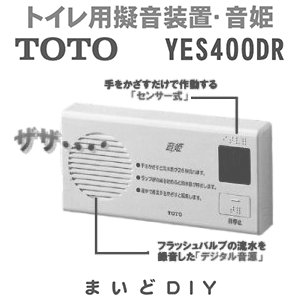
Many Japanese women are embarrassed at the thought of being heard by others during urination. To cover the sound of bodily functions, many women used to flush public toilets continuously while using them, wasting a large amount of water in the process.
As education campaigns did not stop this practice, a device was introduced in the 1980s that, after activation, produces the sound of flushing water without the need for actual flushing. A Toto brand name commonly found is the ‘Otohime’ (literally ‘Sound Princess‘ also homophone with a legendary goddess Otohime). This device is now routinely placed in most new public women’s rooms, and many older public women’s rooms have been upgraded.
Posted in Money, Technology |
Leave a Comment »
February 25, 2013
The Kit-Cat Klock is an art deco novelty style wall clock in the shape of a grinning black cat with cartoon eyes that roll horizontally in sync with a pendulum tail that wags beneath. The clock is traditionally colored black, but models in other colors/styles are available. It first appeared during the 1930s. The clock is an iconic symbol of kitchens in pop culture. Having changed very little in the intervening years, the first clock was made in 1932 by the California Clock Company in Portland, Oregon.
The first generation of clocks, manufactured in the 1930s, 1940s and 1950s, have two paws, while newer models have four paws and a bow tie. The words ‘Kit-Cat’ were added to the clock face in the 1980s. The original clocks were plug-in, but most models sold since the late 1980s use batteries. The manufacturer estimates that the clock has sold on average at the rate of one every three minutes for the last 50 years.
Posted in Art, Humor |
Leave a Comment »
November 30, 2012

The South Butt, LLC was a clothing and accessories company founded in 2007 by Jimmy Winkelmann, a then 16-year-old student at Chaminade College Preparatory School. The company dissolved in 2011.
Winkelmann claimed the company was a parody of the The North Face, an American outdoor product company.
read more »
Posted in Humor, Money, Politics |
Leave a Comment »
September 11, 2012
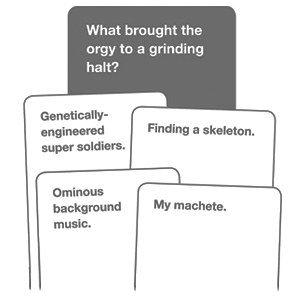
Cards Against Humanity is a multiplayer party game currently available as a free download or a published hardcopy. The game is available under a Creative Commons license. Its title references the phrase ‘crimes against humanity,’ reflecting its politically incorrect content.
Cards Against Humanity was created by a group of alumni of Highland Park High School as a party game for a New Year’s Eve celebration. The project was financed through the website Kickstarter. Co-creator Ben Hantoot stated in an interview that the game was developed by ‘8 of us who are the core writer-creators, 5 or 6 additional ‘part time’ developers’ and ‘dozens of friends and acquaintances who have played the game.’
read more »
Posted in Games, Humor, Language |
Leave a Comment »
August 23, 2012

Hebrew National is a brand of kosher hot dogs and sausages made by ConAgra Foods, Inc. The Hebrew National Kosher Sausage Factory, Inc. was founded on East Broadway, on the Lower East Side of Manhattan in 1905. The company was founded by Theodore Krainin, who emigrated from Russia in the 1880s. In a 1921 article, Alfred W. McCann writing in ‘The Globe and Commercial Advertiser’ citied Hebrew National as having ‘higher standards than the law requires.’
McCann wrote the article during a crusade for commercial food decency standards, in which ‘The Globe’ was prominent. He wrote ‘More power to Krainin and the decency he represents! Such evidence of the kind of citizenship which America should covet is not to be passed by lightly.’ Hebrew National ‘served the Jewish neighborhoods of immigrants from Eastern Europe and Germany and soon developed a favorable reputation among the other Jewish residents of New York City.’
read more »
Posted in Food, Money, Philosophy |
Leave a Comment »
July 30, 2012
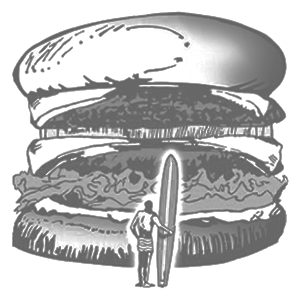
Big Kahuna Burger is a fictional chain of Hawaiian-themed fast food restaurants that appears in the movies of Quentin Tarantino including ‘Death Proof,’ ‘Four Rooms,’ ‘From Dusk Till Dawn,’ ‘Pulp Fiction,’ and ‘Reservoir Dogs.’
The packaging was created by Tarantino’s old friend Jerry Martinez. The Big Kahuna Burger is also seen in ‘The Adventures of Sharkboy and Lavagirl in 3-D,’ directed by Robert Rodriguez.
Posted in Art, Food |
Leave a Comment »
May 30, 2012
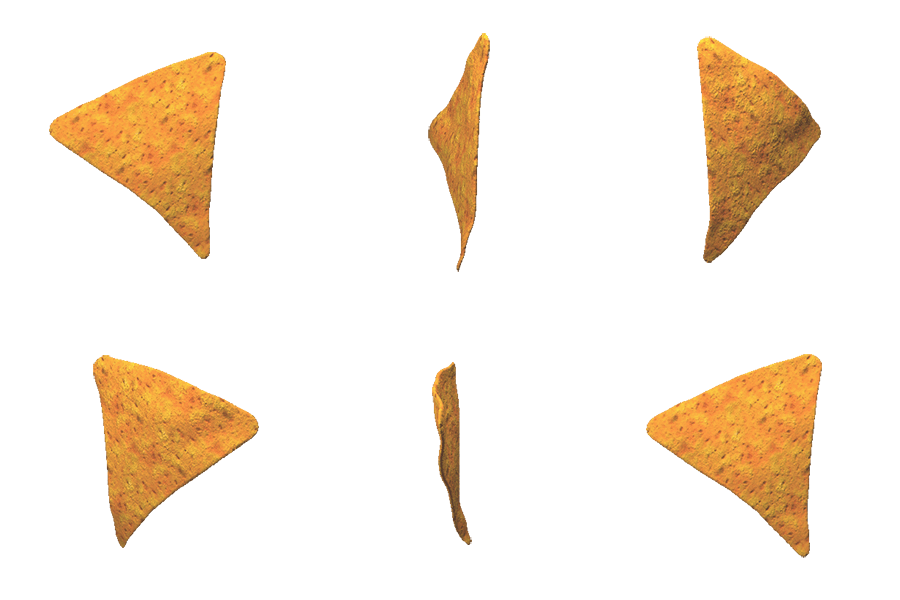
Doritos is a brand of seasoned tortilla chips founded by Arch West and produced since 1964 by Frito-Lay (a division of PepsiCo). The original product was made at the Casa de Fritos location at Disneyland in Anaheim. Using unused tortillas, the company-owned restaurant cut them up and fried them and added basic seasoning. Arch West was the Vice President of Marketing of Frito-Lay at the time, and noticed the popularity.
He made a deal with Alex Foods in 1964, the provider of many items for Casa de Fritos at Disneyland, and produced the chips for a short time regionally, before it was overwhelmed by the volume, and Frito-Lay moved the production in-house to its Tulsa plant. ‘Doritos’ were first available in 1966, the first tortilla chip to be launched nationally in the United States.
read more »
Posted in Food, Money |
2 Comments »
April 27, 2012
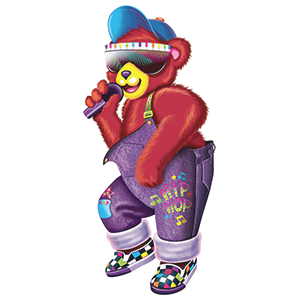
Lisa Frank is an American commercial artist and founder of Lisa Frank Incorporated, headquartered in Tucson, Arizona. The artist’s work appears on various commercial elementary and middle-school products, mostly school supplies. Also common among Lisa Frank-related items are stickers and a variety of other merchandise such as clothing and toys marketed towards young girls. Frank founded the company in 1979 at the age of 24, and her success resulted from her sticker line.
The company’s headquarters is easily visible because of the bright hearts, stars, and music notes decorating the side of the building. There is currently a quarterly magazine also named ‘Lisa Frank.’ Her corporation’s artwork features extremely bright and vibrant colors, and round, smooth, reflective surfaces. A number of characters recur on ‘Lisa Frank’ branded items, such as a Hollywood Bear, and Markie the unicorn. Rainbows and especially the color purple are abundant in Lisa Frank’s art.
Posted in Art, Humor, Money |
2 Comments »
January 25, 2012
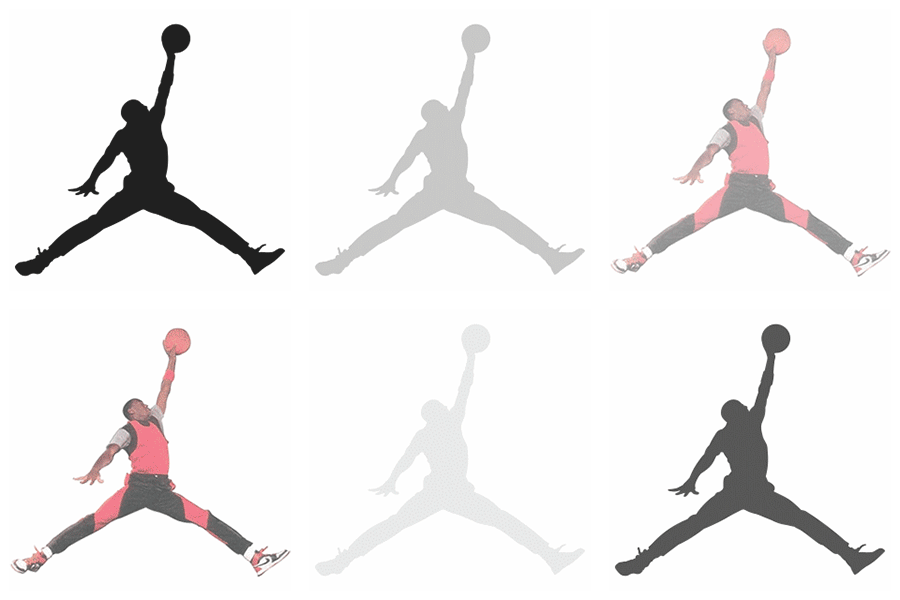
The ‘Jumpman‘ logo is used by Nike to promote its Michael Jordan-related merchandise, including the famous and successful Air Jordan brand of basketball shoes. The logo is a silhouette of a studio photograph of Jordan performing a ballet move, not an actual dunk as many believe. Beginning in 1985, the Jumpman photo or logo always accompanied ‘Jordan’ branded products, even when the only word displayed on the product was ‘Jordan.’
The Air Jordan III, released in 1988, was the first Air Jordan shoe to feature the Jumpman logo, replacing the ‘Wings’ logo, which had been a feature of the Air Jordans I and II. This model was one of the most popular ever. The Jumpman logo would retain a fairly consistent look throughout the Air Jordan line’s history, except on the Air Jordan VIII, on which it was reminiscent of a peace sign. In 1993-94, Nike ran a series of Air Jordan commercials pairing Michael Jordan with Warner Brothers’ own Bugs Bunny. As a tie-in, Nike created a line of merchandise which featured a spoof of the Jumpman using Bugs’ silhouette, combined with a “Hare Jordan” caption. This led to the film ‘Space Jam.’
Posted in Games, Money |
Leave a Comment »
January 16, 2012
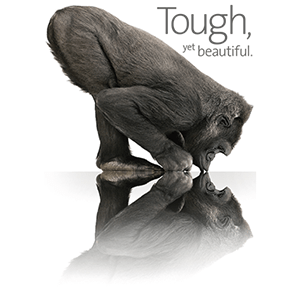
Gorilla Glass, manufactured by Corning, is an alkali-aluminosilicate sheet glass engineered specifically to be thin, light and damage-resistant. Its primary application is portable electronic devices with screens, such as phones and tablets. Corning experimented with chemically strengthened glass in 1960, as part of an initiative called ‘Project Muscle.’ Gorilla Glass was used in about 20 percent of the world’s approximately 200 million mobile handsets in 2010. Corning says that Gorilla Glass is RF compatible and has outstanding optical clarity, making it suitable for HD and 3-D television displays. Early in 2012, Corning announced a new version of Gorilla Glass that is 20 percent thinner, but continues to have the same scratch resistance and endurance as the original. The thinner glass will allow for greater touch sensitivity for the user.
The glass is placed in a hot bath of molten potassium salt at a temperature of approximately 400 °C (~750 °F). Smaller sodium ions leave the glass, and larger potassium ions from the salt bath replace them. These larger ions take up more room and are pressed together when the glass cools, producing a layer of compressive stress on the surface of the glass. Gorilla Glass’s special composition enables the potassium ions to diffuse far into the surface, creating high compressive stress deep into the glass. This layer of compression creates a surface that is more resistant to damage from everyday use. Like all glass, Gorilla glass can be recycled.
Posted in Money, Technology |
1 Comment »
December 23, 2011
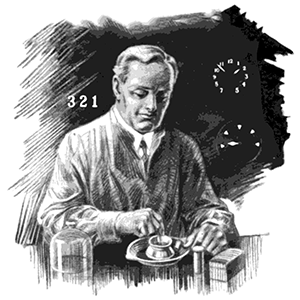
Undark was a trade name for luminous paint made with a mixture of radioactive radium and zinc sulfide, as produced by the U.S. Radium Corporation between 1917 and 1938. It was used primarily in watch dials.
The people working in the industry who applied the radioactive paint became known as the Radium Girls, because many of them became ill and some died from exposure to the radiation emitted by the radium contained within the product. The product was the direct cause of Radium jaw in the dial painters. Undark was also available as a kit for general consumer use and marketed as glow-in-the-dark paint.
Posted in Health, Money, Technology |
Leave a Comment »
December 14, 2011
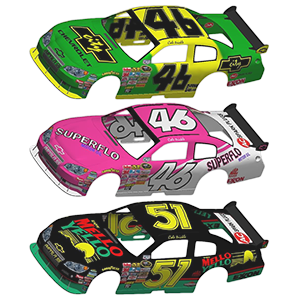
Mello Yello is a caffeinated, citrus-flavored soft drink produced and distributed by The Coca-Cola Company. It was introduced in 1979 to compete with PepsiCo’s Mountain Dew. There have been three flavored variants: Mello Yello Cherry was released in response to Mountain Dew Code Red, and the other two variants were Mello Yello Afterglow (peach-flavored) and Mello Yello Melon.
Mello Yello was featured in the 1990 NASCAR-based movie ‘Days Of Thunder,’ in which Tom Cruise’s character, Cole Trickle, drove a Mello Yello-sponsored car to victory in the Daytona 500, although the product name itself is never verbally mentioned in the movie. That livery went on to become a real NASCAR paint scheme the following year, when driver Kyle Petty drove with Mello Yello sponsorship in the Winston Cup Series.
Posted in Food, Money |
Leave a Comment »



 The Daily Omnivore