March 2, 2011

Kenneth Knowlton (b. 1931), is a computer graphics pioneer, artist, mosaicist and portraitist, who worked at Bell Labs. In 1963, Knowlton developed the BEFLIX (Bell Flicks) programming language for bitmap computer-produced movies, created using an IBM 7094 computer and a Stromberg-Carlson 4020 microfilm recorder. Each frame contained eight shades of grey and a resolution of 252 x 184. In 1966, Knowlton and Leon Harmon were experimenting with photomosaic, creating large prints from collections small symbols or images.
In Studies in Perception I they created an image of a reclining nude (the dancer Deborah Hay), by scanning a photograph with a camera and converting the analog voltages to binary numbers which were assigned typographic symbols based on halftone densities. It was printed in The New York Times on 11 October 1967, and exhibited at one of the earliest computer art exhibitions, The Machine as Seen at the End of the Mechanical Age, held Museum of Modern Art in New York City in 1968.
Posted in Art, Technology |
Leave a Comment »
March 2, 2011

Piet [peet] Mondrian [mawn-dree-ahn] (1872 – 1944), was a Dutch painter, and an important contributor to the De Stijl art movement (Dutch for ‘The Style,’ which advocated pure abstraction and universality by a reduction to the essentials of form and color; they simplified visual compositions to the vertical and horizontal directions, and used only primary colors along with black and white).
He evolved a non-representational form which he termed Neo-Plasticism. This consisted of white ground, upon which was painted a grid of vertical and horizontal black lines and the three primary colors.
Posted in Art, World |
Leave a Comment »
March 2, 2011
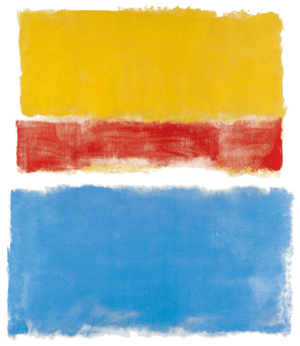
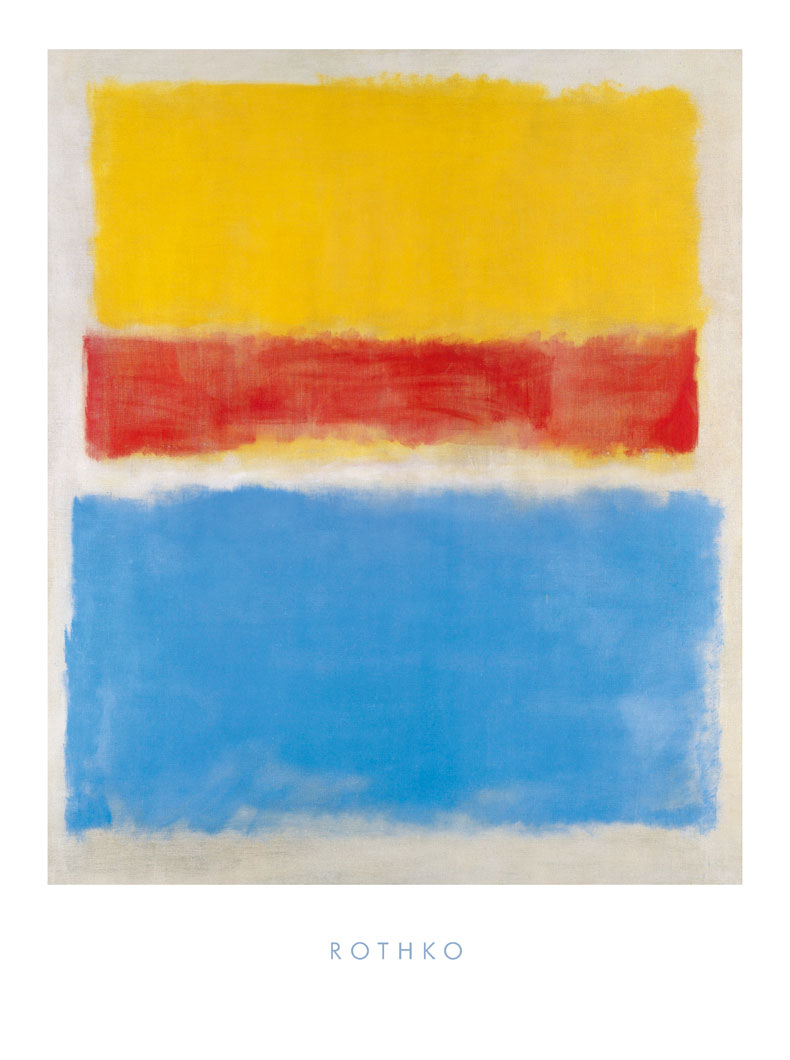
Mark Rothko (1903 – 1970) was a Latvian-born American painter. He is classified as an abstract expressionist, although he rejected the label, and even resisted classification as an ‘abstract painter.’ 1946 saw the creation of Rothko’s transitional ‘multiform’ paintings. He gradually transitioned from surrealistic, myth-influenced works of the early part of the decade to the highly abstract, Clyfford Still-influenced forms of pure color. For Rothko, these blurred blocks of various colors, devoid of landscape or human figure, let alone myth and symbol, possessed their own life force. They contained a ‘breath of life’ he found lacking in most figurative painting of the era.
He started with the application of a thin layer of binder mixed with pigment directly onto uncoated and untreated canvas on which he painted significantly thinned oils, creating a dense mixture of overlapping colors and shapes. His brush strokes were fast and light. Rothko used several original techniques that he tried to keep secret even from his assistants. Electron microscopy and ultraviolet analysis showed that he employed natural substances such as egg and glue, as well as artificial materials including acrylic resins, phenol formaldehyde, and modified alkyd. One of his objectives was to make the various layers of the painting dry quickly, without mixing of colors, such that he could soon create new layers on top of the earlier ones.
Posted in Art, Money |
Leave a Comment »
February 14, 2011
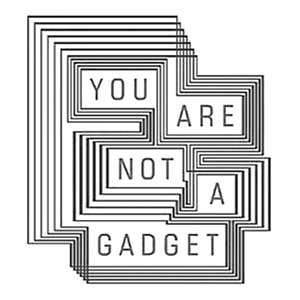
Jaron Lanier [lah-neer] (b. 1960) is an American computer scientist and artist. In the early 1980s he popularized the term ‘Virtual Reality’ (VR) for a field in which he was a pioneer. At that time, he founded VPL Research, the first company to sell VR products. His current appointments include Interdisciplinary Scholar-in-Residence, CET, UC Berkeley. In what is probably his most famous paper ‘One-Half of a Manifesto’ (Wired, 2000) Lanier opposes the prospect of so called ‘cybernetic totalism,’ which is ‘a cataclysm brought on when computers become ultra-intelligent masters of matter and life.’
Lanier’s position is that humans may not be considered to be biological computers, i.e., they may not be compared to digital computers in any proper sense, and it is very unlikely that humans could be generally replaced by computers easily in few decades, even economically. While processor performance increases according to Moore’s law, overall performance rises only very slowly. This is because our productivity in developing software increases only slightly, and software becomes more bloated and remains as error-prone as it ever was. He warns that the biggest problem of any theory is not that it is false, ‘but when it claims to be the sole and utterly complete path to understanding life and reality.’
Posted in Philosophy, Politics, Technology |
Leave a Comment »
February 9, 2011

Patricia Piccinini (born in 1965 in Freetown, Sierra Leone) is an Australian artist and hyperrealist sculptor. Her art work came to prominence in Australia in the late 1990s.
Her major artworks often reflect her interests in issues such as bioethics, biotechnologies and the environment. Other Australian artists who work in a similar idiom are Martine Corompt, Sam Jinks and Ron Mueck.
Posted in Art, Money, Politics |
Leave a Comment »
December 22, 2010
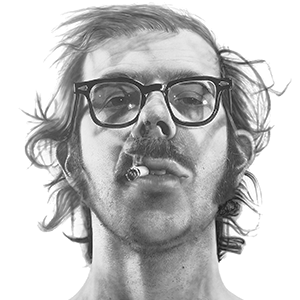
Chuck Close (b. 1940) is an American painter and photographer who achieved fame as a photorealist, through his massive-scale portraits.
Though a catastrophic spinal artery collapse in 1988 left him severely paralyzed, he has continued to paint and produce work that remains sought after by museums and collectors. Ironically, while being one of the most successful portrait artists of his time, Close is also afflicted with prosopagnosia (face blindness), a condition that prevents him from recognizing people’s faces.
read more »
Posted in Art |
2 Comments »
December 20, 2010

Victor Vasarely (1906 – 1997) was a Hungarian French artist whose work is generally seen aligned with Op-art. His work entitled Zebra, created by in the 1930s, is considered by some to be one of the earliest examples of Op-art.
He was born in a town outside of Budapest, but settled in Paris in 1930, where he went on to produce art and sculpture mainly focused around the area of optical illusion. Over the next three decades, Vasarely developed his style of geometric abstract art, working in various materials but using a minimal number of forms and colors.
Posted in Art |
Leave a Comment »
December 7, 2010
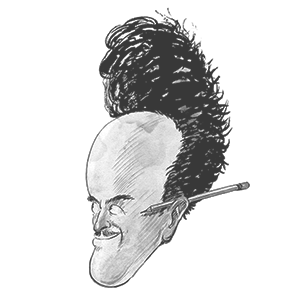
Ub Iwerks (1901 – 1971) was an American animator and special effects technician who created several of Walt Disney’s early characters including Mickey Mouse. Iwerks was considered by many to be Disney’s oldest friend, and he spent most of his career working for Disney in some capacity. The two met in 1918 while working for the Kansas City Art Studio, and would eventually start their own commercial art business together.
He was responsible for the distinctive style of the earliest Disney animated cartoons, and was also responsible for creating several early characters including Mickey Mouse, Clarabelle Cow, and Horace Horsecollar. The first few Mickey Mouse and Silly Symphonies cartoons were animated almost entirely by Iwerks. Disney and he had a falling out over the credit for the characters success. Their friendship and working partnership was severed when Iwerks accepted a contract with Disney competitor Pat Powers to start an animation studio under his own name.
read more »
Posted in Art, Humor, Money |
Leave a Comment »
November 16, 2010

Vladimir Grigoryevich Tretchikoff (1913 – 2006) was one of the most commercially successful artists of all time – his painting Chinese Girl (popularly known as ‘The Green Lady’) is one of the best selling art prints ever. Tretchikoff was a self-taught artist who painted realistic figures, portraits, still life and animals, with subjects often inspired by his early life in China and Malaysia, and later life in South Africa. Tretchikoff’s work was immensely popular with the general public, but is often seen by art critics as the epitome of kitsch (indeed, he was nicknamed the ‘King of Kitsch’).
He worked in oil, watercolour, ink, charcoal and pencil but is best known for his reproduction prints which sold worldwide in huge numbers. The reproductions were so popular that it was said Tretchikoff was second only to Picasso in his popularity. Tretchikoff once said that the only difference between himself and Vincent Van Gogh was that Van Gogh had starved whereas he had become rich.
Posted in Art, Money, World |
Leave a Comment »
November 4, 2010
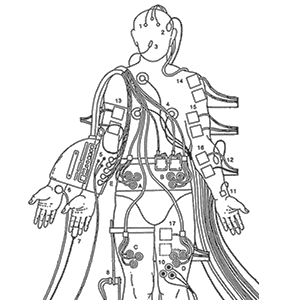
Stelarc (Stelios Arkadiou) is a Greek-Australian performance artist whose works focuses heavily on extending the capabilities of the human body. As such, most of his pieces are centred around his concept that the human body is obsolete. He is currently a visiting Professor in the School of Arts at Brunel University, West London.
In 2007, Stelarc had a cell-cultivated ear surgically attached to his left arm. In 2005, MIT Press published ‘Stelarc: The Monograph’ which is the first extensive study of his prolific work.
Posted in Art, Science, Technology |
Leave a Comment »
October 18, 2010

Robert Crumb (b. 1943) is an American artist, illustrator and musician recognized for the distinctive style of his drawings and his critical, satirical, subversive view of the American mainstream. Crumb was a founder of the underground comix movement and is regarded as its most prominent figure.
Though one of the most celebrated of comic book artists, Crumb’s entire career has unfolded outside the mainstream comic book publishing industry. One of his most recognized works is the ‘Keep on Truckin” comic, which became a widely distributed fixture of pop culture in the 1970s. Others are the characters Devil Girl, Fritz the Cat, and Mr. Natural.
read more »
Posted in Art, Humor |
Leave a Comment »
July 9, 2010

Blek le Rat was born Xavier Prou in Paris in 1952.
He is considered by many the godfather of stencil graffiti art. He began his artwork in 1981, painting stencils of rats on the street walls of Paris, describing the rat as ‘the only free animal in the city,’ and one which ‘spreads the plague everywhere, just like street art.’ His name originates from a childhood cartoon ‘Blek le Roc,’ using ‘rat’ as an anagram for ‘art.’
read more »
Posted in Art, World |
Leave a Comment »





 The Daily Omnivore