October 26, 2016

Birdwell, makers of Birdwell Beach Britches, is an American surf clothing company headquartered in Santa Ana, California. Founded by Carrie Birdwell Mann in 1961, the company manufactures and sells customized heavy-duty swimsuits, which are sold internationally. With four basic models, various fabrics, including Surfnyl, Tectyl, heavy nylon, sailcloth, and canvas, more than 40 colors, and various other options, the combinations that can be created are nearly endless. The company’s motto is ‘We don’t build 1000 things. We build one thing 1000 ways.’
The swimsuits themselves, which resemble board shorts, are paneled swimsuits, with waistbands resembling those of boxing trunks, always double-stitched, always with two layers of fabric. These shorts are known and favored among surfers, lifeguards, and paddleboarders, because of their quick-drying design and extreme durability; with an estimated 10 years for average use, and two to five years for more strenuous use. On all of the trunks there is a 2 square inch logo, of a stylized anthropomorphic surfboard, wearing, of course, Birdwell Beach Britches, nicknamed ‘Birdie.’
Posted in Games, Money |
Leave a Comment »
January 11, 2016

The Knee Defender is a device that an airplane passenger can place on the struts that support his/her drop-down airplane seat tray table to limit the extent to which the seat directly in front of him/her can be reclined. The device was invented by Ira Goldman, and it was first sold to the public in 2003.
In August 2014, on a United Airlines flight from Newark to Denver, an argument developed between a passenger using a Knee Defender and the passenger seated in front of him who wanted to recline. Ultimately the pilot diverted the flight to Chicago and both of those passengers were deplaned.
Posted in Money, Politics, Technology |
Leave a Comment »
December 12, 2015

Smell-O-Vision was a system that released odor during the projection of a film so that the viewer could ‘smell’ what was happening in the movie. The technique was created by inventor Hans Laube and made its only appearance in the 1960 film ‘Scent of Mystery,’ produced by Mike Todd, Jr., son of film producer Mike Todd. The process injected 30 odors, such as freshly-baked bread, pipe tobacco, and salty ocean air, into a movie theater’s seats when triggered by the film’s soundtrack.
The use of scents in conjunction with film dates back to 1906, before the introduction of sound. In this first instance, a 1958 issue of ‘Film Daily’ claims that Samuel Roxy Rothafel of the Family Theatre in Forest City, Pennsylvania, placed a wad of cotton wool that had been soaked in rose oil in front of an electric fan during a newsreel about the Rose Bowl Game. Arthur Mayer installed an in-theater smell system in Paramount’s Rialto Theater on Broadway in 1933, which he used to deliver odors during a film. However, it would take over an hour to clear the scents from the theater, and some smells would linger for days afterward.
read more »
Posted in Art, Humor, Technology |
Leave a Comment »
November 5, 2015

Chromadepth is a patented system from the company Chromatek (a subsidiary of American Paper Optics since 2002) that produces a stereoscopic effect based upon differences in the diffraction of color through a special prism-like holographic film. Chromadepth glasses purposely exacerbate chromatic aberration (the failure of a lens to focus all colors to the same convergence point) and give the illusion of colors taking up different positions in space, with red being in front, and blue being in back.
The effect works particularly well with the sky, sea or grass as a background, and redder objects in the foreground. From front to back the scheme follows the visible light spectrum, from red to orange, yellow, green and blue. This means any color is associated in a fixed fashion with a certain depth when viewing. As a result, ChromaDepth works best with artificially produced or enhanced pictures, since the color indicates the depth.
Posted in Money, Technology |
Leave a Comment »
May 13, 2015

Pappy Van Winkle’s Family Reserve is the flagship brand of bourbon whiskey owned by the ‘Old Rip Van Winkle Distillery’ company (which does not actually own or operate a distillery, but rather has it produced under a contract with another company). It is distilled and bottled by the Sazerac Company at its Buffalo Trace Distillery in Frankfort, Kentucky. It is often regarded as one of the finest bourbons in the world, and is rare to find on the market due to its very low production and high demand. The product has a cult-like following. Famous chefs such as Anthony Bourdain and David Chang have favored the product.
‘Food Republic’ reported that Chef John Currence said: ‘There’s Pappy Van Winkle, then there’s everything else.’ Bourbon aficionados have shown up in droves to get a small chance in a lottery to purchase some. It has been called ‘the bourbon everyone wants but no one can get.’ A writer for ‘The Wall Street Journal’ said ‘You could call it bourbon, or you could call it a $5,000 bottle of liquified, barrel-aged unobtanium.’ Jen Doll wrote in ‘The Wire,’ ‘It’s an age-old dilemma (supply and demand) leading to an age-old marketing dream (a product that can’t be kept on the shelves … money in the pockets … bourbon in the bourbon snifters).’
read more »
Posted in Drugs, Food, Money |
Leave a Comment »
September 10, 2013

The Rally Fighter is the first automobile manufactured by Local Motors. The car is designed under a freely distributable Creative Commons license. It was featured in an episode of the American version of the television show ‘Top Gear.’
The Rally Fighter was also featured on the Discovery Channel television show ‘Game Changers’ showing the build process that customers who purchase a Rally Fighter would go through. The Rally Fighter is an automobile built by the customer at a Micro Factory owned and operated by Local Motors.
Posted in Technology |
Leave a Comment »
September 1, 2013

Swedish Fish is a fish-shaped wine gum (gum drop type) candy. In 1957, Malaco, a Swedish confectionery manufacturer, expanded its business by exporting a few of their products to North America. Various licorice ribbon and licorice lace candies were the first products to be exported. Malaco CEO Thor Fjørgerson called the move ‘a landmark day for Sweden/US relations.’
International trade experts hailed the move, as it allowed Malaco to extend its brand beyond the Scandinavian Peninsula. Malaco’s export trade grew and in the late 1960s and early 1970s, Swedish Fish and Swedish Berries were developed specifically for the North American market. Malaco was eventually acquired by Leaf International.
read more »
Posted in Food, World |
Leave a Comment »
August 17, 2013
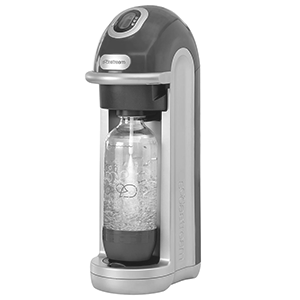
SodaStream is the maker of a consumer home carbonation product based on the principles of making a carbonated drink as originally invented by Guy Gilbey in 1903. The device allows users to take ordinary tap water and carbonate it to create soda water (or carbonated water) to drink.
With the addition of one of over 100 different types of concentrated syrups and flavorings produced by Sodastream, owners can create carbonated beverages. After the company merged with Soda-Club in 1998, it was relaunched with an emphasis on healthier drinks. It went public on the Nasdaq stock exchange in 2010. Sodastream is currently headquartered in Israel, and has 13 production plants.
read more »
Posted in Food, Money |
Leave a Comment »
August 17, 2013

The Flowbee is an electrically powered vacuum cleaner attachment made for cutting hair. It was invented in 1988 by Rick Hunt, a San Diego carpenter. Hunt initially sold the Flowbees out of his garage before finding success with live demonstrations at a county fair. The product was advertised as being capable of performing ‘hundreds of precision layered haircuts’ in frequently aired late-night television infomercials. By 2000, two million Flowbees had been sold.
The Flowbee can also be used to groom dogs with long hair such as Maltese or Bichon Frisé with a special pet grooming attachment which is sold separately. The Flowbee is still being manufactured and sold via their factory (in Corpus Christi, Texas) direct website and various outlets across the Internet.
Posted in Humor, Technology |
Leave a Comment »
July 29, 2013

Pagani is an Italian manufacturer of sports cars and carbon fiber components. The company was founded in 1992 by Horacio Pagani and is based in San Cesario sul Panaro, near Modena, Italy.
Horacio Pagani, who formerly managed Lamborghini’s composites department, founded Pagani Composite Research in 1988. This new company worked with Lamborghini on numerous projects, including the restyling of the 25th Anniversary Countach, the Lamborghini LM002, the Lamborghini P140 design concept, and the Diablo. In the late 1980s, Pagani began designing his own car, then referred to as the ‘C8 Project.’
read more »
Posted in Money, Technology |
Leave a Comment »
July 15, 2013

Slim Jim is a brand of jerky snacks or dried sausage manufactured by ConAgra Foods, Inc., the food conglomerate based in Omaha. They are popular in the United States. More than 500 million are produced annually in at least 20 varieties.
The Slim Jim itself has been transformed in the years since Adolph Levis invented it in 1928. He sold the company in 1967 for about 20 million dollars to General Mills, who moved the operations to Raleigh, N.C., and merged them into other meatpacking operations that it renamed Goodmark Foods. It sold Goodmark in 1982 to a group led by Ron Doggett, who sold it to ConAgra in 1998.
read more »
Posted in Food, Humor |
Leave a Comment »
March 10, 2013

Enviropig is the trademark for a genetically modified line of Yorkshire pigs with the capability to digest plant phosphorus more efficiently than ordinary unmodified pigs that was developed at the University of Guelph.
The benefits of the Enviropig if commercialized include reduced feed cost and reduced phosphorus pollution as compared to the raising of ordinary pigs. Enviropigs produce the enzyme phytase in their salivary glands. When cereal grains are consumed, the phytase mixes with feed in the pig’s mouth, and once swallowed the phytase is active in the acidic environment of the stomach degrading indigestible phytic acid with the release of phosphate that is readily digested by the pig.
read more »
Posted in Food, Science |
Leave a Comment »


 The Daily Omnivore