December 14, 2011
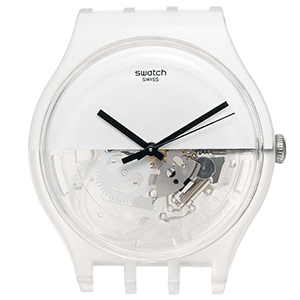
Swatch is a brand name for a line of wrist watches from the Swatch Group, a Swiss conglomerate with vertical control of the production of Swiss watches and related products. Swatch Group is the world’s largest watch company, and the Group has accelerated its acquisition of Swiss luxury brands in recent years, and currently owns: Breguet, Blancpain, Glashütte Original, Omega, Tiffany & Co., Rado, Longines, Tissot, and Hamilton. In 1984,
Swatch was conceived and it was introduced to the market in Switzerland the following year. This concept was realize with a small team of enthusiastic watch engineers led by Elmar Mock and Jacques Müller, who had had the idea to use the case back as a movement main plate (platine), as it had been done to design the thinnest watch in the world, the Delirium which made it to market in 1979. It was also designed for easy assembling.
read more »
Posted in Money, Technology |
Leave a Comment »
November 29, 2011
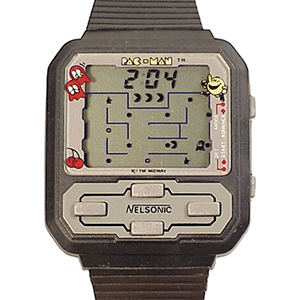
Nelsonic Industries is the name of an electronics manufacturing and development company that operated from Queens, NY in the early 1980s and throughout the 1990s when it was acquired by the watch-manufacturer, M.Z. Berger. Nelsonic produced numerous toy-themed wrist-watches during their existence, often targeting younger audiences with likenesses of characters from popular franchises such as Barbie, the Ghostbusters, and Mario. Nelsonic became notable during the early mid-1980s for being the first electronics company in the United States to produce game-watches (multi-purpose electronic devices capable of functioning as both a time-piece and as a typically electronic game). Today the original Nelsonic Game Watch line has entered the secondary market and individual Game Watches have become highly sought-after collectibles that often fetch high prices on online auction websites.
Throughout its existence, Nelsonic produced pop-culture-themed wrist-watches for children and young adults. The chronograph digital watches, typically made of molded plastic, invariably featured an alarm and utilized LCD display-screens to display the time for their wearers. In time the company began manufacturing multi-purpose units that used the LCD screen to combine time display functions with simple video game functions. These simple video games were variations on the theme of the Calculator watch.
Posted in Games, Money, Technology |
Leave a Comment »
November 25, 2011

Nabiximols (trade name Sativex) is a cannabinoid mouth spray developed by the UK company GW Pharmaceuticals for multiple sclerosis (MS) patients, who can use it to alleviate neuropathic pain, spasticity, overactive bladder, and other symptoms. Nabiximols is also being developed in Phase III trials as a potential treatment to alleviate pain due to cancer. It has also been researched in various models of peripheral and central neuropathic pain.
Nabiximols is distinct from all other pharmaceutically produced cannabinoids currently available because it is derived from cannabis plants, rather than a solely synthetic process. The drug is a pharmaceutical product standardized in composition, formulation, and dose, although it is still effectively a tincture of the cannabis plant. Its principal active cannabinoid components are the cannabinoids: tetrahydrocannabinol (THC) and cannabidiol (CBD). The product is formulated as an oromucosal spray which is administered into the mouth. Each spray delivers a fixed dose of 2.7 mg THC and 2.5 mg CBD.
Posted in Drugs, Health, Politics |
Leave a Comment »
September 12, 2011

Kraft Singles is a processed ‘cheese product’ manufactured and sold by Kraft Foods, introduced in 1949. Although processed cheese was first invented in 1911 by Walter Gerber of Thun, Switzerland, it was James L. Kraft who first applied for an American patent for his method in 1916. Kraft Foods also created the first commercially available sliced processed cheese, which was introduced in 1950.
One of the more famous ad campaigns in the 1980s claimed that each ¾ ounce slice contained ‘five ounces of milk’ (with milk being poured into a glass next to Kraft Singles), which makes them taste better than imitation cheese slices made mostly with vegetable oil and water (with oil being poured into a glass next to imitation cheese) and hardly any milk. The campaign was lambasted for its implications that each slice contained the same amount of calcium as a five ounce glass of milk and also more calcium than imitation cheese slices, which eventually led to a ruling by the Federal Trade Commission in 1992 that ordered Kraft to stop making false claims in its advertising. Kraft removed the ads, but continues to taut the use of milk in its ‘cheese products.’
Posted in Food, Money, Politics |
Leave a Comment »
July 20, 2011

Dippin’ Dots is an ice cream snack, invented by Curt Jones in 1987. The confection is created by flash freezing ice cream mix in liquid nitrogen; consequently, Dippin’ Dots contain less air than conventional ice cream. The resulting small spheres of ice cream are stored at temperatures ranging from -70 to -20 °F (from -57 °C to -29 °C). The marketing slogan is ‘Ice Cream of the Future.’ The company, headquartered in Paducah, Kentucky, United recently began selling its product in supermarkets in the United States. Dippin’ Dots are sold in individual servings at franchised outlets, many in theme parks, stadiums, shopping malls, and in vending machines.
Several competing beaded ice-cream lines have been introduced in recent years. Some of these competing brands are similar to Dippin’ Dots in shape or size, yet differ in that they use dairy stabilizers and artificial sweeteners, in an effort to keep the beads from adhering to one another. Dippin’ Dots, made from conventional ice cream ingredients, are held at sub-zero temperatures to keep the beads separate and free-flowing.
Posted in Food, Money, Technology |
1 Comment »
July 14, 2011

The Big Green Egg is the brand name of a kamado-style ceramic charcoal cooker. Kamado barbecue originates in southern Japan. The kamado first came to the attention of Americans after World War II when US Air Force servicemen brought them back from Japan in empty transport planes. The Big Green Egg Company was founded in 1974 by Ed Fisher and is based in Georgia. The shape of the Egg is designed to contain the heat with only a small draft door at the bottom, and a daisy wheel damper unit on the top to give air flow control and therefore temperature regulation. Between the base and the lid is a felt gasket designed to maximize moisture retention during long cookouts.
Prices vary by model and start at approximately $700. Big Green Egg barbecues have quite an enthusiastic following of amateur chefs and the collective name given these enthusiasts is ‘Eggheads.’ Every October there is a global gathering called ‘Eggtoberfest’ held at the company’s headquarters in Tucker, GA. In addition, numerous other Big Green Egg Festivals occur throughout the US and the world, called ‘EggFests.’
Posted in Food, Money, Technology |
Leave a Comment »
July 11, 2011

The Tamagotchi [tom-uh-gotchee] is a handheld digital pet, created in Japan by Akihiro Yokoi of WiZ and Aki Maita of Bandai. It was first sold by Bandai in 1996 in Japan. As of 2010, over 76 million Tamagotchis have been sold world-wide. Most Tamagotchis are housed in a small egg-shaped computer with an interface usually consisting of three buttons, although the number of buttons may vary for different variations. According to Bandai, the name is a portmanteau combining the Japanese word ‘tamago,’ which means ‘egg,’ and the English word ‘watch.’
Upon removing the tag of a Tamagotchi unit, an egg will appear on the screen. After setting the Tamagotchi unit’s clock, the Tamagotchi will hatch, after which the player will be told of its gender and will be given the opportunity to give it a name. From then on, the player is given the task of raising the Tamagotchi to good health throughout its life and attending to its needs, such as feeding it, playing games to make it happy, and keep it at a healthy weight, cleaning up its excrement, punishing or praising the Tamagotchi based on its actions, returning it to proper health with medicine if it gets sick, and shutting off the lights when it goes to bed.
read more »
Posted in Games, Technology, World |
Leave a Comment »
July 11, 2011

A MiniDisc (MD) is a magneto-optical disc-based data storage device initially intended for storage of up to 74 minutes and, later, 80 minutes, of digitized audio. In the form of Hi-MD, it has also developed into a general-purpose storage medium. MiniDisc was released in 1992, first in Japan, and then in Europe and the U.S. The music format was originally based exclusively on ATRAC audio data compression, but the option of linear PCM recording was later introduced to attain audio quality comparable to that of a compact disc.
Sony’s MiniDisc was one of two rival digital systems introduced in 1992, that were both targeted as a replacement for the Philips analog cassette audio tape system: the other was Digital Compact Cassette (DCC), created by Philips and Matsushita. Sony had originally intended for Digital Audio Tape (DAT) to be the dominant home digital audio recording format, replacing the analog cassette. Unfortunately, due to technical delays, DAT was not launched until 1989, and by then, the U.S. dollar had fallen so far in relation to the yen, the introductory DAT machine Sony had intended to market for about $400 in the late 1980s now had to retail for $800 or even $1000 to break even, putting it out of reach for most users. Relegating DAT for pro use, Sony immediately set to work to come up with a simpler, more economical digital home format.
read more »
Posted in Money, Technology, World |
Leave a Comment »
July 7, 2011
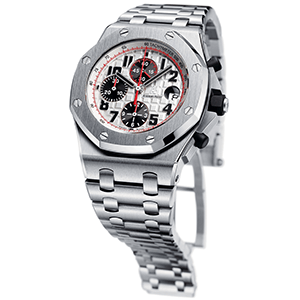
Audemars [awe-de-marr] Piguet [pee-gay] (AP) is a manufacturer of prestige Swiss watches which compete with Patek Philippe and Vacheron Constantin. The roots of the company date back to 1874, when the 23-year-old Jules-Louis Audemars met Edward-Auguste Piguet, then only 21, at Vallée de Joux, in western Switzerland, which is considered to be the cradle of prestige watch-making. Thus Audemars started producing component parts for movements and Piguet got the job of a repasseur, whose job it was to make the final regulation of the timepiece.
In 1875 they founded a firm later known as Audemars, Piguet et Cie, and since 1882, members of the Audemars and Piguet families have always been on the board of directors. Between 1894 and 1899 the company produced about 1,200 timepieces, including some very complex watches. When Audemars and Piguet died, in 1918 and 1919 respectively, the company was already quite famous. As the success of the company’s business was rising its customers became Tiffany & Co, Cartier and Bulgari, who rebranded and sold Audemars Piguet watches under their own house names. Today these watches are only identifiable as Audemars Piguet products by their serial numbers.
read more »
Posted in Money, Technology |
Leave a Comment »
June 28, 2011

The iBOT is a very stable and mobile powered wheelchair developed by Dean Kamen in a partnership between DEKA and Johnson and Johnson’s Independence Technology division. It is a medical technology, made to help people with severe mobility problems.
As of 2006 the iBOT retailed for approximately $26,100 and required a prescription in the U.S. As of 2009, it is no longer available for sale from Independence Technology, but support for existing units will be available until the end of 2013.
read more »
Posted in Health, Technology |
1 Comment »
March 10, 2011


Arm & Hammer is a registered trademark of Church and Dwight, an American manufacturer of household products. The logo of this brand is a muscular arm holding a hammer. Originally associated only with baking soda and washing soda, beginning in the 1970s the company began to expand the brand to other products using baking soda as a deodorizing ingredient, including toothpaste, laundry detergent, underarm deodorant, and cat litter. The Arm & Hammer brand is one of the longest-running and most recognized U.S. trademarks.
The Arm & Hammer logo dates back to the 1860s. James A. Church ran a spice business known as Vulcan Spice Mills. According to the company, the Arm and Hammer logo represents Vulcan, the Roman god of fire and metalworking. Originally a stylized representation of the Greek god of fire and forge, the muscular male arm with hammer in fist was used prior to the American Civil War as a symbol of the labor movement.
Posted in Money |
Leave a Comment »
March 9, 2011

Moleskine is an Italian brand of notebooks. Moleskine books are typically bound in coated paper cardboard, with an elastic band to hold the notebook closed, a sewn spine that allows it to lie flat when opened, cream color paper, rounded corners, a ribbon bookmark, and an expandable pocket inside the rear cover. Among artists who used similar black notebooks were Oscar Wilde, Vincent van Gogh, Pablo Picasso, Ernest Hemingway and Henri Matisse.
read more »
Posted in Art, Money |
Leave a Comment »



 The Daily Omnivore