May 29, 2012
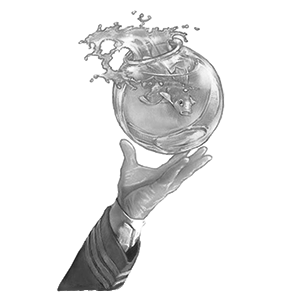
Commandant Eric Lassard is the fictional head of the Metropolitan Police Academy in the 1984 film ‘Police Academy,’ as well as its six sequels. He is portrayed by actor George Gaynes (b. 1917). Lassard is rather eccentric. He is rarely seen without his many goldfish, frequently travels by golf cart, and tends to destroy things while golfing in his office. He also often loses track of his thoughts, either by beginning to pace and proceeding to walk several yards away from the group he is addressing, or by repeating the word ‘very’ (e.g. ‘have a very, very, very good day’). The commandant is a skilled billiards player, once clearing an entire table in a single turn.
Comdt. Lassard’s younger brother, Captain Pete Lassard (played by Howard Hesseman) is head of a precinct that has one of the worst crime rates in the city until the a group of Eric’s graduates eventually snag a gang that’s been terrorizing the streets. A nephew (possibly Pete’s son), Nick Lassard, is with the Miami Police, but leaves to join Eric in ‘Police Academy 6.’
Posted in Humor |
Leave a Comment »
May 16, 2012

Max Headroom is a fictional British artificial intelligence, known for his wit and stuttering, distorted, electronically sampled voice. It was introduced in early 1984. The character was created by George Stone, Annabel Jankel, and Rocky Morton, and portrayed by Matt Frewer as ‘The World’s first computer generated TV host’ although the computer generated appearance was achieved with prosthetic make up. The classic look for the character was a shiny dark suit – which was actually a fibreglass mould – often paired with Ray-Ban Wayfarer sunglasses.
Only his head and shoulders were depicted, usually against a ‘computer generated’ backdrop of a slowly rotating wire-frame cube interior, which was also initially generated by analogue means – in this case traditional cel animation, though later actual computer graphics were employed for the backdrop. Another distinguishing trademark of Max was his chaotic speech patterns – his voice would seemingly randomly pitch up or down, or occasionally get stuck in a loop. These modulations also appeared when the character was performed live.
read more »
Posted in Humor, Money, Technology |
Leave a Comment »
May 9, 2012

MC Skat Kat is an animated cat who appeared with Paula Abdul in the video for her song ‘Opposites Attract’ in 1989. The idea of Skat Kat came from the Gene Kelly movie ‘Anchors Aweigh,’ in which Kelly’s character dances with Jerry, the mouse from the ‘Tom and Jerry’ cartoon series. According to Virgin Records’ media information, Skat Kat is a ‘street philosopher with an alley Kat point of view.’ He likes to dance, is interested in the ladies, and ‘remains on the smooth tip with an old school rap influence which adds the street to his new school hip hop.’
The character was animated by members of the Disney animation team, working outside the studio between major projects, under the direction of Chris Bailey. He was created by Michael Patterson and performed by The Wild Pair duo of Bruce DeShazer and Marv Gunn. He was also voiced by Romany Malco for the first rap of the song and by Derrick ‘Delite’ Stevens for the second rap, the latter of whom would provide vocals for the character in the MC Skat Kat solo album. The character released an album entitled ‘The Adventures of MC Skat Kat and the Stray Mob’ in 1991, but it flopped instantly.
Posted in Art, Humor |
Leave a Comment »
April 10, 2012

Q is a fictional character in the James Bond novels and films. Q (standing for Quartermaster), like M, is a job title rather than a name. He is the head of Q Branch (or later Q Division), the fictional research and development division of the British Secret Service.
The character actually appears only fleetingly in Ian Fleming’s novels, but comes into his own in the successful Bond film series; he is also mentioned in the continuation novels of John Gardner and Raymond Benson. Q has appeared in 20 of 23 Eon Bond films; all except ‘Live and Let Die,’ ‘Casino Royale,’ and ‘Quantum of Solace.’ The character was also featured in the non-official Bond films ‘Casino Royale’ (1967) and ‘Never Say Never Again.’
read more »
Posted in Language, Technology, War |
Leave a Comment »
April 6, 2012

Squidward Tentacles is a fictional character on the television cartoon series ‘SpongeBob SquarePants.’ He is voiced by Rodger Bumpass. Squidward appears in 270 episodes of the series, second only to SpongeBob’s 305. Unlike most characters in the series, Squidward is generally grumpy, tactless, short-tempered, sarcastic, and narcissistic. He dislikes many things, including his consistently annoying neighbors SpongeBob and Patrick, his job at the Krusty Krab, and is constantly aloof towards the citizens of Bikini Bottom. He is very open about his dissatisfaction with his job, and has frequently displayed unprofessional behavior such as sleeping at his counter, failing to clean his workplace, and reading art magazines instead of attending to customers.
Squidward enjoys playing his clarinet (at an elementary level with frequent missed notes and poor intonation, though Squidward considers himself a brilliant musical prodigy), modern dance, abstract art, relaxing, public radio, select television programs, and just about anything else that he considers ‘fancy.’ He does not like anyone, except his mother. Although Squidward likes to consider himself as above the mundane and often immature activities of his peers, he has constantly exhibited an unhealthy obsession with and dedication to such activities when exposed to them.
Posted in Art, Humor |
Leave a Comment »
March 29, 2012
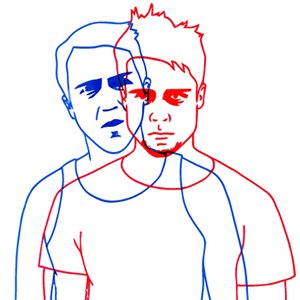
An unreliable narrator is a narrator, whether in literature, film, or theater, whose credibility has been seriously compromised. The term was coined in 1961 by Wayne C. Booth in ‘The Rhetoric of Fiction.’ This narrative mode is one that can be developed by an author for a number of reasons, usually to deceive the reader or audience.
Unreliable narrators are usually first-person narrators, but third-person narrators can also be unreliable. The nature of the narrator is sometimes immediately clear. For instance, a story may open with the narrator making a plainly false or delusional claim or admitting to being severely mentally ill, or the story itself may have a frame in which the narrator appears as a character, with clues to his unreliability.
read more »
Posted in Art, Language |
Leave a Comment »
March 29, 2012
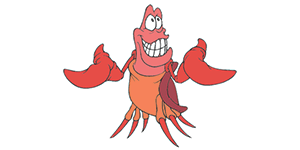

The tricky slave is a stock character. He is a clever, lower-class person who brings about the happy ending of a comedy for the lovers. He is more clever than the upper-class people about him, both the lovers and the characters who block their love, and typically also looking out for his own interests; in the New Comedy, the tricky slave or ‘dolosus servus’ aimed to get his freedom by assisting his young master in love. Besides the actual slaves of classical theater, he also appears as the scheming valet in Renaissance comedy, called the ‘gracioso’ in Spanish. The ‘zanni’ of Commedia dell’arte are often tricky slaves, as are Puss-in-Boots in Perrault’s fairy tale, Jeeves in P. G. Wodehouse’s work, and Figaro. In fairy tales, the same function is often fulfilled by fairy godmothers, talking animals, and like creatures.
A female version of the tricky slave would be Morgiana, a clever slave girl from ‘Ali Baba and the Forty Thieves’ in the ‘One Thousand and One Nights.’ She is initially in Cassim’s household but on his death she joins his brother Ali Baba and through her quick wittedness she saves Ali’s life many times and eventually kills his worst enemy, the leader of the Forty Thieves. As reward, Ali frees her and Morgiana marries Cassim’s son. In contrast to these positive depictions, the tricky slave is portrayed as the antagonist in another Arabian Nights tale, ‘The Three Apples,’ an early example of a murder mystery. After the murderer reveals himself near the middle of a story, he narrates the events leading up to the murder in a flashback. Within this flashback, a slave convinces him of his wife’s infidelity, thus leading to her murder.
Posted in Art, Language |
Leave a Comment »
March 12, 2012

In literature, the competent man is a stock character who can do anything perfectly, or at least exhibits a very wide range of abilities and knowledge, making him a form of polymath. While not the first to use such a character type, the heroes (and heroines) of Robert A. Heinlein’s fiction are generally competent men/women (with Jubal Harshaw being a prime example), and one of Heinlein’s characters Lazarus Long gives a good summary of requirements: ‘A human being should be able to change a diaper, plan an invasion, butcher a hog, conn a ship, design a building, write a sonnet, balance accounts, build a wall, set a bone, comfort the dying, take orders, give orders, cooperate, act alone, solve equations, analyze a new problem, pitch manure, program a computer, cook a tasty meal, fight efficiently, die gallantly. Specialization is for insects.’
The competent man, more often than not, is written without explaining how he achieved his wide range of skills and abilities, especially as true expertise typically suggests practical experience instead of learning through books or formalized education alone. While not implausible with older or unusually long lived characters, when such characters are young it is often not adequately explained as to how they acquired so many skills at an early age. It would be easy for a reader to form the impression that the competent man is just basically a superior sort of human being. Many non-superpowered comic book characters are written as hyper-competent characters due to the perception that they would simply be considered underpowered otherwise.
Posted in Art, Language, Philosophy |
1 Comment »
February 20, 2012
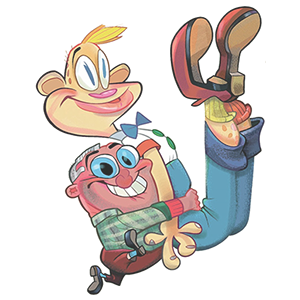
George Liquor (often taking his epithet as George Liquor, American), most famous for his appearances on ‘The Ren and Stimpy Show,’ is a cartoon character created by John Kricfalusi and is a mascot for Kricfalusi’s defunct animation studio, Spümcø. Kricfalusi portrayed George Liquor as a patriotic, outspoken, politically conservative blowhard. Kricfalusi described Liquor as his favorite character to animate.
Kricfalusi described George Liquor as ‘the greatest American’ who is so conservative ‘that he thinks the Republicans are Commies.’ George harbors a deep antipathy for the political left; in one issue of Spümcø’s ‘Comic Book,’ George Liquor becomes enraged after a fish calls him a Democrat. George is a middle-aged, crass, religious, ultra-patriotic American who favors his nephew, Jimmy The Idiot Boy, and tries to teach Jimmy how to be ‘a Real Man.’
read more »
Posted in Art, Humor, Money |
Leave a Comment »
January 15, 2012

Major Lazer is a collaborative musical project from DJ/Producers Diplo and Switch. Made up of DJs Diplo and Switch, the two were introduced after working with M.I.A..
The duo’s first album ‘Guns Don’t Kill People… Lazers Do’ was released in 2009, on Downtown Records. It was recorded in Jamaica at Tuff Gong Studios. Vocalists such as Santigold, Vybz Kartel, Ward 21, Busy Signal, Nina Sky, Amanda Blank, Mr. Vegas, Turbulence, Mapei, T.O.K, Prince Zimboo, Leftside and others contribute guest vocals to the album, as well as additional production from Afrojack and Crookers.
Posted in Art |
Leave a Comment »
January 15, 2012

Goombas, known in Japan as Kuribo (‘Chestnut People’), are fictional species from Nintendo’s series of ‘Mario’ video games. They first appeared in the NES video game ‘Super Mario Bros.’ as the first enemy players encounter. They are usually brown and are most commonly seen walking around aimlessly, often as an obstacle, in video games. They were included late in the development of Super Mario Bros. in order to create a simple, easy-to-defeat enemy.
Goombas were the last enemy added to the game after play testers stated that the Koopa Troopa was too tricky an enemy. As a result, the designers introduce a basic enemy. When they decided to do this, however, they had very little space left in the game. They used a single image twice to convey the notion that the Goombas are walking, rotating it back and forth, causing it to look lopsided as it walks and giving the motion the appearance of a trot. The Goomba’s resemblance to the Super Mushroom forced designers to change the mechanics and appearance of the Super Mushroom. They used the Goomba’s ability to be jumped on and defeated to teach players how to deal with enemies and to not fear the Super Mushroom. The Goombas are designed after a shiitake mushroom.
Posted in Games |
Leave a Comment »
December 19, 2011
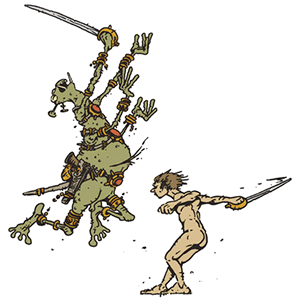
John Carter is a fictional character, created by Edgar Rice Burroughs, who appears in the ‘Barsoom’ novels. Although he is actually a Virginian from Earth and only a visitor to Mars, he is sometimes known as ‘John Carter of Mars,’ in reference to the setting in which his major deeds are recorded, in the tradition of other real-world heroes such as Lawrence of Arabia and Scipio Africanus. His character is enduring, having appeared in various media since his 1912 debut in a magazine serial.
John Carter first appeared in ‘A Princess of Mars,’ the first Burroughs novel set on a fictionalized version of Mars known as ‘Barsoom.’ His character and courtesy exemplify the ideals of the antebellum South. A Virginian, he served as a captain in the American Civil War on the side of the Confederacy. While hiding from Apaches in a cave, he appears to die; leaving his inanimate body behind, he is mysteriously transported by a form of astral projection to the planet Mars, where he finds himself re-embodied in a form identical to his earthly one. Accustomed to the greater gravity of Earth, he is much stronger and more agile than the natives of Mars due to its gravity.
Posted in Art, Language |
3 Comments »


 The Daily Omnivore