April 13, 2012

Sager Midern Computer, Inc., is an American OEM (original equipment manufacturer) computer manufacturer specializing in laptop computers. Sager laptops are manufactured by Clevo which are also sold under many other brand names. Sager is the biggest Clevo retailer. In addition to selling physical hardware, Sager also offers support and repair services for all Clevo based Laptops. This service is offered even if the laptop was not ordered through Sager, although in that case the user must pay in full for all services provided.
The company was founded in 1985 by Shung Song Yuan in City of Industry, California. While ‘A-brands’ such as Dell, Toshiba, IBM, or HP are manufactured on a contract basis where so-called contract manufacturers assemble laptop computers as specified by the brand, Sager instead purchases finished and generic chassis designed and built by Original Design Manufacturers or ODMs (such as Clevo). Sager then assembles the laptop with parts chosen by the final customer, puts its logo on the chassis and sells them under the brand Sager. Sager then provides support to these computers.
Posted in Games, Money, Technology |
Leave a Comment »
April 13, 2012
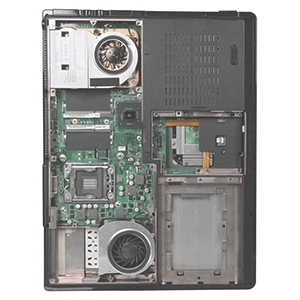
Clevo is a Taiwanese OEM/ODM (original equipment and design manufacturer) computer manufacturer which exclusively produces laptop computers. They manufacture and sell complete laptops under their own brand; they also sell laptop chassis to other OEMs who build laptops on the chassis, often customized for each customer.
Companies which rebrand Clevo chassis or have in the past include Sager, iBuypower, and OriginPC. Alienware also used to sell rebranded Clevo notebooks, although it is unclear whether they still do.
Posted in Money, Technology, World |
Leave a Comment »
March 16, 2012
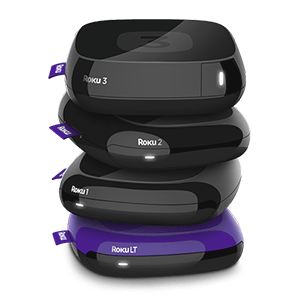
Roku [roh-koo] is an American, privately-held, consumer electronics company that sells home digital media products. The company is based in California, and was founded in 2002, by ReplayTV founder Anthony Wood. ‘Roku’ means ‘six’ in Japanese, a reference to the six companies Wood has launched. Their current product is the ‘Roku 2’ series of digital video players (DVP).
Content on the Roku DVP is provided by Roku partners, and are identified using the ‘channel’ vernacular. Each channel supports content from one partner (though some content partners have more than one channel). Premium channels include Netflix, HBO Go, Hulu Plus, EPIX, and Amazon Instant Video. Users can add or remove different channels from the Roku Channel Store. Both on-demand content and live streaming are supported by the devices. For live TV streams, Roku supports Apple HLS (HTTP Live Streaming) adaptive streaming technology.
Posted in Money, Technology |
Leave a Comment »
March 5, 2012
The Avedis Zildjian [zil-jin] Company is a cymbal manufacturer founded in Istanbul by Armenian Avedis Zildjian in the 17th century during the Ottoman Empire. At nearly 400 years old, Zildjian is one of the oldest companies in the world. The first Zildjian cymbals were created in 1623 by Avedis, an alchemist who was looking for a way to turn base metal into gold; he created an alloy combining tin, copper, and silver into a sheet of metal that could make musical sounds without shattering.
Avedis was given the name of Zildjian by the Sultan Osman II (from the Turkish word ‘zil’ – ‘cymbal,’ ‘dji’ – ‘maker-seller,’ ‘ian’ – a common suffix used in Armenian last names which means ‘son of’). The details of the company’s main product remained secret for generations. It became family tradition that only the company’s heirs would know the manufacturing process. The Zildjian Company moved from manufacturing noisemakers to frighten the enemies of the Ottoman Empire to manufacturing its cymbals as musical instruments in the 19th century.
read more »
Posted in Art, Money |
Leave a Comment »
February 6, 2012
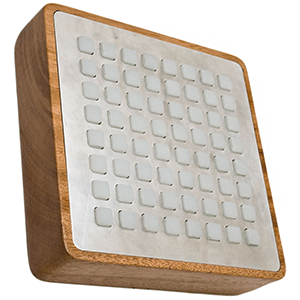
Monome is a family of interface devices for computers made by a Pennsylvania company of the same name. Despite being produced irregularly in small quantities since its introduction in 2006, the Monome button-grid controller has had a significant impact on electronic music. Together with the physically similar Yamaha Tenori-On, which was released a year later in 2007, the monome inspired interest in minimalist, grid-based music controllers. That interest spawned hobbyist projects like the Arduinome and commercial products like the Akai APC40 and the Novation Launchpad. The Monome has a minimalist design. It is simply a box with no letters or labels. There are random buttons that are back-lit. The box that holds the monome is entirely made up of timber, usually walnut. Notable users include deadmau5, Flying Lotus, Daedelus, and Nine Inch Nails contributor Alessandro Cortini.
Monome devices do not produce any sound on their own; they must be connected to a computer. A core design principle of the Monome is that it is not intended for any one specific application — the function of each button and the decision as to which lights are lit are completely up to the software communicating with the device over the Open Sound Control protocol. Several models have been produced, with typical sizes ranging from 64 to 256 buttons — plus a very limited run of 512-button devices. Monome applications span a wide variety of capabilities. Several applications provide sample sequencing capabilities. One such application is MLR, an application that allows for live sequencing and re-cutting of samples. There are also many applications that allow for synthesis either via their own internal synthesizers or by sending MIDI/OSC messages to external synthesizers.
Posted in Art, Money, Technology |
Leave a Comment »
January 24, 2012

GAMAGO is a company that was started in 2001 by Greg Long and Chris Edmundson. The pair began silkscreening t-shirts with artwork from their friends in Long’s San Francisco garage. They wanted to help promote the San Francisco art scene and distract from their day jobs. Shortly after starting, one of Long’s friends, artist Tim Biskup joined them, and printed shirts with Biskup’s Gama-Goon character.
The three of them together took the basement hobby and turned it into a company. In 2006, Tim Biskup ceased his creative involvement with the company. In 2006, GAMAGO shifted their focus from apparel to gifts for the home and kitchen. 2009 saw the release of The Flipper, a guitar shaped spatula. The success of The Flipper.
Posted in Art, Money |
Leave a Comment »
December 20, 2011

Ronco is an American company that manufactures and sells a variety of items and devices, most commonly those used in the kitchen. Ron Popeil founded the company in 1964, and commercials for the company’s products soon became pervasive and memorable, in part thanks to Popeil’s personal sales pitches. The names ‘Ronco’ and ‘Popeil’ and the suffix ‘-O-Matic’ (used in many early product names) became icons of American popular culture and were often referred to by comedians introducing fictional gadgets.
In the beginning, the company chiefly sold inventions developed by Popeil’s father, Samuel ‘S.J.’ Popeil. Products include the Veg-O-Matic and the Popeil Pocket Fisherman. During the 1970s, Ron Popeil began developing products on his own to sell through Ronco. Ronco became a household name with its commercials for kitchen products including the Ginsu knife and Armorcote non-stick pans. Aired frequently, especially during off-hour TV viewing times, these commercials became known for their catchphrases such as ‘…but wait, there’s more!’, ’50-year guarantee’ (later expanded to a ‘lifetime guarantee’), and ‘…now how much would you pay?’
Posted in Money |
Leave a Comment »
December 14, 2011
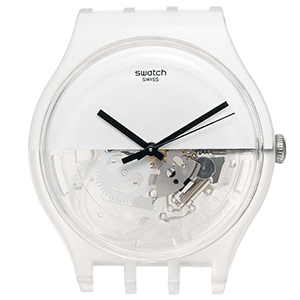
Swatch is a brand name for a line of wrist watches from the Swatch Group, a Swiss conglomerate with vertical control of the production of Swiss watches and related products. Swatch Group is the world’s largest watch company, and the Group has accelerated its acquisition of Swiss luxury brands in recent years, and currently owns: Breguet, Blancpain, Glashütte Original, Omega, Tiffany & Co., Rado, Longines, Tissot, and Hamilton. In 1984,
Swatch was conceived and it was introduced to the market in Switzerland the following year. This concept was realize with a small team of enthusiastic watch engineers led by Elmar Mock and Jacques Müller, who had had the idea to use the case back as a movement main plate (platine), as it had been done to design the thinnest watch in the world, the Delirium which made it to market in 1979. It was also designed for easy assembling.
read more »
Posted in Money, Technology |
Leave a Comment »
December 14, 2011

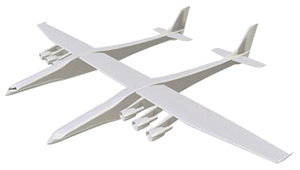
Stratolaunch Systems is a space transportation venture specializing in air launch to orbit, with its corporate headquarters located in Huntsville, Alabama. It was founded in 2011 by Microsoft co-founder Paul G. Allen and Scaled Composites founder Burt Rutan, who had previously collaborated on the creation of SpaceShipOne (which won the Ansari X-Prize by reaching 100 kilometers in altitude). The newly envisioned launch system will use similar components to that of Virgin Galactic though it will be made for orbital launch instead of suborbital.
The startup will build a mobile launch system with three primary components; a carrier aircraft to be build by Scaled Composites, A multi-stage launch vehicle built by Space Exploration Technologies, and a mating and integration system to be built by Dynetics. Allen and Rutan stated that the carrier craft would have a wingspan of 385 feet (117 m), making it the largest aircraft ever to fly, and will weigh in at over 1,200,000 pounds (540,000 kg). The aircraft will be powered by six turbine engines, sourced from a Boeing 747. It will use a 12,000 feet (3,700 m) long runway and is expected to test fly in 2016.
Posted in Money, Technology |
Leave a Comment »
December 8, 2011

Dwolla is a United States-only e-commerce company that provides an online payment system and mobile payments network by the same name. The company was founded in 2008 with services based only in Iowa. After raising $1.31 million in funding, Dwolla launched nationally in 2009 with founders Ben Milne (CEO) and Shane Neuerburg (CTO), in Des Moines, Iowa, United States, with a few small banks and retailers. Transactions using Dwolla surpassed $1 million a week and its Iowa user-base was overtaken in 2011, with 20,000 users. The company began with two employees and has approximately 15 employees as of June 2011.
The main pull for Dwolla is its low transaction fees. From its onset, Dwolla charged 25 cents per transaction, less than its main rival Paypal, which for several years has charged 30 cents, plus 1.9-2.9% of each transaction. The name Dwolla is a conjunct of ‘dollar’ and ‘web.’ Dwolla is notable for its interest among users of Bitcoin, a digital currency. Some Bitcoin exchanges allow users to buy Bitcoins with dollars transferred to the exchange via Dwolla, and allow users to sell Bitcoins and have the proceeds transferred back to them using Dwolla. Although Dwolla representatives have said that they saw growth due to Bitcoin users, they do not offer any official endorsement of Bitcoins.
Posted in Money, Technology |
Leave a Comment »
November 30, 2011
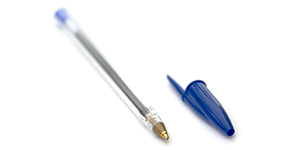

Société Bic (pronounced ‘Bick’ in English) is a company based in Clichy, France, founded in 1945, by Baron Marcel Bich known for making disposable products including lighters, ballpoint pens, and shaving razors; they also manufacture magnets and watersports products including surfboards, kayaks, and dinghies.
The Bic pen, more correctly the Bic Cristal, was the company’s first product and 50 years later is still synonymous with the name Bic. The company’s US subsidiary accounts for more than half of the worldwide company’s sales.
Posted in Games, Money |
Leave a Comment »
November 13, 2011
Young Electric Sign Company (YESCO) is a privately owned manufacturer of electric signs based in Salt Lake City. The company was founded by Thomas Young in 1920 and today has divisions and branches in 10 western states, as well as in Louisiana, Mississippi and Texas. YESCO offers a comprehensive range of services for electronic signs, including design, fabrication, installation and ongoing maintenance.
Many notable sign projects have been produced by YESCO. These include the NBC Experience globe in New York City, the historic El Capitan Theatre and Wax Museum marquees in Hollywood, the most recent incarnation of the Reno Arch and numerous icons in Las Vegas, such as Vegas Vic, the Fremont Street Experience, the Astrolabe in The Venetian and the recent Wynn Las Vegas resort sign.
read more »
Posted in Art, Money, Technology |
Leave a Comment »



 The Daily Omnivore