October 29, 2011

CouchSurfing is a corporation based in San Francisco that offer its users hospitality exchange and social networking services. It recently suffered significant criticism from thousands of users after becoming a for-profit corporation after having been been a non-profit for many years. Couchsurfing is a neologism referring to the practice of moving from one friend’s house to another, sleeping in whatever spare space is available, floor or couch, generally staying a few days before moving on to the next house.
The CouchSurfing project was conceived by Casey Fenton in 1999. According to Fenton’s account, the idea arose after finding an inexpensive flight from Boston to Iceland. Fenton randomly e-mailed 1,500 students from the University of Iceland asking if he could stay. He ultimately received more than 50 offers of accommodation. On the return flight to Boston, he began to develop the ideas that would underpin the CouchSurfing project.
read more »
Posted in Money, Technology, World |
Leave a Comment »
October 28, 2011
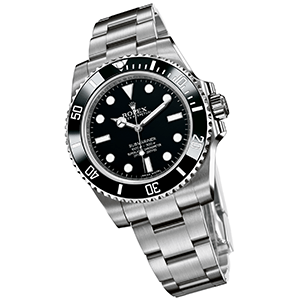
Rolex is a Swiss watchmaking manufacturer of high-quality, luxury wristwatches. Rolex watches are popularly regarded as status symbols. Rolex is also the largest single luxury watch brand, producing about 2,000 watches per day, with estimated revenues of around US$3 billion in 2003. Among the company’s innovations are: the first waterproof wristwatch (Oyster, 1923); the first wristwatch with an automatically changing date on the dial (Rolex Datejust, 1945); the first wristwatch with an automatically changing day and date on the dial (Rolex Day-Date); the first wristwatch case waterproof to 100 m (330 ft) (Rolex Oyster Perpetual Submariner); and the first wristwatch to show two time zones at once (Rolex GMT Master, 1954).
Rolex produced specific models suitable for the extremes of deep-sea diving, mountain climbing and aviation. Early sports models included the Rolex Submariner and the Rolex Oyster Perpetual Date Sea Dweller. The latter watch has a helium release valve, co-invented with Swiss watchmaker Doxa, to release helium gas build-up during decompression. The Explorer and Explorer II were developed specifically for explorers who would navigate rough terrain, such as the world famous Mount Everest expeditions. Another iconic model is the Rolex GMT Master, which was originally developed in 1954 at the request of Pan Am Airways to assist its pilots with the problem of crossing multiple time zones when on transcontinental flights (GMT standing for Greenwich Mean Time).
read more »
Posted in Money, Technology |
Leave a Comment »
October 28, 2011
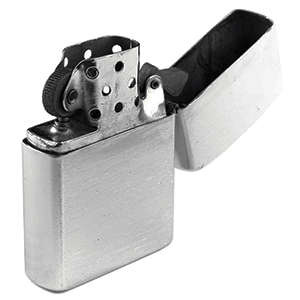
A Zippo lighter is a refillable, metal lighter manufactured by Zippo Manufacturing Company of Pennsylvania. Thousands of different styles and designs have been made in the seven decades since their introduction including military ones for specific regiments. George G. Blaisdell founded Zippo Manufacturing Company in 1932, and produced the first Zippo lighter in early 1933, being inspired by an Austrian cigarette lighter of similar design. It got its name because Blaisdell liked the sound of the word ‘zipper’ and ‘zippo’ sounded more modern.
Zippo lighters became popular in the United States military, especially during World War II when Zippo ceased production of lighters for consumer markets and dedicated all manufacturing to the U.S. military. The Zippo at that time was made of brass, but as this commodity was unobtainable, Zippo used steel during the war years. While the Zippo Manufacturing Company never had an official contract with the military, soldiers and armed forces personnel insisted that Base exchange (BX) stores carry this sought-after lighter. While it had previously been common to have Zippos with authorized badges, unit crests and division insignia, it became popular among the American soldiers of the Vietnam War, to get their Zippos engraved with personal mottos. These lighters are now sought after collectors items and popular souvenirs for visitors to Vietnam.
read more »
Posted in Money, Technology, War |
Leave a Comment »
October 28, 2011
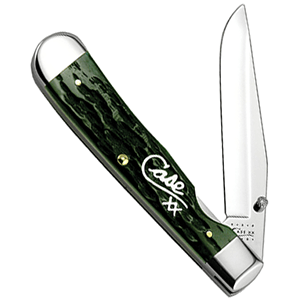
W.R. Case & Sons Cutlery Company is an American manufacturer of traditional pocketknives. The company originated in Little Valley, New York around the turn of the 20th century before relocating to its current home, Bradford, Pennsylvania, in 1905. The company’s namesake, William Russell Case, first made knives with his brothers under the name, Case Brothers Cutlery Company. His son, John Russell (‘Russ’) Case, worked as a salesman for his father’s company before founding W.R. Case & Sons.
The company’s roots extend back to 1889, when the Case brothers – William Russell (W.R.), Jean, John and Andrew Case, formerly of the Cattaraugus Cutlery Company – began selling cutlery from the back of a wagon in various small western New York villages. In January 1900, the brothers incorporated to form Case Brothers Cutlery Company.
read more »
Posted in Games, Money, War |
Leave a Comment »
September 7, 2011

Hilti develops, manufactures, and markets products for the construction and building maintenance industries, primarily to the professional end-user. It concentrates primarily on hammer drills, firestops, and installation systems, but manufactures and markets an array of tools (including cordless electric drills, heavy angle drills, laser levels, power saws, and fasteners). Hilti is based in Liechtenstein, and is the principality’s largest employer. The company employs more than 20,000 people worldwide with over 2,500 employees in the United States. Hilti’s North American headquarters has been located in Tulsa, Oklahoma, since 1979.
The Hilti Group invests over US$160 million annually in researching and developing safer and more efficient building technologies. A recent example of this R&D in power tool technology is Hilti’s TPS (Theft Protection System), which relies on RF technology to prevent unauthorized users from activating power tools, thus discouraging theft. Similarly, Hilti’s ATC (Active Torque Control) technology monitors tool-body movement to prevent equipment from twisting out of the operator’s grip and causing injury. Other developments include improved design of chemical and mechanical anchors for better durability during seismic events, thus helping to save lives during natural disasters.
Posted in Money, Technology |
1 Comment »
July 31, 2011
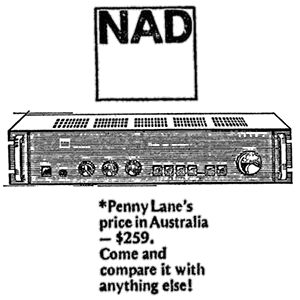
NAD is an electronics firm whose products include low-cost home audiophile amplifiers and related components. NAD was an acronym for New Acoustic Dimension. The company was founded in London, England in 1972 by Dr. Martin L. Borish, an electrical engineer with a Ph.D. in Physics. Its most famous product is the late-1970s NAD 3020 amplifier, designed by Bjørn Erik Edvardsen, which became a staple of low-budget Hi-Fi in Britain. NAD’s philosophy is to include only genuinely useful features for aesthetically understated designs. The company focuses on ‘effective power’ and its amplifiers have been known for delivering generous headroom, meaning that they can deliver dynamic power bursts far in excess of their rated power. The key to this feature is a flexible power supply which stores significant reserve current for quick release at moments of high musical load. The various incarnations of this design have been associated with different names over the years including Power Envelope and recently PowerDrive.
Additional benefits of this approach include the fact that amplifiers using this technology can handle complex, real-life, lower-impedance loudspeaker loads as compared with the simple 8-ohm resistor typically used to calculate advertised power ratings and the fact that the circuitry in this approach requires less cooling, while maintaining ability to handle complex impedance loads as low as 2 ohms. An amplifier that is overdriven, or pushed beyond its designed power capabilities, produces audible distortion known as clipping by cutting off extremes of the music waveform, resulting in harshly unpleasant sound and threatening damage to speakers, particularly tweeters. NAD amplifiers incorporate a user-defeatable ‘Soft-Clipping’ circuit to address this issue. It gently transforms the music waveform as the point of clipping approaches, the goal being clearer reproduction and simultaneous protection of speakers.
Posted in Money, Technology |
Leave a Comment »
July 25, 2011

Airstream is a brand of luxury recreational vehicle manufactured in Jackson Center, Ohio. It is currently a division of Thor Industries. The company, which now employs fewer than 400, is the oldest in the industry. Airstream trailers are easily recognized for their distinctive rounded aluminum bodies, which originated in the 1930s from designs created by Hawley Bowlus. Bowlus was the chief designer of Charles Lindbergh’s aircraft, the Spirit of St. Louis.
The company was founded by Wally Byam, who began building trailers out of Masonite in his backyard in Los Angeles during the late 1920s. A lawyer by training, Byam published a magazine selling ‘how-to’ kits to customers wishing to build their own trailers. He then acquired the struggling Bowlus Company. In 1936 Byam introduced the ‘Airstream Clipper,’ which was essentially a rebadged 1935 Bowlus, with the door relocated from the front to the side. The design cut down on wind resistance and thus improved fuel efficiency. It was the first of the now familiar sausage-shaped, silver aluminum Airstream trailers.
read more »
Posted in Games, Money, Technology |
Leave a Comment »
July 20, 2011

Dippin’ Dots is an ice cream snack, invented by Curt Jones in 1987. The confection is created by flash freezing ice cream mix in liquid nitrogen; consequently, Dippin’ Dots contain less air than conventional ice cream. The resulting small spheres of ice cream are stored at temperatures ranging from -70 to -20 °F (from -57 °C to -29 °C). The marketing slogan is ‘Ice Cream of the Future.’ The company, headquartered in Paducah, Kentucky, United recently began selling its product in supermarkets in the United States. Dippin’ Dots are sold in individual servings at franchised outlets, many in theme parks, stadiums, shopping malls, and in vending machines.
Several competing beaded ice-cream lines have been introduced in recent years. Some of these competing brands are similar to Dippin’ Dots in shape or size, yet differ in that they use dairy stabilizers and artificial sweeteners, in an effort to keep the beads from adhering to one another. Dippin’ Dots, made from conventional ice cream ingredients, are held at sub-zero temperatures to keep the beads separate and free-flowing.
Posted in Food, Money, Technology |
1 Comment »
July 14, 2011

The Big Green Egg is the brand name of a kamado-style ceramic charcoal cooker. Kamado barbecue originates in southern Japan. The kamado first came to the attention of Americans after World War II when US Air Force servicemen brought them back from Japan in empty transport planes. The Big Green Egg Company was founded in 1974 by Ed Fisher and is based in Georgia. The shape of the Egg is designed to contain the heat with only a small draft door at the bottom, and a daisy wheel damper unit on the top to give air flow control and therefore temperature regulation. Between the base and the lid is a felt gasket designed to maximize moisture retention during long cookouts.
Prices vary by model and start at approximately $700. Big Green Egg barbecues have quite an enthusiastic following of amateur chefs and the collective name given these enthusiasts is ‘Eggheads.’ Every October there is a global gathering called ‘Eggtoberfest’ held at the company’s headquarters in Tucker, GA. In addition, numerous other Big Green Egg Festivals occur throughout the US and the world, called ‘EggFests.’
Posted in Food, Money, Technology |
Leave a Comment »
July 11, 2011

Turntable.fm was a social media website that allowed users to interactively share music. The site was run by Billy Chasen, who started it in January 2011 using revenue generated by his previous start-up. The service allowed users to create ‘rooms,’ which other users could join. Designated users, so-called ‘DJs,’ chose songs to be played to everyone in that room, while all users were able to talk with one another through a text interface.
The service opened to the public in May 2011, and by late June had already reached 140,000 active users. The company used the Digital Millennium Copyright Act to license the music that was played on the website; because of this, only individuals from the US were allowed to use the service.
Posted in Games, Money, Technology |
Leave a Comment »
July 7, 2011
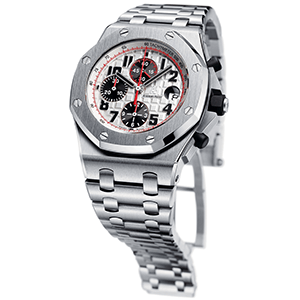
Audemars [awe-de-marr] Piguet [pee-gay] (AP) is a manufacturer of prestige Swiss watches which compete with Patek Philippe and Vacheron Constantin. The roots of the company date back to 1874, when the 23-year-old Jules-Louis Audemars met Edward-Auguste Piguet, then only 21, at Vallée de Joux, in western Switzerland, which is considered to be the cradle of prestige watch-making. Thus Audemars started producing component parts for movements and Piguet got the job of a repasseur, whose job it was to make the final regulation of the timepiece.
In 1875 they founded a firm later known as Audemars, Piguet et Cie, and since 1882, members of the Audemars and Piguet families have always been on the board of directors. Between 1894 and 1899 the company produced about 1,200 timepieces, including some very complex watches. When Audemars and Piguet died, in 1918 and 1919 respectively, the company was already quite famous. As the success of the company’s business was rising its customers became Tiffany & Co, Cartier and Bulgari, who rebranded and sold Audemars Piguet watches under their own house names. Today these watches are only identifiable as Audemars Piguet products by their serial numbers.
read more »
Posted in Money, Technology |
Leave a Comment »
July 5, 2011

Polara Golf is brand for a line of golf balls that correct hooks and slices, based on the physics of their design. The new design, released August 2010, utilizes state-of-the-art aerodynamics and a principle axis of inertia. The ball has shallow truncated dimples around its equator and has deep spherical and small spherical dimples on each of the ball’s poles. Officially sanctioned balls are designed to be as symmetrical as possible.
This symmetry is the result of a dispute that stemmed from the original Polara, that had six rows of normal dimples on its equator but very shallow dimples elsewhere. This asymmetrical design helped the ball self-adjust its spin-axis during the flight. The United States Golf Association refused to sanction it for tournament play and, in 1981, changed the rules to ban aerodynamic asymmetrical balls.
Posted in Games, Money, Technology |
Leave a Comment »



 The Daily Omnivore