March 3, 2025
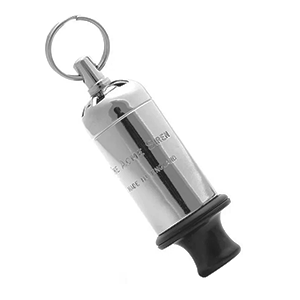
The Acme siren is a musical instrument used in concert bands for comic effect. Often used in cartoons, it produces the stylized sound of a police siren. It is one of the few aerophones in the percussion section of an orchestra. The instrument is typically made of metal and is cylindrical. Inside the cylinder is a type of fan-blade which, when the performer blows through one end, spins and creates the sound. The faster the performer blows, the faster the fan-blade moves and the higher the pitch the instrument creates. Conversely, the slower the performer blows, the lower the pitch.
Iannis Xenakis used it in the 1960s in his works Oresteia, Terretektorh, and Persephassa. A siren was used in Bob Dylan’s classic album, ‘Highway 61 Revisited.’ One is also heard in Stevie Wonder’s song ‘Sir Duke’ just before the second chorus. Dan Zanes also uses a siren in his version of ‘Washington at Valley Forge.’ Acme is the trade name of J Hudson & Co of Birmingham, England, who developed and patented the Acme siren in 1895. It was sometimes known as ‘the cyclist’s road clearer.’
Posted in Art, Humor |
Leave a Comment »
February 5, 2025

Pono [poh-noh] (Hawaiian for ‘proper’ or ‘righteousness’) was a portable digital media player and music download service for high-resolution audio. It was developed by musician Neil Young and his company PonoMusic, which raised money for development and initial production through a crowd-funding campaign on Kickstarter. Production and shipments to backers started in 2014, and shipments to the general public began in the first quarter of 2015.
Pono’s stated goal to present songs ‘as they first sound during studio recording sessions,’ using ‘high-resolution’ 24-bit 192kHz audio instead of ‘the compressed audio inferiority that MP3s offer’ received mixed reactions, with some describing Pono as a competitor to similar music services such as HDtracks, but others doubting its potential for success. Pono was discontinued in 2017, and alternative plans were later abandoned.
read more »
Posted in Art, Money, Technology |
Leave a Comment »
June 28, 2024

A potato cannon is a pipe-based cannon that uses air pressure (pneumatic) or combustion of a flammable gas (aerosol, propane, etc.) to fire projectiles, usually potatoes. A simple design consists of a pipe sealed on one end, with a reducer on the other end to lower the diameter of the pipe, which has the corresponding lower-diameter pipe attached to it, called the barrel. Generally, the operator loads the projectile into the barrel, then utilizes a fuel or air pressure (or sometimes both) to propel the projectile out of the cannon.
The range of the cannon depends on many variables, including the type of fuel used, the efficiency of the fuel/air ratio, the combustion chamber/barrel ratio, and the flight characteristics of the projectile. Common distances vary from 100–200 meters (330–660 feet), and there is a reported case of a cannon exceeding 500 meters (1,600 feet) of range. The potato cannon can trace its origin to the World War II-era Holman Projector, which was a shipboard anti-aircraft weapon.
read more »
Posted in Humor, Technology, War |
Leave a Comment »
January 11, 2024
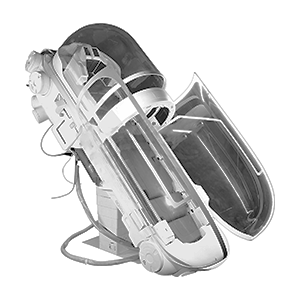
According to a false conspiracy theory, medbeds (an abbreviation of ‘medical bed’ or ‘meditation bed’) are secret beds that can miraculously heal humans and extend life. The plausibility of such devices is pseudoscience. Medbed conspiracy theories often involve claims that the devices are utilized by members of a ‘deep state’ and billionaires and that the former President of the United States, John F. Kennedy, is still alive, lying on a medbed.
Belief in these devices is popular among QAnon influencers such as Michael Protzman, Romana Didulo, and YamatoQ. Various companies sell devices or access to beds that supposedly heal ailments via imaginary technologies while also including fine print on their websites disclaiming that no diagnoses, treatment, or cures are provided.
Posted in Health, Politics, Technology |
Leave a Comment »
September 23, 2023
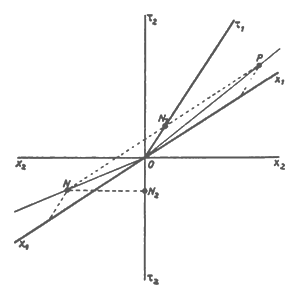
A tachyonic [tak-ee-on-ik] antitelephone is a hypothetical device in theoretical physics that could be used to send signals into one’s own past. Albert Einstein in 1907 presented a thought experiment of how faster-than-light signals can lead to a paradox of causality, which was described by Einstein and Arnold Sommerfeld in 1910 as a means ‘to telegraph into the past.’ The same thought experiment was described by physicist Richard Chace Tolman in 1917; thus, it is also known as Tolman’s paradox.
A device capable of ‘telegraphing into the past’ was later also called a ‘tachyonic antitelephone’ by science fiction writer and astrophysicist Gregory Benford. According to current understanding of physics, no such faster-than-light transfer of information is actually possible.
read more »
Posted in Science, Technology |
Leave a Comment »
November 8, 2022
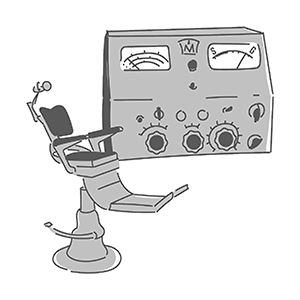
The fruit machine was a device developed in Canada by Frank Robert Wake, a Carleton University psychology professor in the 1950s, that was supposed to be able to identify gay men (derogatorily referred to as ‘fruits’). The subjects were made to view pornography; the device then measured the diameter of the pupils of the eyes (pupillary response test), perspiration, and pulse for a supposed erotic response.
The machine was employed in Canada in the 1950s and 1960s during a campaign to eliminate all gay men from the civil service, the Royal Canadian Mounted Police (RCMP), and the military. A substantial number of workers did lose their jobs. Although funding for the project was cut off in the late 1960s, the investigations continued, and the RCMP collected files on 9,000 people who had been investigated.
read more »
Posted in Politics, Sex, Technology |
Leave a Comment »
May 3, 2021

A synaptic transistor is an electrical device that can learn in ways similar to a neural synapse (the site of transmission of electric nerve impulses between two nerve cells). It optimizes its own properties for the functions it has carried out in the past.
The device mimics the behavior of the property of neurons called spike-timing-dependent plasticity, or STDP. The process adjusts the connection strengths based on the relative timing of a particular neuron’s output and input action potentials (or spikes).
read more »
Posted in Technology |
Leave a Comment »
March 28, 2020
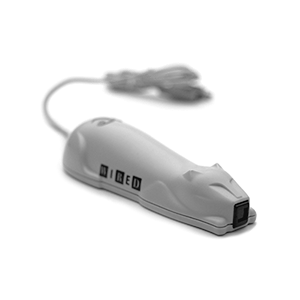
The CueCat, styled :CueCat with a leading colon, is a cat-shaped handheld barcode reader that was given away free to Internet users starting in 2000 by the now-defunct Digital Convergence Corporation. It enabled a user to open a link to an Internet URL by scanning a barcode — called a ‘cue’ by Digital Convergence — appearing in an article or catalog or on some other printed matter.
The company asserted that the ability of the device to direct users to a specific URL, rather than a domain name, was valuable. In addition, television broadcasters could use an audio tone in programs or commercials that, if a TV was connected to a computer via an audio cable, acted as a web address shortcut.
read more »
Posted in Money, Technology |
Leave a Comment »
February 21, 2020
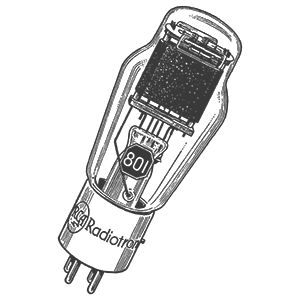
A vacuum tube, also called a ‘valve’ in British English, is a device that controls electric current flow in a high vacuum between electrodes (conductors that emit or receive electrons). Tubes were used in many radios, television sets, and amplifiers until they were supplanted by lower cost transistors in the 1960s that performed the same function but used less electricity and were more durable.
In a vacuum tube, a cathode (an electrode that emits electrons) is heated, as in a light bulb, so it will emit electrons. This is called ‘thermionic emission.’ The electrons are accelerated from the cathode to the anode (an electrode that receives electrons) by the electric field in the tube. Vacuum tubes must be hot to work. Most are made of glass, thus are fragile and can break. Vacuum tubes were used in the first computers like the ENIAC, which were large and need much work to continue operating.
read more »
Posted in Art, Technology |
Leave a Comment »
June 11, 2019
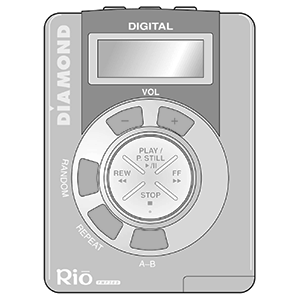
The Rio PMP300 is one of the first portable consumer MP3 digital audio players, and the first commercially successful one. Produced by Diamond Multimedia, it was introduced in 1998 as the first in the ‘Rio’ series of digital audio players, and it shipped later that year. The Rio retailed for US $200 with the ability to hold around 30 minutes of music at a bitrate of 128 kbit/s.
It shipped with 32 MB of internal memory and has a SmartMedia slot, allowing users to add additional memory. It is powered by a single AA battery, which provides between 8 and 12 hours of playback time. Connection to a personal computer is through the computer’s parallel port, with a proprietary connector on the Rio’s edge.
read more »
Posted in Money, Politics, Technology |
Leave a Comment »
November 7, 2018

A tube man, also known as a ‘skydancer,’ ‘air dancer,’ and originally called the ‘Tall Boy,’ is an inflatable moving advertising product comprising a long fabric tube (with two or more outlets), which is attached to and powered by an electrical fan. As the electrical fan blows air through the fabric tube, this causes the tube to move about in a dynamic dancing or flailing motion.
The design of the tube man was invented by Peter Minshall, an artist from Trinidad and Tobago, along with a team that included Israeli artist Doron Gazit, for the 1996 Summer Olympics. Gazit eventually patented the concept of an inflatable, dancing human-shaped balloon and licensed the patent to various companies that manufacture and sell the devices.
Posted in Art, Humor, Money |
Leave a Comment »
May 22, 2017

The phenakistiscope [fen-uh-kiss-tuh-skohp] was the first widespread animation device that created a fluent illusion of motion. The phenakistiscope is regarded as one of the first forms of moving media entertainment that paved the way for the future motion picture and film industry. It is sometimes compared to GIF animation since both show a short continuous loop.
A phenakisticope usually comes in the form of a spinning cardboard disc attached vertically to a handle. Arrayed radially around the disc’s center are a series of pictures showing sequential phases of the animation. Small rectangular apertures are spaced evenly around the rim of the disc. The user would spin the disc and look through the moving slits at the images reflected in a mirror. The scanning of the slits across the reflected images keeps them from simply blurring together, so that the user can see a rapid succession of images that appear to be a single moving picture.
read more »
Posted in Art, Science, Technology |
Leave a Comment »


 The Daily Omnivore