March 9, 2011
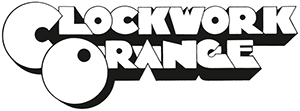
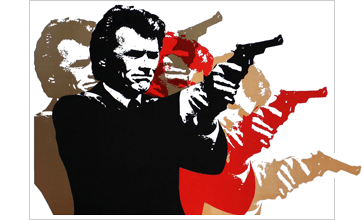
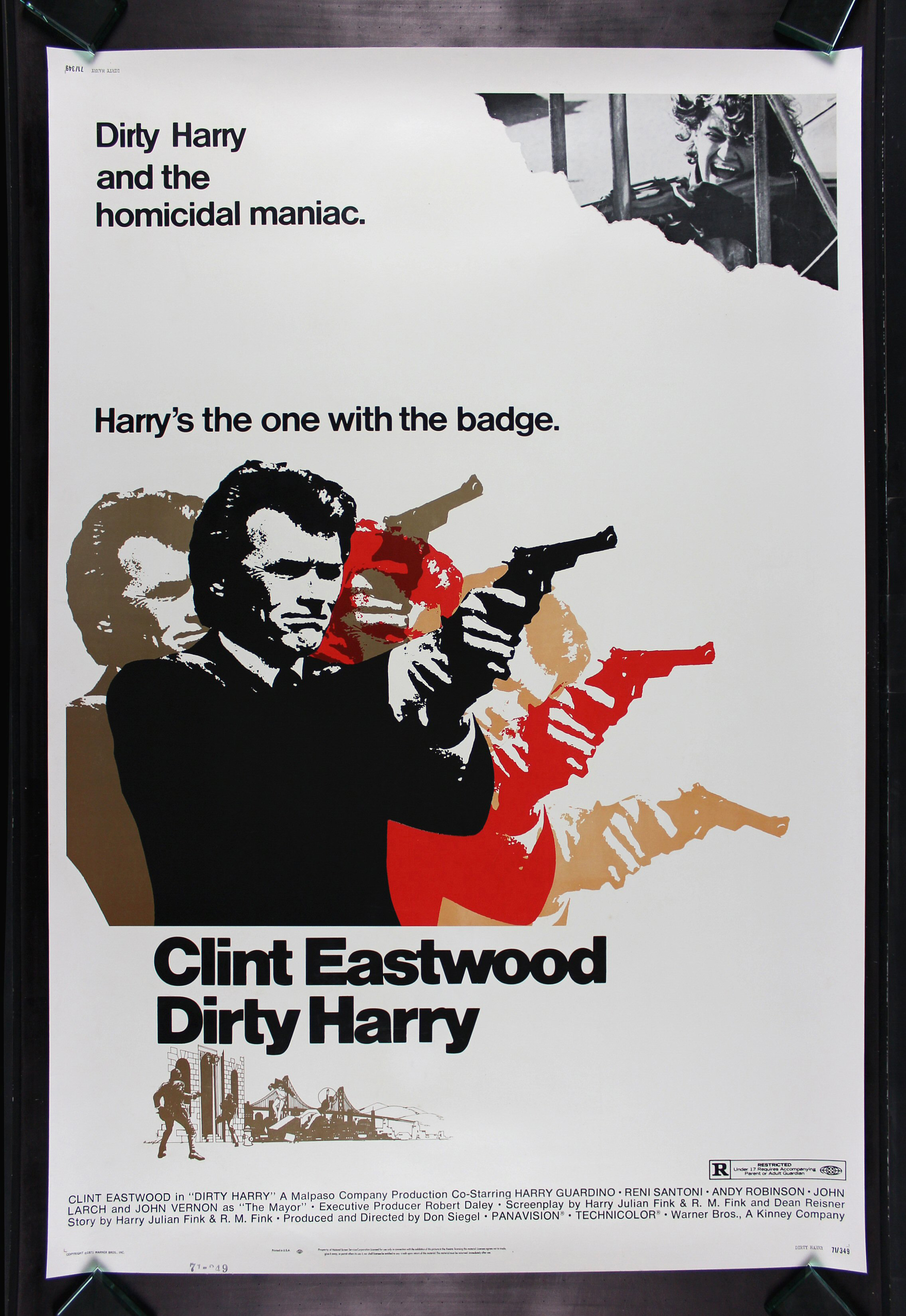
Bill Gold (b. 1921) is an American graphic designer best known for thousands of movie poster designs. During his 60-year career he worked with some of Hollywood’s greatest filmmakers, including Clint Eastwood, Alfred Hitchcock, Stanley Kubrick, Elia Kazan, Ridley Scott, and many more. Among his most famous film posters are those for Casablanca, A Clockwork Orange, and The Sting. Gold designed (and often photographed) posters for 35 consecutive Clint Eastwood films, from Dirty Harry (1971) to Mystic River (2004).
All of Gold’s posters have had a distinctive style. Each poster gave a film its unique identity, often creating the only lasting impression of a film that many would get. Gold’s ever-changing style reflected a wide range of current tastes, trends, and approaches, yet never strayed from the tried-and-true basics of film promotion. Together, Bill Gold’s poster art represents many of the most important American films since the advent of color photography.
Posted in Art, Money |
Leave a Comment »
March 8, 2011
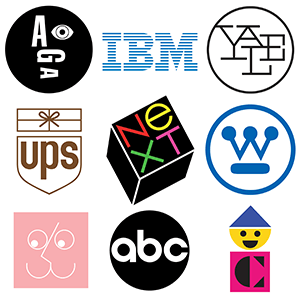

Paul Rand (1914 — 1996) was an American graphic designer, best known for his corporate logo designs, including the logos for IBM, UPS, Enron, Westinghouse, and ABC. He was one of the originators of the Swiss Style of graphic design, which emphasizes cleanliness, readability and objectivity.
read more »
Posted in Art, Money, Philosophy |
Leave a Comment »
March 8, 2011

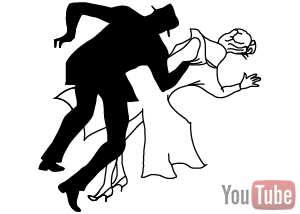
Saul Bass (1920 – 1996) was an American graphic designer and filmmaker, best known for his design on animated motion picture title sequences. During his 40-year career he worked for some of Hollywood’s greatest filmmakers, including most notably Alfred Hitchcock, Otto Preminger, Stanley Kubrick, and Martin Scorsese. His most famous title sequences are the animated paper cut-out of a heroin addict’s arm for Preminger’s ‘The Man with the Golden Arm,’ the text racing up and down what eventually becomes a high-angle shot of the UN building in Alfred Hitchcock’s ‘North by Northwest,’ and the disjointed text that races together and apart in ‘Psycho’ (1960).
Saul Bass designed the sixth AT&T Bell System logo. He also designed AT&T’s ‘globe’ logo after the breakup of the Bell System. Bass also designed Continental Airlines’ 1968 ‘jetstream’ logo which became the most recognized airline industry logo of the 1970s, and several other major corporate logos.
Posted in Art, Money |
Leave a Comment »
March 8, 2011
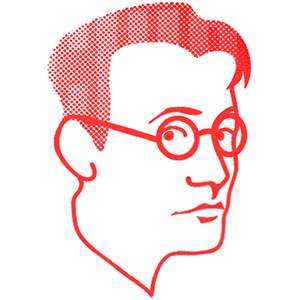
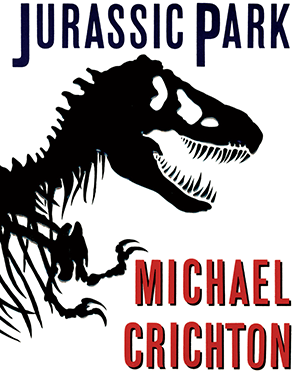
Chip Kidd (b. 1964) is an American author and graphic designer, known for his innovative book covers. He is currently associate art director at Knopf, an imprint of Random House. He first joined the Knopf design team in 1986, as a junior assistant. Kidd also supervises graphic novels at Pantheon.
His output includes cover concepts for books by Bret Easton Ellis, Haruki Murakami, Dean Koontz, Cormac McCarthy, Frank Miller, Alex Ross, David Sedaris, John Updike and others. His design for Michael Crichton’s Jurassic Park novel was carried over into marketing for the film adaptation. Oliver Sacks and other authors have contract clauses stating that Kidd design their books. Kidd is currently working with writer Lisa Birnbach on True Prep, a follow-up to her 1980 book The Official Preppy Handbook.
Posted in Art, Language, Money |
2 Comments »
March 7, 2011


Hapshash and the Coloured Coat is the name of an influential British graphic design and avant-garde musical partnership between Michael English and Nigel Waymouth, producing psychedelic posters and two albums of underground music. The silkscreen printed posters they created, advertising underground ‘happenings,’ clubs and concerts in London, became so popular at the time that they helped launch the commercial sale of posters as art, initially in fashionable stores such as the Indica Bookshop and Carnaby Street boutiques.
Their posters remain highly sought after: a poster advertising Jimi Hendrix’s 1967 concert at the Fillmore Auditorium in San Francisco, depicting the guitarist as a psychedelic Native American chief with a hunting bow in one hand and a peace pipe in the other, was valued in 2008 at $125,000. Their first album of psychedelic music, produced by a collective in early 1967 and including many famous names, is now seen as being influential on the early works of Amon Düül and other pioneers of German Krautrock, as well as inspiring sections of the Rolling Stones’ Their Satanic Majesties Request album.
Posted in Art, Drugs, Money |
Leave a Comment »
March 2, 2011
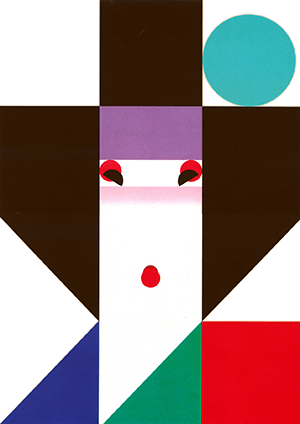
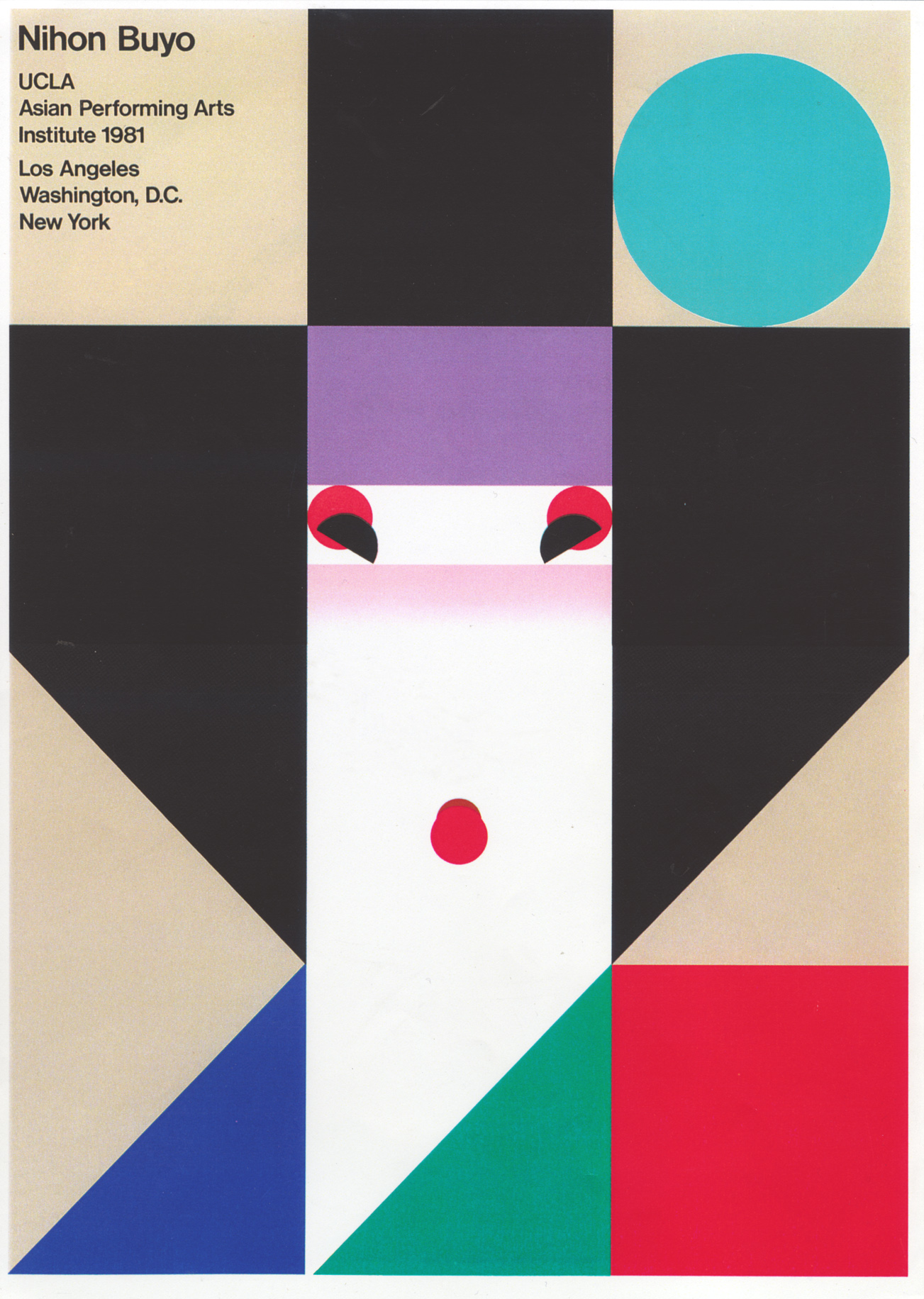
Ikko Tanaka (1930 – 2002) a Japanese graphic designer. The characteristic of his designs is a blending of deeply rooted Japanese traditions with western modernism to produce contemporary visual expression.
Posted in Art |
Leave a Comment »
January 5, 2011
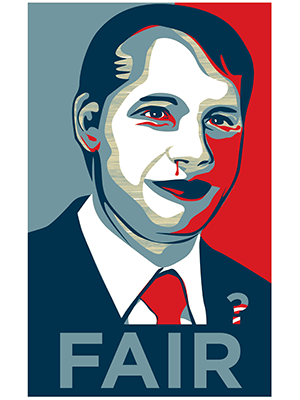
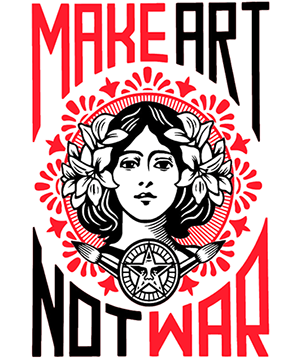
Shepard Fairey (b. 1970) is a contemporary artist, graphic designer, and illustrator who emerged from the American skateboarding scene. He first became known for his ‘André the Giant Has a Posse’ (…OBEY…) sticker campaign, in which he appropriated images from the comedic supermarket tabloid ‘Weekly World News.’ His work became more widely known in the 2008 U.S. presidential election, specifically his Barack Obama ‘HOPE’ poster.
Fairey’s first art museum exhibition, titled ‘Supply & Demand’ like his earlier book, was in Boston at the Institute of Contemporary Art in the summer of 2009. The exhibition featured over 250 works in a wide variety of media: screen prints, stencils, stickers, rubylith illustrations, collages, and works on wood, metal and canvas. As a complement to the ICA exhibition, Fairey created public art works around Boston. The artist explains his driving motivation: ‘The real message behind most of my work is ‘question everything.”
read more »
Posted in Art, Money, Politics |
Leave a Comment »
December 13, 2010
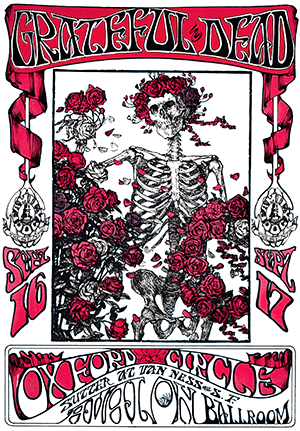

Stanley Mouse (b. 1940) is an American artist, best known for his 1960s psychedelic rock concert poster designs and Grateful Dead album cover art. He got his start in the Kustom Kulture scene working for Ed ‘Big Daddy’ Roth in 1958. The posters he produced were heavily influenced by Art Nouveau graphics, particularly the works of Alphonse Mucha and Edmund Joseph Sullivan.
Material associated with psychedelics, such as Zig-Zag rolling papers, were also referenced. Producing posters advertising for such musical groups as Big Brother and the Holding Company, Quicksilver Messenger Service, and Grateful Dead led to meeting the musicians and making contacts that were later to prove fruitful. Mouse and artist Alton Kelley are credited with creating the skeleton and roses image that became the Grateful Dead’s archetypal iconography, and Journey’s wings and beetles that appeared on their album covers from 1977 to 1980.
Posted in Art, Drugs |
Leave a Comment »







 The Daily Omnivore