February 29, 2012

Ecofont is a TrueType font developed by SPRANQ in the Netherlands. The font uses tiny circles placed in the characters to cut down on ink costs. It claims to cut down the amount of ink usage by approximately 15 percent.
In a 2010 test, Ecofont Vera Sans saved 20% more ink when compared to Bitstream Vera Sans. However, both sans-serif fonts used more ink than most typical serif fonts. Therefore Ecofont developed software to save ink when using any typeface, including serif fonts.
Posted in Money, Technology |
Leave a Comment »
February 25, 2012

A monofin is a type of swimfin typically used in finswimming and free-diving. It consists of a single surface attached to footpockets for both of the free-diver’s feet. Monofins were introduced in 1972, by a Ukrainian finswimming club, and have been used for finswimming competitions since, allowing monofin swimmers to reach speeds of 12km/h. Monofins can be made of glass fiber or carbon fiber. The diver’s muscle power, swimming style, and the type of aquatic activity the monofin is used for determines the choice of size, stiffness, and materials.
To differentiate between the use of monofins and conventional fins, the latter are sometimes referred to as stereo fins or bi-fins. The monofin swimmer extends arms forward, locking hands together, locking the head between the biceps. The undulating movement starts in the shoulders, with maximum amplitude towards the hips, the legs almost don’t bend to transfer the movement to the monofin. This technique is called the dolphin kick.
Posted in Games, Technology |
Leave a Comment »
February 6, 2012
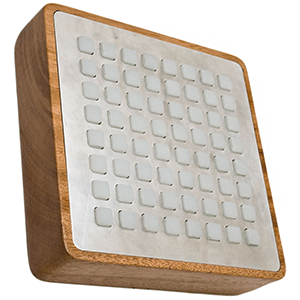
Monome is a family of interface devices for computers made by a Pennsylvania company of the same name. Despite being produced irregularly in small quantities since its introduction in 2006, the Monome button-grid controller has had a significant impact on electronic music. Together with the physically similar Yamaha Tenori-On, which was released a year later in 2007, the monome inspired interest in minimalist, grid-based music controllers. That interest spawned hobbyist projects like the Arduinome and commercial products like the Akai APC40 and the Novation Launchpad. The Monome has a minimalist design. It is simply a box with no letters or labels. There are random buttons that are back-lit. The box that holds the monome is entirely made up of timber, usually walnut. Notable users include deadmau5, Flying Lotus, Daedelus, and Nine Inch Nails contributor Alessandro Cortini.
Monome devices do not produce any sound on their own; they must be connected to a computer. A core design principle of the Monome is that it is not intended for any one specific application — the function of each button and the decision as to which lights are lit are completely up to the software communicating with the device over the Open Sound Control protocol. Several models have been produced, with typical sizes ranging from 64 to 256 buttons — plus a very limited run of 512-button devices. Monome applications span a wide variety of capabilities. Several applications provide sample sequencing capabilities. One such application is MLR, an application that allows for live sequencing and re-cutting of samples. There are also many applications that allow for synthesis either via their own internal synthesizers or by sending MIDI/OSC messages to external synthesizers.
Posted in Art, Money, Technology |
Leave a Comment »
January 29, 2012
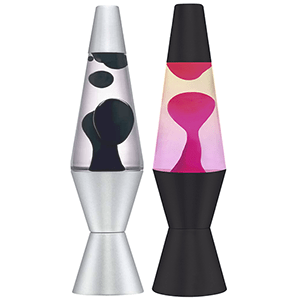
A lava lamp is a novelty light that contains blobs of colored wax inside a glass vessel filled with clear liquid. The wax rises and falls as its density changes due to heating from an incandescent light bulb underneath the vessel. Briton Edward Craven-Walker invented the lava lamp in 1963; it was originally called the ‘Astro Lamp.’
The wax is transparent, translucent or opaque mix of mineral oil, paraffin wax and carbon tetrachloride. The density of common wax is much lower than that of water and would float on top under any temperature. However, the carbon tetrachloride is heavier than water (also nonflammable and miscible with wax), and is added to the wax to make its density at room temperature slightly higher than that of the water.
Posted in Art |
Leave a Comment »
January 16, 2012

Wakamaru is a Japanese domestic robot made by Mitsubishi Heavy Industries, primarily intended to provide companionship to elderly and disabled people. The robot is yellow, 1m tall, and weighs 30 kilograms. It has two arms and its flat, circular base has a diameter of 45 cm. The first hundred went on sale in 2005, for USD $14,000. Wakamaru runs a Linux operating system on multiple microprocessors.
It can connect to the Internet, and has limited speech (in both male and female voices) and speech recognition abilities. Functions include reminding the user to take medicine on time, and calling for help if it suspects something is wrong. Wakamaru was the childhood name of Minamoto no Yoshitsune, a 12th century Japanese general.
Posted in Health, Technology, World |
1 Comment »
January 16, 2012

Paro is a therapeutic robot baby harp seal, intended to be very cute and to have a calming effect on and elicit emotional responses in patients of hospitals and nursing homes, similar to Animal-Assisted Therapy. It was designed by Takanori Shibata of the Intelligent System Research Institute of Japan’s AIST beginning in 1993. It was first exhibited to the public in late 2001 and handmade versions have been sold commercially since 2004.
Paro is based on harp seals Shibata saw in Canada, where he also recorded their cries that Paro uses. The robot has tactile sensors and responds to petting by moving its tail and opening and closing its eyes. It also responds to sounds and can learn a name. It can show emotions such as surprise, happiness and anger. It produces sounds similar to a real baby seal and (unlike a real baby seal) is active during the day and goes to sleep at night.
Posted in Health, Technology, World |
Leave a Comment »
January 4, 2012
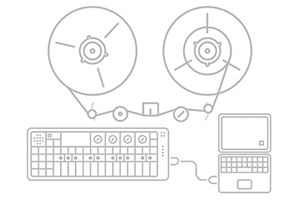

The OP-1 is a synthesizer, sampler, and sequencer designed and manufactured by the Stockholm-based company Teenage Engineering. The OP-1 is Teenage Engineering’s first product; it was released in 2011. The OP-1 is well known for its unconventional design, OLED display, and eight synthesizer engines. It has received some criticism for its physical limitations; however, according to Teenage Engineering cofounder Jesper Kouthoofd, these limitations were programmed into the synthesizer in order to stimulate the design process and the creativity of the user.
The design of the OP-1 was influenced by the VL-Tone, a synthesizer and pocket calculator manufactured by Casio in 1980 that is known for its toy-like novelty sounds and cheap build quality, as well as its inorganic design. In an interview with Damian Kulash of OK Go, Kouthoofd explained that he worked in a music store when he was young, and he was inspired by Japanese synthesizers of the 1980s. He has also stated that ‘limitations are OP-1’s biggest feature.’ The synthesizer’s designers attempted to use the limitation of physical hardware to encourage the unit to stimulate creativity, which might become unfocused in a limitless environment, such as a digital audio workstation.
Posted in Art, Money, Technology |
Leave a Comment »
December 23, 2011
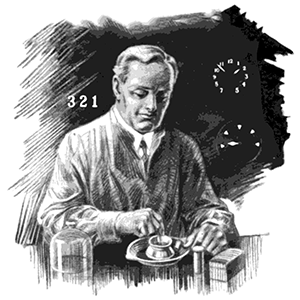
Undark was a trade name for luminous paint made with a mixture of radioactive radium and zinc sulfide, as produced by the U.S. Radium Corporation between 1917 and 1938. It was used primarily in watch dials.
The people working in the industry who applied the radioactive paint became known as the Radium Girls, because many of them became ill and some died from exposure to the radiation emitted by the radium contained within the product. The product was the direct cause of Radium jaw in the dial painters. Undark was also available as a kit for general consumer use and marketed as glow-in-the-dark paint.
Posted in Health, Money, Technology |
Leave a Comment »
December 14, 2011
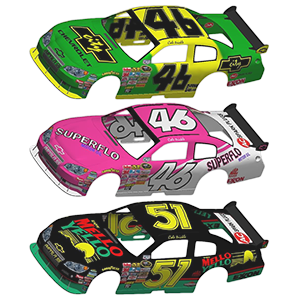
Mello Yello is a caffeinated, citrus-flavored soft drink produced and distributed by The Coca-Cola Company. It was introduced in 1979 to compete with PepsiCo’s Mountain Dew. There have been three flavored variants: Mello Yello Cherry was released in response to Mountain Dew Code Red, and the other two variants were Mello Yello Afterglow (peach-flavored) and Mello Yello Melon.
Mello Yello was featured in the 1990 NASCAR-based movie ‘Days Of Thunder,’ in which Tom Cruise’s character, Cole Trickle, drove a Mello Yello-sponsored car to victory in the Daytona 500, although the product name itself is never verbally mentioned in the movie. That livery went on to become a real NASCAR paint scheme the following year, when driver Kyle Petty drove with Mello Yello sponsorship in the Winston Cup Series.
Posted in Food, Money |
Leave a Comment »
December 14, 2011
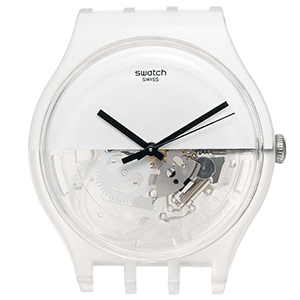
Swatch is a brand name for a line of wrist watches from the Swatch Group, a Swiss conglomerate with vertical control of the production of Swiss watches and related products. Swatch Group is the world’s largest watch company, and the Group has accelerated its acquisition of Swiss luxury brands in recent years, and currently owns: Breguet, Blancpain, Glashütte Original, Omega, Tiffany & Co., Rado, Longines, Tissot, and Hamilton. In 1984,
Swatch was conceived and it was introduced to the market in Switzerland the following year. This concept was realize with a small team of enthusiastic watch engineers led by Elmar Mock and Jacques Müller, who had had the idea to use the case back as a movement main plate (platine), as it had been done to design the thinnest watch in the world, the Delirium which made it to market in 1979. It was also designed for easy assembling.
read more »
Posted in Money, Technology |
Leave a Comment »
November 30, 2011

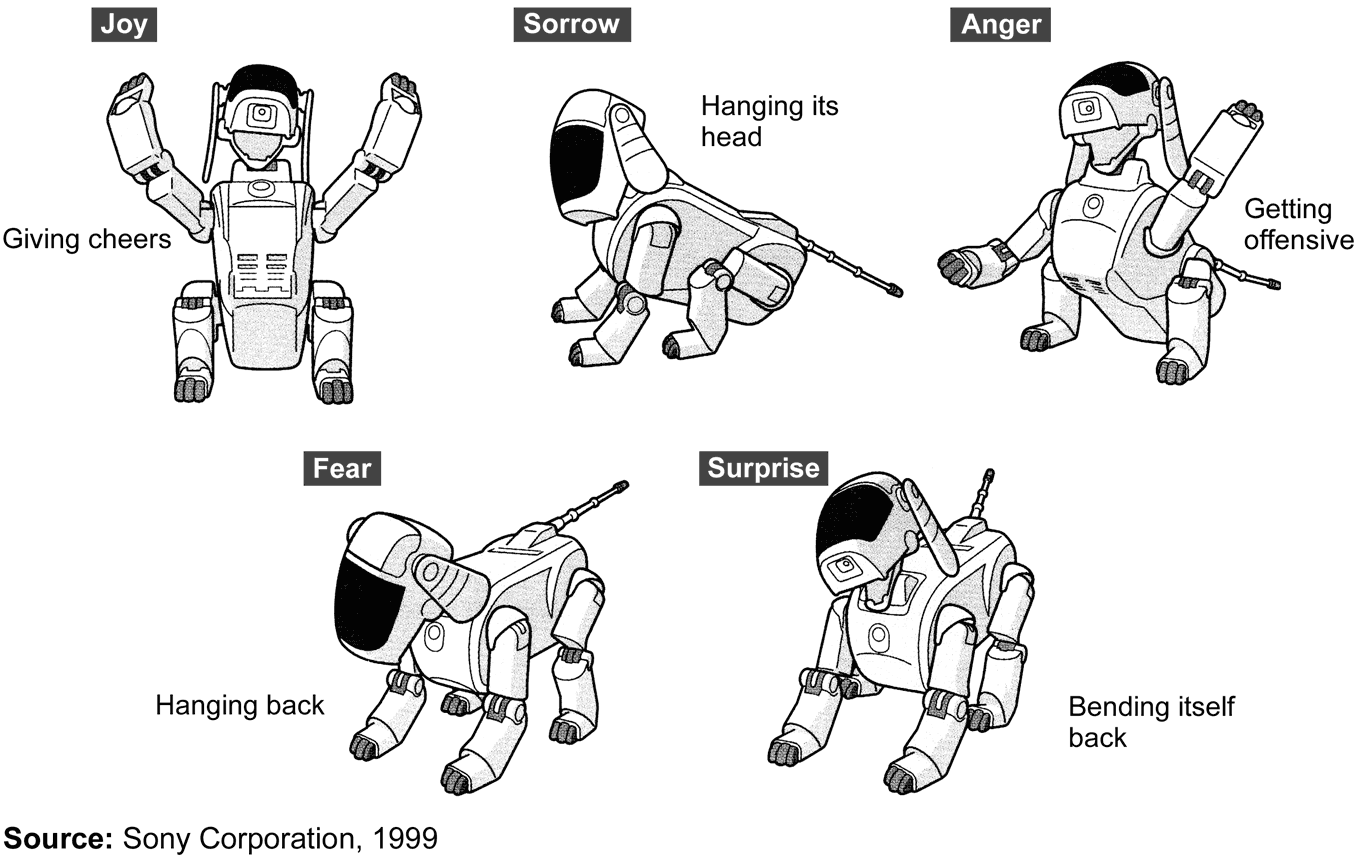
AIBO was one of several types of robotic pets designed and manufactured by Sony from 1999 to 2006. AIBO is able to walk, ‘see’ its environment via camera and recognize spoken commands in Spanish and English. AIBO are autonomous robots since they are able to learn and mature based on external stimuli from their owner, their environment, and from other AIBOs. Artist Hajime Sorayama created the initial designs for the AIBO. AIBO’s sounds were programmed by Japanese DJ/avant-garde composer Nobukazu Takemura. The International AIBO Convention takes place every year at Sony Robotics Tower in the Shinjuku prefecture.
AIBO runs AIBOware on a pink Memory Stick, which allows the robot to be raised from pup to fully grown adult while going through various stages of development as its owner interacts with it. AIBOware allows the owner to interact with a fully mature robot able to understand (though not necessarily willing to obey) 100 voice commands. Without the AIBOware, the AIBO will run in what is called ‘clinic mode’ and can only perform basic actions. Many AIBO owners enjoy teaching their pets new behaviors by reprogramming them in Sony’s special ‘R-CODE’ language. AIBO’s complete vision system uses the SIFT algorithm, to recognize its charging station. The newest versions are equipped with a Wi-Fi connection, allowing them to send the pictures they take via email which led to the Roblog.
Posted in Games, Money, Technology |
Leave a Comment »
November 29, 2011
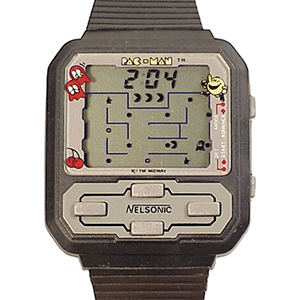
Nelsonic Industries is the name of an electronics manufacturing and development company that operated from Queens, NY in the early 1980s and throughout the 1990s when it was acquired by the watch-manufacturer, M.Z. Berger. Nelsonic produced numerous toy-themed wrist-watches during their existence, often targeting younger audiences with likenesses of characters from popular franchises such as Barbie, the Ghostbusters, and Mario. Nelsonic became notable during the early mid-1980s for being the first electronics company in the United States to produce game-watches (multi-purpose electronic devices capable of functioning as both a time-piece and as a typically electronic game). Today the original Nelsonic Game Watch line has entered the secondary market and individual Game Watches have become highly sought-after collectibles that often fetch high prices on online auction websites.
Throughout its existence, Nelsonic produced pop-culture-themed wrist-watches for children and young adults. The chronograph digital watches, typically made of molded plastic, invariably featured an alarm and utilized LCD display-screens to display the time for their wearers. In time the company began manufacturing multi-purpose units that used the LCD screen to combine time display functions with simple video game functions. These simple video games were variations on the theme of the Calculator watch.
Posted in Games, Money, Technology |
Leave a Comment »


 The Daily Omnivore