November 29, 2011

A calculator watch is a watch with a calculator built into it. Calculator watches first appeared in the Mid 1970s introduced by Pulsar and Hewlett Packard. Several watch manufacturers have made calculator watches over the years, but the Japanese electronics company Casio produced the largest variety of models. In the mid-1980s, Casio created the Data Bank calculator watch, which not only performed calculator functions, but also stored appointments, names, addresses, and phone numbers. The modern eData version of its Data Bank watch has greater memory and the ability to store computer passwords.
When mass produced calculator watches appeared in the early 1980s (with the most being produced in the middle of the decade), the high-tech community’s demand created a ‘feature war’ of one-up-manship between watch manufacturers. However, as the novelty of this new electronic fad watch wore off, they became, much like pocket protectors and thick glasses, associated with nerds and today are no longer considered to be in vogue. Recently, they have come back in style and are worn ‘ironically’ by hipsters.
Posted in Humor, Money, Technology |
Leave a Comment »
November 19, 2011

Truck nuts, also known as truck balls, BumperNuts, BumperBalls, or Trucksticles, are accessories for pickup trucks and other vehicles. This trend began in the United States in 1998 and first sold on the internet in 1999. Truck nuts are used as a statement by the car, truck, ATV, and/or motorcycle owner to boast/amuse/shock him/her self and others. Truck nuts are installed to hang under the bumper area of the vehicle so they are conspicuous to those viewing the vehicle from the rear. Manufacturers use HDPE, ABS, and PVC plastics to create truck nuts, though hollow aluminum and solid brass can also be found. They can be many different colors, as well as metallic chrome coating and a brass-colored reflective metallic coating.
In 2007, a proposal was made in Maryland to ‘prohibit motorists from displaying anything resembling or depicting ‘anatomically correct’ or ‘less than completely and opaquely covered’ human or animal genitals, human buttocks or female breasts.’ The bill’s sponsor, delegate LeRoy E. Myers Jr., referred to the testicles as ‘vulgar and immoral,’ and stated that his proposal was made at the request of a constituent who was offended by the accessories. Similar legislature is being advocated in several other states including Virginia, South Carolina, and Florida.
Posted in Humor, Politics, Sex |
Leave a Comment »
November 19, 2011
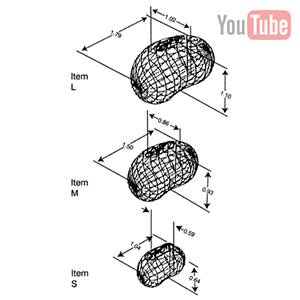
Neuticles are prosthetic testicular implants for neutered dogs and other domestic animals. Creator Gregg Miller won the 2005 Ig Nobel Prize in Medicine, a parody of the real Nobel Prize, for his invention. As of 2007, more than 240,000 pairs of the patented product had been sold, in all 50 U.S. states and 49 countries. Miller developed the idea for Neuticles in 1993, after his bloodhound Buck caught the scent of a bitch in heat, disappeared and turned up days later 30 miles away. Miller had Buck neutered to stop his wandering. Following the procedure, when Buck went to clean himself, he realized something was wrong and acted ‘extremely depressed’ for three days.
The first commercial Neuticles were implanted in 1995. Neuticles are made from Food and Drug Administration–approved materials and are designed to replicate the weight and feel of the animal’s natural testicles. They are made of solid silicone and are not gel-filled and therefore cannot leak. Several companies have tried to copy the patented prosthetic. CTI Corporation, which manufactures Neuticles, cited an investigation revealing that companies in New York and California were pirating Neuticles. CTI warned of health risks to the animals getting the pirate product.
Posted in Humor, Money, Sex |
1 Comment »
November 10, 2011
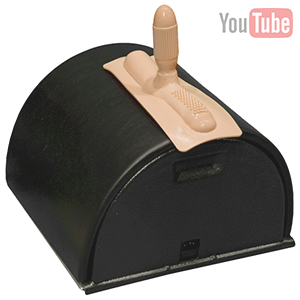
A Sybian is a masturbation device designed for use by females, developed by dance instructor Dave Lampert in the 1980s. It consists of a saddle-like seat containing an electric motor connected to a rod that protrudes from a hole in the center. Various attachments can be added to the rod, which vibrates, rotates and may also stimulate the clitoris externally. The intensity of the movements produced can be increased or decreased through a control box attached to the Sybian’s base. Lampert and his team initially called the device Master Better, shortened to ‘MB’ for about four years before selecting a new name for it. The prefix syb was derived from Sybaris, an Ancient Greek city in southern Italy which was associated with luxurious living.
Generally, the user of the Sybian straddles the machine and inserts the attachment vaginally. The vibration and rotation can be controlled by separate on/off switches and two rotary controls. The Sybian is sold with up to four phallus-shaped washable attachments of varying sizes made from synthetic rubber. Although the Sybian has been featured in many pornographic video productions since the early 2000s, primarily on the Internet, the device came to prominence on The Howard Stern Show since the show’s arrival on Sirius Satellite Radio. Howard Stern was given a Sybian as a birthday gift in 2006 and it remains in the Stern studio for use by willing guests.
Posted in Sex, Technology |
1 Comment »
November 9, 2011

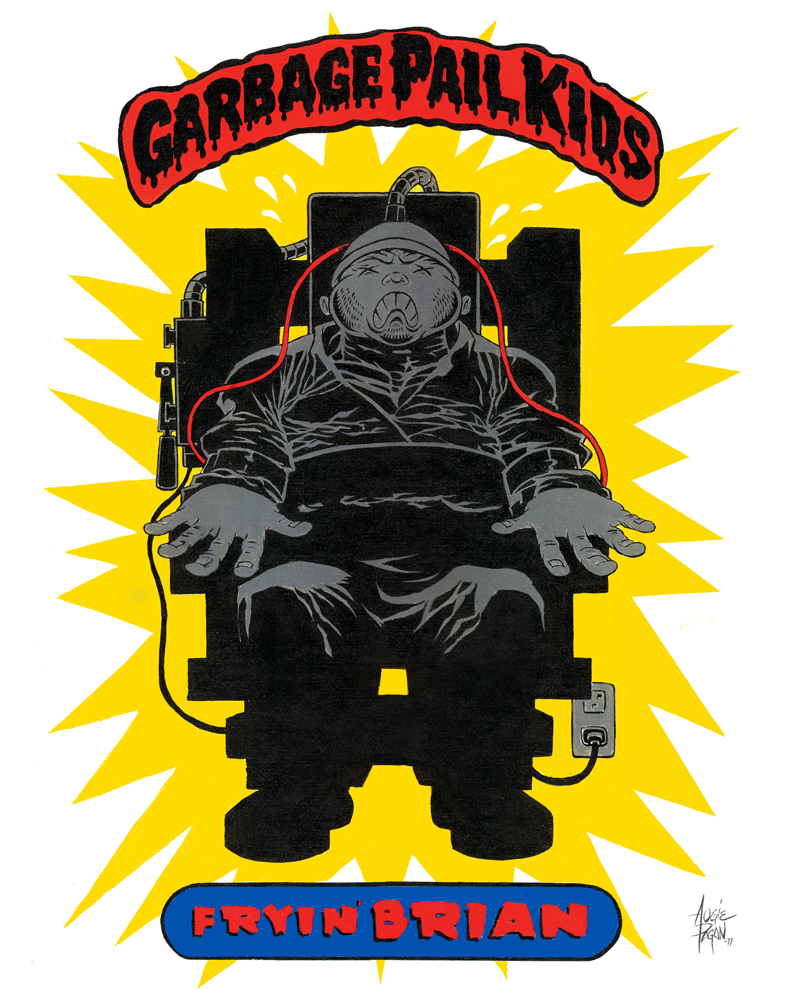
Garbage Pail Kids (also known as ‘Basuritas’ in Latin America, ‘Gang do Lixo’ in Brazil, ‘Sgorbions’ in Italy, ‘Les Crados’ in France and ‘Die total kaputten Kids’ in Germany) is a series of trading cards produced by the Topps Company, originally released in 1985 and designed to parody the Cabbage Patch Kids dolls, which were immensely popular at the time.
Each sticker card features a character with a comical abnormality and/or suffering some terrible fate, and punning name, such as ‘Glandular Angela’ or ‘Half-Nelson.’ Fifteen series of regular trading cards were released in the United States, with various sets released in other countries.
read more »
Posted in Art, Humor, Language |
Leave a Comment »
October 13, 2011

A mind machine (or psychowalkman) uses pulsing rhythmic sound and/or flashing light to alter the brainwave frequency of the user. Mind machines are said to induce deep states of relaxation, concentration, and in some cases altered states of consciousness that have been compared to those obtained from meditation and shamanic rituals. The process applied by these machines is also known as brainwave synchronization or entrainment. Mind machines typically consist of a control unit, a pair of headphones and/or strobe light goggles. The unit controls the sessions and drives the LEDs in the goggles. Professionally, they are usually referred to as Auditory Visual Stimulation devices (AVS). Sessions will typically aim at directing the average brainwave frequency from a high level to a lower level by ramping down in several sequences. Target frequencies typically correspond to delta (1-3 hertz), theta (4–7 Hz), alpha (8–12 Hz) or beta brain waves (13–40 Hz), and can be adjusted by the user based on the desired effects.
There have been a number of claims regarding binaural beats (auditory processing artifacts or apparent sounds), among them that they may help people memorize and learn, stop smoking, tackle erectile dysfunction and improve athletic performance. However, research into binaural beats is very limited. No conclusive studies have been released to support marketing claims for binaural beat systems. Mind machines are often used together with biofeedback or neurofeedback equipment in order to adjust the frequency on the fly. Modern mind machines can connect to the Internet to update the software and download new sessions. When sessions are used in conjunction with meditation, neurofeedback, etc. the effect can be amplified. Rapidly flashing lights may be dangerous for people with photosensitive epilepsy or other nervous disorders. It is thought that one out of 10,000 adults will experience a seizure while viewing such a device; about twice as many children will have a similar ill effect.
Posted in Health, Money, Technology |
Leave a Comment »
October 10, 2011

A beer koozie [koe-zie] is a fabric or foam device that is designed to insulate a beverage can or bottle. It began as a marketing tool. The primary use of a beer koozie is to keep one’s hand warm while keeping the beer cold.
A secondary use of a beer koozie is to easily identify one’s beverage from another. Many different companies have used the koozie as a promotional giveaway because it is not only inexpensive to manufacture, but its frequent use is more likely to bring the company’s name to a household presence. Originally this logo or image was screen-printed on a round foam cylinder with a foam base (generally a hole is provided in the base to alleviate creation of a vacuum). A koozie can be made from many materials like neoprene, polyester or open cell foam.
Posted in Food, Language, Money |
1 Comment »
September 12, 2011

Kraft Singles is a processed ‘cheese product’ manufactured and sold by Kraft Foods, introduced in 1949. Although processed cheese was first invented in 1911 by Walter Gerber of Thun, Switzerland, it was James L. Kraft who first applied for an American patent for his method in 1916. Kraft Foods also created the first commercially available sliced processed cheese, which was introduced in 1950.
One of the more famous ad campaigns in the 1980s claimed that each ¾ ounce slice contained ‘five ounces of milk’ (with milk being poured into a glass next to Kraft Singles), which makes them taste better than imitation cheese slices made mostly with vegetable oil and water (with oil being poured into a glass next to imitation cheese) and hardly any milk. The campaign was lambasted for its implications that each slice contained the same amount of calcium as a five ounce glass of milk and also more calcium than imitation cheese slices, which eventually led to a ruling by the Federal Trade Commission in 1992 that ordered Kraft to stop making false claims in its advertising. Kraft removed the ads, but continues to taut the use of milk in its ‘cheese products.’
Posted in Food, Money, Politics |
Leave a Comment »
July 25, 2011

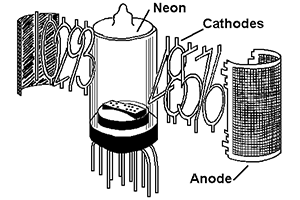
A nixie tube, or cold cathode display, is an electronic device for displaying numerals or other information using glow discharge. The glass tube contains a wire-mesh anode and multiple cathodes, shaped like numerals or other symbols. Applying power to one cathode surrounds it with an orange glow discharge. The tube is filled with a gas at low pressure, usually mostly neon and often a little mercury or argon.
Although it resembles a vacuum tube in appearance, its operation does not depend on thermionic emission of electrons from a heated cathode. It is therefore called a cold-cathode tube (a form of gas-filled tube), or a variant of neon lamp. Such tubes rarely exceed 40 °C (104 °F) even under the most severe of operating conditions in a room at ambient temperature. Vacuum fluorescent displays from the same era use completely different technology – they have a heated cathode together with a control grid and shaped phosphor anodes; Nixies have no heater or control grid, typically a single anode, and shaped bare metal cathodes.
read more »
Posted in Money, Technology |
Leave a Comment »
July 14, 2011
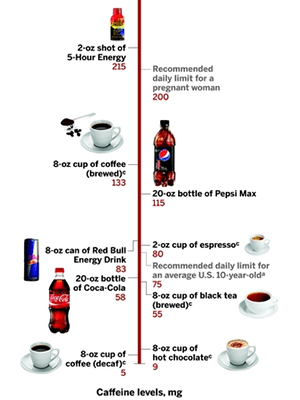
Energy shots are a specialized kind of energy drink. Sold in 59ml (2 fluid oz.) bottles, energy shots normally contain the same amount of caffeine, vitamins or other functional ingredients as their larger siblings, and therefore they may be considered concentrated forms of energy drinks. Also similar to energy drinks, energy shots contain caffeine, vitamins, and herbs such as guarana, ginseng or ginkgo biloba, taurine, maltodextrin, inositol, carnitine, creatine or glucuronolactone. Most energy shots contain sugar; however, many brands also offer artificially-sweetened ‘diet’ versions. The central ingredient in most energy shots is caffeine, the same stimulant found in coffee or tea. The average 50ml energy shot has about 80 mg of caffeine. This is approximately equivalent to a cup of coffee.
The idea of energy shots started decades ago in the Far East, notably in Japan, where small ‘tonics’ became very popular among consumers; they were highly concentrated and without carbonation. In 2004 the first suppliers, like 5-Hour Energy, Nitro2Go, and ZipFizz, took up the idea and launched these energy shots in the US, opening up a sub-segment in the energy drink market. Although originally marketed in the US, energy shots are becoming more popular in other parts of the world, like Europe, Asia and Australia.
Posted in Drugs, Health, Money |
Leave a Comment »
July 14, 2011

The Big Green Egg is the brand name of a kamado-style ceramic charcoal cooker. Kamado barbecue originates in southern Japan. The kamado first came to the attention of Americans after World War II when US Air Force servicemen brought them back from Japan in empty transport planes. The Big Green Egg Company was founded in 1974 by Ed Fisher and is based in Georgia. The shape of the Egg is designed to contain the heat with only a small draft door at the bottom, and a daisy wheel damper unit on the top to give air flow control and therefore temperature regulation. Between the base and the lid is a felt gasket designed to maximize moisture retention during long cookouts.
Prices vary by model and start at approximately $700. Big Green Egg barbecues have quite an enthusiastic following of amateur chefs and the collective name given these enthusiasts is ‘Eggheads.’ Every October there is a global gathering called ‘Eggtoberfest’ held at the company’s headquarters in Tucker, GA. In addition, numerous other Big Green Egg Festivals occur throughout the US and the world, called ‘EggFests.’
Posted in Food, Money, Technology |
Leave a Comment »
July 12, 2011

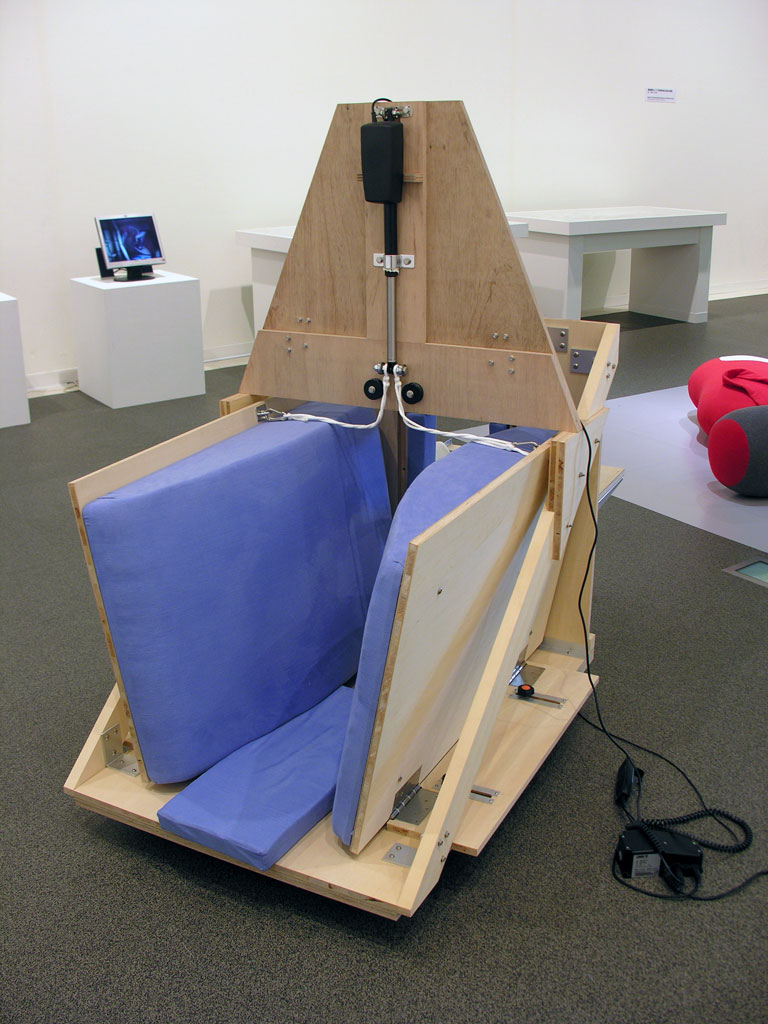
A hug machine, or squeeze box, is a deep-pressure device designed to calm hypersensitive persons, usually individuals with autism spectrum disorders. The therapeutic, stress-relieving device was invented by professor of animal science Temple Grandin in 1965.
Autism and autism-spectrum disorders have profound effects upon both social interactions and sensitivity to sensory stimulation in persons with such conditions, often making it uncomfortable or impractical for them to turn to other human beings for comfort. Grandin solved this by designing the hug machine so both she and others could turn to it for sensory relief, whenever needed or simply desired.
read more »
Posted in Health, Technology |
2 Comments »




 The Daily Omnivore