November 23, 2011

Myachi [mee-ah-chee] is the brand name of a type of hand sack. It is a small rectangular bag approximately 1.5 by 3.5 inches (40 by 90 mm) that players use to perform a variety of tricks using every part of the body except the palm of the hand. Myachi can be played alone or in groups. There are a number of different games played with the Myachi including big air, best trick and MYACH, but it is most commonly used for freestyle.
Myachi is based on a popular college game in which lighters, keys or coins are tossed from person to person using only the back of the hand. Myachi founder Steven Ochs was introduced to this game while studying at Vanderbilt University and saw marketing potential in this simple hobby. Headquartered in Nashville, Tennessee, the company began in 1998 when Ochs quit his job as a Wall Street Broker. Starting in the back of an RV, he hand-stitched the first ten thousand Myachis and traveled the country selling his concept at concerts, festivals and street fairs. Today Myachi is a top selling toy.
Posted in Games, Money |
Leave a Comment »
July 11, 2011

The Tamagotchi [tom-uh-gotchee] is a handheld digital pet, created in Japan by Akihiro Yokoi of WiZ and Aki Maita of Bandai. It was first sold by Bandai in 1996 in Japan. As of 2010, over 76 million Tamagotchis have been sold world-wide. Most Tamagotchis are housed in a small egg-shaped computer with an interface usually consisting of three buttons, although the number of buttons may vary for different variations. According to Bandai, the name is a portmanteau combining the Japanese word ‘tamago,’ which means ‘egg,’ and the English word ‘watch.’
Upon removing the tag of a Tamagotchi unit, an egg will appear on the screen. After setting the Tamagotchi unit’s clock, the Tamagotchi will hatch, after which the player will be told of its gender and will be given the opportunity to give it a name. From then on, the player is given the task of raising the Tamagotchi to good health throughout its life and attending to its needs, such as feeding it, playing games to make it happy, and keep it at a healthy weight, cleaning up its excrement, punishing or praising the Tamagotchi based on its actions, returning it to proper health with medicine if it gets sick, and shutting off the lights when it goes to bed.
read more »
Posted in Games, Technology, World |
Leave a Comment »
July 3, 2011
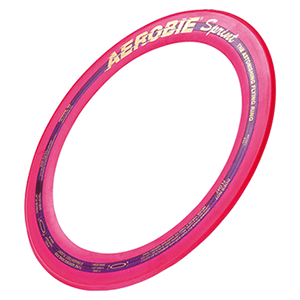
An Aerobie is a flying ring used in a manner similar to a flying disc (Frisbee) for recreational catches between two or more individuals. An Aerobie is lighter, and is more stable in flight than a Frisbee. It can be bent to tune it for straighter flight. Designed in 1984 by Stanford engineering lecturer Alan Adler, the Aerobie has a polycarbonate core with soft rubber bumpers molded onto the inner and outer rims. The outer rim has a spoiler designed to impart stability.
In the 1970s, Adler began attempting to improve the flying disc, considering its design characteristics. He tried streamlining the shape to reduce drag, but this resulted in a disc that was more unstable in flight. Eventually, he turned his attention to the ring shape. This led to the development of the predecessor of the Aerobie, which was called the ‘Skyro.’ About a million of this model were sold. In 1980, it was used to set a Guiness World Record throw of 261 meters. It lacked the spoiler rim of the Aerobie. It had low drag, but was only stable at a certain speed. The later introduction of the spoiler, which balanced the lift, made the ring stable ‘over a wide range of speeds.’
Posted in Games, Money |
Leave a Comment »
May 9, 2011


An executive toy is a novelty item that is usually a small mechanical gadget placed on the desk of a corporate executive or other office workers. They have no work-related function but are usually interesting to look at and entertaining. The first executive toy may have been a gadget designed by the great mathematician and engineer Philo of Byzantium (c.280 BCE), an octagon-shaped ink pot with openings on each side. One could turn the pot so that any face is on top and dip the pen in the opening, but the ink never ran out through the holes on other sides. The inkwell was suspended in the center on a series of gimbals and remained stationary in spite of any rotation.
Examples of executive toys include: EcoSphere (closed Aquarium), Etch A Sketch, Hoberman sphere (a folding and opening geodesic dome), oil and water liquid motion toys, Drinking bird, Magic 8-Ball, mechanical puzzles, music boxes, Nanoblocks (plastic building blocks similar to Lego but about half the linear dimensions), Newton’s cradle (where a set of metal balls are suspended from above, one is pulled from the rest and kicks them, transferring the kinetic energy to the last one), Perpetual pendulum (which doesn’t stop due to an electric magnet in the base of the toy), Pin Art (a box with thousands of small pins of equal length inserted into a board, that can be pressed from one side with any object so that the other ends of the pins form a three-dimensional image of the object on the other side of the board), Rubik’s Cubes, Tops, Yo-yos, Snow globes, Lava lamps, magnet toys, and stress balls.
Posted in Games, Money |
Leave a Comment »
May 9, 2011
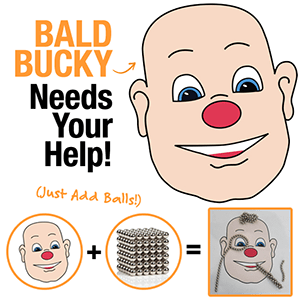
Buckyballs are a magnetic toy launched at the New York International Gift Fair in 2009 and sold in the hundreds of thousands before the U.S. Consumer Product Safety Commission issued a recall. In several cases, children swallowed them, and injured their intestines, resulting in at least one death. As a result, regulatory agencies banned them, and the magnets are no longer marketed as toys. This led to a debate over the risks of toys and parental responsibility.
In 2009, a number of US companies decided to repackage sphere magnets and sell them as toys. Despite existing toy regulations at the time, Maxfield & Oberton, maker of Buckyballs, told the ‘New York Times’ that he saw the product on YouTube and repackaged them as Buckyballs. After the recall all mentions of ‘toy’ were changed to ‘desk toy,’ positioning the product as a stress-reliever for adults and restricted sales from stores that sold primarily children’s products.
read more »
Posted in Games, Science |
Leave a Comment »
April 13, 2011


Designer toys are collectibles that are produced in limited editions (as few as 10 or as many as 2000 pieces) and created by artists and designers. Designer toys are made of variety of materials; ABS plastic and vinyl are most common, although wood, metal, and resin are occasionally used. The term also encompasses plush, cloth and latex dolls.
read more »
Posted in Art, Games, Money |
Leave a Comment »
April 11, 2011

Amigurumi [ah-mee-goo-roo-mee] is the Japanese art of knitting or crocheting small stuffed animals and anthropomorphic creatures. The word is derived from a combination of the Japanese words ‘ami,’ meaning crocheted or knitted, and ‘nuigurumi,’ meaning stuffed doll. The pervading aesthetic of amigurumi is cuteness. To this end, typical amigurumi animals have an over-sized spherical head on a cylindrical body with undersized extremities.
Amigurumi are usually crocheted out of yarn using the single crochet stitch. They can also be knit. Typically, crochet hooks or knitting needles that are slightly smaller than normal are used, in order to achieve a tight gauge that retains stuffing. Stuffing is usually standard polyester or cotton craft stuffing, but may be improvised from other materials. Plastic pellets may be inserted beneath stuffing in order to distribute weight at the bottom of the figure. They are usually worked in sections and then joined, except for some amigurumi which have no limbs, only a head and torso which are worked as one piece.
Posted in Art, Games, World |
2 Comments »
April 1, 2011

Homies are a series of 2-inch figurines loosely based upon Chicano (Mexican American) characters in the life of artist David Gonzalez. First created in 1998, these plastic figurines were initially sold via vending machines typically positioned in supermarkets. Homies have become a highly collectible item among fans of the line, and many imitation toys have sprung up. The figures caused controversy after their initial release as members of the Los Angeles Police Department, argued that the figures glorified gang life. Many stores stopped selling the toys after the complaint.
Gonzales then created a story for each of the Homies’ characters, each of which had a positive view of the characters. Some became former jail mates who went on to educate children about how to avoid prison. Mainstream stores, such as Walmart, quickly returned the Homies to their stacks, and the toy branched out to include a line of diecast cars, among other things. By 2005, the Homies character line had women, as well as Filipino, Japanese and Puerto Rican, and even Evil Clown characters. The Puerto Ricans set, which includes twelve of the Homies, are nicknamed Los Boricuas.
Posted in Art, Games, Money |
Leave a Comment »
April 1, 2011

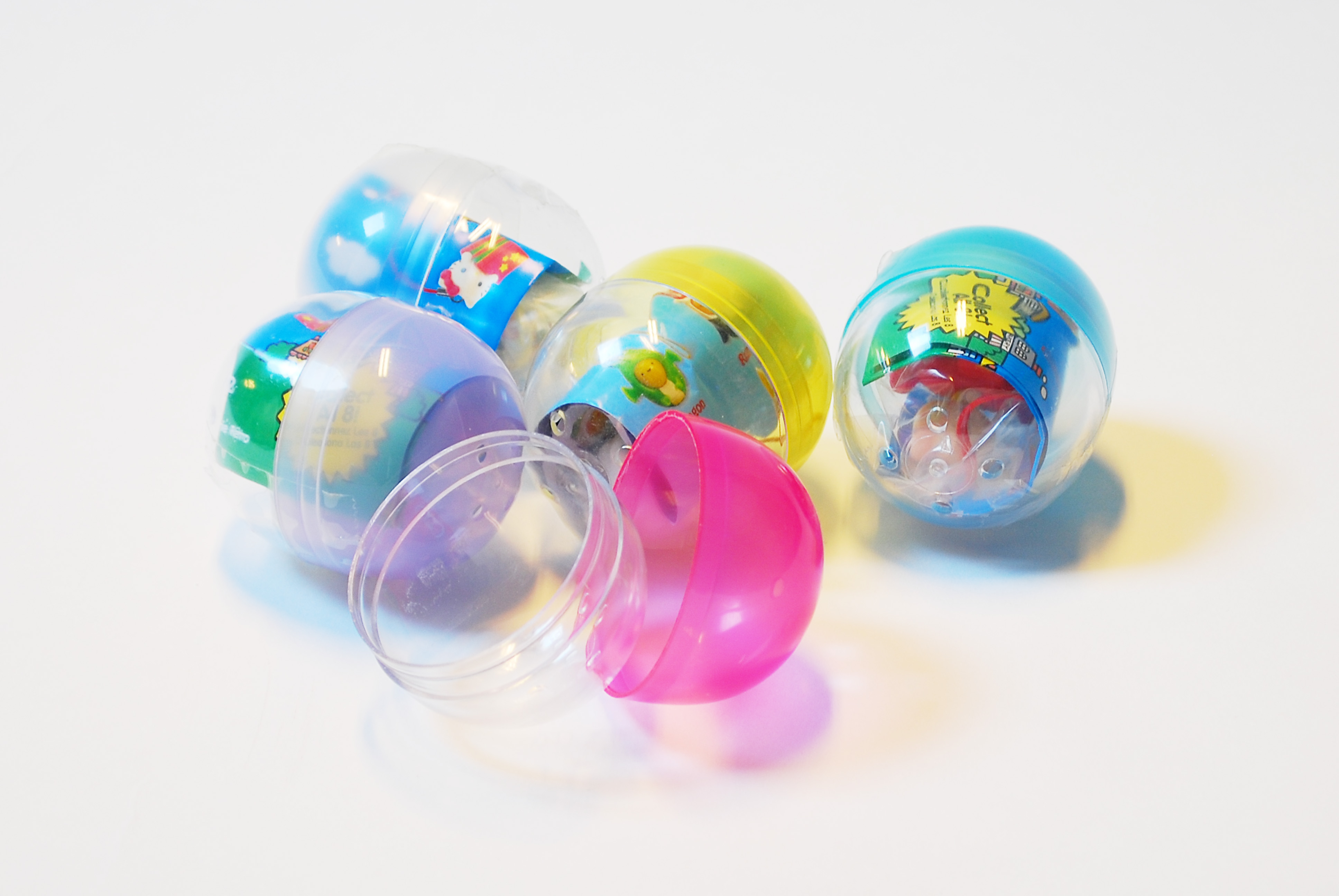
Gashapon [gosh-uh-pone] is a Bandai brand trademark widely used throughout the world for their capsule toys.
‘Gashapon’ is a Japanese onomatopoeia, made up of two sounds: ‘gasha’ for the turning of a crank on a toy vending machine, and ‘pon’ for the sound of the toy capsule dropping into the receptacle. It is used to describe both the machines themselves, and any toy obtained from them.
read more »
Posted in Art, Games, Money |
Leave a Comment »
April 1, 2011

Disney Vinylmation is a brand of vinyl toys sold at Disney theme parks and other locations. The toys all have a common shape (that of Mickey Mouse) but have different themed markings, colors and patterns.
The first figures were introduced in November 2008. The figures are sold in sealed packaging. The purchaser does not know which figure they are buying until they have opened it.
Posted in Art, Games, Money |
Leave a Comment »
March 14, 2011
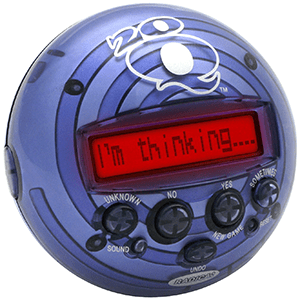
20Q is a computerized game of twenty questions that began as an experiment in artificial intelligence. It was invented by Robin Burgener. The game is based on the spoken parlor game known as twenty questions. 20Q asks the player to think of something and will then try to guess what they are thinking of with twenty yes-or-no questions.
If it fails to guess in 20 questions, it will ask an additional 5 questions. If it fails to guess even with 25 questions, the player is declared the winner.
read more »
Posted in Games, Technology |
Leave a Comment »
March 6, 2011
The Snurfer was the first marketed snowboard. It uses a noboard type of snowboard binding alternative. It was created in 1965 by Sherman Poppen in Muskegon, Michigan.
Poppen was outside his house one day sledding with his daughters, when his 11 year old was going down the hill, standing on her old sled. Poppen then ran inside his shop and bound two skis together. Poppen used a string and tied it to the nose of the board so the rider could have control of the board. Poppen’s wife called it the Snurfer. He licensed the concept to Brunswick Corporation to manufacture the Snurfer. Brunswick sold about a million Snurfers for $10 to $30.
Posted in Games, Money, Technology |
Leave a Comment »





 The Daily Omnivore