August 10, 2012

Thomas Pynchon [pin-chuhn] (b. 1937) is an American novelist. A MacArthur Fellow, he is noted for his dense and complex novels. Both his fiction and non-fiction writings encompass a vast array of subject matter, styles, and themes, including (but not limited to) the fields of history, science, and mathematics. For his most praised novel, ‘Gravity’s Rainbow,’ Pynchon won the 1974 U.S. National Book Award for Fiction (which he declined).
After publishing several short stories in the late 1950s and early 1960s, he began composing the novels for which he is best known: ‘V.’ (1963), ‘The Crying of Lot 49’ (1966), ‘Gravity’s Rainbow’ (1973), and ‘Mason & Dixon’ (1997). Pynchon is also known for being very private; very few photographs of him have ever been published, and rumors about his location and identity have circulated since the 1960s.
read more »
Posted in Art, Humor, Language |
Leave a Comment »
July 30, 2012

Po Bronson (b. 1964) is an American journalist and author who lives in San Francisco. After attending Lakeside School in Seattle, he graduated from Stanford University in 1986 and briefly worked as an assistant bond salesman in San Francisco.
He abandoned finance to pursue writing, publishing short stories and eventually a comedic novel based upon his bond trading experiences. ‘Bombardiers’ was an international best seller in 1995.
read more »
Posted in Language, Money, Technology |
Leave a Comment »
July 30, 2012

Madeline Levine, Ph. D., is a practicing psychologist in Marin County, California. She is the author of several non-fiction books: ‘Viewing Violence’ published in 1996, ‘See No Evil: A Guide to Protecting Our Children from Media Violence’ published in 1998, and ‘The Price of Privilege: how parental pressure and material advantage are creating a generation of disconnected and unhappy kids’ published in 2006. The first two books represent an analysis of the negative effects of media violence on child development.
Her third book is a study of the psychological ailments plaguing teens from affluent families. ‘The Price of Privilege’ is based not only on her 25 years of experience in treating such teens within Marin County (an affluent community within the San Francisco Bay Area) but also on her consultations with colleagues around the United States—particularly research psychologist Suniya S. Luthar — as well as her review of the contemporary psychological research on the subject. Her latest book is ‘Teach Your Children Well: Parenting for Authentic Success.’
Posted in Education, Health, Language |
Leave a Comment »
July 9, 2012


Tony Millionaire (b. 1956) (real name Scott Richardson) is an American cartoonist, illustrator and author known for his syndicated comic strip ‘Maakies’ and the ‘Sock Monkey’ series of comics and picture books. The nautical settings of much of Millionaire’s work draw inspiration from his childhood memories of his grandparents’ artwork and seaside home in Massachusetts as well as the novels of Patrick O’Brian, of which he is an avid reader. He draws in a lush style that mingles naturalistic detail with strong doses of the fanciful and grotesque. His linework resembles that of Johnny Gruelle, whom he cites as one of his main sources of inspiration along with Ernest Shepard and ‘all those freaks from the twenties and thirties who did the newspaper strips’; many of Millionaire’s admirers adduce a similarity to the work of E. C. Segar in particular. He draws with a fountain pen.
When asked in interviews why he uses a pseudonym, Millionaire maintains that he does not, and that ‘Tony Millionaire’ is his real name: ‘It is my legal name, and it’s been around a lot longer than I’ve been a cartoonist.’ He has claimed that his unusual surname is an Old French word meaning ‘a person who owns a thousand serfs.’ Skeptics trace the origin of the name to a character in an episode of the ’60s TV series ‘I Dream of Jeannie.’ Millionaire has speculated that in the future he may publish some family-friendly works of his under a different moniker in order to dissociate them from his other, more ribald output.
read more »
Posted in Art, Humor, Language |
Leave a Comment »
June 5, 2012

Jim Woodring (b. 1952) is an American cartoonist, fine artist, writer, and toy designer. He is best known for the dream-based comics he published in his magazine ‘Jim,’ and as the creator of the cartoon character Frank, a bipedal, bucktoothed animal of uncertain species with a short tail, described by Woodring as a ‘generic anthropomorph’ and ‘naive but not innocent,’ ‘capable of sinning by virtue of not knowing what he’s really about.’ The character design is reminiscent those of old American animated shorts from the 1920s and 1930s, such as from Fleischer Studios.
Since he was a child, Woodring has experienced hallucinatory ‘apparitions,’ which have inspired much of his surreal work. He keeps an ‘autojournal’ of his dreams, which have formed the basis of some of his comics. His most famous creation is fictional—the pantomime comics set in the universe he calls the Unifactor, usually featuring Frank.
read more »
Posted in Art |
Leave a Comment »
May 21, 2012
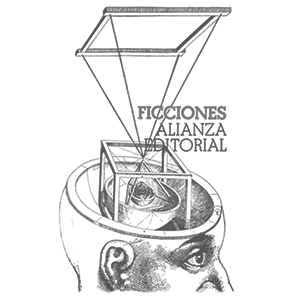
Jorge Luis Borges [bawr-hes] (1899 – 1986) was an Argentine writer whose work embraces the ‘character of unreality in all literature’; his most famous books, ‘Ficciones’ (1944) and ‘The Aleph’ (1949), are compilations of short stories interconnected by common themes such as dreams, labyrinths, libraries, mirrors, animals, fictional writers, religion, and God.
His works have contributed to the genre of science fiction and magic realism (a reaction against the realism/naturalism of the nineteenth century). In fact, critic Angel Flores, the first to use the term, set the beginning of this movement with Borges’s ‘Historia universal de la infamia’ (‘A Universal History of Infamy’) (1935). Scholars have also suggested that Borges’s progressive blindness helped him to create innovative literary symbols through imagination. His late poems dialogue with such cultural figures as Spinoza, Camões, and Virgil.
read more »
Posted in Art, Language, Politics |
Leave a Comment »
May 3, 2012
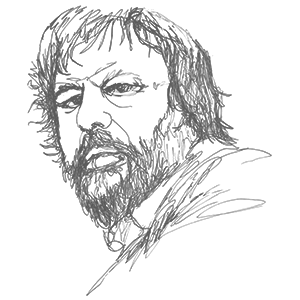
Slavoj Žižek [slah-voy zhee-zhek] (b. 1949) is a Slovenian philosopher and cultural critic working. He has made contributions to political theory, film theory and theoretical psychoanalysis. Žižek is a senior researcher at the Institute of Sociology University of Ljubljana.
Žižek uses examples from popular culture to explain the theory of Jacques Lacan and uses Lacanian psychoanalysis, Hegelian philosophy, and Marxist economic criticism to interpret and speak extensively on immediately current social phenomena, including the current ongoing global financial crisis.
read more »
Posted in Money, Philosophy, Politics |
1 Comment »
April 30, 2012

Simon Reynolds (b. 1963) is an English music critic who is well known for his writings on electronic dance music and for coining the term ‘post-rock.’ Besides electronic dance music, Reynolds has written about a wide range of artists and musical genres, and has written books on post-punk and rock. He has contributed to ‘Melody Maker’ (where he first made his name), ‘Spin,’ ‘Rolling Stone,’ ‘Mojo,’ and others. He currently resides in the East Village in NY.
Reynolds’ first experience writing about music was with ‘Monitor,’ a fanzine he helped to found in 1984 while he was studying history at Oxford. The publication only lasted for six issues. When it was discontinued in 1986, Reynolds was already making his name writing for ‘Melody Maker,’ one of the three major British music magazines of the time (the other two being the ‘New Musical Express’ (NME) and ‘Sounds’).
read more »
Posted in Art, Language, Politics |
Leave a Comment »
April 26, 2012

Clay Shirky (b. 1964) is an American writer, consultant, and teacher on the social and economic effects of Internet technologies. He has a joint appointment at NYU as a Distinguished Writer in Residence at the Arthur L. Carter Journalism Institute and Assistant Arts Professor in the New Media focused graduate Interactive Telecommunications Program (ITP). His courses address, among other things, the interrelated effects of the topology of social networks and technological networks, how our networks shape culture and vice-versa.
Shirky divides his time between consulting, teaching, and writing on the social and economic effects of Internet technologies. His consulting practice is focused on the rise of decentralized technologies such as peer-to-peer, web services, and wireless networks that provide alternatives to the wired client–server infrastructure that characterizes the World Wide Web. He is a member of the Wikimedia Foundation’s Advisory Board. In 2010, Kevin Kelly (founding executive editor of ‘Wired’ magazine) cited the phrase ‘Institutions will try to preserve the problem to which they are the solution,’ and called it the ‘Shirky Principle,’ as the phrasing reminded him of the clarity of the Peter Principle.
read more »
Posted in Language, Politics, Technology |
Leave a Comment »
April 18, 2012

Quentin Tarantino (b. 1963) is an American film director, screenwriter, producer, cinematographer, and actor. In the early 1990s, he began his career as an independent filmmaker with films employing nonlinear storylines and the aestheticization of violence.
His films include ‘Reservoir Dogs’ (1992), ‘Pulp Fiction’ (1994), ‘Jackie Brown’ (1997), ‘Kill Bill’ (2003, 2004), ‘Death Proof’ (2007), and ‘Inglourious Basterds’ (2009). His movies are generally characterized by stylistic influences from grindhouse, kung fu, and spaghetti western films. Tarantino also frequently collaborates with his friend and fellow filmmaker Robert Rodriguez.
read more »
Posted in Art |
1 Comment »
April 17, 2012

Eric Klinenberg is an American sociologist and a scholar of urban studies, culture, and media. He is best known for his contributions as a public sociologist. He is currently Professor of Sociology, Public Policy, and Media, Culture, and Communications at New York University, as well as the editor of the journal ‘Public Culture.’ Klinenberg’s first book, ‘Heat Wave: A Social Autopsy of Disaster in Chicago,’ was published by the University of Chicago Press in 2002.
It was praised as ‘trenchant, persuasive tale of slow murder by public policy.’ Klinenberg’s second book, ‘Fighting for Air: The Battle to Control America’s Media,’ was called ‘a must-read for those who wonder what happened to good radio, accurate reporting and autonomous public interest.’ Since its publication, he has testified before the FCC and briefed Congress on his findings. His latest book, ‘Going Solo: The Extraordinary Rise and Surprising Appeal of Living Alone,’ was published in 2012.
Posted in Language, Politics, Science |
Leave a Comment »
April 9, 2012

Aubrey Beardsley (1872 – 1898) was an English illustrator and author. His drawings in black ink, influenced by the style of Japanese woodcuts, emphasized the grotesque, the decadent, and the erotic.
He was a leading figure in the Aesthetic movement which also included Oscar Wilde and James A. McNeill Whistler. Beardsley’s contribution to the development of the Art Nouveau and poster styles was significant, despite the brevity of his career before his early death from tuberculosis.
read more »
Posted in Art, Sex |
Leave a Comment »


 The Daily Omnivore