December 3, 2010

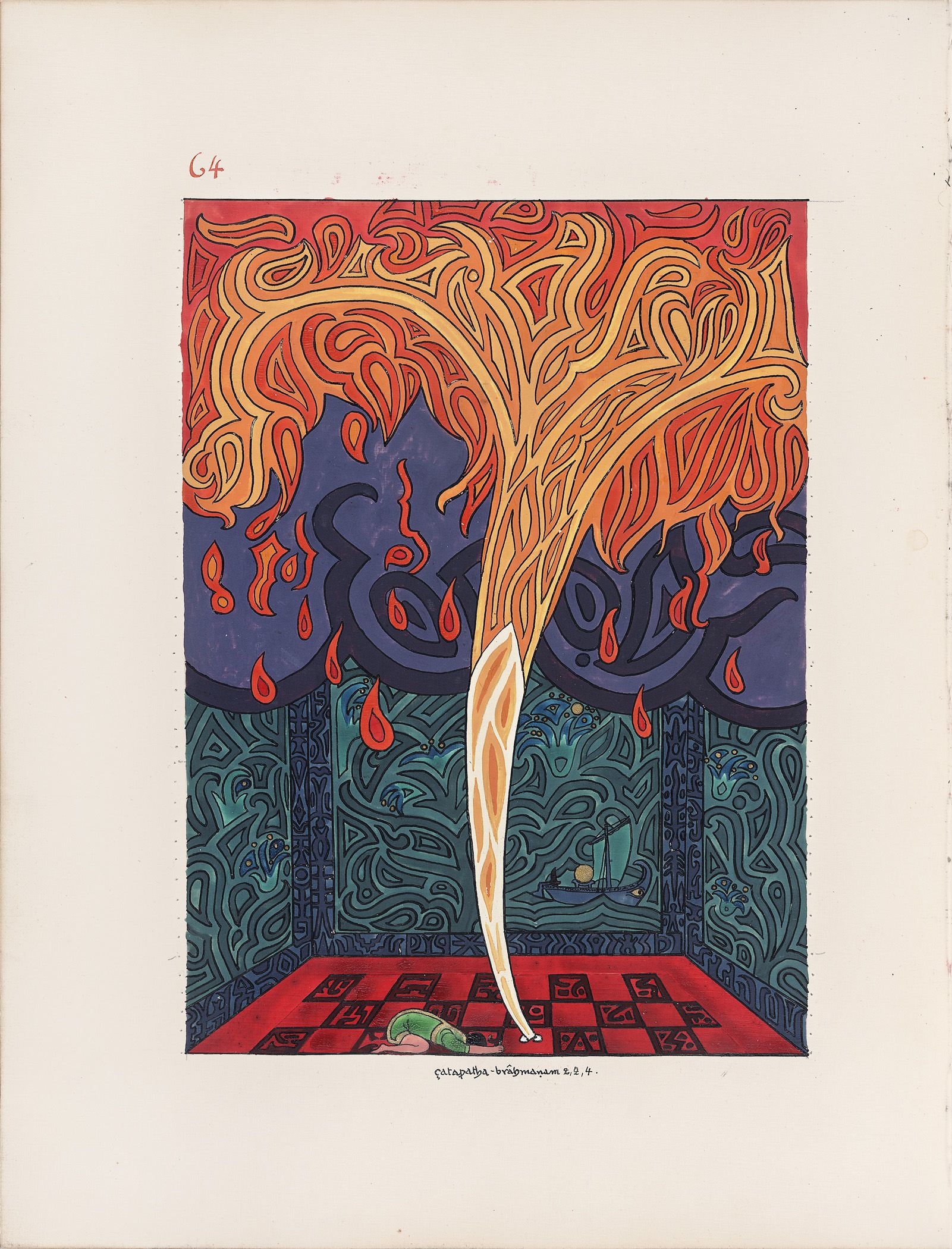
The Red Book, also known as Liber Novus (Latin for New Book), is a 205-page manuscript written and illustrated by Swiss psychiatrist Carl Gustav Jung between approximately 1914 and 1930, which was not published or shown to the public until 2009. It contain some of his most personal material, and during the sixteen years he worked on it, Jung developed his theories of archetypes, collective unconscious, and individuation. Until 2001, his heirs denied scholars access to the book.
read more »
Posted in Art, Philosophy, Science |
Leave a Comment »
December 3, 2010
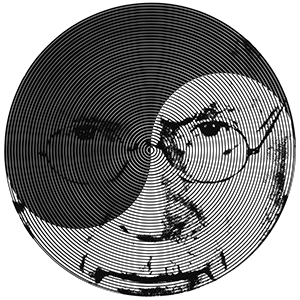
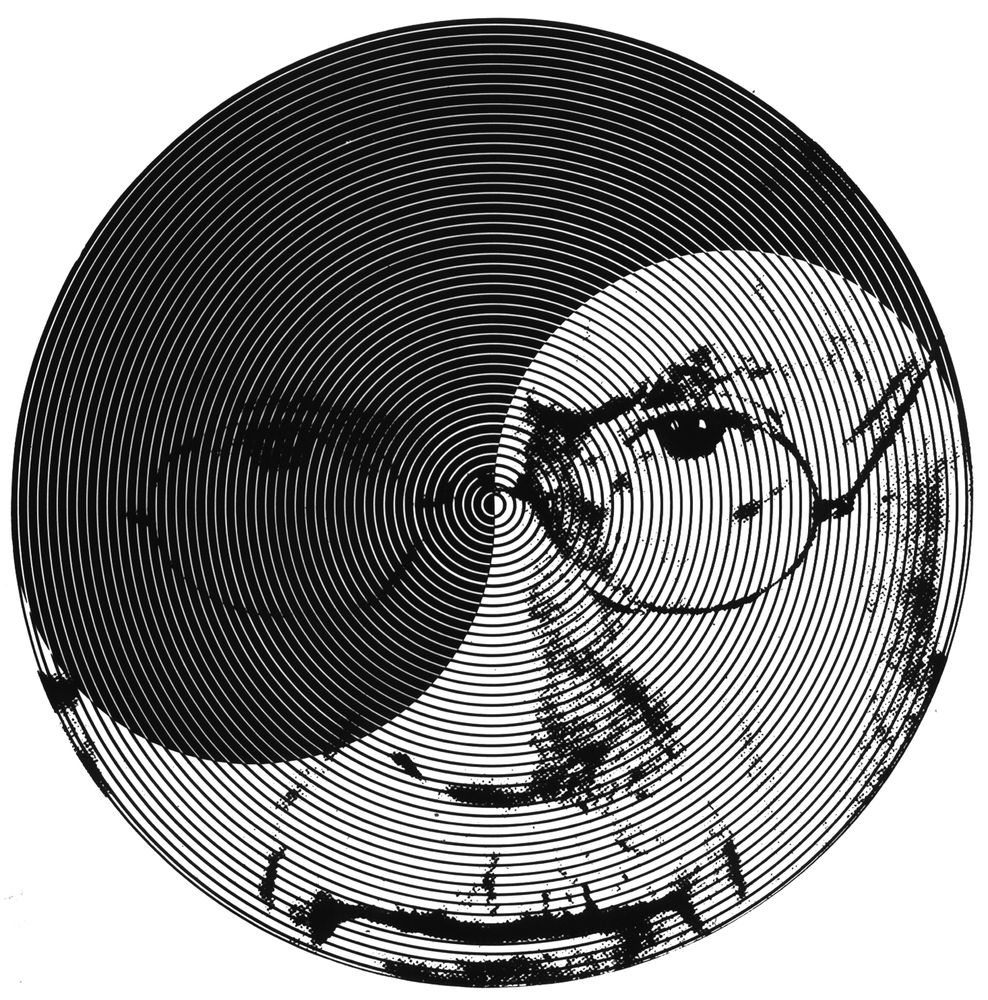
Carl Gustav Jung [yoong] (1875 – 1961) was a Swiss psychiatrist, an influential thinker, and the founder of analytical psychology. Jung is often considered the first modern psychologist to state that the human psyche is ‘by nature religious’ and to explore it in depth. Though not the first to analyze dreams, he has become perhaps one of the most well known pioneers in the field of dream analysis. Although he was a theoretical psychologist and practicing clinician, much of his life’s work was spent exploring other areas, including Eastern and Western philosophy, alchemy, astrology, sociology, as well as literature and the arts.
He considered the process of individuation necessary for a person to become whole. This is a psychological process of integrating the conscious with the unconscious while still maintaining conscious autonomy. Individuation was the central concept of analytical psychology. Many pioneering psychological concepts were originally proposed by Jung, including the Archetype, the Collective Unconscious, the Complex, and synchronicity. A popular psychometric instrument, the Myers-Briggs Type Indicator (MBTI), has been principally developed from Jung’s theories.
Posted in Health, Philosophy, Science |
Leave a Comment »
December 3, 2010

Operation Mincemeat was a successful British deception plan during World War II. As part of Operation Barclay, a plan to cover the intended invasion of Italy from North Africa, Mincemeat helped to convince the German high command that the Allies planned to invade Greece and Sardinia in 1943 instead of Sicily, the actual objective.
This was accomplished by persuading the Germans that they had, by accident, intercepted ‘top secret’ documents giving details of Allied war plans. The documents were attached to a corpse deliberately left to wash up on a beach in Punta Umbría in Spain.
read more »
Posted in Death, War |
Leave a Comment »
December 3, 2010

In 1938 American engineer, Buckminster Fuller coined the term ephemeralization to describe the increasing tendency of physical machinery to be replaced by what is now called software. It describes the ability of technological advancement to do ‘more and more with less and less until eventually you can do everything with nothing.’ Fuller’s vision was that ephemeralization will result in ever-increasing standards of living for an ever-growing population despite finite resources. The concept is a counterargument to Malthusian philosophy, where that the dangers of population growth (famine, disease, etc.) would preclude endless progress towards a utopian society.
Fuller uses Henry Ford’s assembly line as an example of how ephemeralization can continuously lead to better products at lower cost with no upper bound on productivity. Another example is found in length measurement technologies: ruler > rod > rope > telescope > radio. The technological progression is a continuing increase in length-measuring ability per pound of instrument, with no apparent upper limit according to Fuller. However, increasing system complexity and information overload make it difficult and stressful for the people who must control the ephemeralized systems. This can negate the advantages of ephemeralization.
Posted in Language, Technology |
Leave a Comment »
December 3, 2010

A QR Code is a matrix barcode (or two-dimensional code), readable by QR scanners, mobile phones with a camera, and smartphones. The code consists of black modules arranged in a square pattern on white background. The information encoded can be text, URL or other data. Common in Japan, where it was created by Toyota subsidiary Denso-Wave in 1994, the QR code is one of the most popular types of two-dimensional barcodes.
QR is the abbreviation for Quick Response, as the creator intended the code to allow its contents to be decoded at high speed. The maximum information a QR code can represent is about 4300 alphanumeric characters or just under 3 kilobytes.
Posted in Technology |
Leave a Comment »
December 3, 2010
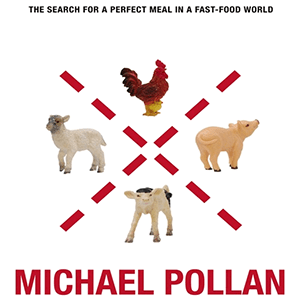
The Omnivore’s Dilemma: A Natural History of Four Meals is a nonfiction book by Michael Pollan published in 2006.
As omnivores – the most unselective eaters – humans are faced with a wide variety of food choices, resulting in a dilemma. Pollan investigates industrial food, organic food, and foraged food.
read more »
Posted in Food, Money, Politics |
Leave a Comment »
December 3, 2010

The Masters of Beef Advocacy (MBA) is an industry-funded program that trains college students to promote agribusiness. Since its launch in March 2009, the MBA has trained nearly 3,000 students and farmers to spread the ‘positive beef message.’ Daren Williams, the communications director for the National Cattlemen’s Beef Association, helped start the MBA with $240,000 from the Beef Checkoff program.
The MBA program is a self-directed online training program designed to equip beef producers and industry allies with the information they need to be everyday advocates for the beef industry. MBA candidates will be required to complete six courses in beef advocacy, including: Modern Beef Production, Animal Care, Beef Safety, Beef Nutrition, and Environmental Stewardship.
Posted in Food, Money, Politics |
Leave a Comment »
December 3, 2010

Checkoff organizations collect funds, sometimes called checkoff dollars, from producers of a particular agricultural commodity and uses these funds to promote and do research on the commodity. The organizations must promote their commodity in a generic way, without reference to a particular producer. These organizations are responsible for familiar American advertising campaigns, including ‘Milk Does a Body Good,’ ‘Got Milk?’, ‘Pork. The Other White Meat,’ ‘The Incredible, Edible Egg,’ and ‘Beef: It’s What’s for Dinner.’
read more »
Posted in Food, Money, Politics |
Leave a Comment »
December 1, 2010

Jury nullification occurs when a jury reaches a verdict contrary to the weight of evidence. Widely, it is any rendering of a verdict by a trial jury contrary to the letter of the law—that is, of an official rule, and especially a legislative enactment. Jury nullification need not disagree with the instructions by the judge—which concern what the law (common or otherwise) is—but it may rule contrary to an instruction requiring the jury to apply the law to the defendant in light of the facts in evidence.
A jury verdict contrary to the letter of the law pertains only to the particular case before it; however, if a pattern of identical verdicts develops in response to repeated attempts to prosecute a statutory offense, it can have the de facto effect of invalidating the statute. A pattern of jury nullification may indicate public opposition to an unwanted legislative enactment.
Posted in Politics |
Leave a Comment »
December 1, 2010
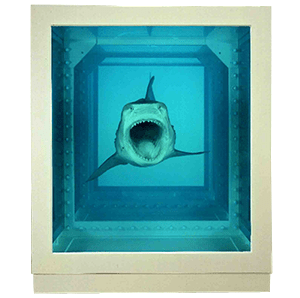

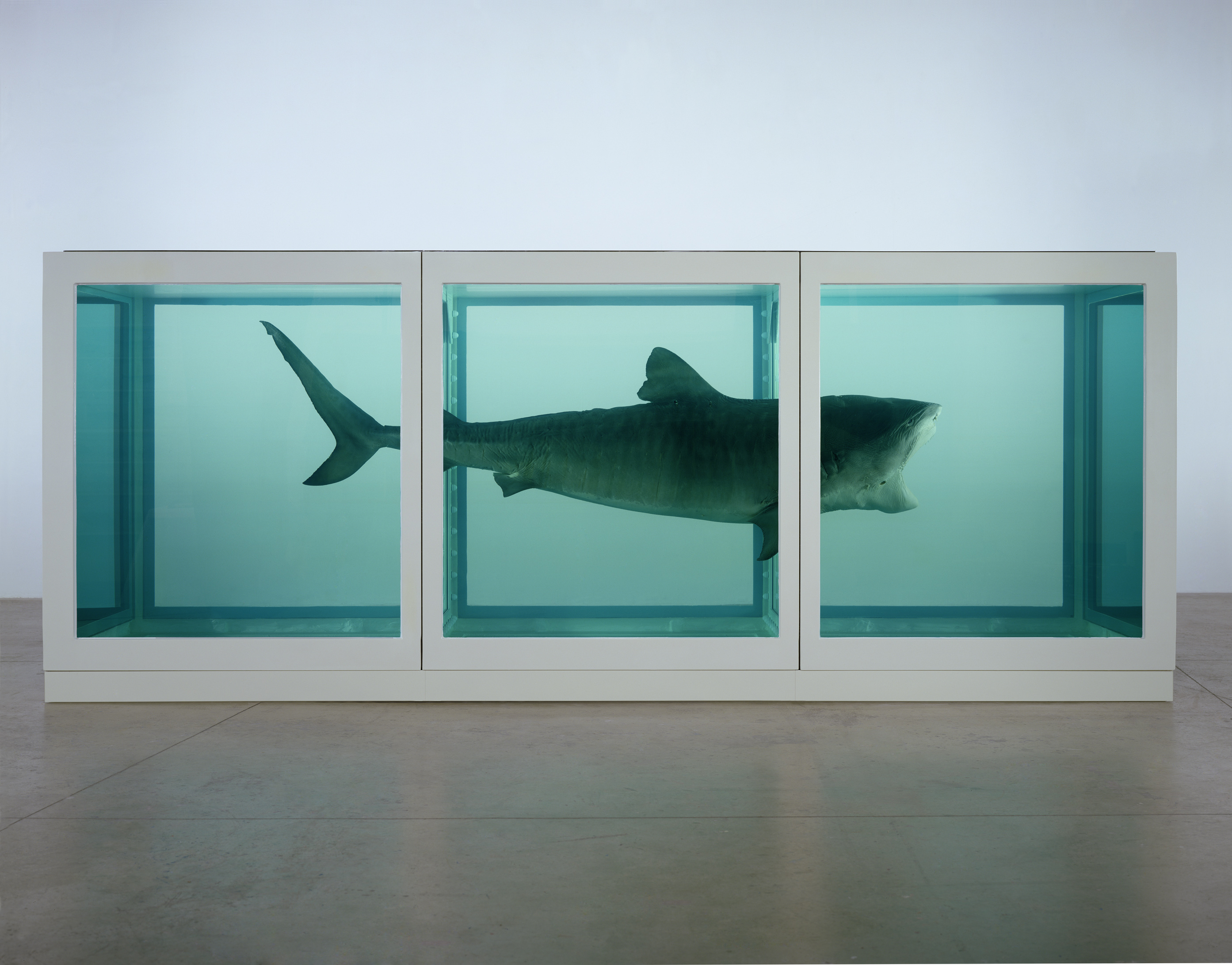
The Physical Impossibility of Death in the Mind of Someone Living is an artwork created in 1992 by Damien Hirst, an English artist and a leading member of the ‘Young British Artists’ (YBA). It consists of a tiger shark preserved in formaldehyde in a vitrine. It was originally commissioned in 1991 by Charles Saatchi, who sold it in 2004, to Steven A. Cohen for an undisclosed amount, widely reported to have been $8 – 12 million dollars.
Due to deterioration of the original 14-foot tiger shark, it was replaced with a new specimen in 2006. It is on display at the Metropolitan Museum of Art in New York City until 2010.
Posted in Art, Money |
Leave a Comment »
December 1, 2010

The Pickelhaube (from the old German pickel, ‘point’ or ‘pickaxe;’ and haube, ‘bonnet’) was a spiked helmet worn in the 19th and 20th centuries by German military, firefighters, and police. Although typically associated with the Prussian army, the helmet enjoyed wide use among uniformed occupations in the Western world. It was originally designed in 1842 by King Frederick William IV of Prussia, maybe as a copy of similar helmets that were adopted at the same time by the Russian military.It is not clear whether this was a case of imitation, or parallel invention.
Posted in Art, War, World |
Leave a Comment »
December 1, 2010

The pith helmet (also known as the safari helmet, sun helmet, topee, sola topee, salacot or topi) is a lightweight cloth-covered helmet made of cork or pith (typically pith from the sola Indian swamp growth). Designed to shade the wearer’s head and face from the sun, pith helmets were once often worn by Westerners in the tropics.
Crude forms of pith helmets had existed as early as the 1840s, but it was around 1870 that the pith helmet became popular with military personnel in Europe’s tropical colonies. The Franco-Prussian War had popularized the German Pickelhaube, which may have influenced the distinctive design of the pith helmet. Such developments may have merged with a traditional design from the Philippines, the salakot. The alternative name salacot (also written salakhoff) appears frequently in Spanish and French sources; it comes from the Tagalog word salacsac (or Salaksak).
Posted in Art, War, World |
1 Comment »




 The Daily Omnivore