March 8, 2011
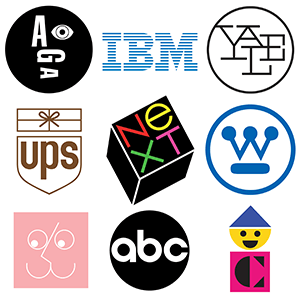

Paul Rand (1914 — 1996) was an American graphic designer, best known for his corporate logo designs, including the logos for IBM, UPS, Enron, Westinghouse, and ABC. He was one of the originators of the Swiss Style of graphic design, which emphasizes cleanliness, readability and objectivity.
read more »
Posted in Art, Money, Philosophy |
Leave a Comment »
March 8, 2011


Graphic design is the art of communication, stylizing, and problem-solving through the use of type, space, and image. Graphic design often refers to both the process (designing) by which the communication is created and the products (designs) which are generated.
Common uses of graphic design include identity (logos and branding), publications (magazines, newspapers and books), print advertisements, posters, billboards, website graphics and elements, signs and product packaging. For example, a product package might include a logo or other artwork, organized text and pure design elements such as images, shapes and color which unify the piece. Composition is one of the most important features of graphic design, especially when using pre-existing materials or diverse elements.
read more »
Posted in Art, Money, Technology |
Leave a Comment »
March 8, 2011

Saul Bass (1920 – 1996) was an American graphic designer and filmmaker, best known for his design on animated motion picture title sequences. During his 40-year career he worked for some of Hollywood’s greatest filmmakers, including most notably Alfred Hitchcock, Otto Preminger, Stanley Kubrick, and Martin Scorsese. His most famous title sequences are the animated paper cut-out of a heroin addict’s arm for Preminger’s ‘The Man with the Golden Arm,’ the text racing up and down what eventually becomes a high-angle shot of the UN building in Alfred Hitchcock’s ‘North by Northwest,’ and the disjointed text that races together and apart in ‘Psycho’ (1960).
Saul Bass designed the sixth AT&T Bell System logo. He also designed AT&T’s ‘globe’ logo after the breakup of the Bell System. Bass also designed Continental Airlines’ 1968 ‘jetstream’ logo which became the most recognized airline industry logo of the 1970s, and several other major corporate logos.
Posted in Art, Money |
Leave a Comment »
March 8, 2011

Alex Ross (b. 1970) is an American comic book artist. He is praised for his realistic, human depictions of classic comic book characters. Since the 1990s he has done work for Marvel Comics and DC Comics (e.g. Marvels and Kingdom Come, respectively), as well as being involved in creating independent works featuring superheroes (e.g. Astro City and Project Superpowers).
Because his painting style is time-consuming, he primarily serves as a plotter and/or cover artist. Ross’ rendering style, his attention to detail, and the perceived tendency of his characters to be depicted staring off into the distance has been satirized in Mad magazine.
read more »
Posted in Art, Money |
Leave a Comment »
March 8, 2011


Chip Kidd (b. 1964) is an American author and graphic designer, known for his innovative book covers. He is currently associate art director at Knopf, an imprint of Random House. He first joined the Knopf design team in 1986, as a junior assistant. Kidd also supervises graphic novels at Pantheon.
His output includes cover concepts for books by Bret Easton Ellis, Haruki Murakami, Dean Koontz, Cormac McCarthy, Frank Miller, Alex Ross, David Sedaris, John Updike and others. His design for Michael Crichton’s Jurassic Park novel was carried over into marketing for the film adaptation. Oliver Sacks and other authors have contract clauses stating that Kidd design their books. Kidd is currently working with writer Lisa Birnbach on True Prep, a follow-up to her 1980 book The Official Preppy Handbook.
Posted in Art, Language, Money |
2 Comments »
March 8, 2011


The glycemic index or GI is a measure of the effects of carbohydrates on blood sugar levels. Carbohydrates that break down quickly during digestion and release glucose rapidly into the bloodstream have a high GI; carbohydrates that break down more slowly, releasing glucose more gradually into the bloodstream, have a low GI.
The concept was developed by Dr. David J. Jenkins and colleagues in 1980 at the University of Toronto in their research to find out which foods were best for people with diabetes.
read more »
Posted in Food, Health, Science |
Leave a Comment »
March 8, 2011

Kwaito is a music genre that emerged in Johannesburg, South Africa, during the late 1990s. It is house music combined with local African sounds. Typically at a slower tempo, Kwaito often contains catchy melodic and percussive loop samples, deep bass lines, and vocals. Although bearing similarities to hip hop music, a distinctive feature of Kwaito is the manner in which the lyrics are often shouted, ‘blabbered,’ and chanted. American music producer, Diplo described Kwaito as ‘slowed-down garage music,’ popular among the black youth of South Africa.
The word kwaito riginates from the Afrikaans word kwaai, which traditionally means strict or angry, although in its more common and contemporary use, the word is a translation of the loose English term ‘cool.’ Despite the fact that the Afrikaans language is associated with the apartheid regime and racial oppression, Afrikaans words are often drawn into the indigenous vocabulary, typically reshaped and used in a related or new context.
Posted in Art, World |
Leave a Comment »
March 8, 2011
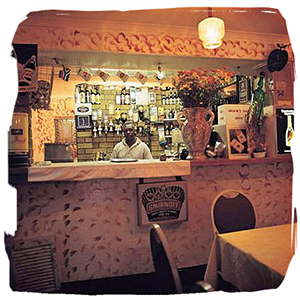
A shebeen [shuh-been] was originally an illicit bar or club where alcoholic beverages were sold without a licence. The term has spread far from its origins in Ireland, to Scotland, Canada, the US, England, Zimbabwe, the Caribbean, Namibia, and South Africa. In South Africa and Zimbabwe, shebeens are most often located in black townships as an alternative to pubs and bars, where under apartheid and the Rhodesian era, black Africans could not enter a pub or bar reserved for whites. Originally, shebeens were operated illegally, selling homebrewed and home-distilled alcohol and providing patrons with a place to meet and discuss political and social issues.
Often, patrons and owners were arrested by the police, though the shebeens were frequently reopened because of their importance in unifying the community and providing a safe place for discussion. During the apartheid era shebeens became a crucial place for activists to meet. They also provided music and dancing, allowing patrons to express themselves culturally, giving rise to the musical genre kwaito. Currently, shebeens are legal in South Africa and have become an integral part of urban culture, serving commercial beers as well as umqombothi, a traditional African beer made from maize and sorghum
Posted in Drugs, Food, World |
Leave a Comment »
March 8, 2011

Jerk is a style of cooking native to Jamaica in which meat is dry-rubbed or wet marinated with a very hot spice mixture called Jamaican jerk spice. Jerk seasoning is traditionally applied to pork and chicken. Modern recipes also apply jerk spice mixes to fish, shrimp, shellfish, beef, sausage, lamb, and tofu. Jerk seasoning principally relies upon two items: allspice (called ‘pimento’ in Jamaica) and Scotch bonnet peppers (similar in heat to the habanero pepper). Other ingredients include cloves, cinnamon, scallions, nutmeg, thyme, garlic, and salt.
The term jerk is said to come from the word ‘charqui,’ a Spanish term of Quechua origin for jerked or dried meat, which eventually became jerky in English. The term jerk spice (also often commonly known as Jamaican jerk spice) refers to a spice rub. The word jerk refers to both the spice rub and to the particular cooking technique.
read more »
Posted in Food, World |
Leave a Comment »
March 8, 2011
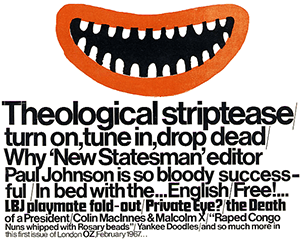
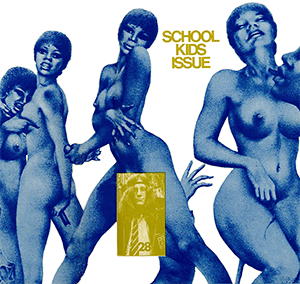
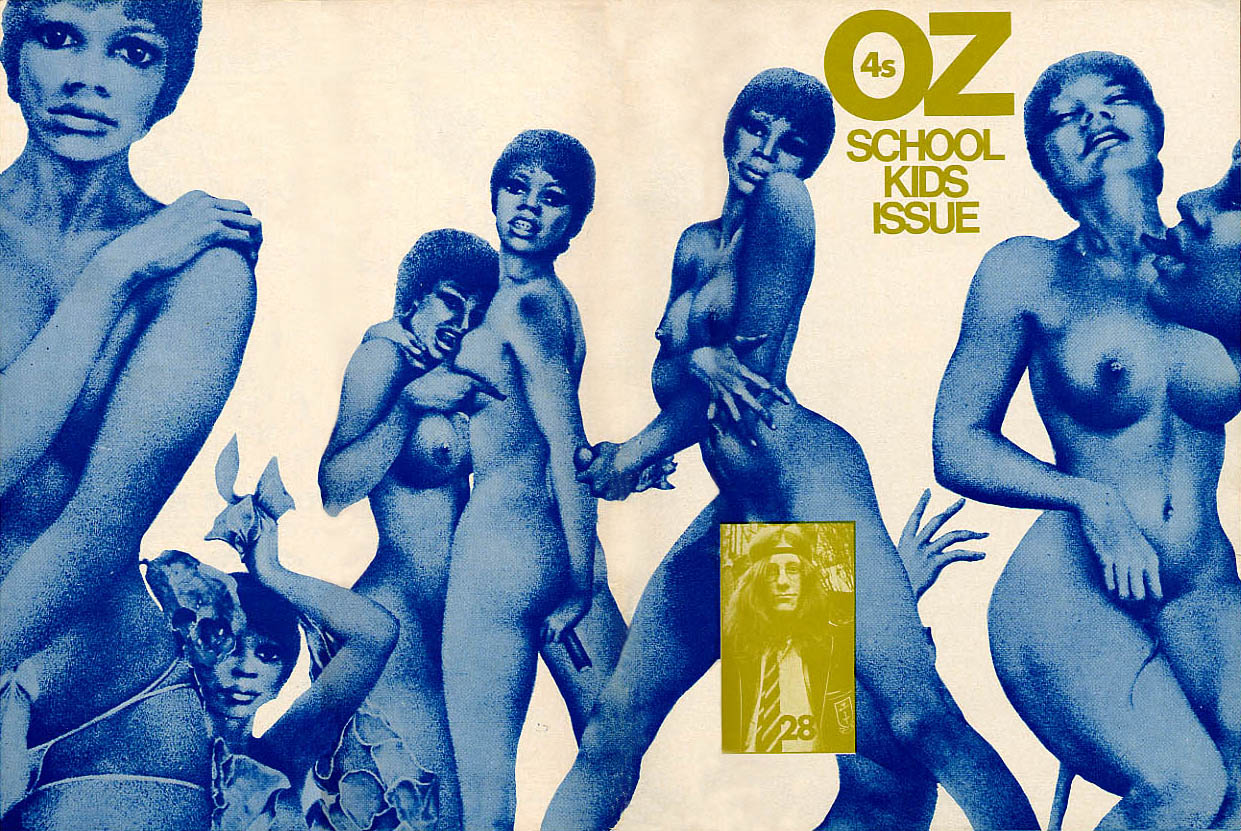
Oz was first published as a satirical humor magazine between 1963 and 1969 in Sydney, Australia and, in its second and better known incarnation, became a ‘psychedelic hippy’ magazine from 1967 to 1973 in London.
Strongly identified as part of the underground press, it was the subject of two celebrated obscenity trials, one in Australia in 1964 and the other in the UK in 1971. On both occasions the magazine’s editors were acquitted on appeal after initially being found guilty and sentenced to harsh jail terms. The central editor throughout the magazine’s life was Richard Neville.
Posted in Art, Drugs, Humor |
Leave a Comment »
March 7, 2011


Hapshash and the Coloured Coat is the name of an influential British graphic design and avant-garde musical partnership between Michael English and Nigel Waymouth, producing psychedelic posters and two albums of underground music. The silkscreen printed posters they created, advertising underground ‘happenings,’ clubs and concerts in London, became so popular at the time that they helped launch the commercial sale of posters as art, initially in fashionable stores such as the Indica Bookshop and Carnaby Street boutiques.
Their posters remain highly sought after: a poster advertising Jimi Hendrix’s 1967 concert at the Fillmore Auditorium in San Francisco, depicting the guitarist as a psychedelic Native American chief with a hunting bow in one hand and a peace pipe in the other, was valued in 2008 at $125,000. Their first album of psychedelic music, produced by a collective in early 1967 and including many famous names, is now seen as being influential on the early works of Amon Düül and other pioneers of German Krautrock, as well as inspiring sections of the Rolling Stones’ Their Satanic Majesties Request album.
Posted in Art, Drugs, Money |
Leave a Comment »
March 7, 2011

Alfons Mucha [moo-kah] (1860 – 1939) was a Czech Art Nouveau painter and decorative artist, best known for his distinct style and his images of women. He produced many paintings, illustrations, advertisements, and postcards. At the time of his death, Mucha’s style was considered outdated. Only recently has a Mucha museum appeared in Prague, run by his grandson, John Mucha.
Mucha’s work has continued to experience periodic revivals of interest for illustrators and artists. Interest in Mucha’s distinctive style experienced a strong revival in the 1960s (with a general interest in Art Nouveau) and is particularly evident in the psychedelic posters of ‘Hapshash and the Coloured Coat,’ the collective name for two British artists, Michael English and Nigel Waymouth.
Posted in Art |
5 Comments »






 The Daily Omnivore