September 7, 2011

Bowie Bonds are asset-backed securities of current and future revenues of the 25 albums (287 songs) that David Bowie recorded before 1990. Issued in 1997, the bonds were bought for US$55 million by the Prudential Insurance Company. The bonds paid an interest rate of 7.9% and had an average life of ten years. Royalties from the 25 albums generated the cash flow that secured the bonds’ interest payments. By forfeiting ten years worth of royalties, David Bowie was able to receive a payment of US$55 million up front. Bowie used this income to buy songs owned by his former manager.
The Bowie Bond issuance was perhaps the first instance of intellectual property rights securitization. The securitization of the collections of other artists, such as James Brown, Ashford & Simpson and the Isley Brothers, later followed. These Bonds are named Pullman Bonds after David Pullman, the banker who pushed the original Bowie deal. In March 2004, Moody’s Investors Service lowered the bonds from an A3 rating (the seventh highest rating) to Baa3, one notch above junk status. This downgrade was prompted by lower-than-expected revenue ‘due to weakness in sales for recorded music.’ A downgrade to an unnamed company that guarantees the issue was also cited as a reason for the downgrade. However, the success of Apple’s iTunes and other legal online music retailers has led to a renewed interest in Bowie and Pullman Bonds.
Posted in Art, Language, Money |
Leave a Comment »
September 7, 2011

Mushin (‘without mind’) is a mental state into which very highly trained martial artists are said to enter during combat. They also practice this mental state during everyday activities. The term is shortened from’ mushin no shin,’ a Zen expression meaning the mind without mind and is also referred to as the state of ‘no-mindness.’ That is, a mind not fixed or occupied by thought or emotion and thus open to everything. It is somewhat analogous to ‘flow’ experienced by artists deeply in a creative process, or athletes being ‘in the zone’ while playing a sport.
Mushin is achieved when a person’s mind is free from thoughts of anger, fear, or ego during combat or everyday life. There is an absence of discursive thought and judgment, so the person is totally free to act and react towards an opponent without hesitation and without disturbance from such thoughts. At this point, a person relies not on what they think should be the next move, but what is their trained natural reaction or what is felt intuitively. It is not a state of relaxed, near-sleepfulness, however. The mind could be said to be working at a very high speed, but with no intentions, plans or direction. In analogy a clear mind is compared to a still pond, which is able to clearly reflect the moon and trees. But just as waves in the pond will distort the picture of reality, so will the thoughts we hold onto disrupt the true perception of reality.
read more »
Posted in Language, Philosophy, War |
Leave a Comment »
September 7, 2011
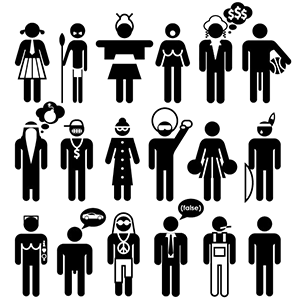
Stereotype threat is the experience of anxiety or concern in a situation where a person has the potential to confirm a negative stereotype about their social group. First described by social psychologist Claude Steele and his colleagues, stereotype threat has been shown to reduce the performance of individuals who belong to negatively stereotyped groups.
For example, stereotype threat can lower the intellectual performance of African-Americans taking the SAT reasoning test used for college entrance in the United States, due to the stereotype that African-Americans are less intelligent than other groups. Since its introduction into the scientific literature in 1995, stereotype threat has become one of the most widely studied topics in the field of social psychology.
read more »
Posted in Language, Science |
Leave a Comment »
September 7, 2011
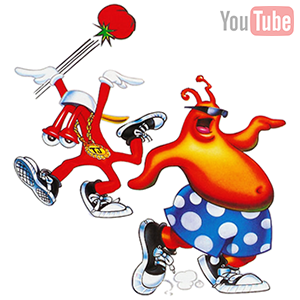
ToeJam & Earl is an action video game for the Sega Genesis (Mega Drive elsewhere). Released in 1991, it centers on the titular ToeJam and Earl—alien rappers who have crash-landed on Earth. As they attempt to escape the planet, players assume the role of either character and collect pieces of their wrecked spacecraft. ToeJam & Earl’s design was heavily influenced by the computer role-playing game Rogue, and took from it such features as the random generation of levels and items. It references and parodies 1990s urban culture and is set to a funk soundtrack. The game was positively received by critics, who praised its originality, soundtrack, humor and two-player cooperative mode. It attained sleeper hit status despite low initial sales, and its protagonists were used as mascots by Sega. Several sequels were produced for other consoles, but their commercial and critical success was mixed.
The game has been called a surreal, comic satire, and a ‘daringly misanthropic commentary on Earthly life.’ ToeJam, a red, three-legged alien, wears a large gold medallion and a backwards baseball cap, while the rotund and orange Earl is marked by high-tops and oversized sunglasses; both outfits are ‘over-the-top appropriations’ of 1990s urban culture. Their speech features California slang. The game is set to a jazz-funk and hiphop soundtrack inspired by Herbie Hancock.
read more »
Posted in Art, Games, Humor |
Leave a Comment »
September 7, 2011

Mountainboarding is a well established, if little-known extreme sport, derived from snowboarding. A mountainboard is made up of components including a deck, bindings to secure the rider to the deck, four wheels with pneumatic tires, and two steering mechanisms known as trucks.
Mountainboarders ride specifically designed boardercross tracks, slopestyle parks, grass hills, woodlands, gravel tracks, streets, skateparks, ski resorts, BMX courses and mountain bike trails. It is this ability to ride such a variety of terrain that separates mountainboarding from other board sports.
read more »
Posted in Games, Technology |
Leave a Comment »
September 7, 2011
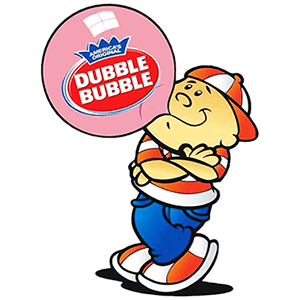
Bubblegum is a type of elastic chewing gum, designed to be blown out of the mouth as a bubble. A 23-inch bubble blown by Susan Montgomery Williams of California in 1996 holds the Guinness World Record for largest bubble blown. Bubble gum was invented by Walter Diemer in 1928. Diemer was working as an accountant for the Fleer Chewing Gum Company in Philadelphia. In his spare time, he experimented with a new gum recipes. The gum he invented was less sticky than regular chewing gum, and stretched more easily. He sold his gum under the name Dubble Bubble in 1928. Original bubble gum was pink because that was the only dye Diemer had on hand at the time.
Bubblegum is available in many different colors and flavors. ‘Bubblegum flavor’ is the taste of the plain gum, an d it is made from synthetic chemicals, such as ethyl methylphenylglycidate, isoamyl acetate and others, and fruit extracts, the true ingredients being kept a mystery to customers. When blended, the chemicals and extracts fuse together to make a sweet, palatable flavor. Other flavors also include strawberry, apple, cherry, watermelon, cinnamon, banana, and grape. Strawberry and banana can be achieved with isoamyl acetate limonene and ethyl methylphenylglycidate, respectively. Malic acid can be used for apple flavor, allyl hexanoate for pineapple, ethyl propionate for fruit punch, cinnamic aldehyde for cinnamon, and acetophenone for cherry.
Posted in Food, Money |
Leave a Comment »
September 7, 2011

The cherimoya [cher-uh-moi-uh] is a species of Annona (also known as a sugar-apple) native to the Andean-highland valleys of Peru, Ecuador, Colombia, Chile, Bolivia, and Argentina. The fruit is oval, often slightly oblate, with a smooth or slightly tuberculated skin. The fruit flesh is white and creamy, and has numerous dark brown seeds embedded in it. Mark Twain called the cherimoya ‘the most delicious fruit known to men.’
The Moche culture of Peru had a fascination with agriculture and represented fruits and vegetables in their art. Cherimoyas were often depicted in their ceramics. The name originates from the Quechua word chirimuya, which means ‘cold seeds,’ because the plant grows at high altitudes. The tree thrives throughout the tropics at altitudes of 1,300 to 2,600 m (4,300 to 8,500 ft). Though sensitive to frost, it must have periods of cool temperatures or the tree will gradually go dormant. The indigenous inhabitants of the Andes say that although the cherimoya cannot stand snow, it does like to see it in the distance.
read more »
Posted in Food, World |
1 Comment »
September 6, 2011
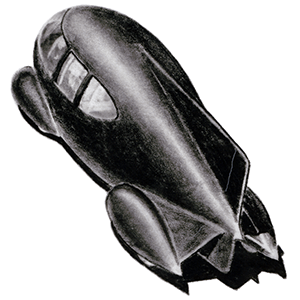
Norman Bel Geddes [bel-ged-eez] (1893 – 1958) was an American theatrical and industrial designer who focused on aerodynamics. His book ‘Horizons’ (1932) had a significant impact: ‘By popularizing streamlining when only a few engineers were considering its functional use, he made possible the design style of the thirties.’
He designed the General Motors Pavilion, known as Futurama, for the 1939 New York World’s Fair. For that famous and enormously influential installation, Bel Geddes exploited his earlier work in the same vein: he had designed a “Metropolis City of 1960′ in 1936.
read more »
Posted in Art, Technology |
Leave a Comment »
September 6, 2011
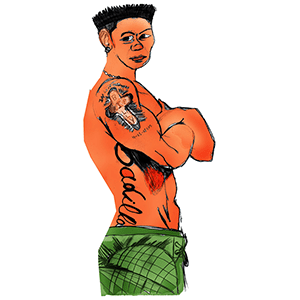
Tanning addiction is a rare syndrome where an individual appears to have a physical and/or psychological addiction to sunbathing or the use of tanning beds.In 2005, a group of dermatologists published a study showing that frequent tanners experience a loss of control over their tanning schedule, displaying a pattern of addiction similar to smokers and alcoholics. Biochemical evidence indicates that tanning addicts are addicted to an opioid release experienced during tanning. When frequent tanners took an endorphin blocker in a 2006 study, they experienced severe withdrawal symptoms, while infrequent tanners experienced no withdrawal symptoms under the same conditions.
Although the syndrome has not been officially described by the medical community, it may include the following reported symptoms: intense anxiety if a session of tanning is missed, competition among peers to see which can get the darkest tan, and chronic frustration about the color of one’s skin, with the affected person being convinced his or her complexion is constantly lighter than it actually is.
read more »
Posted in Health, Language |
1 Comment »
September 6, 2011

Slip-Slop-Slap is the name of a health campaign in Australia exhorting people to ‘slip on a shirt, slop on sunscreen, and slap on a hat’ when they go out into the sun, in order to protect themselves against an increased risk of skin cancer. ‘Seek shade’ and ‘Slide on some sunglasses’ was added a year later. It is probably Australia’s most recognizable health message. The campaign started in 1981; its mascot is a seagull called Sid. It is also used in New Zealand, where the mascot is a lobster, and some Canadian cities have also started their own Slip-Slop-Slap campaigns.
Since the campaign was introduced along with advertisements and a jingle, the incidence of the two most common forms of skin cancer (basal and squamous cell carcinoma) in Australia has decreased. However, the incidence of melanoma – the most lethal form of skin cancer – has increased. An epidimological study published in 2002 concluded that skin cancer increases could not be associated with the use of sun creams, and recommended continued use of the current campaigns as a means to reduce melanoma risk. Vitamin D deficiency has also greatly increased (which can lead to cancers, since sunblock also prevents vitamin D production in the skin. Doctors recommend spending small amounts of time in the sun without sun protection to ensure adequate production of vitamin D.
Posted in Health, Politics, World |
Leave a Comment »
September 6, 2011

Unlike sunscreen but like tanning oil, indoor tanning lotions accelerate the tanning process, by promoting the production of melanin or by increasing blood flow to the skin, thereby increasing the amount of melanin that is brought to the top layers of the skin.
Indoor tanning lotions contain no sunscreen and offer no protection from the sun.
read more »
Posted in Health, Money |
Leave a Comment »
September 6, 2011


Sunscreen (also known as sunblock) is a lotion, spray or other topical product that helps protect the skin from the sun’s ultraviolet (UV) radiation, and which reduces sunburn and other skin damage, with the goal of lowering the risk of skin cancer. However in the United States, the term suntan lotion usually means the opposite of sunscreen, and instead refers to lotion designed to moisturize and maximize UV exposure and tanning rather than block it. These are commonly called indoor tanning lotions when designed for use with tanning beds or just suntan lotion if designed for outdoor use and may or may not have SPF protection in them.
The most effective sunscreens protect against both UVB, which can cause sunburn, and UVA, which damages the skin with more long-term effects, such as premature skin aging. Most sunscreens work by containing either an organic chemical compound that absorbs ultraviolet light (such as oxybenzone) or an opaque material that reflects light (such as titanium dioxide, zinc oxide), or a combination of both. Typically, absorptive materials are referred to as chemical blocks, whereas opaque materials are mineral or physical blocks. The sun protection factor (SPF) of a sunscreen is a laboratory measure of the effectiveness of sunscreen — the higher the SPF, the more protection a sunscreen offers against UVB.
read more »
Posted in Health, Politics, Technology |
Leave a Comment »




 The Daily Omnivore