January 26, 2012

Waterloo Sunset is a song by British rock band The Kinks. It was released as a single in 1967, and featured on their album ‘Something Else by The Kinks.’ Composed and produced by Kinks frontman Ray Davies, ‘Waterloo Sunset’ is one of the band’s best known and most acclaimed songs. The lyrics describe a solitary narrator watching (or imagining) two lovers passing over a bridge, with the melancholic observer reflecting on the couple, the Thames, and Waterloo Station.
The song was rumored to have been inspired by the romance between two British celebrities of the time, actors Terence Stamp and Julie Christie. Ray Davies denied this in his autobiography, ‘It was a fantasy about my sister going off with her boyfriend to a new world and they were going to emigrate and go to another country.’
read more »
Posted in Art |
Leave a Comment »
January 26, 2012

Dr. K. Anders Ericsson is a Swedish psychologist and Professor of Psychology at Florida State University who is widely recognized as one of the world’s leading theoretical and experimental researchers on expertise. He is the co-editor of ‘The Cambridge Handbook of Expertise and Expert Performance,’ a volume released in 2006.
Dr. Ericsson’s research with Herbert Simon on verbal reports of thinking is summarized in a book ‘Protocol Analysis: Verbal Reports as Data,’ which was revised in 1993. With Bill Chase he developed the Theory of Skilled Memory based on detailed analyses of acquired exceptional memory performance. Currently he studies the cognitive structure of expert performance in domains such as music, chess and sports, and how expert performers acquire their superior performance by extended deliberate practice.
Posted in Language, Science |
Leave a Comment »
January 25, 2012

Culturomics is a form of computational lexicology that studies human behavior and cultural trends through the analysis of digitized texts. Researchers data mine large digital archives to investigate cultural phenomena reflected in language and word usage. The term is an American neologism first described in a 2010 ‘Science’ article called ‘Quantitative Analysis of Culture Using Millions of Digitized Books,’ co-authored by Harvard researchers Jean-Baptiste Michel and Erez Lieberman Aiden. Michel and Aiden helped create the Google Labs project Google Ngram Viewer which uses n-gram’s to analyze the Google Book digital library for cultural patterns in language use over time.
In another study called ‘Culturnomics 2.0,’ Kalev H. Leetaru examined news archives including print and broadcast media (television and radio transcripts) for words that imparted tone or ‘mood’ as well as geographic data. The research was able to retroactively predict the 2011 Arab Spring and successfully estimate the final location of Osama Bin Laden to within 124 miles.
Posted in Language, Science, Technology |
Leave a Comment »
January 25, 2012
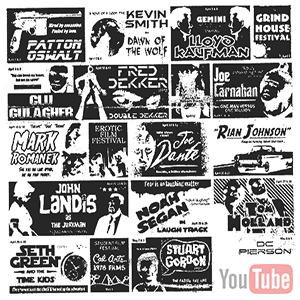
The New Beverly Cinema is a historic movie theater located in Los Angeles, California, United States. Housed in a theater which dates to the 1920s, it is one of the oldest revival houses in the region. The building began life as a vaudeville theater, hosting acts such as Dean Martin, Jerry Lewis, and Jackie Gleason.
Later, the theater was converted into a nightclub called Slapsie Maxie’s, named after the boxer and silent film actor Maxie Rosenbloom. In the late 1950’s, the space was converted into a movie theater, with several incarnations. These include: The New Yorker Theater, the Europa (specializing in foreign films), the Eros (a pornographic theater) and finally the Beverly Cinema, a grindhouse (mostly shows exploitation films, so called because they ‘exploit’ often lurid subject matter such as sex, violence, race, etc.) which incorporated live nude dancing.
read more »
Posted in Art |
Leave a Comment »
January 25, 2012

The ‘Jumpman‘ logo is used by Nike to promote its Michael Jordan-related merchandise, including the famous and successful Air Jordan brand of basketball shoes. The logo is a silhouette of a studio photograph of Jordan performing a ballet move, not an actual dunk as many believe. Beginning in 1985, the Jumpman photo or logo always accompanied ‘Jordan’ branded products, even when the only word displayed on the product was ‘Jordan.’
The Air Jordan III, released in 1988, was the first Air Jordan shoe to feature the Jumpman logo, replacing the ‘Wings’ logo, which had been a feature of the Air Jordans I and II. This model was one of the most popular ever. The Jumpman logo would retain a fairly consistent look throughout the Air Jordan line’s history, except on the Air Jordan VIII, on which it was reminiscent of a peace sign. In 1993-94, Nike ran a series of Air Jordan commercials pairing Michael Jordan with Warner Brothers’ own Bugs Bunny. As a tie-in, Nike created a line of merchandise which featured a spoof of the Jumpman using Bugs’ silhouette, combined with a “Hare Jordan” caption. This led to the film ‘Space Jam.’
Posted in Games, Money |
Leave a Comment »
January 25, 2012

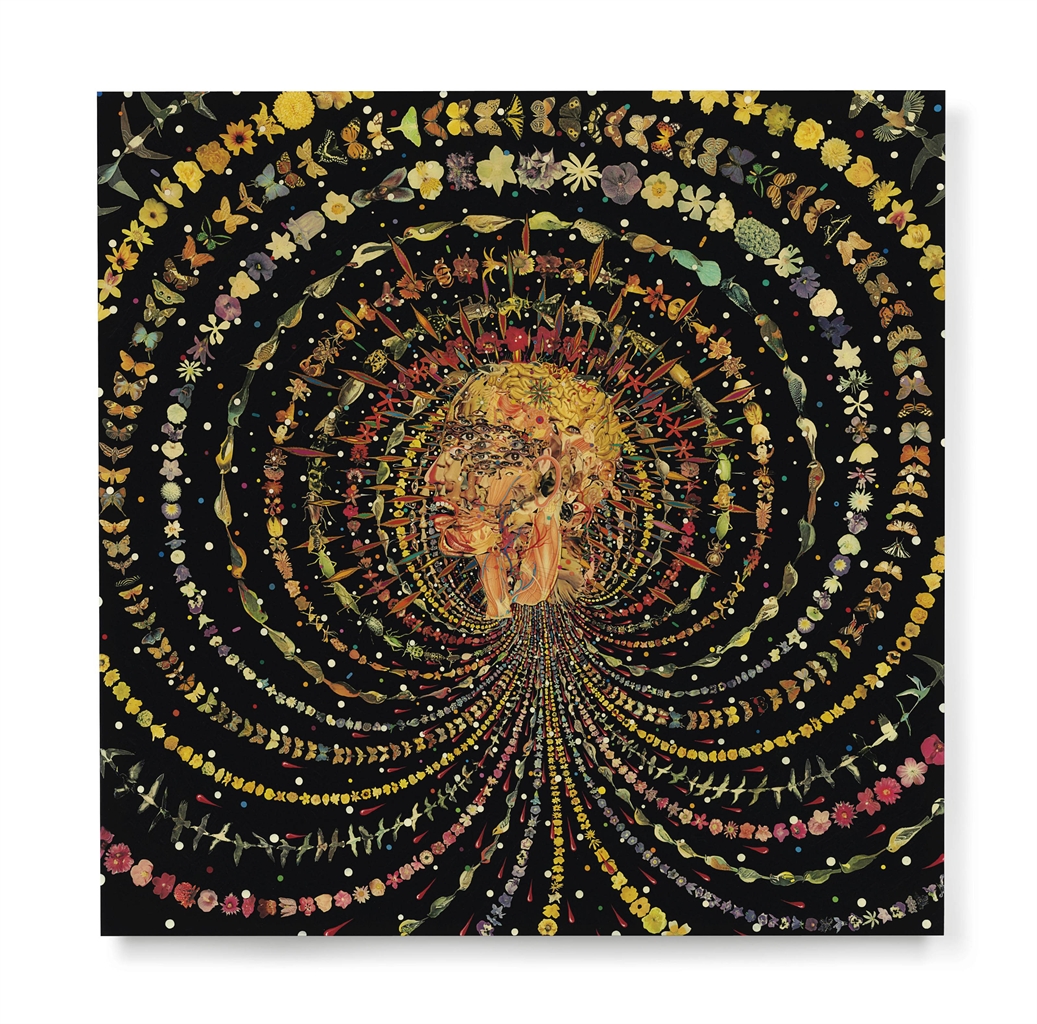
Fred Tomaselli (b. 1956) is an American artist. He is best known for his highly detailed paintings on wood panels, combining an array of unorthodox materials suspended in a thick layer of clear, epoxy resin. Tomaselli is represented by the White Cube gallery in the UK and the James Cohan Gallery in the USA.
He grew up in Orange, California. He attended and graduated from Orange High School where what he has described as ‘artificial, immersive, theme park reality’ as a normal part of everyday life. The idea of a ‘contaminated’ image – one that is Post-modern in its borrowing from both high and low culture – permeates his work.
read more »
Posted in Art |
Leave a Comment »
January 24, 2012


Americans for a Better Tomorrow, Tomorrow (also known as the Colbert Super PAC) is a United States political action committee (PAC) established by Stephen Colbert, who portrays a conservative political pundit on the television series ‘The Colbert Report.’ As a super PAC the organization can raise unlimited sums of money from corporations, unions and other groups, as well as wealthy individuals. Speaking in character, Colbert said the money will be raised not only for political ads, but also ‘normal administrative expenses, including but not limited to, luxury hotel stays, private jet travel, and PAC mementos from Saks Fifth Avenue and Neiman Marcus.’
During the January 12, 2012 episode of The Colbert Report, Colbert announced his plans to form an exploratory committee to lay the groundwork for his possible candidacy for ‘President of the United States of South Carolina.’ In the process, he transferred control of the Super PAC to Jon Stewart, renaming it The Definitely Not Coordinating With Stephen Colbert Super PAC.
read more »
Posted in Humor, Money, Politics |
Leave a Comment »
January 24, 2012


The 2010 midterm election marked the rise of a new political committee, dubbed ‘super PACs,’ and officially known as ‘independent-expenditure only committees,’ which can raise unlimited sums from corporations, unions and other groups, as well as individuals.
The super PACs were made possible by two judicial decisions. The first was the U.S. Supreme Court decision in Citizens United v. Federal Election Commission which held that government may not prohibit unions and corporations from making independent expenditures about politics. Soon after, in Speechnow.org v. FEC, the Federal Court of Appeals for the D.C. Circuit held that contributions to groups that only make independent expenditures could not be limited.
read more »
Posted in Money, Politics |
Leave a Comment »
January 24, 2012
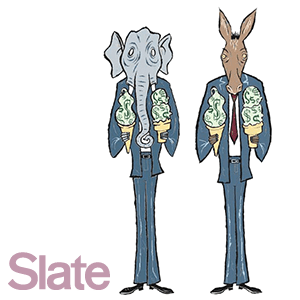
Political money in the United States is often divided into two categories, ‘hard’ money and ‘soft’ money. ‘Hard’ money is contributed directly to a candidate of a political party. It is regulated by law in both source and amount, and monitored by the Federal Election Commission (maximum $2500). ‘Soft’ money is contributed to the political party as a whole. Historically, ‘soft money’ referred to contributions made to political parties for purposes of party building and other activities not directly related to the election of specific candidates. Because these contributions were not used for specific candidate advocacy, they were not regulated by the Federal Election Campaign Act, as interpreted by the Supreme Court in Buckley v. Valeo. The Bipartisan Campaign Reform Act of 2002 (also known as McCain-Feingold) prohibited unregulated contributions to national party committees.
‘Soft money’ also refers to unlimited contributions to organizations and committees other than candidate campaigns and political parties (except, where legal, to state and local parties for use solely in state and local races). Organizations which receive ‘Soft money’ contributions are often called ‘527s,’ for the section of the tax code under which they operate. The term is generally used to refer to independent, nonprofit political organizations that are not regulated by the FEC or by a state elections commission, and are not subject to the same contribution limits as PACs. Such organizations can legally engage in political activity, but funds from ‘soft money’ contributions may not be spent on ads promoting the election or defeat of a specific candidate.
Posted in Money, Politics |
Leave a Comment »
January 24, 2012

A bait car, also called a decoy car, is a vehicle used by law enforcement agencies to capture car thieves. The vehicles are modified, with features including GPS tracking and audio/video surveillance technology, and can be remotely monitored and controlled. A ‘kill switch’ may be installed in the vehicle allowing police to remotely disable the engine and lock all doors from the inside, preventing escape.
The bait car, often filled with valuable items to draw attention to it, is parked in a high auto-theft area. In some cases, the vehicle may be simply left unlocked with the keys in the ignition. When the car is stolen, officers are immediately alerted, and can monitor the vehicle and send commands to control it such as disabling the engine, locking the doors or honking the horn. Live audio/video streaming devices may be installed allowing law enforcement personnel to determine how many suspects are in the car, what they are planning and if they are armed.
Posted in Money, Politics, Technology |
Leave a Comment »
January 24, 2012

GAMAGO is a company that was started in 2001 by Greg Long and Chris Edmundson. The pair began silkscreening t-shirts with artwork from their friends in Long’s San Francisco garage. They wanted to help promote the San Francisco art scene and distract from their day jobs. Shortly after starting, one of Long’s friends, artist Tim Biskup joined them, and printed shirts with Biskup’s Gama-Goon character.
The three of them together took the basement hobby and turned it into a company. In 2006, Tim Biskup ceased his creative involvement with the company. In 2006, GAMAGO shifted their focus from apparel to gifts for the home and kitchen. 2009 saw the release of The Flipper, a guitar shaped spatula. The success of The Flipper.
Posted in Art, Money |
Leave a Comment »
January 24, 2012

Tim Biskup (b. 1967) is an American artist generally considered to be a part of the group that has been dubbed ‘lowbrow’ or pop surrealism. His free-spirited style recalls 1950s storybook illustration, with bright colors and whimsical shapes unrestricted by the black outlining typically used in character design.
He works with playful and vibrant psychedelic imagery in the pop-design genre that emerged in the late 20th century through such diverse media as silkscreening, textile production, and rotocast vinyl. He is also a significant contributor to the ‘GAMA-GO’ clothing line. However, Tim has stated on his website that he has ceased involvement with the company. Tim works closely with ex wife Seonna Hong, with whom he has a daughter named Tigerlily.
Posted in Art |
Leave a Comment »


 The Daily Omnivore