February 6, 2012
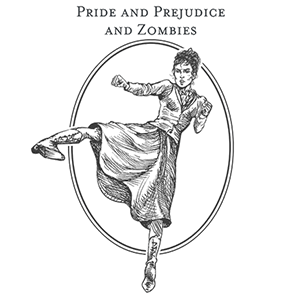
A mashup novel is a work of fiction which combines a pre-existing text, often a classic work of fiction, with a certain popular genre such as vampire or zombie narratives. ‘Pride and Prejudice and Zombies,’ which combines Jane Austen’s classic novel ‘Pride and Prejudice’ with elements of modern zombie fiction, is arguably the first, and certainly one of the most famous and successful works in the genre, and has been credited with spawning a rash of imitations. The term ‘Mashup’ was borrowed from the world of computers and music. Mashup books are seen as distinct from parody novels like ‘Bored of the Rings,’ and parallel novels like ‘The Wind Done Gone’ or ‘Wicked’ since they do not merely make fun of the original text, or tell an alternative version of it, but also introduce the themes and characteristics of a wholly different genre.
While most works in this genre (or cross-genre trend) rely on fictional texts as their basis, other works like ‘Abraham Lincoln, Vampire Hunter’ superimpose the popular genres over historical figures and events. A more recent phenomenon within the genre is the combination of more than two original works, or genres, as in the case of ‘Robinson Crusoe (The Eerie Adventures of the Lycanthrope),’ which combines the original novel with elements borrowed from the works of H.P. Lovecraft as well as the popular genre of werewolf fiction, and is accordingly attributed to three authors – Daniel Defoe, H.P. Lovecraft, and Peter Clines.
Posted in Art, Humor, Language |
Leave a Comment »
February 6, 2012
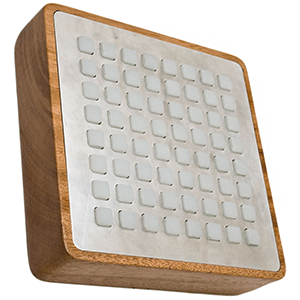
Monome is a family of interface devices for computers made by a Pennsylvania company of the same name. Despite being produced irregularly in small quantities since its introduction in 2006, the Monome button-grid controller has had a significant impact on electronic music. Together with the physically similar Yamaha Tenori-On, which was released a year later in 2007, the monome inspired interest in minimalist, grid-based music controllers. That interest spawned hobbyist projects like the Arduinome and commercial products like the Akai APC40 and the Novation Launchpad. The Monome has a minimalist design. It is simply a box with no letters or labels. There are random buttons that are back-lit. The box that holds the monome is entirely made up of timber, usually walnut. Notable users include deadmau5, Flying Lotus, Daedelus, and Nine Inch Nails contributor Alessandro Cortini.
Monome devices do not produce any sound on their own; they must be connected to a computer. A core design principle of the Monome is that it is not intended for any one specific application — the function of each button and the decision as to which lights are lit are completely up to the software communicating with the device over the Open Sound Control protocol. Several models have been produced, with typical sizes ranging from 64 to 256 buttons — plus a very limited run of 512-button devices. Monome applications span a wide variety of capabilities. Several applications provide sample sequencing capabilities. One such application is MLR, an application that allows for live sequencing and re-cutting of samples. There are also many applications that allow for synthesis either via their own internal synthesizers or by sending MIDI/OSC messages to external synthesizers.
Posted in Art, Money, Technology |
Leave a Comment »
February 6, 2012

Hugo Leclercq (b. 1994), known by his stage name Madeon, is a French electropop producer. He started composing music at the age of 11, and adopted a nu-disco style under the name Madeon in 2010. In the fall of that year, he gained popularity for his award-winning remix of ‘The Island’ by Pendulum.
In the summer of 2011, a YouTube video of his live mashup ‘Pop Culture’ went viral, which combines 39 pop hits into one song. He is known to use Novation’s Launchpad, a MIDI controlled monome, and FL Studio (FruityLoops).
Posted in Art, Technology |
Leave a Comment »
February 5, 2012

Parachuting Rat is an artwork in Melbourne, Australia created by Banksy in 2003. In 2010 it was painted over by council contractors, leading to local and international coverage and debate on the nature of street art and its preservation, and new measures for its protection. Parachuting Rat is a purple rat with aviator glasses descending by parachute. Banksy’s oeuvre is largely directed towards anti-capitalist and anti-war themes.
Banksy’s work is described as distinctive in style, satirical, and provocative. Banksy himself has written, in connection with his works involving rats, ‘they exist without permission. They are hated, hunted and persecuted … if you are dirty, insignificant and unloved then rats are the ultimate role model’; that ‘you can win the rat race but you’re still a rat’; and also that he had been painting rats for three years before someone told him that the word is an anagram of art.
read more »
Posted in Art, Money, Politics |
3 Comments »
February 5, 2012
King Robbo is an English underground graffiti artist who became more widely known following a graffiti war with Banksy. Robbo painted his first train in 1985 and the ‘Merry Christmas’ train of 1988, a joint piece created with ‘Drax WD,’ received coverage in the British media.
His feud with Banksy burnished Robbo’s profile and he entered the commercial art world with a number of gallery shows and commissions in 2010. In 1985 King Robbo painted a large full color graffiti piece called ‘Robbo Incorporated’ on a wall beside Regent’s Canal in London which was only accessible by water. Over the years it became degraded with a few small pieces of graffiti over the top.
read more »
Posted in Art, Money |
Leave a Comment »
February 4, 2012
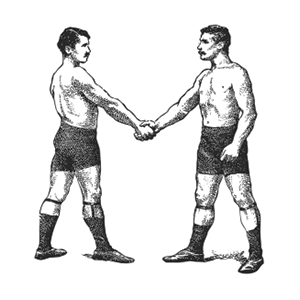
A gentlemen’s agreement is an informal agreement between two or more parties. It is typically oral, though may be written, or simply understood as part of an unspoken agreement by convention or through mutually beneficial etiquette.
The essence of a gentlemen’s agreement is that it relies upon the honor of the parties for its fulfillment, rather than being in any way enforceable. It is, therefore, distinct from a legal agreement or contract, which can be enforced if necessary. A variation on the gentlemen’s agreement is the gentlemen’s bet, wherein there is nothing to win or lose through the bet, other than the honor of winning and shame of losing.
read more »
Posted in Language, Money, Politics |
Leave a Comment »
February 4, 2012
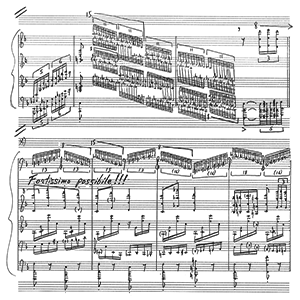
Circus Galop is a piece for player piano written by Marc-André Hamelin. It was composed between 1991 and 1994 and it is dedicated to Beatrix and Jürgen Hocker, piano roll makers. Its duration is approximately 4–5 minutes. Scores of this piece are available through the Sorabji Archive. Piano rolls of this piece are available from Wolfgang Heisig and Jürgen Hocker, who have recorded all three of Hamelin’s player piano pieces on the MDG label, which were released in 2008.
It is impossible for a single human to play, as at some points all the piano staves are played at the same time, and up to 21 notes simultaneously. It is used to test MIDI software to drive it to its maximum potential, such as Synthesia, or PianoMIDI.
Posted in Art, Technology |
Leave a Comment »
February 4, 2012

Zugzwang [tsook-tsvahng] (German: ‘compulsion to move’) is a term usually used in chess which also applies to various other games. The term finds its formal definition in combinatorial game theory, and it describes a situation where one player is put at a disadvantage because he has to make a move when he would prefer to pass and make no move. The fact that the player must make a move means that his position will be significantly weaker than the hypothetical one in which it was his opponent’s turn to move.
In game theory, it specifically means that it directly changes the outcome of the game from a win to a loss. The term is used less precisely in games such as chess. For instance, it may be defined loosely as ‘a player to move cannot do anything without making an important concession.’ Putting the opponent in zugzwang is a common way to help the superior side win a game.
Posted in Games |
Leave a Comment »
February 3, 2012
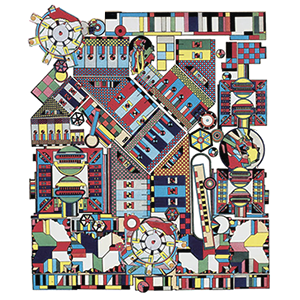
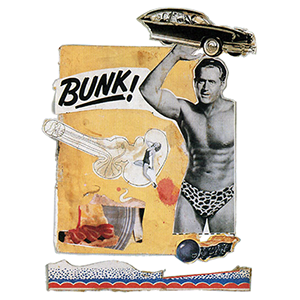
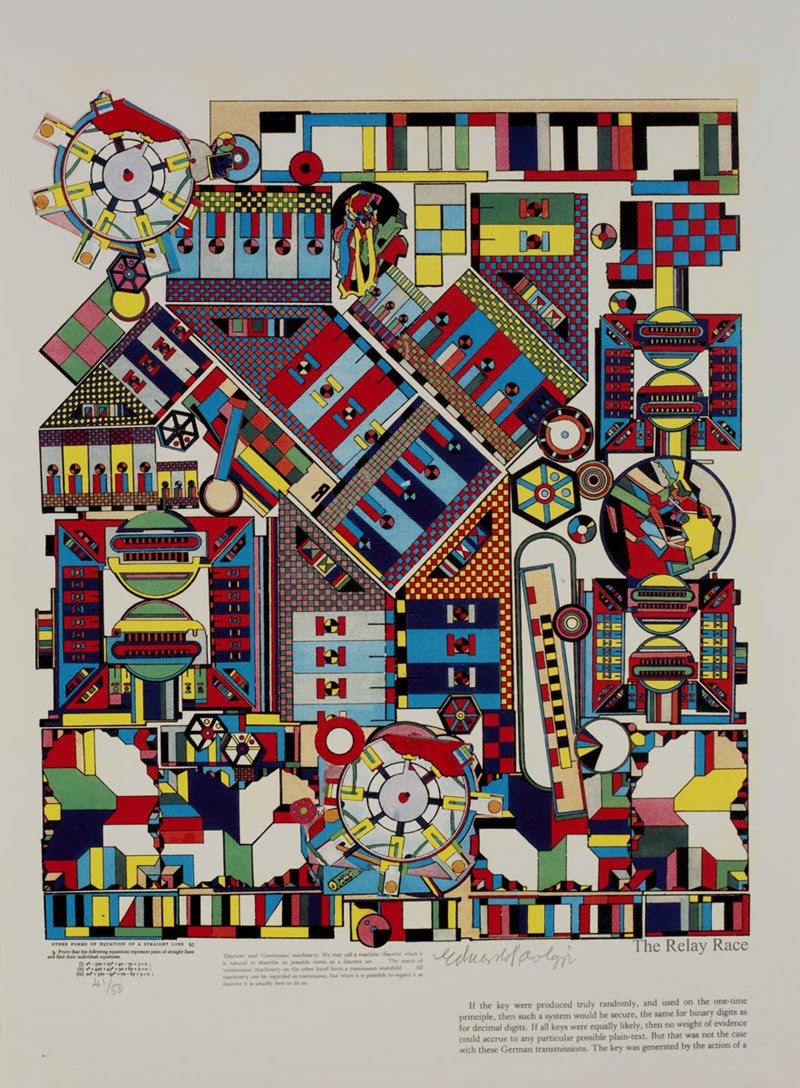
Eduardo Paolozzi [pow-laz-zi] (1924 – 2005), was a Scottish sculptor and artist. Paolozzi investigated how we can fit into the modern world to resemble our fragmented civilization through imagination and fantasy. By the dramatic juxtaposition of ideas in his work, he let us see the confusion as well as the inspiration. Paolozzi’s ‘I was a Rich Man’s Plaything’ (1947) is considered the first standard bearer of Pop Art and first to display the word ‘pop.’ Paolozzi showed the collage in 1952 as part of his groundbreaking ‘Bunk!’ series presentation at the initial Independent Group meeting in London.
He established his first studio in Chelsea, London; a workshop filled with hundreds of found objects, models, sculptures, materials, tools, toys and stacks of books. Paolozzi was interested in everything and would use a variety of objects and materials in his work, particularly his collages. He came to public attention in the 1950s by producing a range of striking screenprints and ‘Art Brut’ sculpture. Paolozzi was a founder of the Independent Group in 1952, which is regarded as the precursor to the mid 1950s British and late 1950s American Pop Art movements.
Posted in Art |
Leave a Comment »
February 3, 2012
The Independent Group (IG) met at the Institute of Contemporary Arts (ICA, an artistic and cultural center on The Mall in London). The IG consisted of painters, sculptors, architects, writers, and critics who wanted to challenge prevailing modernist approaches to culture. They introduced mass culture into debates about high culture, re-evaluated modernism and created the ‘as found’ or ‘found object’ aesthetic. Currently the subject of renewed interest in our post disciplinary age, the IG was the topic of a two-day, international conference at the Tate Britain in 2007. The Independent Group is regarded as the precursor to the Pop Art movement in Britain and the United States.
The Independent Group had its first meeting early in 1952 which consisted of artist and sculptor Eduardo Paolozzi feeding a mass of colorful images from American magazines through an epidiascope (early image projector). These images, composed of advertising, comic strips and assorted graphics, were collected when Paolozzi was resident in Paris from 1947-49. Much of the material was assembled as scrapbook collages and formed the basis of his ‘BUNK!’ series of screenprints (1972) and the ‘Krazy Kat’ Archives now held at the V & A Museum. In fact, Paolozzi’s seminal 1947 collage ‘I was a Rich Man’s Plaything was the first such ‘found object’ material to contain the word ‘pop’ and is considered the initial standard bearer of ‘Pop Art.”
Posted in Art, World |
Leave a Comment »
February 3, 2012
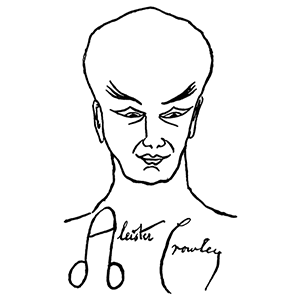
Eroto-comatose lucidity is a technique of sex magic known best by its formulation by English author and occultist Aleister Crowley, but which has several variations and is used in a number of ways by different spiritual communities.
A common form of the ritual uses repeated sexual stimulation (but not to orgasm) to place the individual in a state between full sleep and full wakefulness as well as exhaustion, allowing the practitioner to commune with their god. The rite may end in one of two ways. The ritualist may simply sink into total sleep. Or they may achieve orgasm and then sink into a deep and ‘undisturbable’ sleep.
Posted in Philosophy, Sex |
2 Comments »
February 3, 2012

Erotic sexual denial is a practice in which a heightened state of sexual arousal is maintained for an extended length of time without orgasm, and is commonly practiced in association with BDSM and sexual bondage. Erotic sexual denial can be another name for or variant of orgasm control.
Erotic sexual denial is a form of sexual play. One form of erotic sexual denial is the reduction or deprivation of all genital stimulation. To ensure a complete absence of genital stimulation, a chastity device may be used as a physical barrier to genital touch and/or full erection.
read more »
Posted in Sex |
Leave a Comment »



 The Daily Omnivore