March 5, 2012
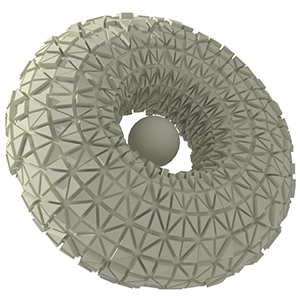
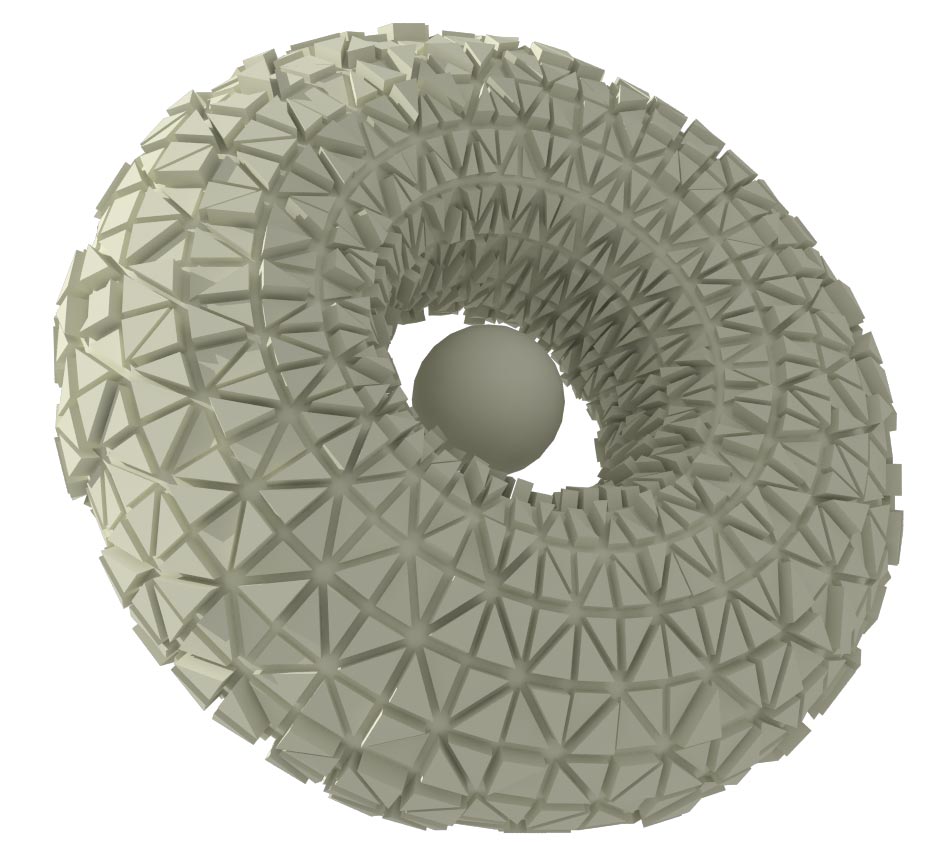
A greeble or nurnie is a small piece of detailing added to break up the surface of an object to add visual interest to a surface or object, particularly in movie special effects. They serve no real purpose other than to add complexity to the object, and cause the flow of the eye over the surface of the object to be interrupted, usually giving the impression of increased size. It is essentially the small detailed technical part of a larger object. The detail can be made from geometric primitives, including cylinders, cubes, and rectangles, combined to create intricate, but meaningless, surface detail.
Greebles are commonly found on models or drawings of fictional spacecraft in science fiction. The earliest recorded use of the term ‘greeble’ found to date was by those working on the special effects for ‘Star Wars’ — the group who would later become Industrial Light and Magic. They also described this design method as ‘guts on the outside.’ Ron Thornton is widely believed to have coined the term ‘nurnies’ referring to CGI technical detail that his company Foundation Imaging produced for the ‘Babylon 5’ series.
read more »
Posted in Art, Language, Technology |
Leave a Comment »
March 5, 2012
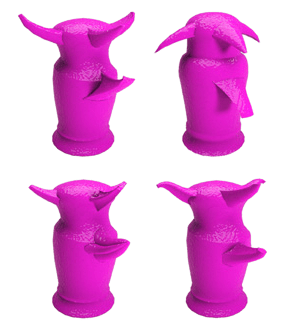
The Greebles refers to a category of novel objects used as stimuli in psychological studies of object and face recognition, created by Scott Yu at Yale University. They were named by the psychologist Robert Abelson. The greebles were created for Isabel Gauthier’s dissertation work at Yale, so as to share constraints with faces: they have a small number of parts in a common configuration.
This makes it difficult to distinguish any individual object on the basis of the presence of a feature, and this is thought to encourage the use of all features and the relationships between them. In other words, greebles, just like faces, can be processed configurally. Yu’s originals (both the symmetrical and asymmetrical sets) can be obtained from Michael Tarr.[1] Greebles appear in over 25 scientific articles.
Posted in Health, Science, Technology |
Leave a Comment »
March 5, 2012

PJ B Hancock and C Foster investigate the double face illusion, where the eyes and mouth are duplicated. On an identification task for briefly (80ms) presented faces, there are strong individual differences: doubling has little effect for the majority, but inhibits recognition for about a quarter of participants. A second experiment shows that some participants are unable to detect face doubling at this speed, while others are 100% correct at 50 ms.
Unlike the Thatcher illusion, a doubled face is still obvious when inverted, but it is less unsettling to look at and a third study found that participants were about 35 ms faster to decide that a face has been doubled when it is inverted. A final experiment tested visual search for normal and doubled faces; neither pops out from the other and the search time per item is again about 35 ms longer for double faces.
Posted in Science |
Leave a Comment »
March 4, 2012
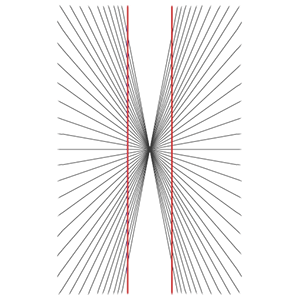
Researcher Mark Changizi of Rensselaer Polytechnic Institute in New York has a more imaginative take on optical illusions, saying that they are due to a neural lag which most humans experience while awake. When light hits the retina, about one-tenth of a second goes by before the brain translates the signal into a visual perception of the world. Scientists have known of the lag, yet they have debated how humans compensate, with some proposing that our motor system somehow modifies our movements to offset the delay.
Changizi asserts that the human visual system has evolved to compensate for neural delays by generating images of what will occur one-tenth of a second into the future. This foresight enables humans to react to events in the present, enabling humans to perform reflexive acts like catching a fly ball and to maneuver smoothly through a crowd. Illusions occur when our brains attempt to perceive the future, and those perceptions don’t match reality.
read more »
Posted in Science |
Leave a Comment »
March 3, 2012

In fiction, an antihero is generally considered to be a protagonist whose character is contrary to that of the archetypal hero, yet typically retains many heroic qualities. Some consider the word’s meaning to be sufficiently broad as to additionally encompass an antagonist who, in contrast to the archetypal villain, elicits considerable sympathy or admiration.
The antihero has evolved over time, changing as society’s conceptions of the hero changed, from the Elizabethan times of Faust and William Shakespeare’s Falstaff, to the darker-themed Victorian literature of the 19th century, such as John Gay’s ‘The Beggar’s Opera’ or as a timid, passive, indecisive man that contrasts sharply with other Greek heroes to Philip Meadows Taylor’s ‘Confessions of a Thug.’ The Byronic hero also sets a literary precedent for the modern concept of antiheroism.
read more »
Posted in Art |
Leave a Comment »
March 2, 2012


Corinthian leather is a term coined by the advertising agency Bozell to describe the upholstery used in certain Chrysler luxury vehicles beginning in 1974. Although the term suggests that the product has a relationship to or origination from Corinth, Greece, there is no relationship; the term is a marketing concept. Some sources say it was a blend of leather and vinyl (seat surfaces were leather and seat sides were vinyl), while other sources say it was simply a trade name for American produced leather, much of which was produced at a plant outside Newark, New Jersey.
The term was first used during the marketing campaign of the 1974 Chrysler Imperial, but the it is usually associated with the marketing campaign for the 1975 Chrysler Cordoba and that campaign’s celebrity spokesperson, Ricardo Montalban, who described the car’s seats as being covered with ‘soft Corinthian leather.’
Posted in Humor, Money, World |
Leave a Comment »
March 1, 2012
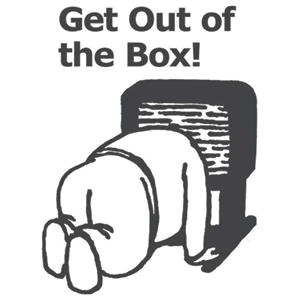
White Dot is an anti-television organization based in the UK. It encourages people to not watch television, and also to switch off televisions in cafés and pubs with devices such as the TV-B-Gone. It also organizes what it calls zocalo (a Mexican term for a town square) events where people are requested to turn off their televisions, go outside and talk to their neighbors.
The organization is named after the white dot that appeared in the middle of old CRT television screens when switched off—as the capacitors discharged, the cathode ray would continue to emit electrons although no longer being controlled horizontally or vertically.
Posted in Politics, Technology, World |
1 Comment »
March 1, 2012
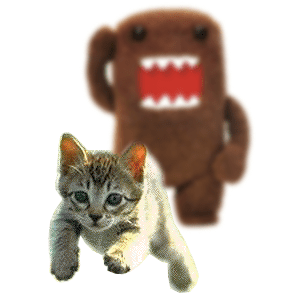
‘Every time you masturbate… God kills a kitten‘ is the caption of an image created by a member of the website Fark.com in 2002. The image features a kitten (subsequently referred to as ‘Cliché Kitty’) being chased by two Domos (a Japanese TV mascot), and has the tagline ‘Please, think of the kittens.’ This phony PSA is quite out of character with Domo’s image in Japan.
The phrase originally appeared as the headline ‘Fact: Every Time You Masturbate, God Kills a Kitten. How Many More Have to Die?’ with a kitten photo on the cover of ‘The Gonzo,’ a satirical publication produced by students at Georgetown University, in 1996.
Posted in Humor, Sex |
Leave a Comment »
March 1, 2012

The Masturbate-a-thon is an event in which participants masturbate in order to raise money for charity and increase the public awareness and dispel the shame and taboos that exist about this form of sexual activity. The event awards several honors for those who raise the most money as well as for multiple orgasms and endurance. In 1999, the Masturbate-a-Thon was originated by the collective Open Enterprises, which operates Good Vibrations a sex shop in San Francisco. The slogan ‘Come for a Cause’ was coined by Rachel Venning, the founder of the sex toy shop Babeland, formerly Toy in Babeland, which has branches in Seattle, in Brooklyn, and Manhattan.
In that year, the first live event was held at San Francisco’s Campus Theater, by the Center for Sex and Culture (CSC)’s Carol Queen and her partner, Robert Lawrence. CSC is an education-based non-profit providing professional-level sex education. The annual events are used as a public-health-education device to increase awareness of self-pleasure as a strategy for safer and healthier sex and to de-stigmatize self-love. The winner of ‘Longest Time Spent Masturbating/Male’ is Mr. Masanobu Sato, who in 2009 masturbated for 9 hours and 58 minutes. The winner of ‘Most Orgasms/Male’ was set by Big Rob in 2010—at 83 climaxes, a world record. The women’s world record is 222 orgasms.
Posted in Humor, Money, Sex |
Leave a Comment »
March 1, 2012

A subtractive color model explains the mixing of paints, dyes, inks, and natural colorants to create a full range of colors, each caused by subtracting (that is, absorbing) some wavelengths of light and reflecting the others. The color that a surface displays depends on which colors of the electromagnetic spectrum are reflected by it and therefore made visible.
Subtractive color systems start with light, presumably white light. Next, colored inks, paints, or filters between the viewer and the light source subtract wavelengths from the light, giving it color. If the incident light is other than white, our visual mechanisms are able to compensate well, but not perfectly, often giving a flawed impression of the ‘true’ color of the surface. Conversely, additive color systems start without light (black). Light sources of various wavelengths combine to make a color. Often, three primary colors are combined to stimulate humans’ trichromatic color vision, sensed by the three types of cone cells in the eye, giving an apparently full range.
Posted in Science |
Leave a Comment »
March 1, 2012
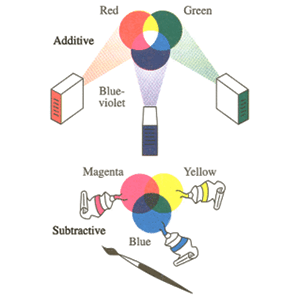
Additive color describes the situation where color is created by mixing the visible light emitted from differently colored light sources. This is in contrast to subtractive colors where light is removed from various part of the visible spectrum to create colors. Computer monitors and televisions are the most common form of additive light, while subtractive color is used in paints and pigments and color filters. The additive reproduction process usually uses red, green and blue light to produce the other colors. Combining one of these additive primary colors with another in equal amounts produces the additive secondary colors cyan, magenta, and yellow. The colored pixels in displays do not overlap on the screen, but when viewed from a sufficient distance, the light from the pixels diffuses to overlap on the retina.
Results obtained when mixing additive colors are often counterintuitive for people accustomed to the more everyday subtractive color system of pigments, dyes, inks and other substances which present color to the eye by reflection rather than emission. For example, in subtractive color systems green is a combination of yellow and blue; in additive color, red + green = yellow and no simple combination will yield green. Additive color is a result of the way the eye detects color, and is not a property of light. There is a vast difference between yellow light, with a wavelength of approximately 580 nm, and a mixture of red and green light. However, both stimulate our eyes in a similar manner, so we do not detect that difference.
Posted in Science |
Leave a Comment »
March 1, 2012

The Invisible Pink Unicorn (IPU) is the goddess of a parody religion used to satirize theistic beliefs, taking the form of a unicorn that is paradoxically both invisible and pink. She is a rhetorical illustration used by atheists and other religious skeptics as a contemporary version of Russell’s teapot, sometimes mentioned in conjunction with the Flying Spaghetti Monster.
The IPU is used to argue that supernatural beliefs are arbitrary by, for example, replacing the word God in any theistic statement with Invisible Pink Unicorn. The mutually exclusive attributes of pinkness and invisibility, coupled with the inability to disprove the IPU’s existence, satirize properties that some theists attribute to a theistic deity.
read more »
Posted in Humor, Philosophy |
Leave a Comment »


 The Daily Omnivore